

Latest Version
September 30, 2026
Funvent Studios Fzco
Puzzle
0
Report a Problem
More About :game
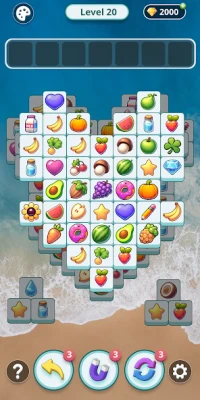
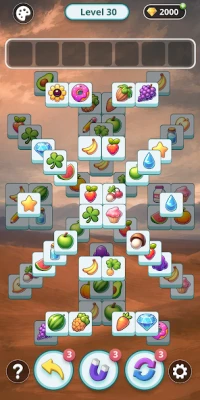
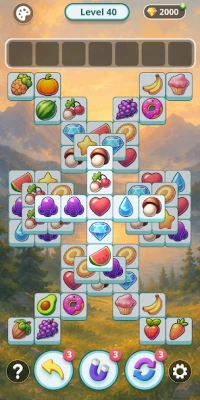
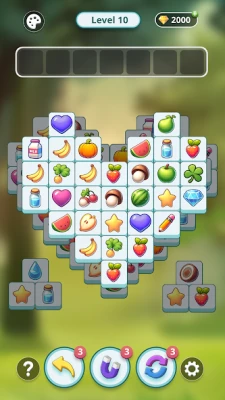
The central challenge is the seven-slot tray. Every tile you select occupies a space, so careless moves can quickly leave you with a full tray and no way to create a match. The current Google Play listing describes the game as a casual, single-player, offline puzzle experience built around nature-inspired tiles, scenic visuals, and relaxed gameplay without timers or pressure.
Tile Park combines simple controls with strategic decision-making, making it easy to start but more demanding when boards become crowded.
What Is Tile Park?
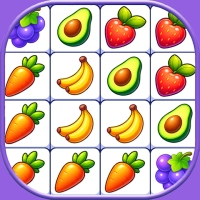
Tile Park is a triple tile matching puzzle game where the goal is to clear every tile from the board.
The basic gameplay loop is simple:
Find matching tiles → place them in the tray → match three identical tiles → clear them → continue until the board is empty.
The seven-slot tray is what makes the game strategic. You cannot select tiles indefinitely. You have to think about which tiles to take and which ones to leave for later.
The current Google Play listing places Tile Park in the Puzzle, Match 3 and Casual categories and identifies it as single-player and offline.
How to Play Tile Park
1. Examine the board
Before tapping anything, look across the available tiles.
Search for:
Three identical tiles
Two matching tiles
Tiles blocking useful combinations
Groups that can potentially be opened
Moves that could expose additional tiles
A quick scan can prevent many unnecessary mistakes.
2. Select a tile
Tap an available tile and it moves into the tray at the bottom of the screen.
The tray has seven spaces, so every selection matters.
3. Build groups of three
When three identical tiles reach the tray, they are matched and removed.
That creates empty spaces and allows you to continue solving the board.
4. Clear the entire landscape
The objective is to eliminate all tiles and complete the stage.
The current game description also highlights discovering new garden layouts as you progress.
Tile Park Strategy Guide
1. Always Look for an Existing Triple
The safest move is often an immediately available triple.
If three identical tiles are accessible, completing that group removes three tiles and frees tray space.
For example:
🌸 Flower + 🌸 Flower + 🌸 Flower
is usually much more useful than selecting three unrelated tiles.
Before starting a complicated sequence, scan the board for easy triples.
2. Treat the Seven-Slot Tray as Your Main Resource
The tray is the most important limitation in Tile Park.
Imagine your tray contains:
Leaf – Shell – Flower – Star – Mushroom – Apple
You have only one empty space remaining.
If you select another unrelated tile, you could create a situation where no triple can be completed.
Therefore, the closer the tray gets to seven tiles, the more carefully you should plan.
Simple rule:
Never fill the tray just because a tile is available.
Select a tile because you have a reasonable plan for matching it.
3. Build Pairs Carefully
If you cannot immediately create a triple, look for useful pairs.
For example:
🍃 Leaf + 🍃 Leaf
means you only need one more matching leaf.
However, don't automatically collect every pair you see.
Ask yourself:
Where is the third tile?
If you cannot see a realistic way to obtain it, another move may be safer.
4. Think About What Each Move Reveals
Some moves are valuable because they expose new tiles.
A tile that appears unimportant now could reveal a useful matching piece underneath it.
When choosing between two moves, consider:
Which tile opens more of the board?
Which move gives you more matching possibilities?
Which move keeps the tray less crowded?
Which move helps you reach a future triple?
This is where Tile Park becomes more strategic than a simple matching game.
5. Don't Tap Randomly
Random tapping is one of the biggest mistakes in triple-match games.
You might see an attractive tile and tap it immediately, only to discover that it does not help your current combinations.
Instead:
Scan → plan → tap → reassess.
After every completed triple, stop for a moment and look at the newly available possibilities.
How to Avoid Losing a Level
A full tray can become dangerous very quickly.
Suppose your seven spaces contain seven different tiles:
Flower – Leaf – Mushroom – Shell – Berry – Bird – Star
There is no completed group.
If none of those tiles can be matched, the board may become impossible to solve.
To avoid this situation:
Keep matching opportunities alive
Try to have at least one or two realistic combinations available.
Don't collect too many singles
Singles consume tray space without immediately helping you clear anything.
Clear triples before the tray becomes crowded
A completed triple creates three spaces, which can dramatically improve your position.
Recheck the board frequently
A newly exposed tile can completely change the best move.
Advanced Tile Park Tips
Plan Two or Three Moves Ahead
You don't always need to know the entire solution.
Instead, try to predict the next few moves.
For example:
Move 1: Select a matching pair.
Move 2: Open the tile covering the third match.
Move 3: Complete the triple.
This is much safer than choosing tiles one at a time without considering the next move.
Prioritize Moves That Increase Options
When two moves appear equally useful, choose the one that gives you more possibilities afterward.
A good move might:
Complete a pair
Reveal another tile
Create a possible triple
Free tray space
Open a new section of the board
The more options you preserve, the less likely you are to become trapped.
Don't Always Complete a Match Immediately
Sometimes a match is available, but waiting can be useful if another move will expose a more important combination.
The goal isn't simply to make matches.
The goal is to clear the entire board without running out of tray space.
Think about the overall sequence rather than only the next triple.
Best Way to Approach Difficult Tile Park Levels
When a level becomes difficult, use this method.
Step 1: Stop tapping
Give yourself a few seconds to examine the entire board.
Step 2: Find all visible triples
These are your immediate opportunities.
Step 3: Find useful pairs
Identify pairs where the third matching tile is likely to become available.
Step 4: Identify blocked areas
Look for tiles that are preventing you from reaching useful pieces.
Step 5: Count your tray spaces
If you already have five or six tiles, become much more conservative.
Step 6: Choose the move that opens the most possibilities
Don't simply choose the easiest-looking tile.
Step 7: Clear a triple when it creates valuable space
A clear tray gives you more flexibility.
Step 8: Reassess
Every cleared group can change the board.
Tile Park Features
Triple Matching Gameplay
Tile Park uses groups of three identical tiles instead of traditional pairs.
Seven-Slot Tray
You have seven available tray spaces, creating the game's main strategic limitation.
Nature-Inspired Tiles
The current presentation uses nature-inspired imagery and a peaceful park setting.
Garden-Themed Progression
Completing stages allows players to discover new garden layouts according to the current Google Play description.
Relaxed Gameplay
The developer describes Tile Park as a tranquil puzzle experience with no timers or pressure.
Offline Play
Google Play currently lists Tile Park as an offline game.
Android and Windows
The current Google Play page lists availability on Android and Windows.
Tile Park Level Tips
Early Levels
Use the early stages to develop good habits.
Don't rely on random tapping even when the board appears easy.
Practice:
Looking for triples
Building useful pairs
Managing tray space
Planning ahead
These habits become increasingly useful later.
Mid-Game Levels
Once boards become more complicated, pay more attention to the order in which you remove tiles.
Opening the wrong area can leave you with several unmatched pieces.
Try to keep your tray balanced.
Harder Levels
On difficult boards, every selection should have a purpose.
Prioritize:
Existing triples
Pairs with an accessible third tile
Moves that expose important tiles
Moves that preserve tray space
Moves that create multiple future options
Common Tile Park Mistakes
Random Tile Selection
A tile may look useful simply because it is available. That doesn't mean it is the correct move.
Ignoring the Tray
The seven-slot limit should influence almost every decision.
Collecting Too Many Singles
Several unrelated tiles can quickly fill your tray.
Forgetting About Future Moves
A move that looks good now may make the next few moves much harder.
Playing Too Quickly
Tile Park does not require speed. The current Google Play description specifically presents the game as a no-pressure experience.
A Simple Winning Strategy
Use this checklist whenever you start a Tile Park puzzle:
1. Scan the board.
2. Find every obvious triple.
3. Look for useful pairs.
4. Identify tiles that block other tiles.
5. Check how many tray spaces are available.
6. Choose the move that creates the most future options.
7. Complete triples to free space.
8. Avoid unnecessary single tiles.
9. Reassess after every major match.
10. Keep the tray from reaching seven unmatched tiles.
Is Tile Park Relaxing?
Tile Park is designed around a peaceful park theme and relaxed tile-matching gameplay. The current Google Play description emphasizes focus, stress relief, scenic visuals and a lack of timers or pressure.
That makes the game different from fast-paced puzzle games where players are constantly racing against a clock.
Here, the challenge comes mainly from decision-making and tray management.
Is Tile Park Offline?
Yes. Google Play currently identifies Tile Park as an offline game.
This makes the core puzzle experience suitable for situations where you don't have a constant internet connection. However, connection-dependent features, advertisements, events or offers can behave differently when offline.
Tile Park Ratings and Player Reception
The current Google Play listing displays 4.7 stars from around 660K reviews and 50M+ downloads.
Recent reviews also show that players have noticed changes to the game's presentation and difficulty following the September 2026 update. For example, some reviewers specifically discussed the new visual design and changes in perceived difficulty. These are individual player opinions rather than an objective measurement of the game's difficulty.
Tile Park FAQ
What is Tile Park?
Tile Park is a relaxing triple-matching puzzle game where you match three identical tiles and clear them from the board.
How many tiles can the tray hold?
The tray has seven spaces.
How do you clear tiles in Tile Park?
Select three identical tiles and place them into the tray. Once the three matching tiles are grouped together, they are cleared.
What happens if the tray fills up?
If all seven spaces are occupied and you cannot create another match, you can reach a game-over situation. The seven-slot limitation is a central part of the game's strategy.
Does Tile Park have a timer?
The current Google Play description says the game has no timers or pressure, allowing players to focus on the puzzle at their own pace.
Is Tile Park a match-3 game?
Yes. Google Play currently categorizes it as a Match 3 game.
Can Tile Park be played offline?
Yes. Google Play currently lists it as an offline game.
Is Tile Park available on Windows?
The current Google Play listing identifies the game as available on Android and Windows.
What is the best strategy for Tile Park?
The key is to avoid filling the seven-slot tray with unrelated tiles. Look for triples first, build useful pairs, open blocked areas carefully and think about what each move will make possible next.
Tile Park: Quick Strategy Checklist
Before selecting a tile, ask:
Can I complete a triple?
Do I already have a useful pair?
Where is the third matching tile?
How many tray spaces remain?
Will this move expose another tile?
Am I creating unnecessary singles?
Can I keep several future options open?
Will completing this triple give me valuable tray space?
If you can consistently answer these questions, you'll make much stronger decisions on difficult boards.
Final Thoughts
Tile Park: Cozy Puzzles takes a straightforward matching concept and adds an important strategic restriction: only seven tiles can occupy the tray at once.
That limitation changes the way you play. Instead of tapping every available tile, you need to consider the order of your moves, protect your tray space and anticipate which tiles may become available next.
Its nature-inspired presentation and no-timer approach make the experience suitable for relaxed puzzle sessions, while the triple-matching system provides enough strategy to keep the gameplay engaging. The current Google Play listing confirms its Puzzle, Match 3 and Casual classifications and lists it as single-player and offline.
For the strongest results, remember the central rule:
Don't just look for a match. Look for the safest sequence of matches.
Rate the Game
User Reviews











Popular Games



















 Android
 iOS
iOS Windows
 Xbox
Xbox