




Latest Version
September 09, 2025
Solid Games
Strategy
iOS
0
Report a Problem
More About :game
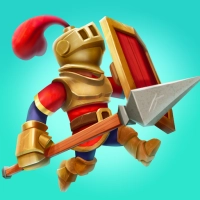
Developed by Solid Games, Fortress of Gears is available on iPhone and iPad, with an Android version also available. The game mixes real-time action with strategic decision-making and features different environments, enemy formations and units including archers, warriors, knights and war elephants.
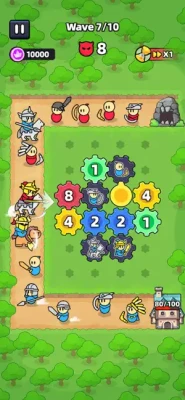
The unusual gear mechanic is the game's defining feature. Every battle asks you to think about which gears to activate, which troops to produce and when to use your strongest abilities.
What Is Fortress of Gears?
Fortress of Gears is a medieval strategy and defense game built around mechanical gears.
You take the role of a ruler defending a kingdom against invading forces. Ancient machines inside the fortress allow you to summon troops and unleash weapons while enemy forces advance toward your defenses.
The official description highlights several major elements:
- Gear-based troop summoning
- Powerful weapon attacks
- Fortress upgrades
- Multiple types of soldiers
- Different battlefield environments
- Enemy lords
- Real-time combat
- Defensive positioning
- Progression through increasingly challenging battles
The result is a hybrid experience that sits between a traditional strategy game, a defensive battle game and a casual real-time action title.
Fortress of Gears Gameplay
The basic idea is straightforward:
Activate gears → summon troops → strengthen your force → attack or defend → survive enemy waves → upgrade → face stronger opponents
The gears are more than a visual theme. They form the foundation of the game's combat system.
Instead of having a completely traditional unit-placement interface, your actions revolve around activating the available mechanical systems and using them to produce soldiers or trigger attacks.
This gives battles a more active feeling than a conventional idle defense game.
How the Gear System Works
The gear mechanic is the most important thing to understand when starting Fortress of Gears.
Different gears can provide different effects, including troop production and combat-related benefits.
The official store description specifically says that turning gears can summon soldiers and unleash powerful weapons.
Think of gears as battlefield resources
You should not treat every available gear as equally important.
Before activating one, consider:
- What does it produce?
- How quickly can its effect help?
- Does it create a useful unit?
- Does it complement your current army?
- Will activating it improve your ability to survive the next wave?
- Is another gear more valuable at the current moment?
This mindset becomes increasingly useful as the battlefield becomes more crowded.
Troop Types
Fortress of Gears features several recognizable medieval unit types.
The official listing specifically mentions:
Archers
Ranged troops can provide damage without immediately entering direct contact with enemy forces.
They can be useful when you need additional damage against approaching enemies, although positioning and the overall battlefield situation matter.
Warriors
Warriors provide a straightforward combat option and can form part of the core defensive force.
They are useful when you need dependable troops rather than relying entirely on specialized units.
Knights
Knights add a stronger medieval combat presence and can become important as enemy forces become more difficult to handle.
War Elephants
War elephants are among the game's heavier units and are designed to provide substantial battlefield power.
The official listing specifically identifies them as one of the units available for building a defensive lineup.
Special and Elite Units
The game has also introduced additional gear types and an automatic elite-soldier synthesis mechanic. The App Store's version history notes that when there are too many soldiers, elite soldiers can be automatically synthesized.
This makes controlling army size and understanding the value of stronger units increasingly important.
Fortress of Gears Strategy Guide
1. Learn the Battlefield Before Using Everything
Do not immediately activate every available option simply because it is available.
Take a moment to understand:
- Enemy direction
- Enemy composition
- Your current troops
- Available gears
- Potential reinforcements
- Your strongest attack options
A few seconds of observation can prevent a poorly timed ability or inefficient troop combination.
2. Build a Balanced Army
A common mistake in strategy games is becoming too dependent on one unit.
A strong defensive formation should be able to handle different types of threats.
For example, combining melee units with ranged support can create a more flexible force than relying entirely on one category.
The official game description itself emphasizes building a defensive lineup from different units rather than depending on a single soldier type.
3. Use Ranged Units Carefully
Archers can provide useful damage from a distance, but they should not necessarily be treated as frontline units.
If enemy melee troops can reach them quickly, their value can disappear.
Try to maintain enough durable troops in front of ranged units so your ranged damage has time to work.
Player reviews have specifically discussed perceived differences between ranged and melee durability, so unit balance can matter significantly in later battles. These are player observations rather than official balance statistics.
4. Don't Waste Powerful Abilities
Some players have reported that certain powerful abilities or special effects have limited availability during a battle.
That means you should avoid automatically using your strongest attack against the first group of enemies.
Instead, save major abilities for situations such as:
- A large enemy group
- A powerful enemy unit
- A dangerous push toward your fortress
- A boss or enemy lord
- A wave that your normal troops cannot handle
The exact value of a special ability depends on your current progression and available units.
5. Watch Enemy Formation
Enemy composition can matter more than enemy numbers.
A large group of weak enemies may be easier to handle than a smaller force containing powerful ranged or heavy units.
Before committing your best resources, look at what is actually approaching.
Ask:
What is the biggest threat on the screen right now?
Then direct your resources toward solving that threat.
6. Use Heavy Units as a Frontline
Powerful melee units can absorb pressure while ranged units operate behind them.
When you have access to heavier troops, avoid thinking only about their damage.
Their value can also come from their ability to remain in combat longer.
A durable frontline gives your other units more time to attack.
7. Upgrade the Fortress Regularly
Fortress upgrades are a central part of the progression system.
As enemy forces become stronger, simply repeating the same strategy will eventually stop being enough.
Use rewards from completed battles to strengthen your available systems.
Prioritize improvements that directly help you overcome the problem currently preventing progress.
For example:
- Losing because your frontline collapses → improve durability or stronger frontline options.
- Losing because enemies overwhelm you → increase overall troop output.
- Losing because powerful targets survive too long → focus on damage improvements.
- Struggling with large groups → consider abilities or units that can handle multiple enemies.
8. Don't Chase Damage Alone
Damage is important, but it is not the only statistic that matters.
A unit that deals high damage but dies immediately may contribute less than a durable unit that remains active throughout a battle.
When comparing upgrades, consider:
Damage + survivability + battlefield role + timing
rather than looking at damage alone.
Early Game Strategy
The opening chapters are primarily about learning the gear system.
Your priorities should be:
- Learn what each available gear does.
- Experiment with different troop combinations.
- Avoid wasting powerful abilities.
- Upgrade your core troops.
- Learn enemy attack patterns.
- Focus on completing stages consistently.
Do not worry about creating a perfect army immediately.
The early game is the best time to learn which units fit your preferred playstyle.
Mid-Game Strategy
The middle stages require more deliberate planning.
Enemy forces become stronger and battlefield situations become less forgiving.
At this point, start thinking about synergy.
A useful formation can contain:
- Frontline melee units
- Ranged support
- A heavy or elite unit
- A situational special ability
The exact combination should change according to the enemies you face.
The game's official description specifically emphasizes adapting to different enemy lords and environments, making flexibility an important part of progression.
Late-Game Strategy
Later battles are less forgiving of inefficient decisions.
At this stage, avoid using the same formation for every encounter.
Instead:
Study the enemy
Determine which enemy type is causing most of your losses.
Change your formation
Use units that address that threat.
Improve the weakest link
A single underpowered component can undermine the entire defensive lineup.
Save powerful abilities
Do not spend your best attack simply because it is available.
Control battlefield pressure
Your goal is not necessarily to destroy everything as quickly as possible.
Your goal is to prevent the enemy from reaching a position where your defense collapses.
How to Deal With Difficult Enemy Waves
When a battle suddenly feels much harder, don't immediately assume that you simply need more power.
Try changing your approach.
If melee enemies overwhelm you
Add more durable frontline troops and use ranged support behind them.
If ranged enemies are causing heavy damage
Prioritize getting durable troops into position and deal with dangerous ranged attackers quickly.
If giant enemies push through your formation
Concentrate your strongest available damage on them instead of spreading attacks across weaker targets.
If the battlefield becomes crowded
Focus on maintaining a manageable army and use stronger units rather than continually adding low-impact troops.
Elite Soldier Synthesis
The App Store version history states that when there are too many soldiers, elite soldiers can be automatically synthesized.
This is an important progression feature because the game does not simply rely on having an ever-growing number of basic soldiers.
A practical approach is to treat elite synthesis as part of your long-term army development.
Instead of thinking:
More soldiers = automatically better
think:
More useful combat power = better
If the game is converting excessive soldiers into stronger elite units, the resulting army composition may become more important than raw unit count.
Gear Management Tips
Don't Activate Everything at Once
Multiple effects can be tempting, but using everything simultaneously can make it harder to understand what is actually helping.
Activate important gears deliberately.
Prioritize Immediate Threats
If a powerful enemy is about to break through, use the gear that helps solve that immediate problem.
Save Strong Options
If the battlefield is currently under control, you may have a better opportunity to use a powerful effect later.
Learn Gear Timing
The same gear can have different value depending on when you activate it.
Timing is one of the easiest ways to improve without spending additional resources.
Fortress of Gears Tips and Tricks
Tip 1: Don't rely on one troop type
A mixed army gives you more ways to respond to different enemies.
Tip 2: Protect your ranged units
Keep durable troops between vulnerable ranged attackers and dangerous enemies.
Tip 3: Save your strongest attacks
Powerful abilities are more valuable against major threats than ordinary enemies.
Tip 4: Upgrade intelligently
Spend resources where they solve your current problem.
Tip 5: Study failed battles
If you lose repeatedly, identify exactly what causes the defeat.
Was it:
- Too little damage?
- Weak frontline?
- Bad troop composition?
- Poor timing?
- A specific enemy unit?
Fix that issue rather than upgrading randomly.
Tip 6: Watch for crowding
Too many soldiers can trigger elite synthesis, according to the game's update notes.
Tip 7: Adapt to each environment
The game includes forests, snowy tundras, deserts and other settings. Treat each encounter as a separate tactical challenge rather than assuming one formation will work everywhere.
Tip 8: Don't judge a unit from one battle
A unit that performs poorly against one enemy composition may be useful in another situation.
Tip 9: Use resources with a plan
Avoid spending valuable currencies simply because you have enough for a purchase.
Tip 10: Experiment
Fortress of Gears is built around combining gears and troops, so experimenting with different setups is part of learning the game.
Fortress of Gears Environments
The game takes battles through several different environments, including:
- Forest areas
- Snowy tundras
- Deserts
- Other battlefield settings
These locations provide visual variety while the enemy forces and challenges change as you progress.
The environmental changes also help prevent the campaign from feeling like a single repeated battlefield.
Fortress of Gears Real-Time Combat
Although the game has strong strategic elements, it is not simply a static tower-defense experience.
The official description highlights a combination of strategy and real-time action, including defensive positioning and precise weapon attacks.
That means good results depend on both preparation and timing.
You need to decide what to deploy, but you also need to recognize when an ability or attack is most useful.
Ads and In-App Purchases
Fortress of Gears is free to play and contains in-app purchases.
The US App Store currently lists several purchases, including:
- Ad-ticket bundles
- Diamonds
- Auto Blessing
- Fast Forward
- Larger premium currency packages
The listed prices range from $2.99 for a small ad-ticket package to $99.99 for a large diamond package.
Player reviews have raised concerns about advertisements and ad-gated gears or rewards. Other players have reported that the advertising experience changed after updates. These are individual player experiences rather than a universal description of the current experience.
Fortress of Gears Performance and Bugs
Player feedback has mentioned several issues at different points in the game's development, including balance concerns, occasional progress problems, interface issues and performance problems when many units are active.
For example, some App Store reviewers reported lag when large numbers of units were present, while other reviews mentioned issues involving unit balance or progression.
These reports are useful context, but they should not automatically be treated as current universal problems because game updates can change performance and mechanics.
The App Store version history shows several updates addressing new gears, iPad interface performance and automatic elite-soldier synthesis.
Fortress of Gears Features
The main features include:
- Gear-driven strategy gameplay
- Medieval fantasy battles
- Real-time defensive combat
- Troop summoning
- Fortress upgrades
- Archers
- Warriors
- Knights
- War elephants
- Elite soldier synthesis
- Powerful weapon attacks
- Enemy lords
- Multiple environments
- Campaign-style progression
- Free-to-play structure
- In-app purchases
- iPhone and iPad support
- Android availability
Graphics and Atmosphere
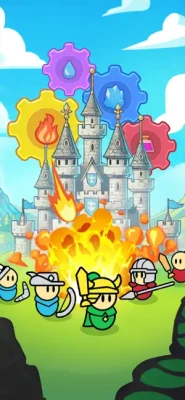
Fortress of Gears combines medieval fantasy imagery with mechanical machinery.
The contrast between castles, soldiers and enormous gears gives the game its distinctive visual identity.
Instead of presenting a realistic medieval battlefield, it creates a fantasy world where ancient mechanical systems power the kingdom's defenses.
The result is an unusual combination of:
Medieval warfare + fantasy units + mechanical gears
That combination is one of the game's defining characteristics.
Controls
The game is designed around touch interaction rather than traditional virtual joystick controls.
Players interact with gears, units and combat systems directly on the mobile screen.
The App Store lists the game for iPhone and iPad and requires iOS/iPadOS 13.0 or later.
Game Information
| Information | Details |
|---|---|
| Game | Fortress of Gears |
| Developer | Solid Games |
| Genre | Strategy |
| Platforms | iPhone, iPad, Android |
| Age Rating | 4+ |
| iOS Requirement | iOS 13.0 or later |
| iPad Requirement | iPadOS 13.0 or later |
| App Size | 194.5 MB on the US App Store listing |
| Monetization | Free with ads and in-app purchases |
| App Store Rating | 4.6/5 at the time checked |
| App Store Ratings | About 3.9K |
| Android Rating | 4.2/5 at the time checked |
| Android Reviews | About 37.8K |
| Android Downloads | 1M+ |
| Main Mechanic | Gear-based troop and weapon activation |
| Main Units | Archers, warriors, knights and war elephants |
| Combat | Strategy + real-time action |
Ratings, reviews, downloads and store information can change over time and may vary between regions and platforms.
Recent Updates
The App Store's listed version history includes several gameplay and performance updates.
Version 2.3.8, dated July 15, 2025, included iPad interface performance optimization and notes that when there are too many soldiers, elite soldiers will be automatically synthesized.
Earlier updates added new gears, including versions 2.3.6 and 2.3.4.
The Android listing shows the game continuing to receive updates, so platform versions may not always have identical features or update dates.
Frequently Asked Questions
What is Fortress of Gears?
Fortress of Gears is a medieval strategy game where players use gear-driven machines to summon troops, activate weapons and defend a fortress against invading enemies.
Who developed Fortress of Gears?
The game is developed by Solid Games.
What units are available in Fortress of Gears?
The official description names archers, warriors, knights and war elephants among the available units.
Is Fortress of Gears a tower defense game?
It has defensive gameplay elements, but its mechanics also include real-time action, troop summoning and gear-based systems. It is more accurately described as a strategy and defense game with real-time elements.
What makes Fortress of Gears different?
Its central gear system is the biggest distinguishing feature. Players activate mechanical gears to summon soldiers and unleash weapons rather than relying exclusively on conventional tower placement.
Does Fortress of Gears have upgrades?
Yes. Fortress upgrades and unit development are central parts of progression.
Does Fortress of Gears have different environments?
Yes. The official description mentions forests, snowy tundras, deserts and other environments.
Is Fortress of Gears free?
Yes. The game is free to play with in-app purchases and advertising.
Is Fortress of Gears available on Android?
Yes. The Android version is available through Google Play and is listed by Solid Games.
Is Fortress of Gears available on iPhone?
Yes. The App Store lists Fortress of Gears for iPhone and iPad.
How do you get better at Fortress of Gears?
Focus on learning the gear system, building balanced troop combinations, protecting vulnerable units, identifying the biggest enemy threat and saving powerful abilities for important moments.
Final Thoughts
Fortress of Gears takes a familiar medieval defense concept and gives it an unusual mechanical twist.
The game's identity comes from the interaction between gears, troops, weapons and real-time battlefield decisions. Instead of simply building a static defense and watching the battle unfold, you have to think about which systems to activate, which troops to create and when to use your strongest options.
The most useful strategy is to stay flexible. Build a balanced force, protect vulnerable ranged units, use powerful attacks carefully and pay attention to the enemy composition rather than relying on exactly the same setup in every battle.
For players who enjoy medieval strategy games, fortress defense, troop management, real-time combat and unusual mobile strategy mechanics, Fortress of Gears offers a distinctive gear-powered take on the genre.
Rate the Game
User Reviews












Popular Games



















 Android
 iOS
 Windows
 Xbox