





Latest Version
September 28, 2026
UNICO STUDIO
Simulation
iOS
0
Report a Problem
More About :game
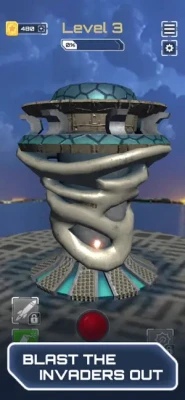
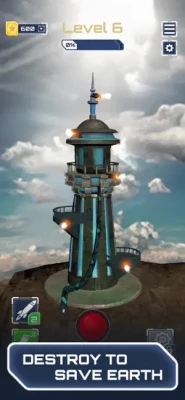
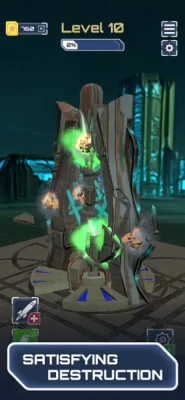
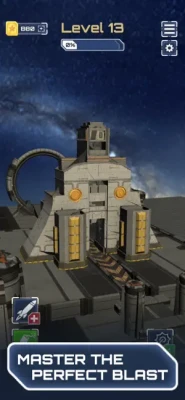
The game combines building demolition, explosive puzzles, physics-based destruction, city smashing, strategic dynamite placement, and satisfying 3D destruction. Players can rotate structures from different angles, attack factories, towers, monuments, and other alien structures, then use special boosters when ordinary explosives aren't enough.
What Is Fake World: Alien Demolition?
Fake World: Alien Demolition! puts you in the role of a demolition specialist fighting an alien occupation.
Instead of simply blowing everything up, you need to study each structure and determine where your limited dynamite will have the greatest effect.
Every building is effectively a destruction puzzle.
You can rotate the 3D camera, inspect different sides of the structure, place explosives, and then detonate them to watch walls, floors, towers, and other sections collapse under physics-based destruction.
The central challenge is simple:
How can you use a limited number of explosives to cause the biggest possible collapse?
How to Play Fake World: Alien Demolition
1. Inspect the Building
Before placing dynamite, rotate the camera and examine the entire structure.
Look for:
- Weak structural sections
- Narrow supports
- Lower floors
- Large unsupported areas
- Important connection points
- Sections that could trigger a chain reaction
The first few seconds of observation can make a major difference.
2. Rotate the 3D Camera
Swipe around the structure to see it from multiple angles.
A weak point that is hidden from the front may be obvious from the side or rear.
Don't commit your explosives until you understand the building's overall structure.
3. Place Dynamite
Tap the desired locations to place dynamite.
Because the number of explosives is limited, every placement should have a purpose.
Rather than covering the building randomly, try to concentrate your explosives around areas that can destabilize multiple sections.
4. Detonate
Once your explosives are positioned, trigger the blast.
The structure then reacts according to the game's physics system, with walls, floors, towers, and other components falling as the destruction spreads.
5. Evaluate the Result
If the building doesn't collapse sufficiently, think about what happened.
Perhaps the explosives were too high.
Maybe the main support remained intact.
Or perhaps the explosion destroyed one section without affecting the rest of the building.
Use that information to improve your next attempt.
Main Gameplay Features
Strategic Dynamite Placement
Dynamite is the foundation of the gameplay.
You have a limited supply, so the objective isn't simply to place as much TNT as possible.
The better approach is to identify structural weak points and create an explosion capable of causing a chain reaction.
Physics-Based Building Destruction
Fake World focuses heavily on the visual satisfaction of watching structures collapse.
The game uses physics-based destruction to create falling walls, floors, towers, and buildings after an explosion.
This makes every demolition feel different depending on where the explosives are placed.
Global City Demolition
The campaign takes you through world cities under alien occupation.
Different countries contain different demolition challenges, with structures ranging from industrial plants and towers to monuments and other unusual buildings.
Alien Structures
The alien invasion gives the game its distinctive setting.
Instead of demolishing ordinary buildings alone, you're clearing bizarre structures and fake landmarks created by the invading forces.
Missiles
The missile booster provides another way to attack difficult structures.
It can be particularly useful when conventional dynamite placement isn't producing enough destruction.
Laser
The laser is another powerful demolition booster designed to help break through difficult targets.
Use it when a particular part of the structure is resisting your normal explosive strategy.
Air Support
Air Support delivers three powerful bombs in a row.
It can provide a major burst of destruction when a building requires additional firepower.
Events and Rewards
Fake World includes special events and rewards.
Players can complete missions, earn coins, and continue progressing through the demolition experience.
Full Fake World: Alien Demolition Strategy Guide
1. Never Place Dynamite Randomly
The easiest mistake is treating dynamite like unlimited ammunition.
It isn't.
You have a limited number of explosives, so each one should contribute toward a specific demolition objective.
Before tapping, ask:
What part of this building do I want the explosion to affect?
2. Find the Weakest Structural Point
Look for areas that appear to connect major sections of the building.
A well-placed explosive in an important support area can potentially affect much more of the structure than several explosives placed in isolated locations.
3. Attack the Lower Structure
When appropriate, examine the lower portions of a building carefully.
If the lower structure supports several floors above it, damaging an important connection there can create a much larger collapse.
However, don't assume the lowest point is always the correct target. Some structures require a different approach.
4. Use Multiple Angles
One of the game's most important tools is the ability to rotate the 3D camera.
Use it.
A placement that looks effective from the front may be poorly positioned when viewed from the side.
Rotate the structure before committing to your final explosive arrangement.
5. Think About Chain Reactions
The goal isn't necessarily to destroy the section directly beside the dynamite.
The strongest explosions can trigger a sequence:
Explosion → structural failure → falling section → impact → additional collapse
Look for opportunities where one failure can affect another part of the building.
6. Don't Waste Explosives on Cosmetic Damage
Breaking a few walls may look satisfying, but the real objective is usually much larger.
If the structure remains standing, consider whether those explosives actually affected an important structural area.
Prioritize meaningful collapse over superficial damage.
7. Learn From the First Explosion
The first attempt can teach you a lot.
Pay attention to:
- Which sections moved
- Which supports remained intact
- Where the largest collapse occurred
- Which explosives had little effect
- Which direction the building naturally fell
Use that information when planning your next attempt.
8. Consider the Direction of the Collapse
Buildings don't necessarily fall straight down.
The position of your explosives can influence how different sections collapse.
When possible, think about where the structure will move after its supports are compromised.
9. Save Boosters for Difficult Structures
Missiles, lasers, and Air Support are powerful tools.
Don't automatically spend them on an easy building.
Save them for targets where ordinary dynamite cannot produce enough destruction or where a difficult structural arrangement requires additional force.
10. Use the Missile When You Need Concentrated Destruction
If a specific part of a building is preventing the larger collapse, the missile can be useful as an additional attack.
Use it with a purpose rather than simply firing it because it is available.
11. Use the Laser Against Resistant Sections
When one important area continues to survive your normal explosives, consider whether the laser can help remove that obstacle.
The key is identifying the section that is actually preventing the building from collapsing.
12. Use Air Support for Major Problems
Air Support provides three bombs in succession.
Because it delivers multiple attacks, it can be especially useful when a structure has several remaining sections that need to be removed.
13. Don't Rush the Detonation
The game isn't primarily about reaction speed.
The App Store description emphasizes analyzing the structure, finding weak points, and planning the attack before detonating.
Take advantage of that.
14. Check Every Side Before Your Final Placement
Before detonating, rotate the camera one final time.
Ask yourself:
- Is there a stronger weak point?
- Are my explosives concentrated effectively?
- Is one important support still untouched?
- Could I create a better chain reaction?
- Am I wasting explosives on sections that don't matter?
This final check can save an entire attempt.
Advanced Demolition Tips
Think Like a Structural Puzzle
Don't view the building as one giant object.
Break it into sections.
Think about:
Foundation → Supports → Floors → Upper structure → Connected sections
Then identify which part has the greatest influence over everything else.
Look for Connected Sections
Some buildings have multiple sections that depend on one another.
If you can weaken the connection between two major sections, the resulting collapse may be considerably larger than attacking each section independently.
Use Minimal Force When Possible
A good demolition doesn't necessarily require the biggest explosion.
If you can cause the desired collapse with fewer explosives, you've demonstrated better control of the puzzle.
Study Failed Demolitions
A failed attempt isn't wasted if it tells you something about the building.
For example, if the upper floors collapse but the base remains intact, you have learned that the lower structure is probably the critical obstacle.
If one side falls while another remains standing, investigate what is keeping the second side supported.
Best Beginner Strategy
If you're new to Fake World, follow this simple process:
Step 1: Rotate around the building.
Step 2: Identify the major structural sections.
Step 3: Find likely weak points.
Step 4: Place a small number of explosives around meaningful connection points.
Step 5: Check the building from another angle.
Step 6: Detonate.
Step 7: Study how the structure reacts.
Step 8: Adjust your placement if the collapse is incomplete.
Step 9: Save special boosters for harder structures.
This approach is much more reliable than simply covering a building with dynamite.
Different Demolition Challenges
Fake World features different types of targets, including:
- Towers
- Factories
- Industrial structures
- Monuments
- Strange alien buildings
- Fake landmarks
- Room-based structures
The layouts and weak points vary between levels, so a strategy that works for one building may not work for the next.
City and Country Progression
The game takes players across world cities affected by the alien invasion.
Each country introduces destruction challenges involving different structures and layouts.
This gives the campaign a sense of travel while keeping the central demolition mechanic consistent.
Fake World Game Atmosphere
Fake World combines a playful alien-invasion setting with exaggerated building destruction.
The experience is less about realistic urban simulation and more about the satisfaction of watching strange structures collapse after carefully placed explosives.
The physics-based destruction, explosive effects, falling structures, and 3D camera create the game's main visual appeal.
Offline Play
One of the game's notable features is offline play.
The store listing specifically describes Fake World as an offline demolition game, allowing players to continue destroying alien structures without a constant internet connection.
Connected features such as advertising, purchases, or certain event functionality may behave differently when offline.
Fake World on iPhone and iPad
Fake World: Alien Demolition! is a free Simulation game developed by UNICO STUDIO.
The current App Store listing supports iPhone and iPad and requires iOS 15.0 or later on iPhone and iPadOS 15.0 or later on iPad. The listing also supports Mac computers with an Apple M1 chip or later under the stated compatibility requirements.
The game is rated 13+ and contains advertising and optional in-app purchases.
The App Store currently does not have enough ratings or reviews to display an overall rating summary, so there isn't a meaningful App Store rating to report at this time.
The Android version is also available and was updated on September 15, 2026, with bug fixes and performance improvements.
Fake World Pros and Cons
Pros
- Satisfying 3D building destruction
- Physics-based collapses
- Strategic dynamite placement
- Multiple camera angles
- Different buildings and structures
- Alien-invasion theme
- Missile, laser, and Air Support boosters
- City and country progression
- Events and rewards
- Offline play
- Simple controls
- Easy to understand but increasingly strategic
Cons
- Limited dynamite makes poor placement costly
- Some structures require experimentation
- The gameplay is primarily focused on demolition rather than traditional combat
- Advertising is included
- Optional in-app purchases are available
- The current App Store listing does not yet have enough ratings to provide an overall rating summary.
Who Should Play Fake World: Alien Demolition?
Fake World is particularly suitable for players who enjoy:
- Building destruction games
- Demolition games
- Physics-based games
- City destruction games
- Explosive puzzle games
- TNT and dynamite games
- Strategy puzzles
- 3D simulation games
- Offline games
- Alien-themed games
- Satisfying destruction games
It is especially appealing if you enjoy games where the main challenge comes from figuring out how a structure will collapse rather than controlling a character during combat.
Fake World vs. Traditional Destruction Games
Traditional destruction games may focus primarily on causing as much damage as possible.
Fake World adds a puzzle element.
Because dynamite is limited, the challenge is not simply:
"How much can I destroy?"
It is:
"Where should I place my explosives to create the most useful collapse?"
That makes the game closer to a strategic demolition puzzle than a pure destruction sandbox.
Frequently Asked Questions
What is Fake World: Alien Demolition?
Fake World: Alien Demolition! is a 3D building destruction and simulation game where players demolish alien structures in world cities using dynamite and special boosters.
How do you play Fake World?
Rotate the 3D camera, examine the building, identify weak points, place dynamite, and then detonate the explosives to trigger a physics-based collapse.
Is Fake World a destruction game?
Yes. Building demolition and physics-based destruction are the game's central mechanics.
Does Fake World use dynamite?
Yes. Dynamite is the primary tool used to damage and demolish structures, and the number of explosives available makes placement an important strategic decision.
Does Fake World have boosters?
Yes. The game includes Missile, Laser, and Air Support boosters. Air Support launches three bombs in succession.
Does Fake World have physics-based destruction?
Yes. The game specifically features physics-based building collapses, including falling walls, floors, towers, and other structural sections.
Does Fake World have different cities?
Yes. The game takes players through world cities under alien occupation, with different countries presenting different demolition challenges.
Can you play Fake World offline?
Yes. Offline play is explicitly listed as one of the game's features.
Does Fake World have events?
Yes. The game includes events, missions, and rewards that provide additional progression beyond the regular demolition levels.
Is Fake World free?
Yes. The game is free to download, with advertising and optional in-app purchases.
What is the best strategy in Fake World?
Study the building before placing explosives, rotate the camera to find structural weak points, use limited dynamite carefully, and aim for chain reactions that cause larger collapses. Save missiles, lasers, and Air Support for structures that require additional firepower.
Final Thoughts
Fake World: Alien Demolition! turns building destruction into a strategic puzzle. The fun isn't simply watching an explosion; it comes from studying the structure, finding its weak points, deciding where limited dynamite should go, and seeing whether your plan produces the collapse you expected.
The combination of 3D destruction, physics-based buildings, alien structures, world-city progression, dynamite, missiles, lasers, Air Support, events, and offline play gives the game a clear identity within the demolition genre.
For beginners, the most important lesson is simple:
Don't place explosives where the building looks weakest. Place them where the building's structure is most vulnerable to a chain reaction.
Rate the Game
User Reviews















Popular Games



















 Android
 iOS
iOS Windows
 Xbox
Xbox