


Latest Version
November 02, 2026
North Star Digital Games
Strategy
iOS
0
Report a Problem
More About :game
Every decision matters. You can develop defensive characteristics to protect your animals, improve their ability to find food or transform them into dangerous predators. With single-player challenges, campaign progression and online multiplayer, Evolution offers an entertaining experience for fans of nature-inspired games, tactical decisions and competitive board games.
Game Overview
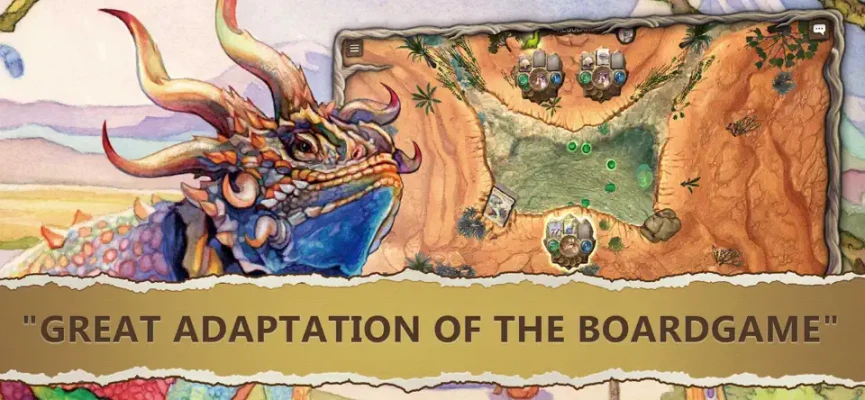
Evolution Board Game brings the fascinating concept of natural selection into an interactive strategy experience. Developed by North Star Digital Games, the game is inspired by the popular tabletop title and transforms its ecosystem-building mechanics into a digital environment.
Instead of simply collecting animals or completing traditional puzzles, players must think like evolutionary strategists. Each species needs the right combination of characteristics to survive, grow and compete with other creatures.
The central challenge revolves around three important elements: food, adaptation and survival. Players must understand the changing conditions around them, anticipate the decisions of their opponents and develop species that can handle different environmental situations.
A species that performs well in one round might struggle in the next. Food can become limited, predators can threaten vulnerable creatures, and opponents may develop unexpected abilities. This constant uncertainty makes every match different.
The game is particularly appealing to players who enjoy strategic board games because success depends on planning, observation and smart resource management rather than quick reactions.
Main Features of Evolution Board Game
Natural Selection and Species Development
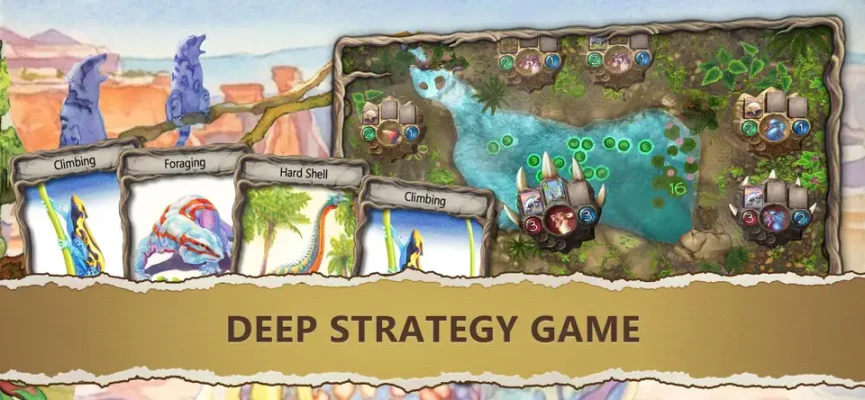
The main attraction is the ability to create and customize different animal species. Rather than controlling a predetermined creature, you develop species by choosing traits that influence how they behave and survive.
Some characteristics help animals obtain food, while others provide protection or create opportunities to attack competing species. Choosing the right combination is essential because each ability has strengths and weaknesses.
Strategic Card-Based Gameplay
Evolution uses cards to introduce important decisions throughout each round. Players must decide how to use their available cards to improve existing species, create new ones, increase population or influence the food supply.
Every card represents an opportunity, but using it incorrectly can leave your species vulnerable. Successful players consider both their immediate needs and their long-term plans.
A Changing Ecosystem
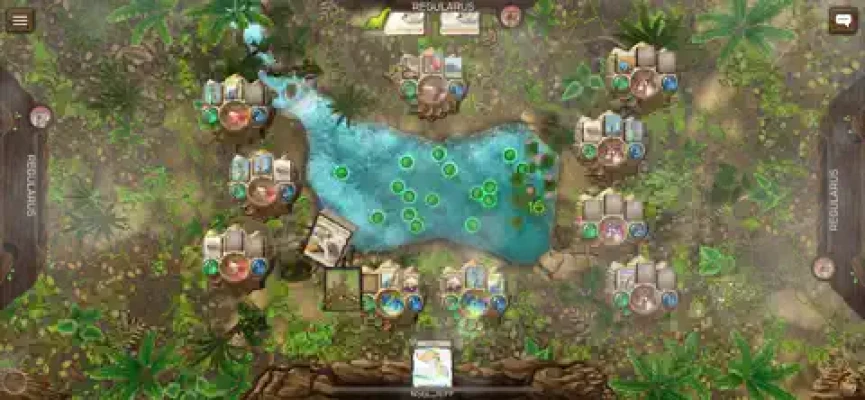
The watering hole is the central food source for herbivorous species. However, food availability is not guaranteed. Players must compete for resources and prepare for situations where the available supply cannot support every creature.
This creates an interesting balance between population growth and survival. Having a large population can be beneficial, but only when your species can obtain enough food.
Carnivores and Defensive Abilities
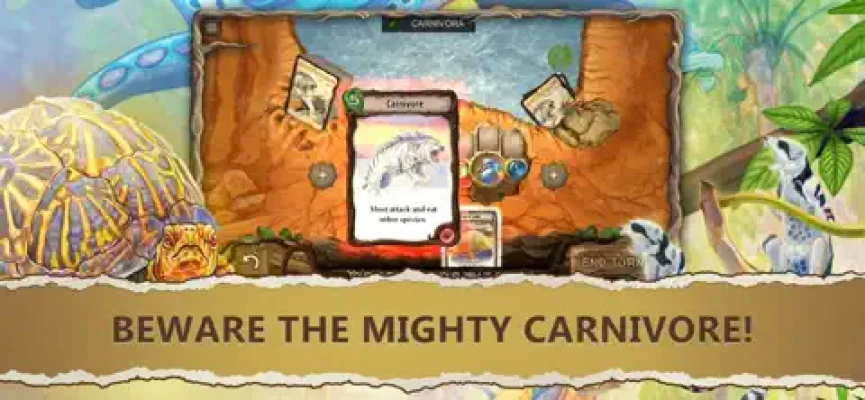
Predatory species introduce another layer of strategy. Carnivores can hunt other animals, creating opportunities to obtain food when ordinary resources become scarce.
However, attacking is not always straightforward. Defensive traits can make potential prey difficult or impossible to hunt under certain conditions.
Players must carefully evaluate the abilities of their opponents before deciding whether to develop a predator or invest in protection.
Single-Player Campaign
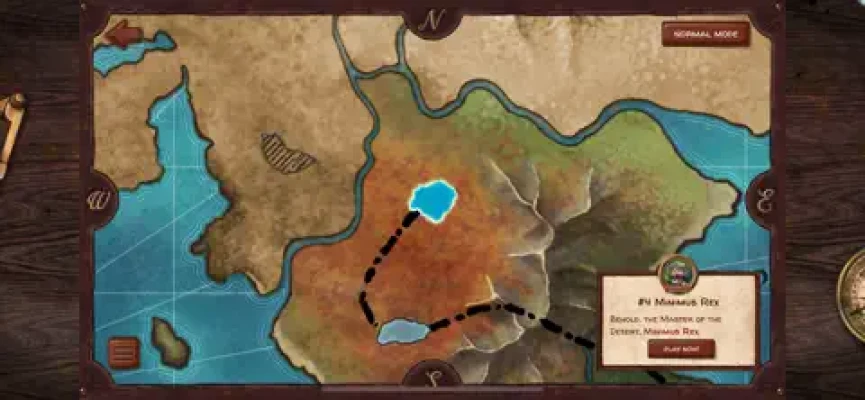
The campaign takes players through Evolution Island, where they encounter different challenges and distinctive boss opponents.
Progressing through the campaign introduces new strategic situations and allows players to unlock Apex Species. These specialized opponents demonstrate different approaches to survival and provide additional challenges.
Intelligent AI Opponents
Players can practice against computer-controlled opponents with different difficulty levels.
The free experience includes easy and intermediate AI opponents, while the full-game unlock provides access to harder and expert challenges. This makes it possible to improve gradually before competing against experienced human players.
Online Multiplayer
Evolution includes matchmaking that connects players with opponents of similar skill levels.
Players can also enjoy custom multiplayer experiences, compete in seasonal tournaments and challenge friends. Private multiplayer and asynchronous games are among the features available through the full-game unlock.
Weekly Challenges and Replayability
The game offers additional challenges that encourage players to experiment with different evolutionary approaches.
Its collection of trait cards creates thousands of possible species combinations. Since the available resources, opponents and strategic situations change between matches, there are plenty of reasons to return and experiment with new tactics.
Flight and Additional Content
The digital version also includes additional content beyond the basic experience.
The Flight upgrade introduces flying species that can access alternative food sources and avoid certain carnivore threats. Other optional content includes Climate and promotional card packs, providing additional ways to expand the gameplay experience.
Gameplay Mechanics and How to Play
Understanding the basic mechanics is the first step toward becoming a successful Evolution player. Although the rules are relatively straightforward, the interactions between species, traits and food create considerable strategic depth.
Creating Animal Species
At the beginning of a match, players receive cards that can be used to develop their ecosystem.
One of the most important decisions is whether to establish a new species or improve an existing one.
Creating additional species gives you more opportunities to collect food and develop different survival strategies. However, every additional species also creates another creature that may require resources.
A balanced ecosystem is generally more reliable than one that depends entirely on a single powerful animal.
Increasing Population
Population determines how many individual animals belong to a species.
Increasing population can improve your potential food collection and help you earn more points when those animals survive. However, larger populations also require more food.
Before increasing population, consider whether your species has enough opportunities to feed. Growing too quickly without a reliable food source can become a serious disadvantage.
Increasing Body Size
Body size is another important characteristic.
Larger animals can be more difficult for certain predators to attack, depending on the relevant traits. Body size also influences the effectiveness of carnivore strategies.
Increasing body size can be useful when you expect aggressive opponents, but it should support a clear survival plan rather than being treated as an automatic upgrade.
Developing Traits
Trait cards are the foundation of species customization.
Different traits provide different advantages. Some improve feeding efficiency, some provide defensive protection, and others help animals interact with predators or obtain food in unusual ways.
The most effective approach is to choose traits that work together.
For example, a species designed around efficient feeding may benefit from characteristics that increase its ability to obtain food. A defensive species may combine protection with sufficient population to remain valuable throughout the game.
Feeding at the Watering Hole
Feeding is one of the most important parts of every round.
Herbivorous species generally obtain food from the available plant supply. Players must consider the number of animals that need feeding and how much food is likely to remain available.
If the food supply becomes insufficient, some animals may go hungry.
This is why it is important to evaluate the entire ecosystem rather than focusing exclusively on your own species.
Hunting Other Species
Carnivores have a different feeding approach.
Instead of relying on the ordinary plant-food supply, they attack eligible species to obtain food.
However, they must satisfy the conditions required for an attack. Defensive traits, body size and other characteristics can prevent a successful hunt.
A strong carnivore should therefore be developed with its potential targets in mind.
Ending a Round and Scoring
After the feeding phase, the round concludes and players receive points based on their successful evolutionary development.
Food collected by species, population and traits contribute to the overall scoring system.
The objective is to build an ecosystem that consistently produces points across multiple rounds. A single successful feeding phase is useful, but long-term consistency is what creates a winning strategy.
Specific Titles and Important Game Elements
Species Development: Create new animal species and customize their characteristics to suit different survival conditions.
Natural Selection: Respond to environmental challenges by developing abilities that improve your chances of survival.
Trait Cards: Use specialized characteristics to improve feeding, defense, movement and hunting strategies.
Population Growth: Increase the number of animals in a species while maintaining a manageable food requirement.
Body Size: Develop larger creatures to strengthen your evolutionary strategy and influence predator interactions.
Herbivore Strategy: Build species that efficiently collect food from the watering hole.
Carnivore Strategy: Create predators that obtain food by hunting vulnerable opposing species.
Defensive Evolution: Use protective abilities to discourage predators and keep your animals alive.
Watering Hole: Manage the competition for limited food resources.
Apex Species: Encounter specialized opponents and unlock additional single-player challenges through campaign progression.
Evolution Island: Explore the campaign and face different strategic situations.
AI Battles: Practice against computer opponents at different difficulty levels.
Online Matchmaking: Compete against players of comparable skill.
Private Multiplayer: Arrange custom matches with friends.
Asynchronous Matches: Enjoy multiplayer games that do not require every participant to take their turn simultaneously.
Seasonal Tournaments: Test your abilities in competitive multiplayer events.
Weekly Challenges: Explore additional gameplay challenges and experiment with different strategies.
Flight Content: Introduce flying species and alternative approaches to finding food.
Climate Content: Expand the experience with additional environmental and strategic possibilities.
Complete Strategy Guide for Evolution Board Game
Build a Balanced Ecosystem
One of the biggest mistakes beginners make is concentrating on only one powerful species.
A successful ecosystem should include different types of animals with complementary abilities. You might develop one species that collects food efficiently, another that is difficult to attack and a third that can take advantage of carnivore opportunities.
This diversity makes your ecosystem more adaptable.
If one feeding strategy becomes ineffective, your other species may still provide opportunities to collect food and earn points.
Avoid Increasing Population Too Quickly
Population growth can be tempting, especially when you want to establish a strong presence in the ecosystem.
However, every additional animal increases your feeding requirements.
Before expanding a population, examine the current food supply and consider how many other species will compete for resources.
A smaller population that feeds consistently can be more valuable than a large population that repeatedly struggles to survive.
Strategy tip: Increase population when you have a dependable feeding advantage or when your species has traits that make obtaining food easier.
Choose Traits That Complement Each Other
Trait combinations are more important than individual abilities.
A single powerful trait might improve a species, but several complementary characteristics can create a much stronger survival strategy.
Consider the purpose of each species before selecting its traits.
For a feeding-focused species, prioritize characteristics that help it obtain food efficiently.
For a defensive species, choose abilities that make it difficult for carnivores to attack.
For a predator, focus on characteristics that increase its ability to find suitable prey and successfully hunt.
Avoid choosing traits simply because they appear powerful. Their usefulness depends on the ecosystem and your opponents.
Watch Your Opponents Carefully
Evolution is not a game where you can concentrate entirely on your own development.
Observing other players is essential because their decisions influence your survival opportunities.
Pay attention to species with increasing populations, unusually large body sizes and dangerous combinations of traits.
If an opponent is developing a carnivore, identify which of your species could become potential targets.
You should also watch for opponents building highly efficient herbivores. These creatures may compete aggressively for the available food supply.
Anticipating these developments allows you to prepare before a threat becomes serious.
Use Carnivores at the Right Time
Carnivores can provide an alternative food source, but developing a predator without considering available prey can be a poor investment.
Before creating a carnivorous species, examine the defensive characteristics of opposing animals.
Look for vulnerable targets that satisfy the requirements for a successful attack.
You should also consider whether your predator has enough useful abilities to remain effective throughout the match.
A carnivore that cannot find suitable prey may contribute very little to your overall strategy.
Advanced tip: Do not reveal your entire offensive plan too early. Keeping opponents uncertain about your next move can make it harder for them to prepare effective defenses.
Prioritize Survival Over Aggression
Aggressive strategies can be exciting, but survival is the foundation of consistent scoring.
A defensive species that collects food every round may outperform a predator that struggles to hunt.
Likewise, an efficient herbivore can become extremely valuable when the watering hole contains sufficient food.
Try to maintain a combination of offensive and defensive options.
This gives you flexibility when the ecosystem changes unexpectedly.
Understand the Food Supply
The watering hole determines many of the important decisions during a match.
Before committing to population growth, consider how much food might become available and how many animals will compete for it.
If you expect limited resources, avoid developing unnecessary feeding requirements.
If the food supply looks promising, you may have an opportunity to expand your populations and increase your potential scoring.
Experienced players also pay attention to the feeding requirements of opponents because resource competition can change the outcome of an entire round.
Use Your Cards Efficiently
Cards should be treated as strategic resources rather than simple upgrades.
Every card you play should contribute to a particular objective.
Sometimes it is better to create a new species than to improve an existing one. In other situations, strengthening an established species can provide a more dependable advantage.
Consider the current state of the ecosystem before committing valuable cards.
Do not spend every useful card immediately. Think about how your decisions affect the following rounds and whether you might need flexibility later.
Develop an Effective Defensive Strategy
Protection becomes especially important when opponents begin developing powerful carnivores.
A vulnerable species with a large population can become an attractive target.
Defensive traits can reduce this risk and force opponents to search for easier prey.
However, defense should not come at the expense of feeding efficiency.
The best defensive species are not simply difficult to attack; they also have a reliable way to obtain food.
Master the Timing of Evolution
Timing is one of the most important skills in Evolution.
An ability that is useful early in the game might become less valuable later. Similarly, a defensive upgrade may be unnecessary until opponents begin developing predators.
Think about what your species needs now and what it might need in future rounds.
Avoid making changes without considering their long-term effects.
A well-timed evolutionary improvement can transform a struggling species into an important source of points.
Beginner's Guide: How to Get Started
Complete the Interactive Tutorial
Start with the built-in tutorial rather than immediately entering competitive multiplayer.
The tutorial introduces the basic rules, explains species development and demonstrates how feeding works.
Pay particular attention to the relationship between population, food availability and survival.
Understanding these mechanics will make later strategic decisions much easier.
Begin with Easy AI Opponents
After completing the tutorial, practice against easy computer opponents.
Use these matches to experiment with different species combinations without worrying too much about competitive rankings.
Try creating defensive herbivores, experimenting with carnivores and testing different approaches to population growth.
Progress to Intermediate Challenges
Once you understand the basic mechanics, move to intermediate AI opponents.
These matches provide a better opportunity to develop your decision-making skills.
Pay closer attention to your opponents' traits and learn to anticipate their feeding strategies.
Explore the Campaign
The campaign provides structured challenges that help develop your strategic understanding.
Different boss opponents encourage you to experiment with new approaches.
Pay attention to their strengths and weaknesses rather than repeatedly using the same strategy.
Unlocking additional Apex Species also provides more options for future single-player challenges.
Enter Multiplayer When Ready
Online multiplayer introduces unpredictable human opponents.
Unlike AI players, human competitors can make unusual decisions, develop unexpected combinations and deliberately respond to your strategy.
Start with casual or standard matchmaking when available.
Use each match as an opportunity to improve your understanding of competitive play.
Advanced Strategies for Experienced Players
Create Multiple Independent Feeding Strategies
One of the strongest approaches is to avoid depending on a single food source.
Develop species with different strengths so that your ecosystem remains productive under different circumstances.
For example, you might combine efficient herbivores with a carefully developed carnivore.
This approach reduces the risk of having your entire ecosystem affected by one feeding problem.
Use Defensive Traits to Influence Opponents
Defensive abilities do more than protect your animals.
They can also influence the decisions of other players.
If your species becomes difficult to hunt, opponents may redirect their attention toward easier targets.
This can provide an indirect advantage even when your species is not actively attacking anything.
Predict the Next Feeding Phase
Experienced players think about what the ecosystem might look like during the next feeding phase.
Consider how your opponents might use their cards, which species could become more dangerous and whether the food supply will support growing populations.
Making decisions with the next round in mind helps prevent unnecessary losses.
Balance Species Quantity and Quality
Having many species creates flexibility, but every species needs a purpose.
Avoid building an ecosystem filled with creatures that cannot feed efficiently.
Instead, develop a smaller number of well-designed species with complementary characteristics.
Each species should contribute something meaningful, whether through food collection, defensive protection or hunting.
Adapt Rather Than Repeat
A strategy that worked in your previous match may not work against a different group of opponents.
Some matches reward defensive development, while others provide opportunities for aggressive carnivore strategies.
Learn to identify the situation and adjust your approach.
The ability to adapt is more important than memorizing a single combination of traits.
Common Mistakes to Avoid
Growing populations without enough food: Large populations create higher feeding requirements and can become difficult to maintain.
Ignoring opponent traits: Failing to monitor opposing species can expose your animals to unexpected attacks.
Creating unnecessary carnivores: Predators need suitable targets and effective hunting abilities.
Choosing random traits: Every trait should support a clear purpose within your overall strategy.
Ignoring defense: Species that cannot protect themselves may become easy targets.
Overinvesting in body size: Larger animals are not automatically successful. Body size should complement your feeding and survival plans.
Depending on one species: A single unsuccessful feeding phase can seriously damage an ecosystem built around only one creature.
Using cards without planning: Poor card management can leave you without the improvements needed to respond to future threats.
Expanding too aggressively: More species and larger populations are not always better.
Ignoring campaign practice: Skipping the learning experience can make competitive matches unnecessarily difficult.
Game Modes and Progression
Freeplay Mode
The free experience allows players to explore the basic mechanics before purchasing the full game.
It includes the interactive tutorial, easy and intermediate AI opponents, five campaign levels and one multiplayer game per day.
This is a useful way to discover whether the game's strategic mechanics match your interests.
Full Campaign
The complete campaign expands the single-player experience with additional levels and boss encounters.
Players can explore Evolution Island, overcome specialized challenges and unlock Apex Species.
Multiplayer Mode
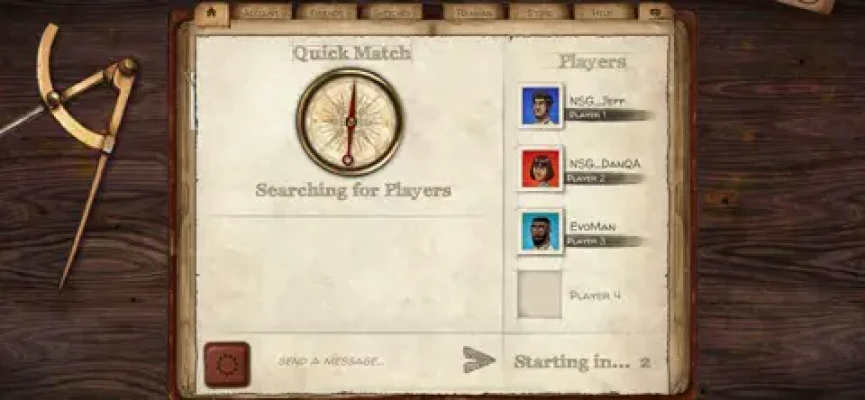
Matchmade multiplayer provides competitive matches against other players.
The game also supports private multiplayer experiences and asynchronous matches through its unlocked features.
Weekly Challenges
Weekly Challenges provide additional objectives and encourage players to explore different combinations of traits and evolutionary approaches.
Additional Expansions
Optional content expands the available gameplay possibilities.
The Flight upgrade introduces flying species and alternative feeding opportunities, while Climate and promotional packs offer further content for players interested in expanding their experience.
Graphics, Sound and User Experience
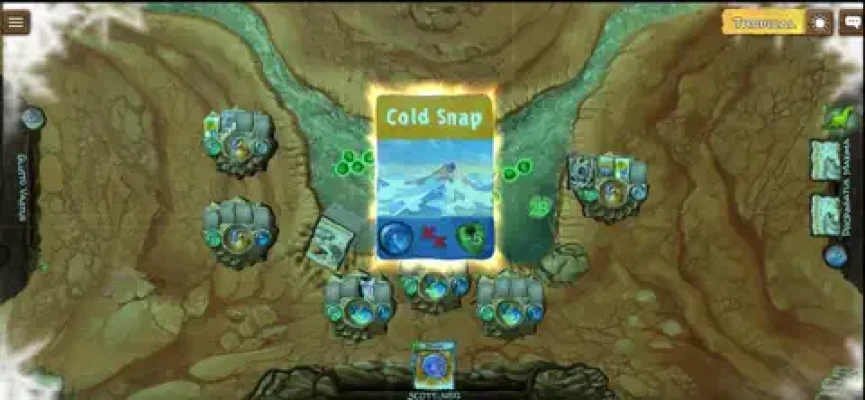
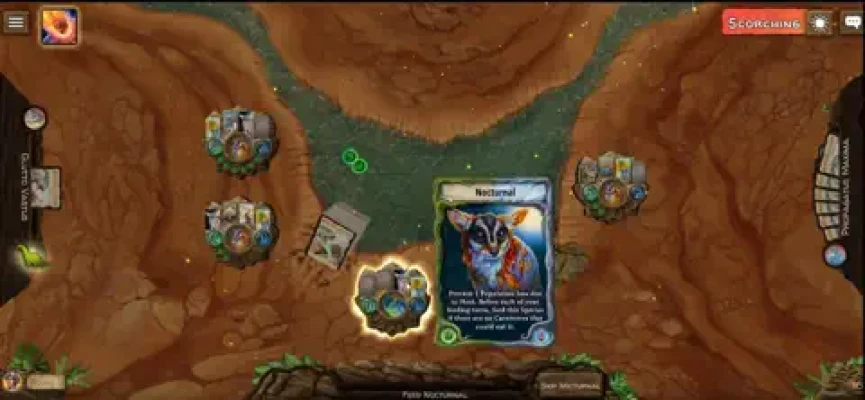
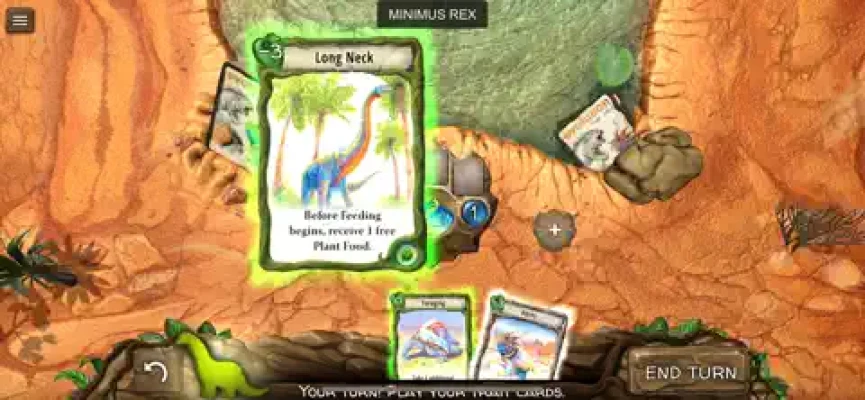
Evolution Board Game uses attractive illustrations and carefully designed animations to bring its animal species and ecosystem to life.
The visual presentation focuses on making the gameplay understandable while maintaining the atmosphere of a natural environment.
Species development is particularly enjoyable because players can combine different characteristics and observe how their creatures become specialized.
The interface is designed to support strategic decision-making without requiring players to navigate complicated menus constantly.
Animations help communicate important actions, including feeding, hunting and evolutionary changes.
The overall presentation makes the game accessible to newcomers while providing enough strategic depth to interest experienced board game players.
Is Evolution Board Game Free to Play?
Evolution Board Game is available as a free download with optional in-app purchases.
The free version provides access to the tutorial, selected campaign levels, AI opponents and limited daily multiplayer.
A one-time full-game purchase unlocks additional functionality, including unlimited matchmade multiplayer, the complete campaign, harder AI opponents, private multiplayer games, asynchronous matches and Weekly Challenges.
Additional purchases are available for expansions and promotional content.
This try-before-you-buy approach allows players to experience the central gameplay before deciding whether to purchase the expanded version.
Game Information
Game Title: Evolution Board Game
Developer: North Star Digital Games
Publisher: North Star Digital Games LLC
Game Category: Board Game / Strategy
Platform: iOS
Compatible Devices: iPhone and iPad
Minimum System Requirement: iOS 13.0 or later
Content Rating: 9+
Game Type: Strategy, Evolution, Ecosystem Simulation and Multiplayer Board Game
Gameplay Style: Turn-Based Strategy
Main Objective: Develop successful animal species, collect food, survive predators and earn points.
Single-Player Content: Tutorial, AI opponents and campaign challenges.
Multiplayer Content: Online matchmaking, private matches and asynchronous games.
Monetization: Free download with optional in-app purchases.
Developer's Full Game Unlock: One-time purchase, with additional optional content available separately.
Tips for Winning More Matches
Focus on reliable food collection before increasing your population.
Develop different species with complementary survival abilities.
Pay attention to the traits used by your opponents.
Avoid creating predators without considering available prey.
Use defensive abilities when aggressive opponents become a serious threat.
Keep your species' feeding requirements under control.
Save useful cards for situations where they can make a meaningful difference.
Experiment with different combinations instead of repeating one strategy.
Use campaign challenges to improve your understanding of advanced mechanics.
Adapt your plans whenever the ecosystem changes.
Prioritize consistent survival rather than temporary advantages.
Think about future feeding phases before making important evolutionary decisions.
Frequently Asked Questions
What is Evolution Board Game about?
Evolution Board Game is a strategy experience where players create animal species, develop special traits, compete for food and adapt to survive in a changing ecosystem.
Who developed Evolution Board Game?
The game was developed by North Star Digital Games and is based on the popular Evolution tabletop board game.
Can you play Evolution Board Game offline?
The game includes single-player AI opponents and campaign content. Online features require an internet connection. Players should also connect periodically to synchronize their progress.
Does Evolution Board Game have multiplayer?
Yes. The game offers online matchmaking, private multiplayer matches and asynchronous multiplayer options through its unlocked features.
Can you play against AI opponents?
Yes. Players can compete against computer-controlled opponents with different difficulty levels.
What is the purpose of trait cards?
Trait cards allow players to customize their animal species with abilities that improve feeding, defense, hunting and survival.
How do you win Evolution Board Game?
The objective is to earn more points than your opponents by successfully developing species, collecting food and maintaining a surviving ecosystem.
Are carnivores important?
Carnivores can provide an alternative feeding strategy by hunting other species. However, their effectiveness depends on available prey and the defensive abilities of opponents.
Does the game have a campaign?
Yes. The campaign takes players through Evolution Island, featuring different challenges and boss opponents.
Is Evolution Board Game suitable for beginners?
Yes. The interactive tutorial and easier AI opponents make it possible for beginners to learn the rules before attempting more difficult challenges.
Does the game include expansions?
Yes. Optional content includes Flight, Climate and several promotional card packs.
Is Evolution Board Game worth playing?
For players who enjoy thoughtful strategy, nature-inspired gameplay, competitive board games and tactical card combinations, Evolution offers a rewarding experience with considerable replayability.
Final Verdict
Evolution Board Game is an excellent choice for players who enjoy strategy games that reward careful planning, creativity and adaptability. Its central concept of natural selection creates an engaging experience in which every species has the potential to become successful, provided players make the right decisions.
The combination of species customization, trait cards, resource management and predator interactions gives every match its own personality. Players must constantly evaluate their surroundings, anticipate threats and decide how to improve their ecosystem.
The campaign offers a welcoming introduction, while AI battles and online multiplayer provide opportunities to develop more advanced strategies.
Whether you prefer building efficient herbivores, creating powerful carnivores or experimenting with unusual combinations of evolutionary traits, Evolution Board Game offers plenty of strategic possibilities.
Its greatest strength is that there is no single approach that guarantees victory. The ecosystem is always changing, and the most successful players are those who know when to grow, when to defend and when to adapt.
For fans of tactical board games and intelligent strategy experiences, Evolution Board Game is a worthwhile adventure into the fascinating world of survival and natural selection.
Rate the Game
User Reviews















Popular Games



















 Android
 iOS
 Windows
 Xbox