

Latest Version
May 12, 2024
Yateland - Learning Games For Kids
Simulation
11
com.imayi.doctorkids
Report a Problem
More About :game
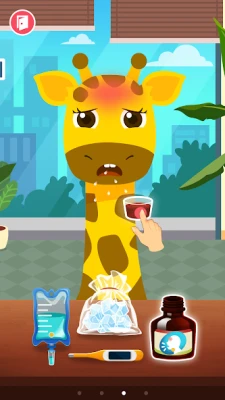
From treating a giraffe with a fever to helping a panda with a bee sting or caring for patients with toothaches, each activity introduces a different situation through interactive play. With multiple medical minigames, simple controls, and child-friendly guidance, the game combines imaginative role-playing with opportunities to learn about caring for others.
Game Overview
Game Name: Doctor Games for Kids
Developer: Yateland Games for kids
Game Genre: Educational, Medical Simulation, Casual, Role-Playing
Platform: Android, with Windows availability listed by the developer
Game Modes: Single-player medical minigames
Target Audience: Preschool children and young players
Main Activities: Diagnosing simple ailments, treating patients, dental care, using medical instruments, and completing hospital activities
Visual Style: Colorful environments, friendly animated characters, and playful medical equipment
Internet Requirement: Offline play is supported
Monetization: Free to start, with in-app purchases for additional content
Main Features of Doctor Games for Kids
1. A Friendly Children's Hospital
Step into a playful medical environment where every patient needs a little attention. The hospital setting encourages children to explore different healthcare activities while learning that helping others can be rewarding.
2. Multiple Medical Minigames
The game features a collection of medical activities involving different ailments and treatments. Each minigame presents a small task that children can work through using interactive tools and on-screen guidance.
The Google Play listing describes 24 medical minigames in its current feature information, although the number of freely accessible activities may differ from the total available.
3. Interactive Dentist Games
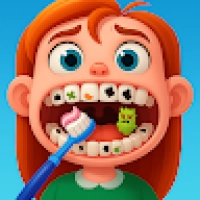
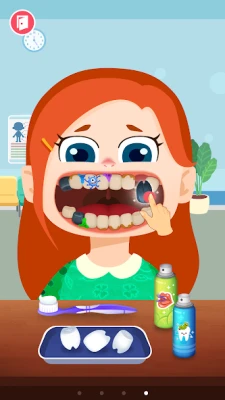
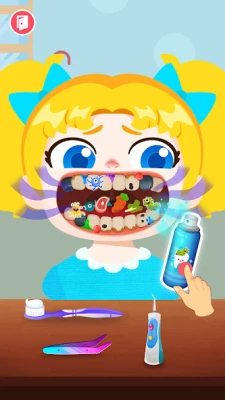
Dental activities introduce children to basic oral-care concepts through playful procedures. Players may use tools such as cavity sprays and tooth extractors as part of the game's treatment scenarios.
These activities make dental visits easier to imagine and can provide a starting point for conversations about brushing teeth and looking after a healthy smile.
4. Cute Animal Patients
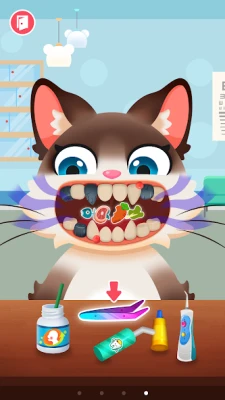
Friendly animal characters give the hospital activities personality. Children can meet patients with different problems, observe their symptoms, and choose the tools needed to complete each treatment.
The animated expressions help make each encounter feel more engaging and give players a reason to see what happens next.
5. Learn Through Interactive Play
Doctor Games for Kids combines simple problem-solving with imaginative role-play. Players can practice matching a problem to an appropriate in-game treatment, following instructions, and completing tasks in a logical order.
The experience also creates opportunities for parents to discuss kindness, responsibility, hygiene, and why people visit doctors.
6. Simple Controls and Helpful Guidance
The game is designed for young players, with interactive medical equipment and guidance that helps them understand what to do. Children can learn by exploring the available tools and following the instructions provided during each activity.
7. Offline Play
The game supports offline gameplay, making it convenient for travel, waiting rooms, and quiet activities at home. Some purchase-related functions may still require an internet connection.
8. Child-Friendly Presentation
The colorful characters and playful medical scenarios are designed to make healthcare activities approachable for children. The Google Play listing states that the game does not contain third-party advertisements, while in-app purchases are available.
Parents should review the purchase settings and available content before handing the device to a young child.
Gameplay: How the Hospital Adventures Work
The main gameplay loop revolves around choosing a patient, identifying a problem, selecting a suitable tool, and completing the treatment.
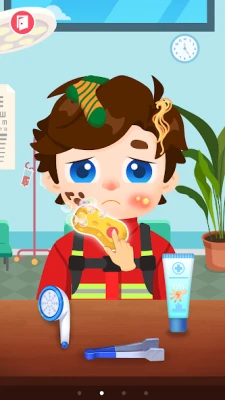
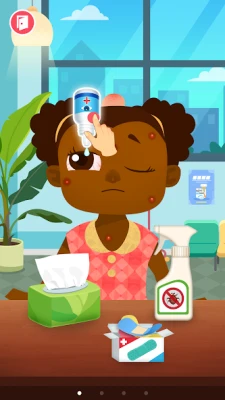
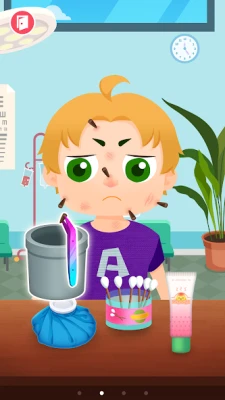
A patient might arrive with a fever, a dental problem, or an insect sting. Players examine the situation, follow the available instructions, and interact with the medical equipment to help the character recover.
Rather than requiring detailed medical knowledge, the game focuses on observation, matching, and completing simple tasks. Each activity introduces a different situation, keeping the experience varied while reinforcing the basic idea of helping someone who needs care.
The updated game also includes a waiting room where players can choose a patient and begin treatment more directly.
Complete Strategy Guide for Doctor Games for Kids
Although Doctor Games for Kids is designed to be accessible, a thoughtful approach can help children enjoy more activities and get greater educational value from their play sessions.
1. Start by Exploring the Hospital
Begin by looking around the available hospital interface and identifying the patients who can be treated. Take time to understand how the waiting room works and how to enter a medical activity.
Let younger players explore the characters and tools without rushing. Becoming familiar with the interface makes subsequent treatments easier to follow.
Helpful tip: Start with an available patient and complete the activity before moving on to another. This gives children a clear sense of progress.
2. Observe the Patient Before Choosing a Tool
The first step in a treatment is to understand what is wrong with the patient. Pay attention to the symptoms shown on screen and read or listen to any available instructions.
A fever, a toothache, and a bee sting require different approaches within the game's activities. Choosing tools based on the problem helps children understand the connection between observation and treatment.
Best approach: Look carefully before tapping. Encourage children to identify the problem in their own words before selecting a tool.
3. Follow the On-Screen Instructions
Each medical minigame provides its own sequence of interactions. Some tasks may involve applying a treatment, removing an object, or using a particular instrument.
Follow the guidance in the order presented rather than trying every tool at random. If an action does not work, check whether the game expects a different instrument or a more precise interaction.
This method helps children develop patience and attention to detail.
4. Learn the Purpose of Each Medical Tool
The game introduces different instruments for different activities, including dental procedures. Encourage children to notice what each tool does and when it is used.
For example, dental tools belong in dental-care activities, while other treatments may require equipment suited to a different problem.
The objective is not to memorize complex medical procedures. It is to learn that tools have different purposes and that choosing the right one matters.
5. Approach Dental Activities Step by Step
Dental minigames can be especially useful for introducing conversations about oral hygiene. Encourage children to follow the order of the treatment and observe how the patient responds to each action.
After playing, parents can reinforce the experience by discussing everyday habits such as brushing twice a day and visiting a dentist when necessary.
The game is an educational role-playing experience, not a replacement for professional dental advice.
6. Complete One Treatment Before Starting Another
Finishing an activity gives children a clear goal and helps them understand the full process of caring for a patient.
Rather than switching between several unfinished activities, encourage players to follow each task through to completion. This can help develop concentration, sequencing skills, and a sense of accomplishment.
Once a treatment is finished, choose another available patient and discover a different medical scenario.
7. Encourage Empathy Through Role-Playing
One of the game's strongest educational opportunities is its focus on caring for patients. Ask children how a character might feel when sick, why the character needs help, and how treatment can make the situation better.
These conversations can turn a simple tapping activity into a more meaningful role-playing experience.
Children can also take turns playing doctor and patient with toys, using the game as inspiration for imaginative play.
8. Use Mistakes as Learning Opportunities
Young players may select the wrong instrument or struggle to complete an interaction. Encourage them to look at the instructions again rather than treating a mistake as a failure.
A useful routine is to observe the problem, identify the requested action, choose the appropriate tool, and try again.
This approach supports patience and problem-solving while keeping the experience relaxed.
9. Explore the Available Minigames
Different patients introduce different situations, so variety is an important part of the experience. Explore the free activities first and identify which types of treatment the child enjoys most.
Some players may prefer dental care, while others may enjoy examining animal patients and treating common ailments.
Keep in mind that the advertised collection includes activities that may require payment to unlock. Check the available content before purchasing additional minigames.
10. Make Playtime More Educational
Parents can extend the value of the game by connecting its activities with everyday experiences.
Try asking questions such as:
What do you think is bothering this patient?
Which tool should the doctor use?
Why is it important to keep our teeth clean?
How can we help someone who feels unwell?
Why should we follow a doctor's instructions?
These simple questions encourage children to explain their decisions and think about what they have learned.
11. Manage Playtime and In-App Purchases
Doctor Games for Kids is designed for casual play sessions, so there is no need to rush through every activity at once.
Parents should check which activities are available without payment and whether additional content offers enough value for their child. Setting purchase restrictions can prevent accidental spending.
Short, supervised sessions can help keep the experience enjoyable while leaving time for physical play, reading, and other activities.
Educational Benefits
Observation and Problem-Solving
Children look at symptoms, identify the task, and select an appropriate in-game treatment. These interactions encourage basic reasoning and attention to detail.
Understanding Basic Healthcare
The game introduces familiar medical situations and tools, helping children become more comfortable with the idea of visiting a doctor or dentist.
Patience and Following Instructions
Completing a treatment requires children to follow the steps provided by the game. This can encourage careful observation and sequential thinking.
Empathy and Kindness
Helping animal patients creates opportunities to talk about how others feel and why caring for someone who is unwell matters.
Imaginative Role-Playing
Playing doctor allows children to explore a familiar real-world role in a safe, fictional environment.
These are potential learning opportunities rather than guaranteed educational outcomes. Children benefit most when gameplay is combined with conversation and real-world guidance from adults.
Advantages and Disadvantages
Advantages
Colorful characters and friendly medical scenarios.
Multiple minigames covering different types of treatment.
Interactive dental-care activities.
Simple controls suitable for young players.
Helpful guidance during treatments.
Opportunities to discuss hygiene, kindness, and healthcare.
Offline gameplay support.
No third-party advertisements according to the developer's listing.
Disadvantages
Some activities and characters require in-app purchases.
Children may finish familiar treatments quickly and want more variety.
The simple gameplay may not appeal to older children looking for complex simulation mechanics.
The educational value depends partly on how children engage with the activities and whether adults reinforce the lessons.
Is Doctor Games for Kids Worth Playing?
Doctor Games for Kids is a suitable option for families looking for a simple medical role-playing game with colorful characters and interactive activities. Its strongest feature is the variety of treatment scenarios, particularly the combination of general medical care and dental minigames.
The game works best as a casual educational activity rather than a detailed hospital simulator. Parents should be aware that not every activity is necessarily available for free, especially if their child wants to explore the full collection.
For preschool children interested in doctors, dentists, and helping others, the game offers an approachable introduction to these themes.
Frequently Asked Questions
What is Doctor Games for Kids?
Doctor Games for Kids is an educational medical simulation game developed by Yateland Games for kids. Players treat animal patients, use medical tools, and complete interactive hospital and dental-care activities.
How many minigames are available?
The current Google Play description advertises 24 medical minigames. The number of activities accessible without purchasing additional content may be smaller.
Is Doctor Games for Kids free?
The game is available to start for free, but it includes in-app purchases. Parents should review which activities are included and which require payment.
Can children play Doctor Games for Kids offline?
Yes. Offline play is supported, allowing children to enjoy the available gameplay without a continuous internet connection.
Does the game include dentist activities?
Yes. The game includes dental-care minigames featuring interactive tools and procedures intended to introduce children to basic oral-health concepts.
Is Doctor Games for Kids suitable for preschoolers?
The game is designed for children and uses colorful characters, simple interactions, and helpful instructions. Parents should choose activities appropriate for their child's age and supervise purchase settings.
Does Doctor Games for Kids contain advertisements?
The developer's Google Play description states that the game has no third-party advertisements. In-app purchases are available.
What can children learn from the game?
Children can practice observation, following instructions, simple problem-solving, and imaginative role-playing. The medical scenarios also provide opportunities to discuss hygiene, kindness, and caring for others.
Is this a realistic medical simulator?
No. The game focuses on simplified, child-friendly medical activities rather than real clinical procedures. Its purpose is entertainment and introductory learning.
What is the best way to play Doctor Games for Kids?
Choose an available patient, observe the problem, follow the instructions, select the appropriate tool, and complete the treatment. Explore different activities gradually and discuss the experience with a parent or caregiver.
Final Verdict
Doctor Games for Kids turns simple healthcare scenarios into colorful interactive activities for young players. From examining animal patients to exploring dental-care procedures, the game encourages children to follow instructions, solve small problems, and imagine what it is like to help others.
Its straightforward controls and offline support make it convenient for casual play, while the variety of medical minigames provides opportunities to explore different situations. The main consideration for parents is the availability of paid content, which may limit how many activities children can access for free.
Overall, Doctor Games for Kids is worth considering for families seeking a child-friendly doctor game that combines imaginative hospital play with introductory lessons about healthcare, hygiene, and compassion.
Rate the Game
User Reviews










Popular Games



















 Android
 iOS
 Windows
 Xbox