
Latest Version
September 22, 2026
THQ Nordic Mobile GmbH
Simulation
iOS
0
Report a Problem
More About :game
The game combines classic city-building with a detailed economic system. Your Townies have daily routines and different needs, so simply constructing buildings isn't enough. A successful ruler needs to maintain a reliable economy while keeping the population supplied, productive, and happy.
The current iOS version is available for iPhone and iPad and offers a free starting experience with the tutorial plus limited access to a scenario and Sandbox map before additional content.
Game Information
| Feature | Details |
|---|---|
| Game | Townsmen: A Kingdom Rebuilt |
| Genre | City Builder, Strategy, Simulation |
| Setting | Medieval |
| Developer | HandyGames / THQ Nordic Mobile |
| Platforms | iPhone, iPad, Android, Windows and other platforms |
| iOS Category | Simulation |
| Age Rating | 9+ |
| iOS Size | About 850 MB |
| Players | Single-player |
| Controller Support | Yes |
| Languages | English + 15 additional languages |
| Main Gameplay | City building, economy, production, research and management |
| Buildings | 150+ town and production buildings |
| Game Modes | Scenarios and Sandbox |
| Combat | Optional military system with soldiers and bandits |
The current App Store listing specifically highlights more than 150 unique buildings, complex production chains, changing seasons, disasters, marketplace trading, research, scenarios, Sandbox gameplay and bandit defense.
What Makes Townsmen: A Kingdom Rebuilt Different?
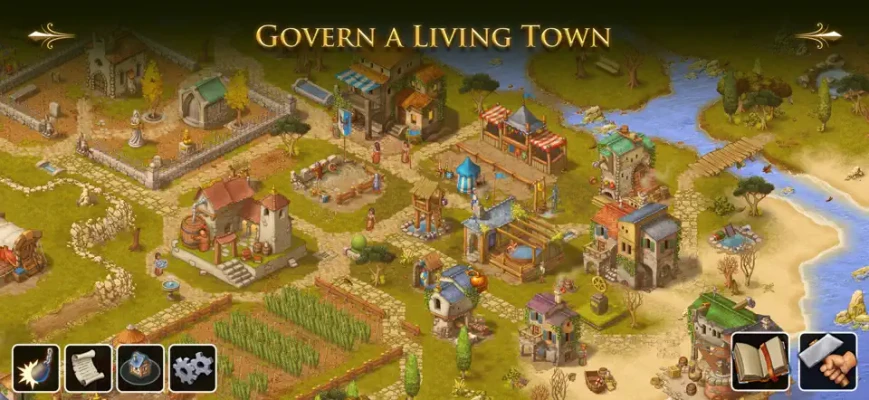
The main attraction is that your settlement behaves like a living medieval community rather than a collection of static buildings.
Townies have daily routines and require housing, food, entertainment and other goods. Their happiness affects the productivity and economic health of your settlement. That creates a constant balancing act between expansion and keeping the population supplied.
The game also has a surprisingly deep production system. Raw materials can move through several stages before becoming valuable finished products. For example, resources gathered from the environment can eventually become processed materials, food or luxury goods.
That means the smartest expansion isn't necessarily the fastest expansion.
Core Gameplay Features
Medieval City Building
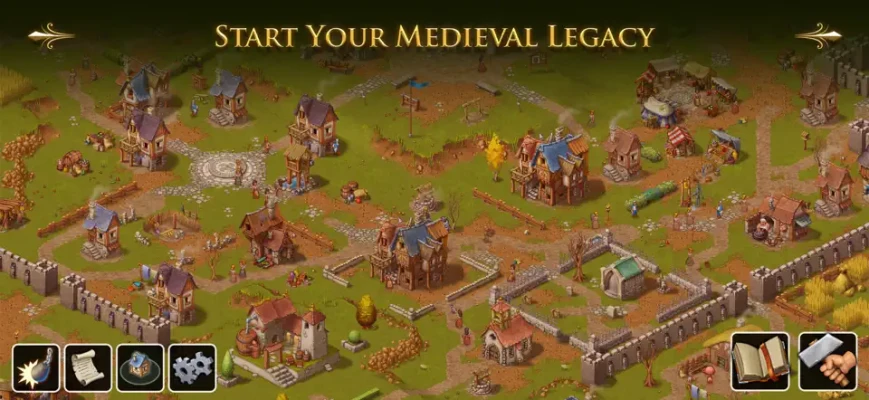
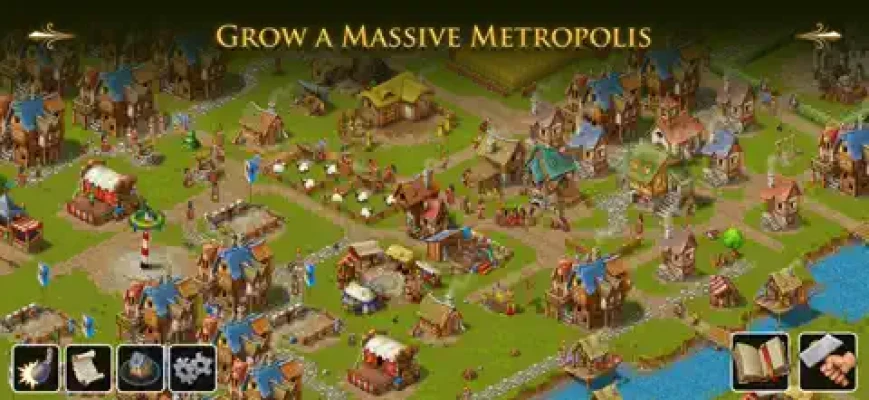
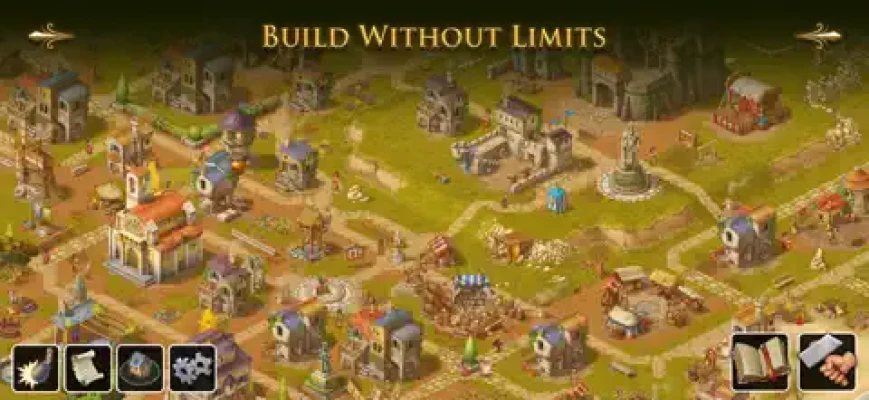
Start with a modest settlement and gradually develop it into a large medieval metropolis.
You'll need to decide where to place:
- Houses
- Farms
- Production buildings
- Resource gathering sites
- Marketplaces
- Taverns
- Parks
- Defensive structures
- Storage and economic buildings
- Government and prestige structures
- Decorative buildings
Good city planning becomes increasingly important as the population grows.
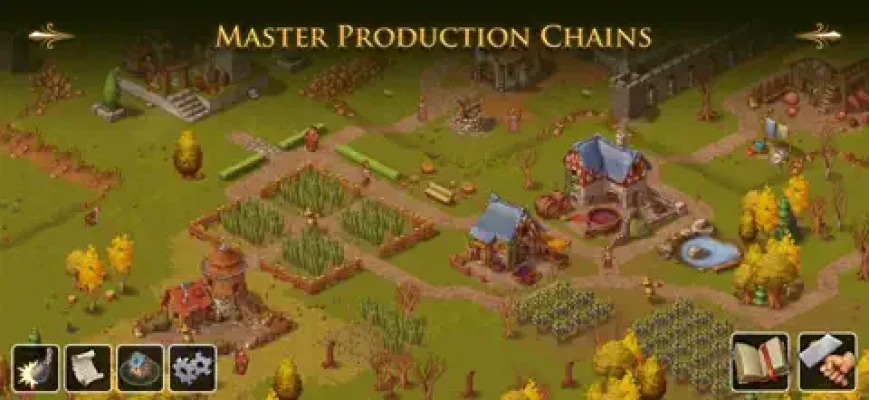
Deep Production Chains
Production is one of the most important systems in the game.
Instead of simply building a factory and receiving a finished product, you often need to establish a chain connecting multiple workers and buildings.
For example:
Raw resource → Processing → Finished product → Storage/Market → Town consumption or trade
The game includes production ranging from basic food and materials to more advanced goods such as jewelry.
This makes resource planning much more important than simply accumulating money.
Food and Resource Management
Food should be one of your first priorities.
A growing population consumes more resources, so production must increase alongside population.
A common mistake is building too many houses before establishing enough food production.
Instead:
- Establish reliable food production.
- Make sure workers can reach their workplaces efficiently.
- Create sufficient storage.
- Monitor consumption.
- Expand housing gradually.
- Increase production before shortages appear.
A kingdom that expands faster than its food supply will eventually run into problems.
Seasons and Weather
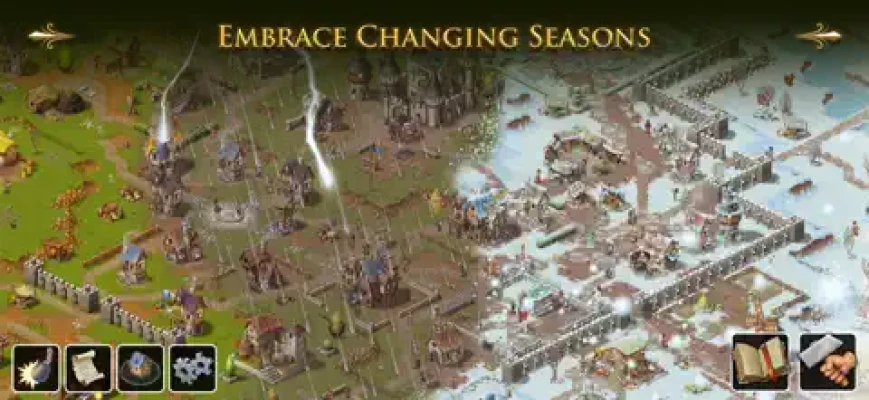
Seasons aren't simply visual changes.
The game expects you to adapt your economy to changing conditions. The current description specifically mentions increased water requirements during summer and preparing wood for winter.
Winter preparation
Before winter arrives:
- Build up important resource reserves.
- Avoid spending all your wood.
- Check heating-related requirements.
- Make sure production remains staffed.
- Keep essential buildings supplied.
Summer preparation
Before hotter periods:
- Monitor water requirements.
- Maintain sufficient food reserves.
- Watch resource consumption.
- Avoid allowing your economy to become dependent on a single production source.
The best time to prepare for a seasonal shortage is before it begins.
Happiness and Townie Needs
A successful kingdom isn't only about money.
Your inhabitants have different needs, and keeping them satisfied helps maintain a productive workforce and stronger tax income.
Pay attention to:
- Housing
- Food
- Drinks
- Recreation
- Entertainment
- Employment
- Access to useful services
- Availability of required goods
If your population becomes unhappy, expanding even further can make the problem worse.
Better approach: stabilize the existing town first, then expand.
Money, Taxes and Trading
Your economy has several interconnected sources of income.
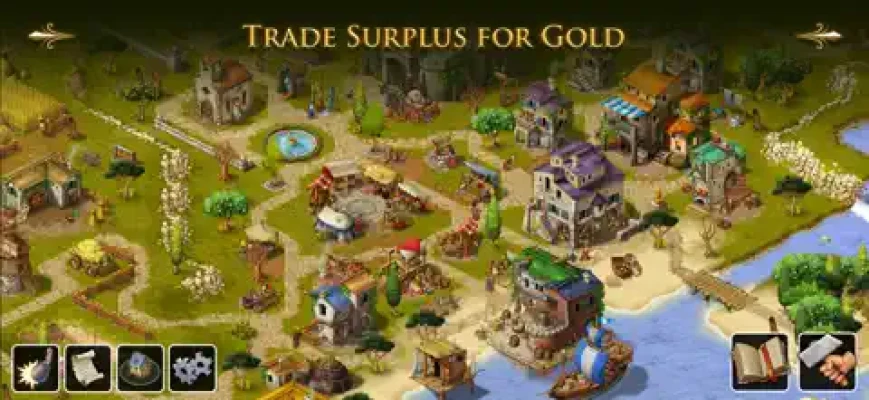
Taxes help fund construction and expansion, while the marketplace gives you another way to turn surplus resources into money.
A useful economic cycle is:
Production → Surplus → Marketplace → Gold → Expansion → More Production
However, don't sell everything simply because you can.
Keep enough resources for:
- Population consumption
- Production chains
- Seasonal preparation
- Emergency situations
- Construction
- Military defense
A large treasury doesn't help much if your town suddenly runs out of essential supplies.
Research and Town Progression
One of the game's most useful long-term systems is its progression and research system.
Your actions generate experience, which can be used to unlock improvements that remain useful across maps. Examples include improvements to taxation and defensive structures.
This creates an important long-term strategy:
Don't think only about your current settlement. Think about making future settlements easier to manage.
Research that improves the efficiency of your economy can have a compounding effect as your town becomes larger.
Full Strategy Guide
1. Don't Build Too Quickly
The biggest beginner mistake in a city-building game is treating available land as a reason to expand.
Every new building can create additional demands.
More houses mean:
More residents → More food → More jobs → More resources → More services → More infrastructure
Expand when your economy can support the next population increase.
2. Build Around Your Economy
Don't place buildings randomly.
Think about transportation and worker efficiency.
Resource-producing buildings should have sensible access to the rest of your production network.
A useful planning principle is:
Resource area → Processing → Storage → Distribution/Market
This reduces unnecessary movement and makes the settlement easier to manage.
3. Establish Basic Production First
Your early economy should focus on essential resources rather than luxury production.
Prioritize:
- Basic building materials
- Food
- Essential resources
- Housing
- Basic services
- Economic expansion
- Advanced production
- Luxury goods
Once your foundation is stable, start investing in more complicated production chains.
4. Watch Your Workforce
A building is only useful if it has the workers and resources necessary to operate.
Before constructing another production building, check whether you actually have enough available workers.
A beautiful town filled with inactive buildings isn't an efficient town.
5. Keep Production Chains Balanced
Suppose one building produces a resource that another building consumes.
If the first building produces 100 units while the second requires 150, you'll eventually experience a shortage.
If the first produces 500 while demand is only 100, you're tying up workers and resources in unnecessary production.
Therefore, regularly check:
Input → Processing → Output → Consumption
Try to identify the bottleneck rather than simply building more of everything.
6. Build a Resource Reserve
Don't operate your kingdom at exactly the amount required for current consumption.
Maintain emergency reserves.
Your reserve can protect you against:
- Seasonal changes
- Fires
- Disease
- Drought
- Production interruptions
- Sudden population growth
- Bandit attacks
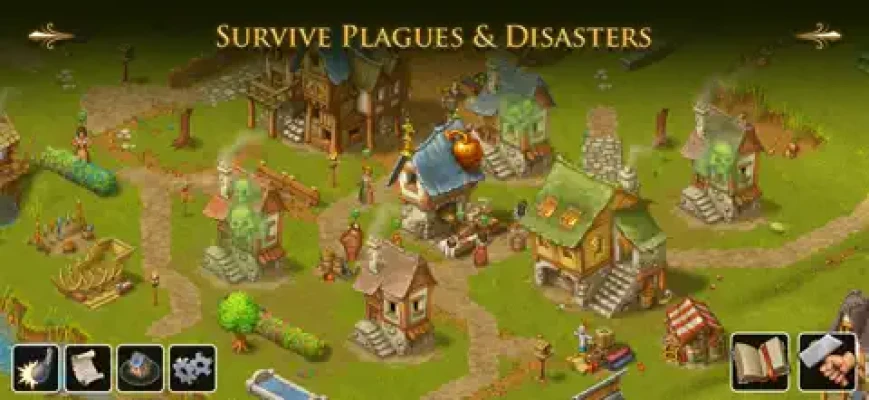
The game specifically includes disasters such as fires, plague and drought, so emergency preparation is an important part of long-term survival.
7. Prepare Before Disasters
When your town becomes established, don't spend every available coin on expansion.
Keep resources available for emergencies.
If a disaster occurs, you want to be able to respond immediately rather than waiting for your economy to recover.
This is especially important when playing difficult scenarios.
8. Don't Ignore Fire Protection
Fire can turn a prosperous settlement into a crisis surprisingly quickly.
Make sure your defensive and emergency infrastructure keeps pace with the size of the town.
If you have limited resources, prioritize protecting the core of the settlement and essential production.
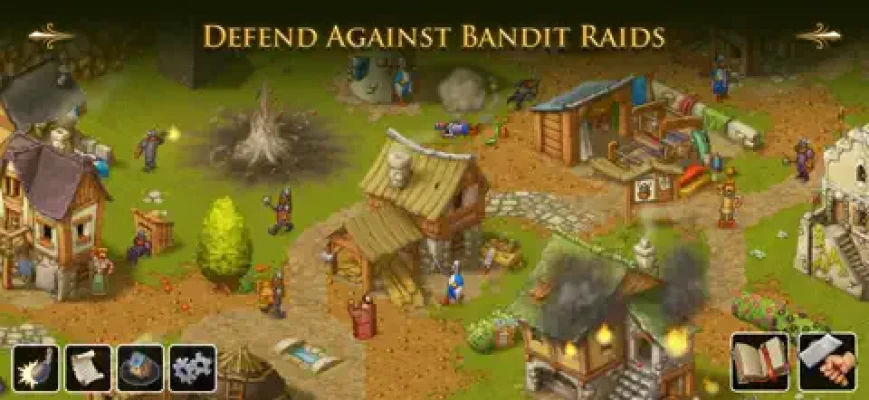
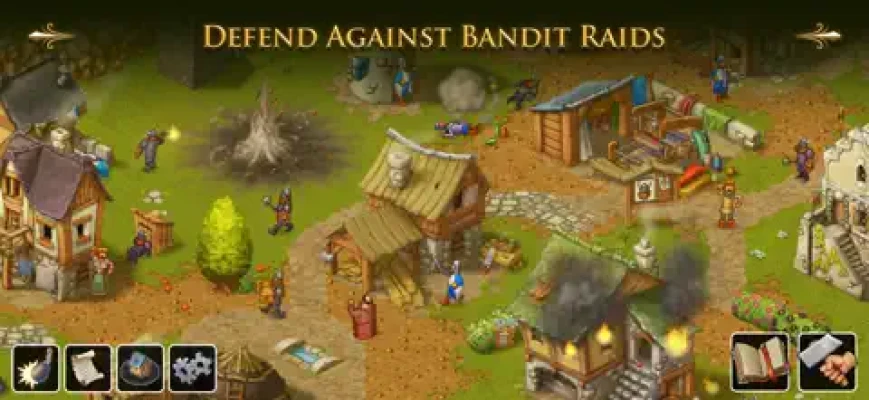
9. Defend Against Bandits
The military system is optional, but once bandit threats become relevant, ignoring defense can put your economy at risk.
The game includes watchtowers, barracks and soldiers as part of its defensive system.
A good defensive strategy is:
- Protect valuable production areas.
- Protect important population centers.
- Place defensive structures where they can cover important areas.
- Keep military production supplied.
- Don't overspend on defense before the economy can support it.
10. Use the Marketplace Intelligently
The marketplace isn't just a way to make quick money.
Use it to balance your economy.
If you have a large surplus of a resource that your population doesn't need immediately, selling some of it can help finance expansion.
But avoid selling resources that are likely to become important during the next season.
11. Follow Scenario Objectives
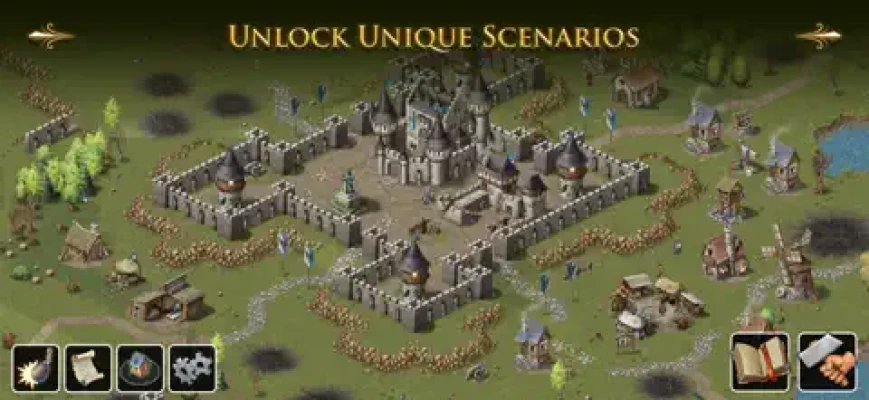
Scenario maps often give you specific targets rather than simply asking you to build the biggest possible city.
Don't spend all your resources pursuing unnecessary upgrades.
Read the objectives carefully and organize your economy around them.
This can save substantial time.
The broader game includes dozens of handcrafted scenarios and Sandbox-style building, while the established version lists 26 scenarios and 24 endless maps.
12. Use Sandbox to Experiment
Sandbox mode is ideal for learning city design without being completely focused on objectives.
Use it to experiment with:
- Production layouts
- Housing districts
- Resource chains
- Market placement
- Defense
- Decorative layouts
- Population growth
Once you understand how your economy behaves, scenario objectives become easier to manage.
13. Spend Prestige Carefully
Prestige can be particularly useful when construction needs to happen immediately.
A beginner guide notes that Prestige can be used to rush or instantly complete construction and becomes especially valuable when responding to time-sensitive situations such as emergencies.
Don't waste it simply because you have some available.
Save it for situations where time matters.
14. Think in Economic Loops
Instead of looking at individual buildings, look at complete economic loops.
For example:
Workers → Raw materials → Production → Finished goods → Population → Happiness → Taxes → Expansion
Improving one part of this loop can improve the entire kingdom.
This is the key concept behind becoming good at Townsmen.
15. Upgrade Before Expanding Again
If your existing town has:
- Resource shortages
- Unhappy residents
- Understaffed buildings
- Weak defense
- Poor food production
- Seasonal shortages
then expanding isn't necessarily the solution.
Fix the bottleneck first.
A smaller efficient kingdom can often support expansion much better than a large inefficient one.
Best Beginner Build Order
A practical early-game approach is:
Phase 1 — Establish the Settlement
Build your basic housing and resource infrastructure.
Focus on:
- Wood
- Food
- Basic materials
- Workers
- Storage
- Essential services
Phase 2 — Stabilize
Check whether your population has enough food and whether production is keeping pace with demand.
Don't rush into advanced production.
Phase 3 — Expand
Add more houses and jobs only after the economy has enough capacity.
Phase 4 — Develop
Introduce more sophisticated production chains and economic buildings.
Phase 5 — Protect
Strengthen emergency services and defenses as the town becomes more valuable.
Phase 6 — Optimize
Use research to improve the efficiency of the kingdom and prepare for larger challenges.
Advanced Town Planning Tips
Create Functional Districts
Instead of scattering everything randomly, consider creating logical areas.
For example:
Residential District
Houses + recreation + essential services
Industrial District
Production + storage + resource processing
Agricultural District
Farms + food-related production
Commercial District
Marketplace + trade-related buildings
Defense District
Barracks + watchtowers + military infrastructure
This makes your city easier to expand and manage.
Keep Essential Buildings Accessible
Worker travel matters.
When a production chain requires workers to constantly travel long distances, the entire system can become less efficient.
Keep related buildings reasonably close together while still leaving room for future expansion.
Common Beginner Mistakes
❌ Building too many houses
More residents aren't automatically better.
❌ Selling all surplus resources
Today's surplus could become tomorrow's shortage.
❌ Ignoring seasonal preparation
The economy changes as conditions change.
❌ Expanding without enough workers
A large city with understaffed production isn't productive.
❌ Ignoring happiness
Unhappy residents can weaken your economy.
❌ Building defense too late
Waiting until a raid becomes a crisis is expensive.
❌ Overproducing one resource
A production chain is only efficient when supply and demand are balanced.
❌ Spending emergency resources on unnecessary upgrades
Keep a reserve for unexpected problems.
Townsmen Strategy: The Most Important Rule
Always expand your economy before expanding your population.
If your town grows first and your economy catches up later, you'll constantly fight shortages.
If your economy grows first, the next population increase becomes much easier to support.
Think:
Resources → Production → Services → Happiness → Taxes → Expansion
rather than:
Houses → Houses → Houses → Panic
Game Atmosphere
One of the game's strongest characteristics is its relaxed medieval atmosphere.
The settlement feels alive because Townies move through the town, work their jobs, consume goods and follow daily routines. The changing seasons and weather also give the settlement a sense of progression rather than making the environment feel static.
The result is a city-builder that can be played strategically but also enjoyed as a slower-paced medieval settlement simulator.
Honest Gameplay Assessment
Townsmen: A Kingdom Rebuilt is particularly focused on economic management rather than constant combat.
The challenge comes from keeping multiple systems working together:
- Population
- Employment
- Production
- Resources
- Happiness
- Taxation
- Trade
- Research
- Seasons
- Disasters
- Defense
That interconnected design is what gives the game its depth.
One important point for the current iOS version is that the App Store describes it as a free starting experience with in-app purchases: the tutorial and a limited trial of the first scenario and Sandbox map are available before additional content.
So a page about the game should clearly distinguish the current mobile access model from older descriptions of the game as a premium release.
Tips for Winning Difficult Scenarios
When a scenario becomes difficult, use this checklist:
1. Check food first.
A food shortage can destabilize the entire town.
2. Find the bottleneck.
Determine which resource is actually limiting your production.
3. Check workers.
Make sure important buildings aren't sitting idle.
4. Review happiness.
Don't solve an economic problem while creating a population problem.
5. Check storage.
You may already be producing enough but lack adequate reserves.
6. Prepare for the season.
Don't wait until the weather changes.
7. Protect valuable infrastructure.
Defense becomes increasingly important as the town becomes larger.
8. Stop unnecessary construction.
Focus on the objective instead of building everything available.
9. Use Prestige strategically.
Save it for emergencies and time-sensitive construction.
10. Expand only after stabilization.
A stable economy is the foundation for completing difficult objectives.
Frequently Asked Questions
Is Townsmen: A Kingdom Rebuilt a city-building game?
Yes. It combines medieval city building with economic management, production chains, population management, research and optional military defense.
How many buildings are in Townsmen?
The game features more than 150 town and production buildings.
Does Townsmen have Sandbox mode?
Yes. Sandbox is one of the game's major modes, allowing players to develop a settlement without being restricted to a traditional scenario objective.
Does Townsmen have combat?
It has an optional military system involving soldiers and bandits. The primary focus, however, remains city building and economic management.
Are there disasters?
Yes. Fires, plague, drought and other disasters can create major problems for an unprepared settlement.
Does the game have seasons?
Yes. Seasonal changes affect resource management and the needs of your population.
Is Townsmen: A Kingdom Rebuilt available on iPhone and iPad?
Yes. The current App Store listing supports both iPhone and iPad.
Is Townsmen: A Kingdom Rebuilt free on iOS?
The current iOS listing is free with in-app purchases. It provides the tutorial and limited trial content, with additional scenarios and Sandbox content available through the game's purchase system.
Rate the Game
User Reviews













Popular Games


















 Android
 iOS
iOS Windows
 Xbox
Xbox