



Latest Version
August 12, 2025
AI GAMES FZ LLC
Strategy
iOS
0
Report a Problem
More About :game
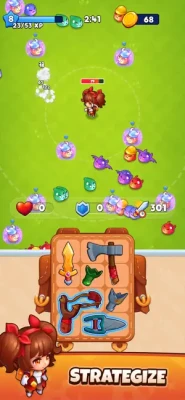
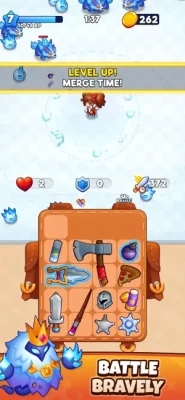
The backpack has limited space, so every slot matters. A strong setup is therefore about more than collecting the most items possible. You need to create a useful combination of weapons and equipment without filling the bag with low-value items.
The App Store describes levels as a series of shorter stages, allowing players to experiment with weapons and battle strategies while collecting clothing, weapons, monsters, and other items.
What Is Brawl Bag - Merge & Fight?
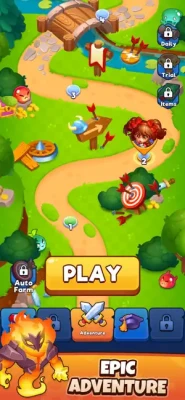
Brawl Bag is a fantasy-themed backpack battle game from AI Games FZ. It is listed in the Strategy category and is available on iPhone and iPad, with Apple Silicon Mac compatibility listed as well.
The central gameplay loop is:
Collect Items → Organize Your Backpack → Merge Matching Gear → Increase Power → Fight Monsters → Earn More Progress → Improve Your Build
The interesting part is that your backpack is effectively your battle preparation screen.
Once the battle begins, your warrior handles the fighting, so the decisions you make before combat have a major impact on the outcome.
How to Play Brawl Bag
Each stage gives you items that can be placed into your backpack.
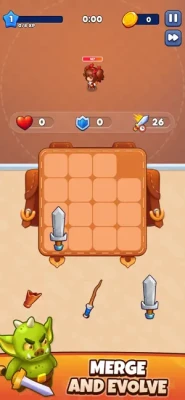
Similar items can be combined to create more powerful equipment. However, backpack capacity is limited, meaning you cannot simply keep everything.
The basic strategy is therefore:
- Identify useful equipment.
- Place it efficiently.
- Merge matching items.
- Avoid filling valuable slots with weak items.
- Prepare your strongest possible setup.
- Enter the monster fight.
- Repeat the process for the next stage.
The App Store specifically emphasizes the limited backpack space and the importance of choosing and merging items carefully.
Full Strategy Guide
1. Backpack Space Is Your Most Important Resource
The easiest mistake is treating every empty slot as an invitation to collect another item.
Don't.
A backpack filled with random low-level equipment can actually be weaker than a smaller backpack containing carefully merged gear.
Before adding an item, ask:
Will this item improve my current build, help create a merge, or provide useful battle power?
If the answer is no, don't prioritize it.
2. Think About the Next Merge
Don't only consider an item's current strength.
Think about what happens when you obtain another copy.
For example:
Item A + Item A = stronger Item B
If you already have one copy of an item and another is likely to appear, preserving space for that combination can be more valuable than filling the slot with something unrelated.
This is the core principle behind efficient backpack management.
3. Merge With a Purpose
Merging should improve the overall quality of your backpack.
Avoid combining items simply because the game allows you to do so.
Before merging, consider:
- What will the upgraded item replace?
- Will the merge free a backpack slot?
- Is the resulting equipment actually useful?
- Will another merge become possible afterward?
- Does this improve your overall combat setup?
A good merge should ideally accomplish more than one thing.
4. Keep Your Backpack Organized
Organization matters because you need to recognize potential combinations quickly.
Try to group similar items together.
For example:
Weapon + matching weapon
rather than scattering identical pieces across the entire bag.
A clean layout makes it easier to spot merge opportunities and prevents valuable equipment from being overlooked.
5. Don't Fill the Backpack Too Early
Leaving a little flexibility can be extremely valuable.
If every slot is occupied, a potentially powerful new item may become difficult to accommodate.
A crowded backpack also makes it harder to perform useful merges.
Think of empty space as future potential, not wasted space.
6. Prioritize Quality Over Quantity
Ten weak pieces of equipment are not necessarily better than several well-merged items.
The goal is to build a compact, powerful loadout.
Whenever possible, turn multiple weaker items into stronger ones and use the resulting free space to improve the rest of the backpack.
7. Pay Attention to Your Existing Build
Don't select each item independently.
Look at the backpack as a complete system.
If your current equipment already has a strong offensive setup, adding another unrelated item may not help as much as upgrading what you already have.
Try to create a coherent build instead of a collection of unrelated equipment.
Weapon Strategy
Weapons are one of the most important parts of your backpack because they directly influence your ability to defeat monsters.
The game allows you to collect and merge weapons, with stronger combinations helping your warrior deal with increasingly difficult encounters.
Don't Automatically Keep Every Weapon
A new weapon may look attractive, but your backpack has limited space.
Compare it against your current equipment.
Ask:
- Is it stronger?
- Can it be merged?
- Does it complement my current setup?
- Is it worth the backpack slot?
- Could that space be used for a more useful combination?
This prevents your backpack from becoming cluttered.
Upgrade Existing Weapons
If you have a reliable weapon combination already working well, strengthening it can be more efficient than constantly replacing it.
A powerful upgraded item also has the advantage of freeing space when multiple weaker pieces are merged.
Clothing and Equipment
Brawl Bag also includes collectible clothing and other equipment that contribute to progression and customization.
Don't think of clothing purely as cosmetic.
The game's description notes that collectible outfits can aid your warrior in battle.
Whenever you obtain a new piece of equipment, compare it with your current setup instead of assuming newer automatically means better.
Monster Battle Strategy
The combat itself is relatively hands-off compared with traditional action games.
That means the important battle decisions happen before the fight.
Your preparation should focus on:
- Strong equipment
- Efficient merges
- Useful backpack organization
- Avoiding wasted slots
- Maintaining a balanced setup
The game describes each level as containing several smaller stages, allowing you to adjust your battle strategy and experiment with different weapons.
This means a failed battle should be treated as information.
Don't simply repeat the same backpack arrangement.
Change something.
How to Prepare for Difficult Stages
When a stage starts becoming difficult, use this process.
Step 1: Review Your Backpack
Look for weak items that can be merged or replaced.
Step 2: Identify Your Best Equipment
Determine which items are carrying your current build.
Step 3: Search for Merge Opportunities
Combine matching equipment whenever the resulting upgrade is meaningful.
Step 4: Remove Unnecessary Clutter
Free space for better items.
Step 5: Rebuild Before the Next Fight
Don't enter another difficult battle with exactly the same setup if the previous one failed.
The Best Backpack Management Routine
Use this routine after every meaningful item collection:
Check → Group → Merge → Compare → Free Space → Rebuild
Check
Look at everything you've acquired.
Group
Put matching or related items together.
Merge
Combine useful duplicates.
Compare
Check whether the upgraded item is better than something already equipped.
Free Space
Remove or replace weak equipment when appropriate.
Rebuild
Arrange your strongest setup before the next fight.
How to Deal With Limited Backpack Space
Limited capacity is one of the defining mechanics of Brawl Bag.
When the backpack becomes crowded, don't panic.
Use a priority system.
Highest Priority
Powerful upgraded equipment.
High Priority
Items that can immediately create a useful merge.
Medium Priority
Strong individual items that fit your build.
Lower Priority
Duplicates that don't yet create a meaningful upgrade.
Lowest Priority
Weak items that occupy space without contributing to your strategy.
This simple hierarchy makes backpack decisions much easier.
When Should You Merge?
There are two major reasons to merge.
Reason 1: Increase Power
The obvious benefit is stronger equipment.
Reason 2: Create Space
This is just as important.
If several low-level items can become one stronger item, merging them effectively converts multiple backpack slots into one.
That can give you room to accept better equipment later.
Don't Merge Blindly
Although merging is central to the game, you shouldn't automatically combine everything.
Sometimes keeping separate items temporarily can give you more flexibility.
Before merging, ask:
Will I need these individual pieces for another useful combination?
If not, merging is generally more attractive.
Early-Game Strategy
During the early stages, concentrate on learning the backpack system rather than trying to build a perfect setup.
Your priorities should be:
- Learn which items can merge.
- Keep the backpack organized.
- Avoid unnecessary clutter.
- Upgrade equipment regularly.
- Experiment with different combinations.
- Learn which equipment provides the best results.
Early stages are the ideal time to experiment because the cost of making a suboptimal decision is relatively low.
Mid-Game Strategy
Once the game becomes more demanding, stop treating each stage independently.
Start developing a preferred build.
Ask:
- Which equipment combinations consistently perform well?
- Which items take up too much space?
- Which merges provide the biggest improvements?
- Which equipment should be upgraded first?
At this point, efficient backpack management becomes more important than simply collecting everything.
Late-Game Strategy
Later stages reward careful preparation.
Don't rush into a difficult battle.
Spend time optimizing the backpack first.
Your late-game priorities should be:
Strong equipment → useful merges → efficient space → reliable build → battle
A few well-planned upgrades can make a much bigger difference than several random additions.
How to Beat Difficult Monsters
When a monster repeatedly defeats you, don't simply increase the number of items in your backpack.
Instead, look for weaknesses in your setup.
Problem: Not Enough Damage
Improve your offensive equipment and look for useful merges.
Problem: Poor Overall Build
Replace low-value items and create a more coherent setup.
Problem: Backpack Too Full
Merge weaker pieces and remove unnecessary clutter.
Problem: Progress Stops Suddenly
Review your equipment rather than assuming you simply need more items.
The objective is to make every backpack slot work for you.
Efficient Progression Tips
Don't Chase Every Collectible
The game contains numerous collectible categories, including weapons, clothing and monsters.
Collecting is enjoyable, but progression should remain your priority.
Keep Strong Items
Don't replace useful equipment simply because something new appeared.
Compare them first.
Merge Regularly
Don't allow the backpack to become a warehouse of low-level duplicates.
Experiment
Different equipment combinations can produce different results.
If a build isn't working, change it.
Common Mistakes to Avoid
Filling Every Slot
More equipment does not automatically mean more power.
Ignoring Merges
Unmerged duplicates can consume valuable space.
Keeping Weak Items Too Long
A weak item can become expensive in terms of opportunity cost when your backpack is crowded.
Repeating a Failed Build
If you lose several times with the same setup, something needs to change.
Merging Without Thinking
A merge should improve your overall situation, not merely make one item look stronger.
Ignoring Clothing and Equipment
Some collectible gear can contribute to your battle performance.
Wasting Valuable Backpack Space
Every slot should have a reason to exist.
Best Beginner Build Philosophy
For new players, simplicity is usually better than trying to create an overly complicated combination.
Use this basic philosophy:
Reliable weapon + useful equipment + frequent merges + open space
Once you understand how the item system behaves, experiment with more specialized setups.
Tips for Faster Level Progression
Brawl Bag's levels are designed to be relatively short, with several smaller stages making up each level.
To progress efficiently:
- Prepare before every battle.
- Merge whenever it meaningfully improves your build.
- Don't waste slots on weak items.
- Learn from failed fights.
- Keep your backpack organized.
- Experiment when a stage becomes difficult.
- Avoid repeating exactly the same strategy after a loss.
The fastest progression isn't necessarily the one with the most items. It's the one with the best use of limited space.
Gems and In-App Purchases
The App Store lists several optional purchases, including gems, new heroes, a fast-forward option, and a package described as removing ads.
If you're playing without spending money, don't assume that every premium purchase is necessary for progression.
Use the free progression systems first and save premium currency for situations where it provides meaningful value.
Ads and Monetization
The game contains advertising and optional purchases. The App Store specifically lists a No ADS purchase, Fast Forward, gems, and New Hero purchases.
Player feedback is mixed on this subject. One App Store reviewer complained about the number of ads and the distinction between mandatory and optional advertising, while Google Play feedback has also mentioned frequent advertisements.
That is worth mentioning because the core game may appeal to players who enjoy backpack merging, but the monetization experience may be less appealing to players who strongly dislike ads.
Bugs and Player Feedback
The App Store currently shows a 4.7/5 rating from 371 ratings, so overall reception is positive.
However, there are some notable complaints.
One player reported becoming stuck around level 77 because the final monsters would not approach, preventing completion of the stage. Another reviewer criticized the advertising model.
Google Play reviews also mention issues involving backpack expansion, advertisements, and difficulty spikes.
These reports don't mean every player will encounter the same problems, but they're useful context when evaluating the game.
Graphics and Atmosphere
Brawl Bag uses a colorful fantasy style with cute monsters, humorous characters, weapons, outfits, and lighthearted music and sound effects.
The presentation intentionally contrasts the fighting mechanic with a friendly visual style. The App Store describes the characters and enemies as cute and emphasizes the relaxed nature of the experience.
This makes the game feel more like a casual strategy puzzle than a serious combat RPG.
Controls
The controls are deliberately simple.
The primary interaction is managing the backpack:
- Add items
- Move equipment
- Combine matching items
- Prepare your loadout
- Enter battle
Once combat starts, your warrior handles the actual fighting.
This makes preparation much more important than reflexes.
Progression and Collectibles
Brawl Bag gives players several things to collect:
- Weapons
- Clothing
- Monsters
- Equipment
- Heroes
- Other upgrade-related items
The game's collection system provides a reason to continue playing beyond individual battles.
For completion-minded players, keeping track of equipment and monster encounters can become part of the long-term appeal.
Current Version and Requirements
The US App Store lists the game as requiring iOS 15.0 or later on iPhone and iPad. It is also listed as compatible with macOS 12.0 or later on a Mac with an Apple M1 chip or later, as well as Apple Vision. The listed app size is approximately 591 MB.
The latest version shown in the App Store history is 1.7.0, dated October 29, 2025, with previous releases focused on bug fixes and gameplay improvements.
Pros and Cons
Pros
- Easy-to-understand backpack battle system
- Satisfying item merging
- Limited-space mechanic adds strategy
- Short battle stages
- Lots of collectible equipment
- Weapons can be combined into stronger items
- Clothing and heroes add progression
- Cute fantasy presentation
- Simple controls
- Positive overall App Store rating
Cons
- Backpack capacity can become restrictive
- Some players report difficulty spikes
- Advertising is a significant criticism
- Some players have reported progression or stage issues
- Gameplay may feel basic if you want a deeper RPG system
- Monetization includes gems and optional purchases
Is Brawl Bag - Merge & Fight Worth Playing?
If you enjoy backpack games, merge mechanics, casual strategy, equipment management, and automatic battles, Brawl Bag is an easy game to pick up.
Its strongest mechanic is the limited backpack. The game takes a simple concept—combine matching equipment—and adds an important question:
What deserves the limited space in your bag?
That creates most of the strategic decision-making.
The game is less suitable for players looking for complex real-time combat because the battle itself is largely automatic. The real gameplay happens during preparation.
Player feedback is generally positive overall, but complaints about advertising, progression issues, and some difficulty spikes are worth considering.
Final Verdict
Brawl Bag - Merge & Fight is a straightforward but enjoyable backpack strategy game where smart inventory management matters more than fast reflexes.
The best players won't simply collect everything. They'll create space, merge intelligently, prioritize useful equipment, and build a backpack where every slot contributes to the next battle.
Best for: Backpack-game fans, merge-game players, casual strategy fans, equipment collectors, and players who enjoy short monster battles.
Gameplay style: Backpack Strategy • Merge • Auto Battle • Fantasy • Monster Fighting • Equipment Management
Frequently Asked Questions
What is Brawl Bag - Merge & Fight?
Brawl Bag is a casual strategy game combining backpack management, item merging, equipment collection, and monster battles.
How does the backpack system work?
You collect equipment and place it inside a limited-space backpack. Similar items can be combined to create stronger equipment.
Why is backpack space important?
The backpack has limited capacity, so filling it with weak or unnecessary items can prevent you from taking better equipment later.
Can you merge weapons?
Yes. Similar weapons and other collectibles can be combined to create more powerful items.
Does the warrior fight automatically?
The game's design focuses on preparing the backpack and loadout, after which the warrior handles the monster battle.
What should I do when I lose a battle?
Review your backpack rather than simply repeating the same setup. Look for better merges, remove weak equipment, and reorganize your available space.
Does Brawl Bag have clothing?
Yes. Clothing and other collectible items are part of the game's progression and can aid the warrior in battle.
Does Brawl Bag have different heroes?
The App Store lists New Hero purchases among its optional in-app purchases.
Is Brawl Bag free?
Yes. The game is free to download but contains advertising and optional in-app purchases.
Does Brawl Bag have ads?
Yes. Advertising is listed on the App Store, alongside an optional No ADS purchase.
What is the best beginner strategy?
Keep the backpack organized, prioritize useful equipment, merge matching items, avoid filling every slot, and learn from each battle rather than collecting everything indiscriminately.
How do I manage a full backpack?
Merge duplicates, replace weak items, prioritize your strongest equipment, and keep some flexibility for future items.
What is the most important strategy in Brawl Bag?
Make every backpack slot count. Strong equipment is useful, but efficient space management and smart merging are what turn individual items into a strong battle setup.
Rate the Game
User Reviews









Popular Games



















 Android
 iOS
 Windows
 Xbox