
Latest Version
November 24, 2025
KAYAC Inc.
Puzzle
iOS
0
Report a Problem
More About :game
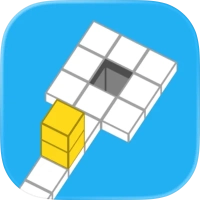
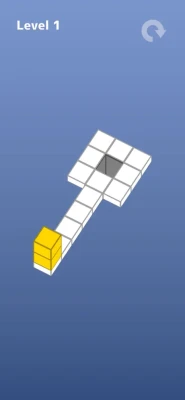
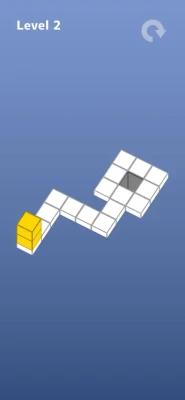
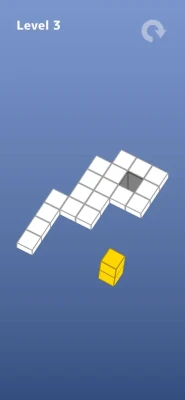
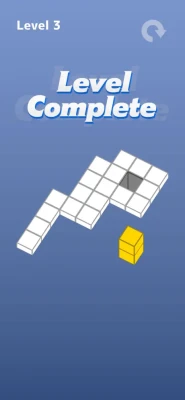
Block Escape: 3D Block Puzzle is a logic-based mobile puzzle game from KAYAC Inc. The central idea is straightforward: move a rectangular block around a 3D-style tiled level and get it into the designated hole.
The clever part is that the block does not simply slide across the board. Each swipe causes it to tip over, changing its position and orientation. When the block is lying down, it occupies two tiles, so every movement needs to be considered carefully.
That simple mechanic creates puzzles that reward planning rather than speed.
Gameplay Overview
The gameplay revolves around movement, positioning, and spatial reasoning.
You begin with a block placed somewhere on the puzzle board. Your objective is to determine a sequence of swipes that eventually places the block correctly over the hole.
A single move can completely change the block's orientation, meaning that an apparently useful direction may actually make the next move more difficult.
The basic gameplay loop is:
- Examine the puzzle layout.
- Identify the target hole.
- Plan a possible route.
- Swipe to roll the block.
- Check its new position and orientation.
- Continue adjusting your route.
- Fit the block into the hole.
- Clear the stage.
The result is a minimalist puzzle experience that is easy to understand but can require considerable thought.
How the Block Movement Works
Understanding the block's movement is the key to mastering the game.
When you swipe, the block tips over and rolls in that direction. This means the block's orientation changes after each move.
When it is standing upright, it occupies a smaller footprint. When it falls onto its side, it stretches across two tiles.
This creates an important strategic question:
Where will the block finish after my next swipe?
Thinking one move ahead is useful, but more complicated puzzles require you to consider several moves in sequence.
Controls & Interface Guide
The control system is intentionally simple.
Swipe Left
Roll the block toward the left.
Swipe Right
Roll the block toward the right.
Swipe Up
Move the block upward through the level.
Swipe Down
Roll it in the opposite direction.
There are no complicated button combinations to memorize. The challenge comes from understanding how each swipe changes the block's position and orientation.
Puzzle Mechanics
The game's main puzzle mechanic combines grid movement with block orientation.
This creates several things to consider:
- The block's current position
- Its current orientation
- Available tiles
- The target hole
- The route toward the target
- The effect of the next swipe
- Whether the block will finish standing or lying down
A move that looks harmless can place the block in an awkward position, forcing you to rethink the route.
Game Theme & Atmosphere
Block Escape uses a clean, minimalist puzzle presentation that keeps the focus on the board and the block.
There is no need for a complicated story or elaborate world-building. The game's appeal comes from watching the block move through the puzzle and finding the correct solution.
The uncluttered presentation works particularly well for a logic game because players can concentrate on the puzzle itself.
Game Story
Block Escape: 3D Block Puzzle does not rely on a traditional story campaign.
Instead, the game is built around its puzzle mechanics. Each stage presents a new movement problem, and the player's goal is to solve it by guiding the block to the hole.
This approach makes the game suitable for players who prefer gameplay-focused experiences rather than dialogue-heavy adventures.
Main Features
🧩 3D Block Puzzles
Navigate three-dimensional puzzle layouts using a rolling block.
↔️ Simple Swipe Controls
Move the block by swiping in the direction you want it to roll.
🧠 Logic-Based Gameplay
Think ahead and determine the correct sequence of movements.
📐 Spatial Reasoning
The block's orientation and two-tile footprint make positioning important.
🎯 Clear Stage Objective
Reach the hole with the block to complete the puzzle.
📱 Easy to Learn
The controls can be understood almost immediately.
🔄 Increasing Challenge
Player feedback indicates that the game can become more difficult after the early stages.
How to Play Block Escape: 3D Block Puzzle
Start by looking at the entire board before making your first move.
Identify the location of the hole and consider the route required to reach it.
Then use swipes to roll the block.
The most important thing is not simply reaching the correct area. You need to get the block's orientation and final position right so that it fits into the target.
If a move doesn't work, reconsider the sequence rather than repeatedly making random swipes.
Beginner's Guide
If you're new to block escape puzzles, begin by learning how the block behaves after each swipe.
Tip 1: Look Before You Move
Don't immediately swipe. Take a moment to study the board.
Tip 2: Watch the Orientation
Remember that the block changes orientation after rolling.
Tip 3: Think One or Two Moves Ahead
Try to predict where the block will finish after each movement.
Tip 4: Avoid Random Swipes
Experimentation can help, but deliberate movement is much more effective.
Tip 5: Learn From Failed Attempts
A failed move can reveal which part of your planned route doesn't work.
Advanced Puzzle Strategy
Once the basic controls become familiar, start treating every puzzle as a sequence of positions rather than individual swipes.
Plan Backward From the Hole
Instead of asking where you should move first, consider what position the block needs to reach immediately before entering the hole.
Track the Block's Orientation
Knowing whether the block will be standing or lying down after a move can prevent unnecessary mistakes.
Avoid Dead-End Positions
Some positions may leave you with very few useful movement options.
Build a Movement Sequence
Try to mentally map out several swipes before executing them.
Use Controlled Trial and Error
When you don't know the solution, make one deliberate move at a time and learn from the result.
Game Difficulty
The game's basic mechanic is easy to understand, but the actual puzzle-solving can become considerably more challenging.
One current App Store reviewer described the game as initially easy but said that it becomes harder later.
This makes the difficulty curve one of the game's more important characteristics: beginners can quickly understand the objective while experienced puzzle players have opportunities to think more deeply about movement sequences.
Level Progression
The game is structured around individual puzzle stages.
Each stage asks you to guide the block into the correct hole. As players progress, the challenge comes from increasingly demanding layouts and the need for more carefully planned movements.
Some player reviews have raised concerns about repeated layouts after reaching later levels, so replay variety may depend on the version and progression available to the player.
Characters
There are no traditional playable characters or character classes.
The block itself is the central gameplay object, and the entire puzzle experience revolves around controlling its movement and orientation.
Items & Power-Ups
The current App Store description does not identify a conventional inventory, equipment system, or collection of power-ups.
The game's challenge is based primarily on movement and puzzle solving rather than character upgrades or item management.
Game Modes
The core experience is the stage-based 3D block puzzle mode.
The current App Store listing does not advertise traditional multiplayer, competitive modes, or an extensive collection of separate gameplay modes.
Tips for Solving Difficult Levels
When a puzzle becomes difficult, try this approach:
1. Stop moving randomly.
Start analyzing the board.
2. Locate the hole.
Determine what orientation the block needs when it reaches the target.
3. Work backward.
Think about the position immediately before the final move.
4. Test one route.
Follow a deliberate sequence.
5. Restart your thinking, not just the level.
If the route fails, identify the exact move that caused the problem.
6. Keep track of successful positions.
A good intermediate position can become the foundation for the rest of the solution.
Hints & Assistance
Hints have been mentioned in player feedback. Some players appreciate help when stuck, while others feel that automatic hints can reduce the satisfaction of solving a puzzle independently.
This highlights an interesting part of Block Escape: for many players, the real reward comes from discovering the solution themselves.
Player Experience
The current U.S. App Store listing shows 4.6 out of 5 stars from 529 ratings, indicating generally positive reception.
Reviews commonly highlight the game's enjoyable puzzle concept, while some players criticize the frequency of advertisements or mention repeated levels and hints.
This makes Block Escape particularly appealing to people who enjoy classic block-rolling puzzles and logic challenges.
Pros & Cons
Pros
- Simple swipe controls
- Easy-to-understand objective
- Clever block movement mechanic
- Encourages logical thinking
- Requires spatial awareness
- Minimalist presentation
- Suitable for short puzzle sessions
- Positive overall App Store rating
Cons
- Advertising can interrupt the experience
- Some players report too many hints
- Some users have noticed repeated puzzles
- Long-term variety may be limited for advanced players
Block Escape: 3D Block Puzzle for Puzzle Fans
If you enjoy block puzzles, brain games, logic games, spatial puzzles, rolling block games, and classic tile-based challenges, Block Escape has an immediately recognizable appeal.
The game takes a familiar grid and adds an important twist: the block has physical orientation.
That means the solution isn't simply about finding an open path. You need to understand how the block moves and how much space it occupies after each roll.
What Makes Block Escape Different?
The strongest feature of Block Escape is its simplicity.
There are only a few basic actions, but those actions create surprisingly interesting situations.
You don't need complicated controls, dozens of characters, or elaborate progression systems. The puzzle itself is the challenge.
That makes the game a good example of easy-to-learn, harder-to-master mobile puzzle design.
Technical Details
| Information | Details |
|---|---|
| Game | Block Escape: 3D Block Puzzle |
| Developer | KAYAC Inc. |
| Genre | Casual |
| Price | Free |
| Platforms | iPhone, iPad |
| Size | 98.8 MB |
| iPhone | iOS 13.0 or later |
| iPad | iPadOS 13.0 or later |
| Mac | macOS 11.0+, Apple M1 or later |
| Apple Vision | visionOS 1.0 or later |
| Languages | English, French, German, Japanese, Korean, Simplified Chinese, Spanish, Traditional Chinese |
| Advertising | Yes |
| Age Rating | 18+ |
These details come from the current App Store listing.
Updates & Version History
The App Store currently lists version 039, released September 26, 2025, with the update described as bug fixes. Earlier versions also contain bug-fix updates, including versions 038, 035, 032, 023, 020, and 019.
Accessibility
Apple's current listing says that the developer has not yet indicated specific accessibility features for the app.
Expert Rating
| Category | Rating |
|---|---|
| Puzzle Design | 8.5/10 |
| Controls | 9/10 |
| Originality | 8/10 |
| Presentation | 8/10 |
| Challenge | 8.5/10 |
| Replay Value | 7.5/10 |
| Overall | 8.3/10 |
The game's greatest strength is its ability to create meaningful puzzles from a very small set of mechanics.
Who Should Play Block Escape?
Block Escape: 3D Block Puzzle is a good choice for players who enjoy:
- 3D puzzle games
- Block puzzle games
- Brain teasers
- Logic games
- Spatial reasoning games
- Rolling block puzzles
- Casual mobile games
- Offline-style puzzle experiences
- Short gaming sessions
- Classic puzzle mechanics with a modern mobile interface
YouTube Gameplay
Frequently Asked Questions
What is Block Escape: 3D Block Puzzle?
Block Escape is a 3D casual puzzle game where you roll a rectangular block across a tiled board and guide it into a designated hole.
How do you play Block Escape?
Swipe in the direction you want the block to roll. Each swipe changes its position and orientation, so you need to plan your movements carefully.
Is Block Escape: 3D Block Puzzle free?
Yes. The App Store lists the game as free and indicates that it contains advertising.
Is Block Escape available on iPhone?
Yes. It supports iPhone devices running iOS 13.0 or later.
Is Block Escape available on iPad?
Yes. The game is designed for iPad and requires iPadOS 13.0 or later.
Is Block Escape difficult?
The basic controls are simple, but the puzzles require increasingly careful planning. Player feedback indicates that the game can become harder beyond the early stages.
Does the block occupy two tiles?
Yes. When the block tips over, it takes up two tiles as it moves, which is an important part of the puzzle mechanics.
Does Block Escape have hints?
Player reviews mention hints appearing during gameplay. Opinions differ: some players find them helpful, while others prefer solving the puzzles without assistance.
Who developed Block Escape: 3D Block Puzzle?
The game was developed by KAYAC Inc.
Final Verdict
Block Escape: 3D Block Puzzle takes a remarkably simple concept and turns it into a thoughtful mobile brain game. The swipe controls are straightforward, but the block's changing orientation means that every movement matters.
Its strongest appeal is the combination of 3D block movement, spatial reasoning, simple controls, and increasingly challenging puzzle solving.
While advertisements, hints, and reports of repeated levels are legitimate criticisms raised by some players, the overall App Store reception remains positive, with a current 4.6/5 rating from 529 U.S. ratings.
For anyone searching for a 3D block puzzle game, brain teaser for iPhone, rolling block puzzle, logic game, or casual puzzle challenge, Block Escape: 3D Block Puzzle is an easy game to understand and a surprisingly thoughtful one to master.
Rate the Game
User Reviews









Popular Games

















 Android
 iOS
iOS Windows
 Xbox
Xbox