

Latest Version
November 05, 2026
COTTONGAME Network Technology Co., Ltd.
Puzzle
iOS
0
Report a Problem
More About :game
Game Overview
The Son of Art is a creative adventure puzzle game developed by COTTONGAME Network Technology Co., Ltd. It offers a distinctive experience that combines artistic inspiration with point-and-click exploration and mystery-solving gameplay.
Instead of following a traditional fantasy or action storyline, the game invites players to explore environments shaped by different artistic movements. Each world introduces its own atmosphere, visual language, objects, and challenges.
Players take on the role of an art seeker who travels through imaginative environments, examines mysterious details, collects objects, and discovers solutions to environmental puzzles.
The experience revolves around observation, experimentation, logical thinking, and understanding the relationship between objects and their surroundings.
The four featured artistic worlds provide different experiences, making the adventure feel varied rather than repetitive.
Main Features of The Son of Art
Four Artistic Worlds
Explore imaginative environments inspired by Picasso, Malevich, Magritte, and Mondrian. Each world introduces a different visual identity and a collection of puzzles connected to its artistic style.
Creative Puzzle Challenges
Solve environmental puzzles using observation, logical reasoning, object interactions, and experimentation. Challenges encourage players to look beyond obvious solutions.
Hidden Objects and Secrets
Search detailed locations for missing objects, useful tools, mysterious symbols, and clues that help unlock new areas.
Interactive Environments
Examine objects, investigate unusual details, and discover how different elements of the environment work together.
Artistic Storytelling
Learn about the inspiration and creative ideas behind different artistic movements through imaginative locations and interactive experiences.
Beautiful Visual Presentation
Enjoy colorful environments, abstract compositions, unusual objects, and distinctive artistic themes.
Relaxing Adventure Gameplay
The game focuses on exploration and thoughtful puzzle-solving instead of fast reactions or competitive action.
The Four Artistic Worlds
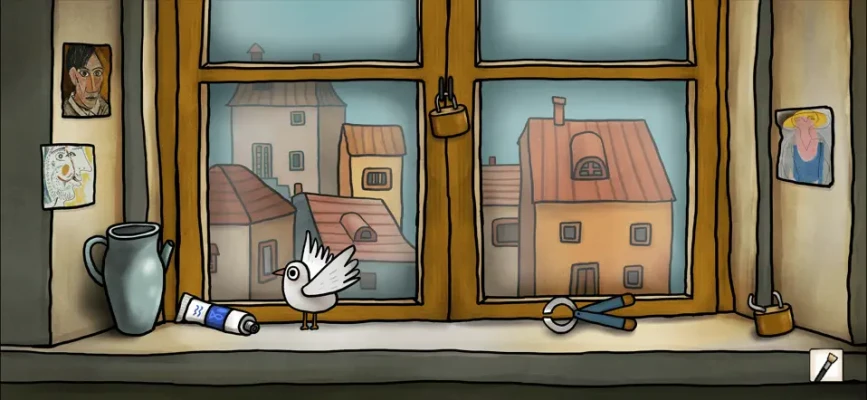
Picasso's Cubist Fantasy
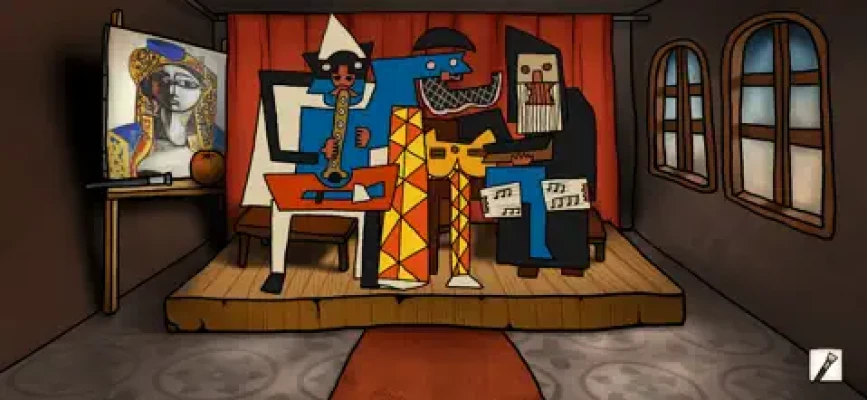
The first major artistic journey takes players into a world inspired by Pablo Picasso and Cubism.
This environment features Spanish-inspired scenery, colorful compositions, unusual shapes, and visual arrangements that challenge traditional perspectives.
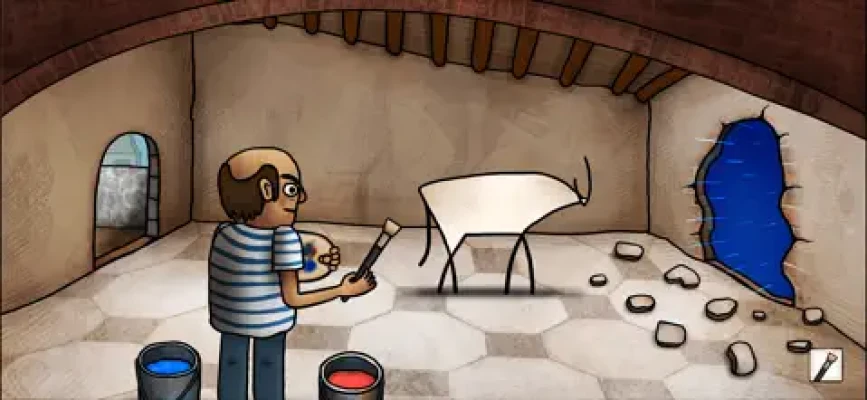
Players explore different locations, search for missing brushes, investigate hidden symbols, and interact with objects connected to the surrounding environment.
The puzzles encourage players to examine their surroundings carefully. Details that initially appear decorative may contain important clues.
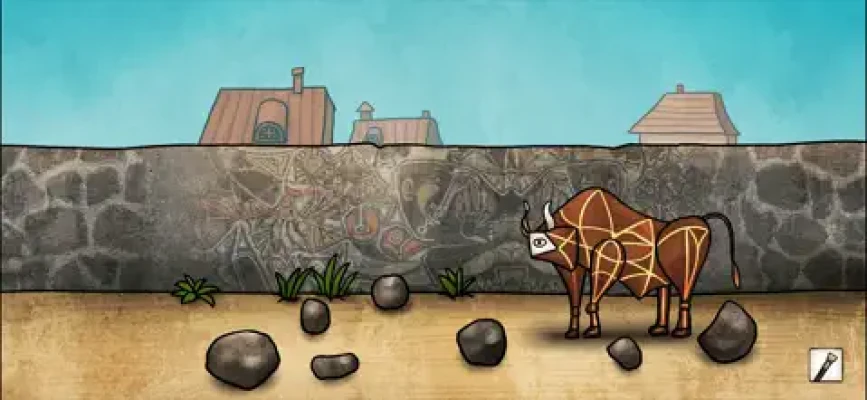
The bull is another important element of this artistic journey, representing the powerful imagery and expressive energy associated with Picasso's creative world.
Main challenges include:
Searching for missing artistic tools.
Discovering hidden symbols.
Examining unusual objects.
Understanding visual clues.
Solving environmental puzzles.
Following the clues that reveal the story behind the artwork.
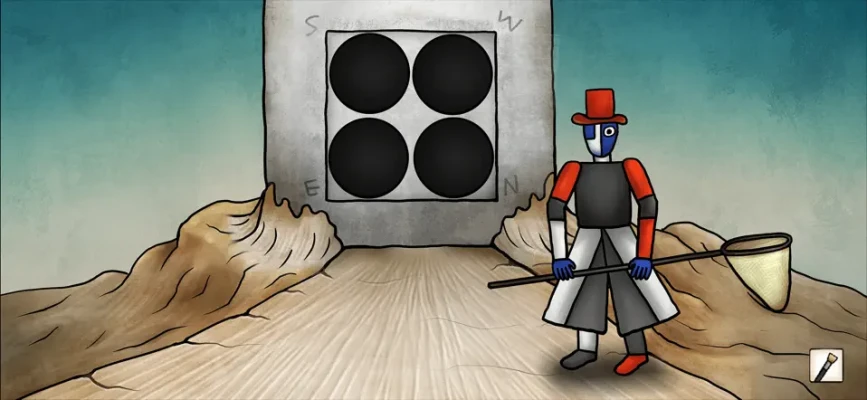
Malevich's Suprematist Purity
The Malevich-inspired world introduces a more abstract puzzle experience based on geometric shapes and minimalist artistic expression.
Squares, circles, crosses, and other geometric elements become important parts of the environment.
Unlike conventional puzzle locations, this world encourages players to think about shapes, positions, patterns, and relationships between objects.
The geometric labyrinth contains challenges that require patience and careful observation.
Players must investigate the surroundings, discover useful items, and solve puzzles that eventually lead toward the sanctuary of Suprematism.
Main challenges include:
Understanding geometric arrangements.
Recognizing patterns and shapes.
Exploring abstract environments.
Finding objects needed for progression.
Solving puzzles connected to the sun.
Discovering the secrets of the geometric sanctuary.
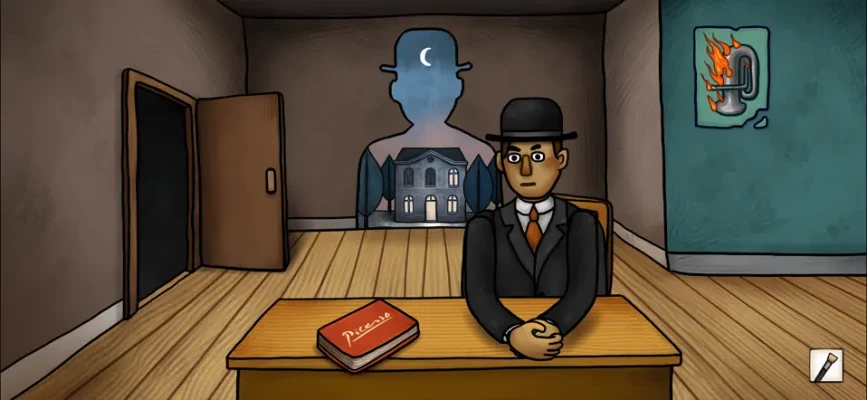
Magritte's Surreal Dream
The Magritte-inspired world takes the adventure into a mysterious environment where ordinary objects behave in unexpected ways.
Inspired by René Magritte's surrealist imagination, this section combines familiar objects with strange situations and unusual visual relationships.
Apples may float, familiar objects may appear in unfamiliar places, and seemingly impossible arrangements can contain important clues.
Players need to question what they see and experiment with objects rather than relying entirely on conventional logic.
This world rewards creative thinking and encourages players to consider alternative interpretations of the environment.
Main challenges include:
Investigating surreal environments.
Examining familiar objects in unusual situations.
Finding hidden clues.
Understanding unexpected object relationships.
Solving imaginative environmental puzzles.
Discovering the secrets behind dreams and reality.
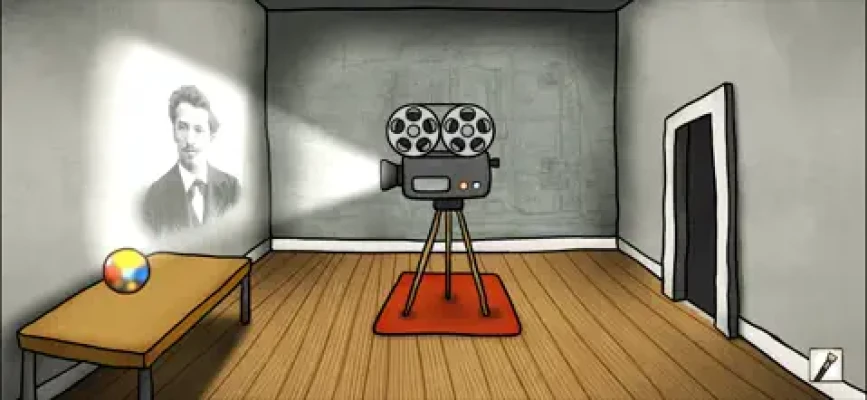
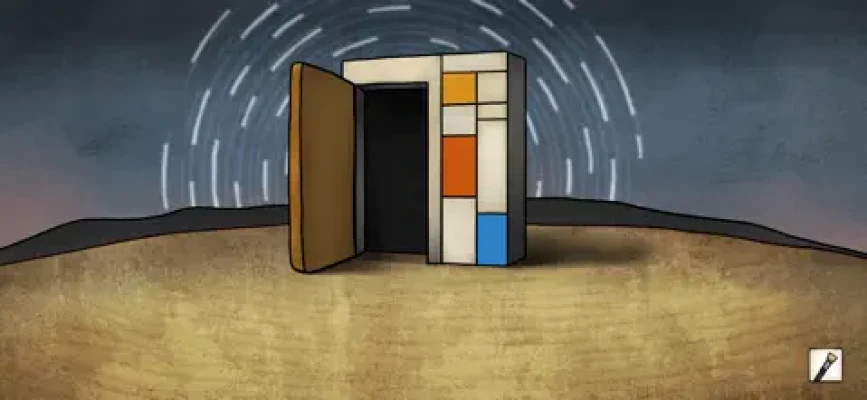
Mondrian's Rhythmic Order
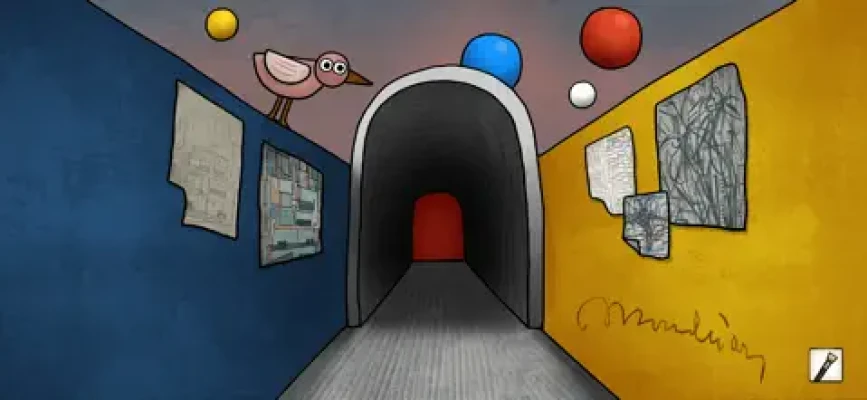
The Mondrian-inspired world introduces a different atmosphere built around geometric balance, color, and visual organization.
Red, yellow, and blue play important roles in the environment, alongside straight lines, geometric sections, and carefully arranged compositions.
Players explore puzzles that focus on color relationships, patterns, and the positioning of different elements.
The challenges encourage logical thinking and careful examination of the surrounding artwork.
This world offers an opportunity to experience the relationship between simplicity, structure, and visual harmony.
Main challenges include:
Recognizing color patterns.
Understanding geometric arrangements.
Examining lines and shapes.
Solving color-based puzzles.
Discovering hidden visual relationships.
Restoring balance and harmony to the environment.
Gameplay Mechanics and Important Systems
Exploration
Exploration is one of the most important parts of The Son of Art. Players move through artistic environments, inspect different areas, and search for objects that may become useful later.
Not every important item is immediately visible. Some objects blend into the environment or appear to be ordinary decorative elements.
Careful examination is essential for discovering everything needed to progress.
Object Collection
Collecting objects is a central part of the puzzle-solving experience.
Players can discover tools, missing components, and other useful items throughout the different environments.
An object found in one location may become useful in another, so it is important to remember where items were collected and consider their possible purposes.
Item Interaction and Combination
Some challenges require players to use collected objects in specific locations or combine useful items.
The relationship between objects is not always obvious.
Experimenting with possible combinations can reveal new solutions, but players should pay attention to contextual clues before using important tools.
Environmental Puzzles
Environmental puzzles require players to understand how different elements interact.
These challenges may involve geometric patterns, hidden symbols, color arrangements, or objects that must be placed in the correct locations.
The solution often becomes clearer after examining the surrounding environment.
Hidden Clues
Visual details provide important information about the next objective.
Players should inspect paintings, unusual shapes, background objects, symbols, and interactive elements.
A seemingly minor detail may provide the missing information needed to complete a difficult puzzle.
Complete Strategy Guide for The Son of Art
Understanding the Game Before Starting
The best way to approach The Son of Art is to treat every environment as an interactive puzzle rather than simply a beautiful background.
Take time to examine each location before moving forward. Look at the objects, colors, shapes, and symbols that appear throughout the scene.
Do not rush through the early sections. Learning how the game presents clues and handles object interactions makes later challenges easier.
Pay attention to anything that looks different from its surroundings because unusual details may indicate something important.
How to Explore Every Location Efficiently
Start by examining the entire visible environment.
Check the edges of the screen, corners, shelves, paintings, furniture, and unusual decorations. Important objects may be placed away from the main focus of the scene.
After examining the location, interact with anything that appears suspicious or potentially useful.
If an object does not respond immediately, remember its position and return after collecting additional items.
Some puzzles become easier when players understand the purpose of objects discovered in other areas.
Managing Your Inventory
Your inventory is one of your most important resources.
Every collected object should be treated as a potential solution to a future challenge.
Avoid using items randomly. Instead, examine the environment and identify locations where an object might logically belong.
When you encounter a locked mechanism or an incomplete puzzle, review your inventory before searching the entire area again.
If the game allows item combinations, experiment with objects that appear to share a purpose or belong to the same puzzle.
Solving Picasso's Puzzles
Picasso's artistic world rewards attention to visual details and unusual compositions.
When exploring this section, concentrate on finding missing objects and examining the relationship between the environment's symbols and interactive elements.
Search carefully for brushes and other useful artistic tools.
Do not assume that every colorful object is merely decoration. Some details may provide clues or become part of a puzzle solution.
When encountering a challenge involving the bull or other important environmental elements, investigate the surrounding objects first.
A useful approach is to identify what appears incomplete, locate the objects associated with it, and then test the available interactions.
Solving Malevich's Geometric Puzzles
Malevich's world requires a different approach because its environments rely heavily on abstract shapes.
Focus on the arrangement of squares, circles, crosses, and other geometric elements.
Look for repeated patterns and differences between objects. These visual relationships may indicate how a puzzle should be solved.
When a challenge involves positioning or matching shapes, examine the entire arrangement before interacting with individual components.
Important tip: Keep track of collected tools and check that an item has been used successfully before leaving a location.
The blue beetle and insect-net interaction has previously been associated with a progression issue reported by players. The developer listed a fix in version 1.0.11. If this interaction does not work correctly, check that the game is updated and retry the puzzle.
Solving Magritte's Surreal Puzzles
Magritte's world encourages players to think creatively.
Conventional expectations are not always useful in surreal environments. Objects may appear in unexpected places, and their relationships may be more important than their ordinary functions.
When facing a difficult puzzle, ask yourself what makes the scene unusual.
Look for objects that do not belong together, unusual positioning, floating elements, and visual contradictions.
Try interacting with objects that appear connected through their placement or appearance.
If the obvious solution does not work, consider another interpretation of the scene.
Solving Mondrian's Color and Pattern Puzzles
Mondrian's world is best approached through careful visual analysis.
Pay attention to the three primary colors: red, yellow, and blue.
Observe how lines divide the environment into different sections and how shapes are arranged within those spaces.
When solving a color-related challenge, look for repeated arrangements and patterns that may indicate the correct order.
Avoid making random changes. Instead, compare the different elements and identify which parts of the composition appear incomplete or out of balance.
Patience is especially important in puzzles that depend on precise arrangements.
Advanced Tips and Tricks
Examine Every Interactive Object
Never assume that an object is unimportant because it looks ordinary. Examine anything that stands out or appears connected to a puzzle.
Remember Where You Found Items
Keeping track of item locations makes it easier to revisit earlier areas when a new puzzle requires a previously collected object.
Think About the Artistic Theme
Each world follows a different artistic concept. Understanding the theme can provide helpful clues when a puzzle seems confusing.
Avoid Random Item Usage
Before using an important tool, look for a logical connection between the object and the target.
Revisit Previous Locations
A location that initially seemed unimportant may become useful after collecting another object or discovering a new clue.
Look for Patterns
Colors, shapes, symbols, and repeated visual elements may reveal the correct solution to environmental puzzles.
Update the Game
If an interaction fails unexpectedly, check whether an update is available. A previous update specifically addressed the Malevich blue beetle issue and improved item synthesis.
Take Your Time
The game is designed around observation and creative thinking. Rushing through scenes can cause you to overlook important objects and clues.
Common Mistakes to Avoid
Ignoring Small Details
One of the biggest mistakes is focusing only on large objects. Small symbols, unusual decorations, and background details can be equally important.
Forgetting Collected Items
Players sometimes continue searching for new objects even though the required solution is already available in their inventory.
Review collected items whenever you encounter a challenge that seems impossible.
Using Tools Without Checking the Target
Some objects have specific purposes. Using them in unrelated locations may waste time or create confusion.
Assuming Every Puzzle Uses Conventional Logic
The surreal and abstract sections require players to think differently. A solution that works in a traditional adventure game may not work in these artistic environments.
Overlooking Previous Areas
Do not hesitate to revisit an earlier location. New discoveries can change the way you understand an existing puzzle.
Is The Son of Art Worth Playing?
The Son of Art is an interesting choice for players who enjoy artistic environments, hidden-object adventures, point-and-click exploration, and creative puzzle challenges.
Its biggest attraction is the way it connects gameplay with four recognizable artistic movements. Instead of presenting ordinary puzzle rooms, it creates environments inspired by different approaches to art and visual expression.
Picasso's world offers expressive imagery, Malevich introduces geometric abstraction, Magritte brings surreal imagination, and Mondrian focuses on color and structure.
The result is an adventure that combines entertainment with an introduction to different artistic ideas.
Players who prefer fast-paced action or competitive gameplay may find its slower approach less appealing. However, those who enjoy exploring mysterious locations and solving puzzles at their own pace will find plenty to appreciate.
Game Information
Category | Details |
|---|---|
Game Title | The Son of Art |
Developer | COTTONGAME Network Technology Co., Ltd. |
Genre | Puzzle, Adventure |
Gameplay | Exploration, Point-and-Click, Hidden Objects |
Main Theme | Art and Creative Expression |
Featured Artists | Picasso, Malevich, Magritte, Mondrian |
Game Mode | Single-player |
Platform | iPhone and iPad |
Minimum iOS Version | iOS 16.0 |
Age Rating | 4+ |
Languages | English and 9 additional languages |
Business Model | Free with In-App Purchases |
Frequently Asked Questions
What is The Son of Art?
The Son of Art is an artistic puzzle adventure where players explore imaginative environments inspired by four twentieth-century artists. It combines hidden-object challenges, environmental puzzles, and interactive exploration.
Who developed The Son of Art?
The game was developed by COTTONGAME Network Technology Co., Ltd.
Which artists are featured in The Son of Art?
The game features artistic worlds inspired by Pablo Picasso, Kazimir Malevich, René Magritte, and Piet Mondrian.
What type of gameplay does The Son of Art offer?
It offers puzzle-solving, point-and-click exploration, hidden-object discovery, item collection, and environmental interactions.
Is The Son of Art free to play?
The game is available as a free download with optional in-app purchases for additional content.
Can beginners enjoy The Son of Art?
Yes. Its exploration-based gameplay makes it accessible to players who enjoy taking their time, examining environments, and solving puzzles through observation.
Does The Son of Art require fast reactions?
No. The main focus is on exploration, logical thinking, finding objects, and understanding puzzle mechanics rather than fast reflexes.
How can players solve difficult puzzles?
Examine the environment carefully, collect useful objects, look for visual patterns, review your inventory, and consider how the artistic theme connects to the puzzle.
What makes The Son of Art different from other puzzle games?
Its main distinction is the combination of adventure gameplay with artistic worlds inspired by four major twentieth-century artists. Each world offers a different visual atmosphere and puzzle-solving approach.
Final Verdict
The Son of Art delivers a distinctive puzzle adventure that celebrates creativity, imagination, and artistic expression. Its four themed worlds provide different environments to explore, from Picasso's colorful Cubist fantasy to Malevich's geometric universe, Magritte's surreal dream, and Mondrian's balanced compositions.
With hidden objects, interactive puzzles, mysterious locations, and thoughtful exploration, the game offers an experience that goes beyond traditional puzzle-solving.
Whether you enjoy discovering hidden details, experimenting with unusual objects, or exploring artistic environments, The Son of Art provides an engaging journey through the relationship between art and interactive entertainment.
Rate the Game
User Reviews







Popular Games



















 Android
 iOS
 Windows
 Xbox