


Latest Version
November 05, 2026
CO AND EF LIMITED
Puzzle
iOS
0
Report a Problem
More About :game
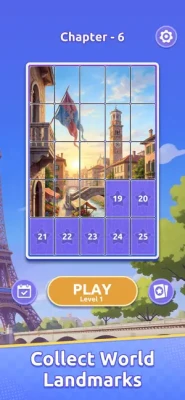
Featuring colorful high-definition cartoon artwork, satisfying completion animations, daily challenges, and collectible postcards from destinations around the world, Jigslip offers an enjoyable experience for casual puzzle fans. Each chapter contains 25 levels, and completing the full chapter allows players to assemble a postcard featuring a famous landmark.
Whether you want a short puzzle break or a longer challenge, Jigslip provides a calm and rewarding way to enjoy picture-based gameplay.
What Is Jigslip?
Jigslip is a jigsaw solitaire puzzle game developed by CO AND EF LIMITED. It combines two familiar puzzle concepts into one experience: the visual satisfaction of completing pictures and the accessible mechanics of card-style solitaire.
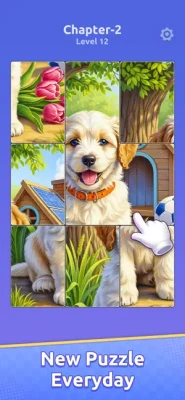
The game is designed around simple interactions. Players swipe, slide, and match puzzle pieces as they work toward completing each picture. This approach gives traditional jigsaw gameplay a different rhythm, making it feel more like a smooth sequence of decisions than a conventional puzzle with many loose pieces.
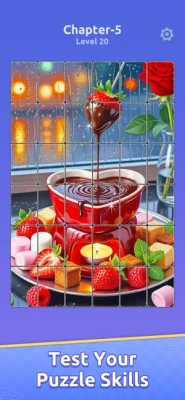
The visual presentation is another important part of the experience. Jigslip features high-definition cartoon-style artwork, and completing a puzzle unlocks an animation that celebrates the finished picture.
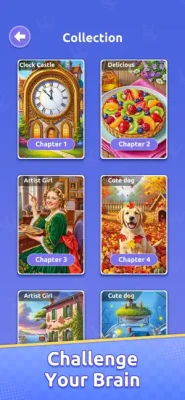
Beyond the regular levels, players can take on more difficult Daily Challenges and collect postcard fragments as they progress through chapters. Every completed level contributes to a larger collection, giving players an additional reason to continue.
Main Features of Jigslip
Jigsaw Puzzles With Solitaire Mechanics
Jigslip combines picture-based puzzles with card-inspired interactions. Players swipe, slide, and match pieces to complete images through a simple and accessible system.
This combination gives the game a fresh identity compared with traditional jigsaw titles. It is designed to make puzzle-solving feel smooth, straightforward, and satisfying.
Beautiful HD Cartoon Artwork
The game features colorful, high-definition cartoon-style pictures. These illustrations provide the visual foundation for each puzzle and make completed images enjoyable to look at.
The artwork also gives players a reason to finish each level beyond simply progressing to the next challenge.
Animated Puzzle Completion Rewards
Completing a puzzle unlocks a special animation that celebrates the finished artwork.
These visual rewards make each successful level feel more satisfying and provide a pleasant sense of accomplishment.
Daily Challenges
Jigslip offers Daily Challenge stages that provide a more demanding experience than the regular puzzles.
These challenges are designed to test players' puzzle-solving abilities and offer exclusive rewards. They provide a useful change of pace for anyone who wants something more challenging after completing standard levels.
Global Postcard Collection
One of Jigslip's distinctive features is its postcard collection system.
The game is organized into chapters containing 25 levels each. Every completed level earns a postcard fragment. Once all 25 levels in a chapter are completed, players can assemble a postcard featuring a landmark from somewhere around the world.
This gives the game a sense of travel and discovery while providing a long-term progression goal.
Relaxing and Casual Gameplay
Jigslip is designed for relaxation and mindfulness. Its simple interactions and colorful artwork make it suitable for short breaks, quiet evenings, and casual gaming sessions.
Players can enjoy the puzzles without needing to rush through every level.
Accessible Mobile Experience
The swipe-based controls make the gameplay easy to approach. Players can focus on recognizing pieces and making useful moves rather than learning complicated control systems.
Gameplay Mechanics and Controls
Understanding the basic gameplay is the first step toward completing puzzles more efficiently.
Swiping: Swipe across the screen to interact with puzzle pieces and make moves.
Sliding: Move pieces through the available puzzle layout to work toward completing the picture.
Matching: Recognize the pieces or positions that belong together and make selections that help progress toward the finished image.
Progression: Complete the required puzzle to advance through the chapter and earn the corresponding postcard fragment.
Daily Challenges: Enter the daily challenge stages when you want a more demanding puzzle experience and an opportunity to earn additional rewards.
The most important skill is learning to recognize useful moves instead of interacting with pieces randomly.
How to Play Jigslip
Start by opening a regular puzzle level. Examine the picture and the available pieces before making your first move.
Use the swipe and slide controls to interact with the puzzle. Pay attention to the artwork, the position of the pieces, and the possible connections between different parts of the image.
Make moves carefully and observe how each action changes the puzzle. Try to recognize which pieces contribute to the overall picture and focus on progressing toward a complete image.
Continue working through the puzzle until it is finished. Completing a level rewards you with a postcard fragment and moves you closer to completing the chapter.
After finishing the regular stages, you can explore Daily Challenges for a more demanding experience.
As you progress, collect all 25 fragments in a chapter to assemble its landmark postcard.
Complete Strategy Guide for Jigslip
Study the Picture Before Making Moves
Before interacting with the puzzle, take a moment to examine the artwork.
Look for recognizable objects, colors, characters, backgrounds, and other visual details. Understanding the overall picture makes it easier to recognize where individual pieces may belong.
Pay special attention to distinctive parts of the illustration. A bright object, unusual shape, or strong color contrast can help you identify important sections.
Starting with a quick visual overview can prevent unnecessary moves later.
Learn the Swipe and Slide Mechanics
Jigslip uses card-inspired puzzle interactions, so becoming comfortable with its controls is essential.
Practice swiping and sliding during the early levels. Pay attention to how the pieces respond and how each action affects your progress.
Avoid making several moves too quickly before understanding the result of each one. A little practice will help you develop a more consistent approach.
Focus on Recognizable Image Details
When examining a puzzle, look for features that are easy to identify.
For example, a character's face, a colorful object, a building, or a distinctive background can help you understand the picture's structure.
Recognizable details are useful reference points. Once you understand where a particular feature belongs, other parts of the artwork may become easier to interpret.
Work Through the Puzzle Systematically
Try to approach each level with a clear plan rather than making random moves.
Focus on one recognizable part of the image at a time. Observe how the pieces relate to the surrounding artwork and make moves that contribute to completing the picture.
A systematic approach helps you maintain focus and reduces unnecessary experimentation.
Pay Attention to Colors and Patterns
Color is one of the most useful visual clues in picture-based puzzles.
Look for areas with similar shades, repeated patterns, and clear transitions between different parts of the illustration.
A section with a distinctive color may be easier to recognize than a large area with similar background details. Use these visual differences to guide your decisions.
Avoid Rushing Through Levels
Jigslip is designed to offer a relaxing puzzle experience. There is no need to treat every level as a race.
Take your time to understand the picture and consider each move. Rushing can make it easier to overlook important details.
A steady approach is particularly useful when you encounter artwork with many similar colors or small visual elements.
Use Completed Sections as Reference Points
Whenever you make progress on a recognizable part of the image, use it to understand the surrounding areas.
A completed or clearly identified section can provide context for nearby pieces. This makes it easier to see how the rest of the illustration fits together.
Instead of repeatedly examining the entire picture without a plan, build your understanding around the details you have already recognized.
Adapt Your Approach to Different Artwork
Not every picture presents the same type of challenge.
Some illustrations contain large, colorful objects that are easy to recognize. Others may feature detailed backgrounds, similar shades, or several small elements.
Change your approach according to the artwork. Focus on strong visual details when they are available, and be more patient with sections that contain less distinctive patterns.
Make Daily Challenges Part of Your Routine
Daily Challenges provide a useful opportunity to test your skills beyond the regular levels.
Try them when you want a change of pace or feel comfortable handling more demanding puzzles.
Regular practice can help you become better at recognizing visual patterns and making thoughtful decisions. Completing these stages also gives you the opportunity to earn exclusive rewards.
Work Toward Completing Each Chapter
Each chapter contains 25 levels, and every completed level contributes a postcard fragment.
Think of the postcard as a long-term goal rather than something you need to finish immediately.
Completing levels consistently helps you build your collection and eventually assemble the landmark postcard for the chapter.
Enjoy the Completion Animations
When a puzzle is finished, take a moment to enjoy the animation and the completed artwork.
These rewards are part of the game's presentation and make progress feel more satisfying.
They also provide a natural break before moving on to another puzzle.
Best Beginner Tips for Jigslip
Examine the complete picture before making your first move.
Learn the swipe and slide controls through early levels.
Look for recognizable objects and distinctive visual details.
Pay attention to colors, shapes, and repeated patterns.
Make moves carefully rather than interacting randomly.
Focus on one recognizable section of the artwork at a time.
Adjust your approach to the type of picture you are solving.
Try Daily Challenges when you want a greater challenge.
Complete all 25 levels in a chapter to assemble its postcard.
Enjoy the animations and artwork instead of rushing through the experience.
Advanced Strategies for Better Puzzle Performance
Build a Visual Understanding of the Artwork
Experienced puzzle players benefit from recognizing the structure of an image before concentrating on individual details.
Identify the main subject, background, and major color areas. This creates a mental picture that can help you understand how different sections relate to one another.
Prioritize Distinctive Details
When several parts of an illustration look similar, focus on the details that stand out.
Strong outlines, unusual colors, recognizable objects, and character features can provide better reference points than large areas of plain background.
Make Deliberate Moves
Avoid making multiple actions without checking their results.
Observe how each move changes the puzzle and use that information to decide what to do next. This approach makes it easier to understand the mechanics and avoid unnecessary experimentation.
Improve Your Pattern Recognition
As you play more levels, pay attention to how different illustrations use colors, shapes, and visual arrangements.
Recognizing repeated visual patterns can help you understand new pictures more quickly.
Challenge Yourself With Daily Stages
Once regular levels become comfortable, use Daily Challenges to test your skills.
The higher difficulty provides an opportunity to practice patience, observation, and decision-making under a more demanding puzzle setup.
Maintain a Comfortable Playing Pace
Long puzzle sessions can make it harder to notice small details.
Take breaks when needed and return with a fresh perspective. A relaxed mind can make visual patterns easier to recognize.
Daily Challenges and Exclusive Rewards
Daily Challenges add another layer to Jigslip beyond its regular chapter progression.
These stages are designed to be more difficult, giving players an opportunity to test their abilities and earn exclusive rewards.
They are particularly useful for players who enjoy improving their puzzle-solving skills and want something different from the standard levels.
A good approach is to become familiar with the regular gameplay first. Once you understand the controls and visual style, daily stages can provide a more interesting test of your abilities.
Global Postcards and Chapter Progression
The postcard collection system gives Jigslip a sense of discovery.
Each chapter contains 25 levels, and completing each level earns a postcard fragment. When all the levels in a chapter are finished, the fragments come together to reveal a postcard featuring a landmark from around the world.
This system provides a clear long-term objective. Instead of focusing only on individual puzzles, players can work toward completing an entire collection.
The postcards also add variety to the experience by connecting puzzle progression with destinations, landmarks, and world exploration.
Common Mistakes to Avoid
Making Moves Without Studying the Picture
Starting immediately without examining the artwork can make a puzzle feel more difficult than necessary. Take a moment to understand its main visual elements.
Ignoring Distinctive Details
Small features can be important clues. Pay attention to unusual shapes, strong color differences, and recognizable objects.
Rushing Through the Controls
Fast swiping without observing the result can lead to unnecessary actions. Learn how the interactions work and use them deliberately.
Focusing on Only One Part of the Artwork
Some puzzles become easier when you understand how different sections connect. Keep the overall image in mind instead of concentrating too narrowly on one detail.
Skipping Daily Challenges
If you enjoy additional difficulty, ignoring the Daily Challenges means missing an important part of the game's variety and reward system.
Forgetting the Postcard Collection Goal
Every completed level contributes to chapter progress. Keep working through the 25 stages if you want to assemble the complete landmark postcard.
Why Players May Enjoy Jigslip
Jigslip offers a different take on traditional picture puzzles by combining jigsaw-style artwork with solitaire-inspired interactions.
Its swipe-and-slide mechanics provide a simple way to play, while the colorful HD illustrations make each level visually appealing. Completion animations add a rewarding finish to every successful puzzle.
The Daily Challenges give experienced players something more demanding to explore, while the postcard collection system creates a longer-term goal across chapters.
Its relaxed atmosphere also makes it suitable for people who want a casual activity during a break or a quiet moment. Whether you enjoy picture puzzles, card-inspired games, or collecting visual rewards, Jigslip offers a combination of features worth exploring.
Frequently Asked Questions
What is Jigslip?
Jigslip is a mobile puzzle game that combines jigsaw-style picture puzzles with solitaire-inspired gameplay. Players swipe, slide, and match pieces to complete colorful images.
Who developed Jigslip?
Jigslip was developed by CO AND EF LIMITED.
What type of game is Jigslip?
It combines puzzle and card-game elements, using a jigsaw solitaire concept with swipe-based interactions.
How do you play Jigslip?
Players interact with puzzle pieces by swiping, sliding, and matching them as they work toward completing each picture.
Does Jigslip have daily challenges?
Yes. The game includes Daily Challenge stages with higher difficulty and exclusive rewards.
Does Jigslip feature animated rewards?
Yes. Completing a puzzle unlocks an animation that celebrates the finished artwork.
How many levels are in each chapter?
Each chapter contains 25 levels.
What are postcard fragments?
Postcard fragments are rewards earned by completing levels. Collecting all 25 fragments in a chapter allows players to assemble a postcard featuring a landmark from around the world.
Is Jigslip suitable for casual players?
Yes. Its simple interactions and relaxing presentation make it accessible to players who enjoy casual puzzle experiences.
What makes Jigslip different from traditional jigsaw games?
Jigslip combines jigsaw-style artwork with solitaire-inspired mechanics. Instead of relying on conventional loose-piece assembly, it uses swiping, sliding, and matching interactions.
Can beginners enjoy Jigslip?
Yes. The straightforward gameplay makes it approachable for beginners. Starting with regular levels helps new players become familiar with the controls before trying more difficult daily stages.
What can players collect in Jigslip?
Players can collect postcard fragments through chapter progression and assemble landmark postcards after completing all 25 levels in a chapter.
Final Verdict
Jigslip is a relaxing and visually appealing puzzle game that gives traditional jigsaw gameplay a fresh twist through solitaire-inspired mechanics. Its simple swipe-and-slide interactions make it easy to approach, while the Daily Challenges provide additional difficulty for players who want to test their skills.
The high-definition cartoon artwork, satisfying completion animations, and global postcard collection system give the game a rewarding sense of progression. With 25 levels in every chapter, players have a clear goal to work toward as they explore new pictures and collect landmark postcards.
For anyone who enjoys jigsaw puzzles, casual card games, and relaxing brain teasers, Jigslip offers an entertaining way to combine picture-solving with a calm mobile gaming experience.
Rate the Game
User Reviews










Popular Games



















 Android
 iOS
 Windows
 Xbox