
Latest Version
November 09, 2026
APIX Educational Systems
Puzzle
iOS
0
Report a Problem
More About :game
Game Overview
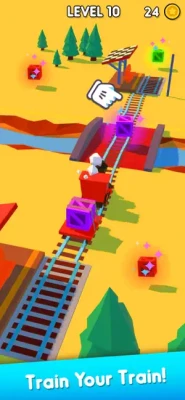
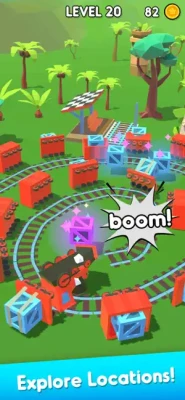
Train It! 3D puts players in charge of a train journey where reaching the station requires more than simply moving forward. Each level presents a railway puzzle that must be solved by creating a suitable track route and guiding the train through the available space.
The main objective is to build tracks that connect the starting point to the destination while collecting wagons and cargo along the way. Every wagon collected makes the train longer, which adds another layer of difficulty to the journey. A short train may pass through a narrow section easily, but a longer one needs more room to turn and avoid obstacles.
The challenge comes from planning ahead. Players must consider the shape of the route, the position of obstacles, and the space required for the entire train to pass safely. Sharp turns can be especially dangerous because the wagons follow the locomotive and may collide with objects even when the front of the train has cleared them.
With colorful 3D graphics, different locations, and progressively challenging levels, Train It! 3D offers an accessible puzzle experience for players who enjoy railway games, route-planning challenges, and casual brain teasers.
Main Features of Train It! 3D
Railway Track Building
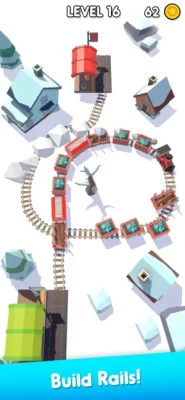
The central feature is the ability to build tracks and create a route to the station. Players must think carefully about the path they construct, making sure the train can travel through it without crashing.
Train and Wagon Collection
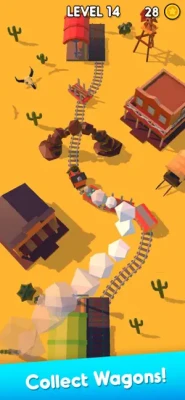
Collecting wagons is an important part of the gameplay. Each additional wagon increases the train's overall length, making route planning more complicated.
Cargo Collection
Cargo adds another objective to the journey. Players must consider how to collect the available cargo while keeping the train on a safe path toward the station.
Challenging Railway Puzzles
Every level tests the player's ability to find a suitable route. The best solution requires a balance between collecting items, avoiding hazards, and reaching the destination.
Obstacles and Sharp Turns
The railway courses include obstacles and tight corners. These hazards require careful planning because the entire train must fit through the route, not just the front locomotive.
Colorful 3D Graphics
The game uses colorful three-dimensional visuals to present its railway environments, trains, and puzzle layouts in an accessible style.
Various Locations
Different locations provide visual variety as players continue exploring the game's levels.
Casual Gameplay
Train It! 3D is designed as a casual puzzle experience. Its basic objective is easy to understand, while the growing train length and more difficult routes provide additional challenges.
Understanding the Gameplay Mechanics
Building the Railway Route
Track construction is the foundation of each puzzle. Players need to create a route that allows the train to travel from its starting position to the station.
A good route should be direct enough to avoid unnecessary complications but wide and smooth enough for the complete train to pass safely.
Collecting Wagons
Wagons increase the train's length. This is important because a longer train needs more room to turn and navigate around obstacles.
Before collecting another wagon, consider how the extra length may affect the remaining route.
Gathering Cargo
Cargo provides an additional collection objective. Players should look for opportunities to gather it without creating an unsafe route or making the journey unnecessarily complicated.
Reaching the Station
The final goal is to arrive at the station without crashing. A successful journey depends on the route created earlier and the player's ability to account for the full train length.
Managing Train Length
The longer the train becomes, the more difficult it is to navigate sharp turns and tight spaces. Players must plan for the movement of every wagon rather than focusing only on the locomotive.
Complete Strategy Guide
Study the Level Before Building Tracks
Start by examining the available space, the station's position, and the obstacles between the train and its destination.
Look for the simplest route that can connect the starting point to the station. Identifying narrow passages and sharp corners early can prevent mistakes later.
Plan for the Entire Train
One of the most important lessons in Train It! 3D is that the locomotive is not the whole train.
When the engine turns, every wagon behind it follows the same route. A corner that looks safe for the front of the train may still cause a collision farther back.
Always leave enough room for the wagons to follow the track.
Avoid Unnecessarily Sharp Turns
Sharp turns make it harder to guide a long train through the course. Whenever possible, build smoother curves that give the wagons enough space to follow the locomotive.
If a tight turn is unavoidable, examine the surrounding area carefully before committing to the route.
Balance Collection and Safety
Wagons and cargo are important objectives, but collecting everything should not come at the expense of a safe journey.
Think about how each additional wagon affects the train's length. A route that works before collecting more wagons may become dangerous afterward.
Plan the collection path with the final train size in mind.
Choose a Practical Route
The shortest route is not always the best one. A direct path may contain obstacles or corners that make it difficult for a long train to pass.
A slightly longer route can be a better choice if it provides wider turns and fewer dangerous sections.
Keep Obstacles in Mind
Look for objects that could interfere with the train's movement. Do not judge a route only by whether the locomotive can pass through it.
Consider the position of every wagon as the train moves around obstacles.
Think Ahead Before Making Changes
Track construction should be based on the entire journey rather than the next few seconds.
Before choosing a direction, consider what happens after the next turn. A route may look promising initially but lead into a narrow area with no practical way to continue.
Use Previous Attempts to Improve
If a train crashes, identify the exact part of the route that caused the problem.
Was the turn too sharp? Was there insufficient space for the wagons? Did collecting another wagon make the route too difficult?
Use the answer to adjust the track layout on your next attempt.
Prioritize a Smooth Journey
A smooth route makes it easier for the locomotive and wagons to travel together. Avoid unnecessary bends and complicated track layouts when a simpler solution is available.
The fewer difficult turns your train needs to make, the easier it becomes to reach the station safely.
Reconsider the Route When the Train Gets Longer
A route that works for a short train may not work for a longer one. As you collect additional wagons, pay more attention to corners and narrow sections.
Always evaluate the route based on the train's final length, not just its starting size.
Stay Focused on the Destination
Cargo and wagon collection can make the puzzle more interesting, but reaching the station remains the main objective.
Keep the destination in mind while planning the collection route. Every decision should help create a journey that the complete train can finish.
Advanced Tips and Tricks
Think about the train's tail. The last wagon needs enough room to follow every turn made by the locomotive.
Prefer smooth curves. Wide turns are generally easier to navigate than sudden directional changes.
Plan the collection route early. Decide how to collect wagons and cargo before committing to a complicated track layout.
Avoid unnecessary track complexity. A simple route is easier to understand and often reduces the risk of mistakes.
Look for narrow sections. These areas can become difficult once the train grows longer.
Learn from collisions. A failed attempt can reveal which part of the route needs improvement.
Consider the final train length. Do not design a route only for the locomotive or the first few wagons.
Keep the station in view. Make sure every track-building decision contributes to a practical path toward the destination.
Common Mistakes to Avoid
Building Tracks Without Planning
Creating a route without examining the level can lead to unnecessary turns and difficult sections. Study the layout before deciding where the train should travel.
Ignoring the Wagons
The locomotive may clear an obstacle while the wagons behind it collide with the same object. Always account for the full length of the train.
Making Tight Turns
Sharp corners can create problems for longer trains. Use smoother routes whenever possible.
Collecting Wagons Without Considering the Route
More wagons mean a longer train. Collecting additional wagons without planning for the increased length can make the remaining journey much harder.
Choosing the Shortest Route Automatically
A short track is not necessarily a safe track. Consider the obstacles and turning space before deciding which path to build.
Forgetting About Cargo
Focusing only on reaching the station can cause players to overlook cargo collection. Include cargo in the route plan whenever it can be collected safely.
Repeating the Same Failed Route
If a particular turn causes a crash, making the same track arrangement again is unlikely to solve the problem. Identify the cause and change the route.
Is Train It! 3D Difficult?
Train It! 3D is easy to understand because its main objective is straightforward: build tracks, collect wagons and cargo, and reach the station without crashing.
However, the puzzles become more demanding when the train grows longer. Players must consider how every wagon follows the locomotive, especially around sharp turns and obstacles.
Beginners can start by building simple routes and learning how train length affects movement. As they become more familiar with the mechanics, they can attempt more complicated layouts and improve their ability to plan efficient railway paths.
What Makes Train It! 3D Enjoyable?
The appeal of Train It! 3D comes from its combination of railway construction and route-planning puzzles. Players are not simply driving a train along a fixed track. They must work out how to build a suitable path and make sure the entire train can complete the journey.
The wagon-collection mechanic adds an interesting challenge because every additional carriage changes how much space the train needs. Cargo collection gives players another objective, while obstacles and sharp turns require careful thinking.
Its colorful 3D presentation and different locations help make the railway puzzles accessible and entertaining for casual players.
Frequently Asked Questions
What is Train It! 3D?
Train It! 3D is a casual railway puzzle game in which players build tracks, collect wagons and cargo, avoid obstacles, and guide a train safely to the station.
Who developed Train It! 3D?
The game is developed by APIX Educational Systems. The App Store lists UAB Edukacines sistemos as the seller.
Is Train It! 3D free to play?
Yes. The iOS App Store lists Train It! 3D as a free game.
What is the main objective?
The main objective is to build a suitable railway route, collect available wagons and cargo, and reach the station without crashing.
Why does collecting wagons make the game harder?
Every wagon increases the train's length. A longer train needs more space to navigate turns and pass obstacles safely.
Does Train It! 3D include obstacles?
Yes. Obstacles and sharp turns are important parts of the railway puzzles.
Does the game have different locations?
Yes. The App Store description highlights various locations that provide visual variety throughout the game.
What is the best strategy for beginners?
Beginners should study each level before building tracks, use simple routes, avoid sharp turns, and remember that every wagon must fit through the chosen path.
How can players avoid crashing?
Plan the complete route, leave enough room for the train's full length, avoid unnecessary sharp turns, and consider obstacles before collecting additional wagons.
Is Train It! 3D suitable for casual players?
Yes. Its straightforward objective and colorful 3D presentation make it approachable for players who enjoy casual puzzles and simple train games.
Final Verdict
Train It! 3D is an enjoyable railway puzzle game that combines track building, cargo collection, and train navigation. Its central challenge is making sure that the entire train reaches the station safely, even after collecting additional wagons.
The game rewards players who think ahead, build practical routes, and understand how train length affects movement. Obstacles and sharp turns add difficulty, while colorful 3D graphics and different locations provide variety.
For players who enjoy casual brain teasers, railway challenges, and route-planning games, Train It! 3D offers a simple but engaging experience. The key to success is to plan the track carefully, leave enough room for every wagon, and guide the train to the station without a crash.
Rate the Game
User Reviews













Popular Games



















 Android
 iOS
 Windows
 Xbox