








Latest Version
November 10, 2026
Supercharge Mobile
Puzzle
0
com.vincellstudios.hiddenescapelosttemple
Report a Problem
More About :game
Game Overview
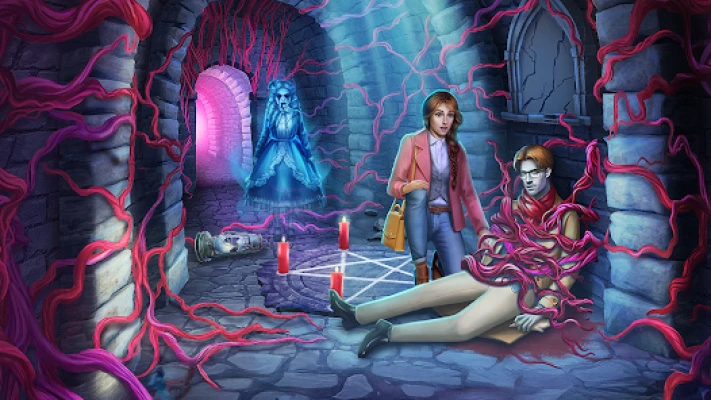
Hidden Escape: Lost Temple is a point-and-click adventure game that combines ancient mythology, archaeological exploration, mysterious locations, and challenging puzzles. Developed originally by Vincell Studios, the adventure takes players into a forgotten temple filled with secrets, dangerous encounters, and mysterious discoveries.
The story follows a group of adventurous archaeologists who risk everything to find the lost scepter of Sheshnaag, a powerful legendary figure associated with Indian mythology.
Their expedition is far from an ordinary archaeological journey. As they explore the ancient ruins, they encounter unexpected entities, mysterious symbols, hidden passages, and challenges that test their intelligence and determination.
Players must investigate their surroundings, search for useful objects, examine important clues, and solve puzzles that reveal new parts of the story.
The game follows a point-and-click format, making exploration accessible while still providing plenty of opportunities for thoughtful problem-solving.
One of the most interesting elements is the combination of mythology and adventure. The forgotten temple provides a mysterious setting, while the ancient texts and legendary artifacts give the storyline a distinctive identity.
Rather than relying on fast-paced action, the experience encourages players to observe details, connect clues, and think logically before making decisions.
The Lost Temple adventure is also part of the wider Hidden Escape Mysteries collection, which brings together several mystery and escape room experiences in one application.
Main Features of Hidden Escape: Lost Temple
Adventure Inspired by Indian Mythology
Explore a fantasy world influenced by Indian mythology, ancient legends, mysterious artifacts, and supernatural forces.
Ancient Temple Exploration
Investigate forgotten locations and discover hidden areas containing important objects, clues, and secrets.
Challenging Brain Puzzles
Solve different puzzles that require observation, logical reasoning, pattern recognition, and problem-solving skills.
Hidden Object Challenges
Search carefully designed environments to locate objects that may become important later in the adventure.
Ancient Text Decoding
Examine mysterious inscriptions and decipher forgotten messages to uncover information about the temple and its secrets.
Engaging Storyline
Follow the archaeologists' expedition as unexpected discoveries and dangerous encounters reveal more about their mission.
Interesting Characters
Meet different characters and discover how their actions and decisions contribute to the unfolding adventure.
Beautifully Illustrated Environments
Explore detailed scenes that create an atmospheric setting for the archaeological mystery.
Point-and-Click Gameplay
Interact with objects, investigate locations, collect useful items, and solve environmental puzzles through simple touch controls.
Mystery and Fantasy Elements
Experience a combination of archaeological adventure, legendary mythology, supernatural encounters, and escape room challenges.
Understanding the Gameplay
Explore Every Location Carefully
Exploration is one of the most important parts of Hidden Escape: Lost Temple.
Each environment can contain objects, clues, and interactive elements that contribute to solving the current challenge.
Players should examine different parts of every scene instead of concentrating only on objects that immediately appear important.
Some clues may be hidden in unusual places, while others become useful only after completing another puzzle.
Careful observation is essential for making steady progress.
Search for Hidden Objects
Hidden object challenges require players to identify useful items within detailed environments.
These objects may include tools, keys, symbols, documents, or other items connected to the storyline.
Some objects are easy to recognize, while others may blend into the background.
Take your time when examining each scene and remember that an apparently ordinary item may become important later.
Solve Ancient Puzzles
Puzzles are at the center of the adventure.
Players must interpret symbols, recognize patterns, understand relationships between objects, and use clues to unlock new areas.
Some challenges require straightforward observation, while others involve several connected steps.
The best approach is to understand what the puzzle is asking before attempting random solutions.
Decipher Forgotten Texts
The ancient texts found throughout the adventure contribute to its mythological atmosphere.
They may contain important information about symbols, objects, or the history of the temple.
Pay attention to repeated patterns and unusual markings.
A symbol encountered in one location may provide the solution to a puzzle somewhere else.
Collect and Use Important Items
Objects collected during exploration are not always needed immediately.
Some items may become useful only after discovering a particular locked mechanism or interactive object.
Keep track of everything you collect and consider how different objects might work together.
Successful inventory management can prevent unnecessary backtracking.
Storyline and Mythological Setting
The central objective of Hidden Escape: Lost Temple is to discover the lost scepter of Sheshnaag.
The adventure draws inspiration from Indian mythology, using legendary themes to create a mysterious archaeological journey.
The expedition begins with the search for an ancient artifact, but the discovery process gradually introduces increasingly unusual challenges.
The archaeologists must investigate forgotten ruins, confront unexpected entities, and uncover secrets hidden within the temple.
The setting creates a strong connection between historical exploration and fantasy storytelling.
Ancient architecture, mysterious inscriptions, hidden chambers, and legendary powers all contribute to the atmosphere.
For players who enjoy mythology-inspired adventures, this setting offers something different from ordinary detective mysteries and modern escape room games.
Full Strategy Guide for Hidden Escape: Lost Temple
Start by Understanding Your Environment
When entering a new location, avoid immediately tapping random objects.
First, examine the entire scene and identify anything that looks unusual.
Look for symbols, containers, doors, inscriptions, switches, and objects that appear different from their surroundings.
This initial inspection helps you understand the environment and identify possible puzzle elements.
Examine Every Interactive Object
Some objects may require several interactions before revealing their purpose.
Try examining suspicious items carefully and pay attention to any visual or narrative feedback.
If an object cannot be used immediately, remember its location and return after collecting additional items.
Do not assume that every object has an obvious purpose when first discovered.
Collect Everything That Could Be Useful
Inventory management is essential in point-and-click adventures.
Whenever you find an object that can be collected, consider taking it unless the game clearly indicates otherwise.
Keys, tools, symbols, and other items may unlock new opportunities later.
If you become stuck, review your inventory and think about which objects could interact with the environment.
Read Every Important Clue
Written information can provide essential hints for solving difficult challenges.
Ancient inscriptions, documents, and symbols may explain the relationship between objects or reveal the correct order for a puzzle.
Avoid skipping dialogue or text without examining it.
Even a small detail can become important during a later stage of the adventure.
Recognize Patterns and Repeated Symbols
Many puzzle adventures use visual patterns to communicate solutions.
Look for repeated symbols, matching shapes, sequences, colors, and numbers.
If you discover a pattern in one location, consider whether it connects to a mechanism or locked object elsewhere.
Taking screenshots of complicated symbol arrangements can also help you remember them.
Solve Puzzles Step by Step
When facing a difficult puzzle, divide it into smaller parts.
Identify the information provided, determine what the puzzle requires, and test logical possibilities.
Avoid making too many random attempts because this can make it harder to understand which actions are useful.
A systematic approach makes complicated challenges more manageable.
Pay Attention to Inventory Combinations
Some escape room puzzles require players to use an item in the correct location or combine objects when the game allows it.
If a collected item does not appear useful, consider whether another object or mechanism could provide the missing context.
Think about the practical purpose of each item rather than trying to use everything everywhere.
Revisit Previous Areas
Progression in point-and-click adventures sometimes depends on discovering information in a later room.
If you become stuck, return to earlier locations and check whether newly collected items can unlock previously inaccessible elements.
Revisiting an area with additional knowledge can reveal solutions that were not obvious before.
Use Logic Instead of Random Guessing
A puzzle's solution usually has some connection to the clues available in the environment.
Before entering a combination or activating a mechanism, examine the surrounding information.
Consider whether the answer involves a sequence, a relationship between symbols, or the arrangement of objects.
Reasoning through the available clues is more effective than repeatedly testing unrelated possibilities.
Manage Your Hints Carefully
The wider Hidden Escape Mysteries collection provides assistance through tutorials, walkthroughs, and puzzle-skipping options.
Use hints when you have genuinely exhausted the available clues.
If you are only slightly confused, try examining the environment again before spending resources on assistance.
Saving hints for more complicated puzzles can make the overall experience more rewarding.
Stay Patient During Difficult Challenges
Some puzzles are designed to require more time and attention than others.
If a particular challenge becomes frustrating, step away for a short period and return with a fresh perspective.
A different approach can make an apparently complicated puzzle much easier to understand.
Advanced Tips and Tricks
Examine the Corners of Every Scene
Important objects may be placed away from the center of the screen. Check the entire environment carefully.
Remember Unusual Symbols
Take note of repeated markings and visual patterns. They may provide clues for future mechanisms.
Read the Story Carefully
Dialogue and written information can contain important hints about characters, locations, and puzzle solutions.
Keep Your Inventory Organized
Remember which objects you collect and where they might be useful.
Avoid Random Puzzle Combinations
Use the clues available in the environment to make informed decisions.
Return to Earlier Locations
A previously inaccessible object may become usable after you obtain a new item.
Use Screenshots for Complicated Clues
Visual notes can help you remember symbol sequences and other information.
Think About Object Functions
Consider the practical purpose of a key, tool, or artifact before deciding where it belongs.
Use Hints Only When Necessary
Try to solve challenges independently before relying on tutorials or puzzle skips.
Enjoy the Story
The adventure is not only about completing puzzles. Understanding the mythology and following the archaeologists' journey makes the experience more enjoyable.
Common Mistakes to Avoid
Rushing Through Locations
Moving too quickly can cause you to overlook important clues and interactive objects.
Ignoring Written Information
Ancient texts and character conversations may contain valuable information needed for later puzzles.
Forgetting Collected Items
An object discovered earlier may be the exact solution to a challenge encountered much later.
Using Random Puzzle Solutions
Repeated guessing can waste time and make it harder to identify the correct logic.
Overlooking Small Details
Symbols, colors, and unusual environmental features may contain essential clues.
Skipping Every Difficult Puzzle
Using assistance immediately can reduce the satisfaction of solving a mystery independently.
Failing to Revisit Previous Rooms
Some locations may contain objects that become relevant after further progression.
Hidden Escape Mysteries: Other Adventures to Explore
The wider Hidden Escape Mysteries collection includes several additional story-driven adventures.
Hidden Escape: Murder Mystery
A detective adventure set around a reality television dating show. When a contestant is murdered, the remaining participants become part of an investigation filled with secrets and unexpected revelations.
Hidden Escape: Spy Agent
An undercover mission follows an inexperienced agent who must stop a ruthless dictator from launching a nuclear attack. Players encounter secret codes, dangerous locations, prison escapes, and rescue challenges.
Hidden Escape: Horror Mystery
A darker adventure that introduces frightening environments, mysterious events, and supernatural elements.
Hidden Escape: Island Mystery
An exploration-based mystery that combines unusual locations, hidden clues, and an unfolding adventure.
The Puzzler Edition
A crossover adventure featuring characters from other popular stories. Players must solve challenging puzzles while the characters race against time to prevent chaos.
These additional adventures provide different settings and storylines while maintaining the collection's focus on exploration, puzzles, and mystery.
Is Hidden Escape: Lost Temple Worth Playing?
Hidden Escape: Lost Temple is an appealing choice for players who enjoy story-driven puzzle adventures and mythology-inspired mysteries.
Its biggest attraction is the combination of ancient temple exploration, archaeological discoveries, hidden objects, and logical challenges.
The Indian mythology inspiration gives the adventure a distinctive identity, while the search for Sheshnaag's legendary scepter provides a clear objective that connects the different challenges.
The point-and-click gameplay makes it accessible to casual players, but the puzzles still require patience, careful observation, and logical thinking.
The wider Hidden Escape collection also adds value by providing access to other mysteries, including detective stories, spy adventures, horror experiences, and additional puzzle challenges.
Overall, Hidden Escape: Lost Temple is a good option for players who prefer thoughtful exploration and engaging storytelling over fast-paced action.
Frequently Asked Questions
What is Hidden Escape: Lost Temple?
Hidden Escape: Lost Temple is a fantasy puzzle adventure inspired by Indian mythology. Players explore an ancient temple, solve puzzles, discover hidden objects, and search for the legendary scepter of Sheshnaag.
Who developed Hidden Escape: Lost Temple?
The original Lost Temple adventure was developed by Vincell Studios. The current Google Play collection is published by Supercharge Mobile.
What is the main objective of the game?
The main objective is to help a group of archaeologists discover the lost scepter of Sheshnaag while overcoming dangerous encounters and solving ancient puzzles.
Is Hidden Escape: Lost Temple based on Indian mythology?
Yes. Its fantasy storyline is inspired by Indian mythology and features the legendary Sheshnaag.
What type of gameplay does it offer?
The game features point-and-click exploration, hidden object challenges, logical puzzles, ancient text decoding, and story-driven adventure sequences.
Does the game include hidden object puzzles?
Yes. Players must search different environments for objects and clues that help them solve challenges and advance through the adventure.
Is Hidden Escape: Lost Temple suitable for beginners?
Yes. Its point-and-click controls are accessible, although some puzzles require careful observation and logical reasoning.
Can players get hints when they are stuck?
The broader Hidden Escape Mysteries collection offers assistance through tutorials, walkthroughs, and puzzle-skipping options.
Is Hidden Escape Mysteries free to play?
The game is available as a free download on Google Play and includes advertisements and optional in-app purchases.
What other games are included in Hidden Escape Mysteries?
The collection includes adventures such as Murder Mystery, Spy Agent, Horror Mystery, Island Mystery, Lost Temple, and The Puzzler Edition.
Can you play without an internet connection?
Offline availability may depend on the specific story, downloaded content, and current application version. Check the game before relying on offline access.
Final Thoughts
Hidden Escape: Lost Temple offers an exciting combination of mythology, archaeological exploration, hidden objects, and challenging puzzles.
Its mysterious temple setting and search for the legendary scepter of Sheshnaag create an engaging adventure for players who enjoy discovering secrets and solving complicated challenges.
The best way to progress is to explore every location carefully, collect useful objects, study ancient clues, and approach each puzzle with patience.
Whether you are a fan of escape room games, mythology-inspired adventures, or point-and-click mysteries, Hidden Escape: Lost Temple provides an enjoyable opportunity to test your observation skills and experience a fascinating fantasy journey.
Rate the Game
User Reviews















Popular Games



















 Android
 iOS
 Windows
 Xbox