


Latest Version
October 21, 2026
SayGames Ltd
Role Playing
0
com.DoorTeam.BagMaster
Report a Problem
More About :game
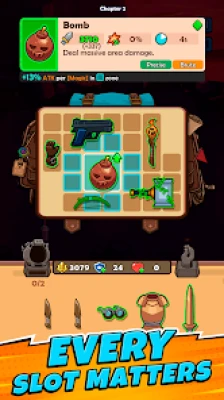
The central gameplay mechanic revolves around a magical backpack. Every available slot matters, and the way you arrange weapons and other items can influence the strength of your build. Players collect equipment, merge matching items into stronger versions, choose useful buffs, and prepare their characters for increasingly difficult encounters.
Unlike action games that depend primarily on quick reflexes, BagMaster Isekai rewards planning and resource management. Each battle offers an opportunity to evaluate your equipment, identify weaknesses, and adjust your strategy before facing the next wave.
Whether you enjoy backpack puzzle games, weapon-merging challenges, dungeon crawlers, or tactical RPG adventures, BagMaster Isekai offers a mix of inventory management and turn-based combat that encourages experimentation.
What Is BagMaster Isekai?
BagMaster Isekai is a fantasy role-playing game built around a simple but important question: how can you fit the strongest possible equipment into a limited amount of backpack space?
Your adventure revolves around collecting items, organizing your inventory, merging compatible equipment, and preparing for enemy encounters. Each decision can affect how efficiently your character deals damage and survives a fight.
The game combines several familiar genres:
Backpack management: Arrange equipment within a limited inventory.
Merge gameplay: Combine matching items to create stronger equipment.
Turn-based combat: Prepare your build before resolving battles against enemies.
Roguelike progression: Adapt your strategy as encounters become more challenging.
Dungeon exploration: Progress through fantasy environments filled with monsters and stronger opponents.
Character development: Improve your overall capabilities through equipment, buffs, and progression systems.
The result is a strategy game that is easy to understand but offers plenty of room for smarter decisions. A successful run depends on more than collecting powerful items. You must also make sure your equipment works together and fits the available space.
Main Features of BagMaster Isekai
Strategic Backpack Organization
The backpack is the heart of the gameplay. Weapons and other equipment occupy inventory space, so careless placement can limit your options later.
You must decide which items deserve to remain in your build, which ones should be merged, and which pieces are less useful for your current strategy.
Weapon Merging and Equipment Upgrades
Collecting matching items allows you to merge them into stronger equipment. Upgrading the right weapons can improve your build without requiring you to fill every available slot with separate items.
The key is to balance immediate strength with future opportunities. Keeping an extra matching item may be useful if you can complete a valuable merge soon, but holding unnecessary equipment for too long can restrict your inventory.
Turn-Based Tactical Battles
Combat emphasizes preparation and decision-making rather than constant manual movement. You arrange your equipment and develop your strategy before facing enemy waves.
Your equipment choices influence how effectively you handle the encounter, making the preparation phase just as important as the battle itself.
Buff Selection
After battles, you can choose buffs that strengthen your developing build. These decisions provide opportunities to improve your damage, survivability, or other useful aspects of your strategy, depending on the options offered.
Choosing a buff that complements your existing equipment is generally more effective than selecting an upgrade without considering your current weaknesses.
Enemy Waves and Boss Encounters
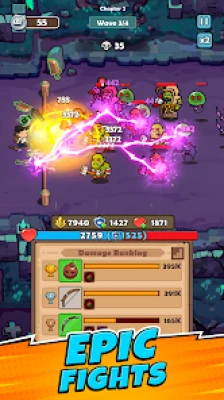
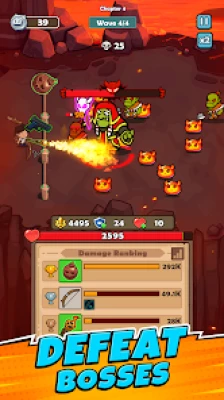
The adventure includes repeated enemy encounters and stronger opponents, including bosses. As the challenge increases, you need to improve your equipment and adapt your approach instead of relying on the same basic setup throughout the game.
Fantasy Exploration and Progression
BagMaster Isekai combines equipment puzzles with progression through a colorful fantasy world. Continued advancement gives you opportunities to experiment with different combinations and refine your preferred playstyle.
How to Play BagMaster Isekai
The basic gameplay loop is straightforward, but each stage offers decisions that can influence the result.
Step 1: Collect Equipment
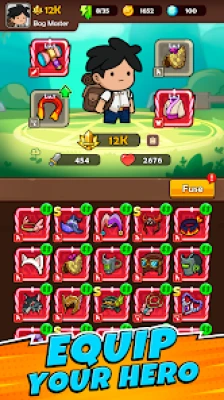
Start by examining the available items. Weapons and other equipment provide different opportunities for strengthening your build.
Avoid choosing items automatically. Consider how each piece fits your current inventory and whether it contributes to a useful combination.
Step 2: Organize Your Backpack
Place equipment carefully within the available slots. Leave enough flexibility for future merges and new items whenever possible.
A backpack that looks full of powerful equipment is not necessarily better than one arranged to support efficient upgrades.
Step 3: Merge Matching Items
When you have compatible copies, evaluate whether merging them will improve your overall setup. Stronger equipment can provide better value than keeping several weaker copies occupying valuable space.
However, do not merge blindly. Consider the immediate benefit and whether the resulting equipment fits your planned build.
Step 4: Prepare for Combat
Review your equipment before beginning the next encounter. Think about whether your current setup provides enough damage, useful synergies, and adequate survivability for the enemies ahead.
If your previous battle exposed a weakness, use the preparation phase to address it.
Step 5: Fight the Enemy Wave
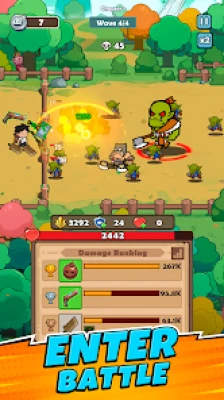
Enter combat and observe how your build performs. Pay attention to whether enemies are defeated efficiently and whether your character can survive the encounter.
The results provide useful information for your next equipment and buff choices.
Step 6: Choose a Useful Buff
After a battle, evaluate the available upgrades. Prioritize options that improve your current strategy or compensate for a serious weakness.
Step 7: Adapt and Continue
Repeat the process as you advance. Collect equipment, merge items, improve your inventory, and refine your build as the game introduces tougher enemies.
Complete BagMaster Isekai Strategy Guide
1. Treat Backpack Space as a Resource
One of the most important BagMaster Isekai tips is to manage inventory space as carefully as you manage upgrades.
Every item has an opportunity cost. A piece of equipment might be useful on its own, but if it prevents you from placing a more valuable weapon or completing a merge, keeping it may weaken your overall strategy.
Before accepting or retaining an item, ask three questions:
Does it improve my current build?
Can it help complete an important merge?
Is its value worth the space it occupies?
If an item does not support your current plan, consider whether replacing or recycling it is the better option when those actions are available.
2. Prioritize Valuable Merges
Merging is one of the game's central progression systems. Stronger equipment can improve your combat potential while freeing space previously occupied by weaker copies.
Develop a habit of checking your inventory for matching items before making other decisions.
A useful approach is to identify one or two equipment priorities for your current run. When new items appear, determine whether they help advance those priorities. This creates a clearer plan than upgrading random equipment whenever an opportunity appears.
Do not assume every merge is automatically optimal, however. The resulting item should still fit your build and available inventory.
3. Avoid Filling Every Slot Immediately
It can be tempting to collect every available item because each one appears to offer an advantage. In practice, filling the backpack too quickly can make later decisions more difficult.
Keep some flexibility whenever possible. Open space can help you accommodate new equipment, complete merges, and adjust your setup after an unexpected reward.
A flexible inventory is especially valuable when the game offers items that could change your strategy.
4. Build Around Synergy
Individual equipment strength is only part of the equation. The relationship between your items and buffs can be just as important.
When choosing upgrades, look for combinations that reinforce the same general strategy. If your equipment benefits from dealing damage quickly, consider upgrades that support that approach. If survival is becoming difficult, focus on strengthening the defensive side of your build.
The exact best combination depends on the items and buffs available during your run. Experiment with different setups and pay attention to which combinations consistently perform well.
5. Balance Damage and Survival
A build that deals impressive damage can still fail if your character cannot survive long enough to use it effectively.
Likewise, a defensive setup may struggle if it takes too long to defeat enemies.
Aim for a balance that suits the current encounter. If enemies are overwhelming you quickly, improve survivability where possible. If battles are lasting too long, consider strengthening your damage output or improving the synergy between your weapons.
The best balance can change as you progress, so review your setup regularly.
6. Choose Buffs With a Clear Purpose
Buff selection is an important opportunity to shape your run.
Rather than selecting whichever upgrade sounds strongest, compare each option with your current needs. A damage improvement may be valuable when your offense is falling behind, while a defensive option may be more useful when surviving enemy attacks is the main problem.
Use the following decision process:
Identify the biggest weakness in your current build.
Compare the available buffs with that weakness.
Prefer upgrades that complement your strongest equipment.
Consider how the choice may help in later encounters, not just the next fight.
This approach makes your upgrades more consistent and reduces the risk of building around unrelated bonuses.
7. Learn From Every Enemy Wave
Each encounter is an opportunity to test your strategy. Do not focus only on whether you won or lost; consider how efficiently your setup performed.
If your character survived comfortably, your build may be strong enough for the current challenge. If the fight was difficult, identify what caused the problem.
Possible issues include insufficient damage, weak synergy, inefficient use of inventory space, or inadequate survivability.
Use this information to make a targeted adjustment before the next wave.
8. Prepare Differently for Bosses
Boss encounters can expose weaknesses that are less noticeable during ordinary battles. A build that handles regular enemies well may struggle against a tougher opponent.
Before a boss fight, review your available options and consider whether your equipment is sufficiently upgraded.
Focus on the following priorities:
Strengthen your most important weapons where practical.
Remove or replace equipment that contributes little to your strategy.
Select buffs that address your most significant weakness.
Avoid unnecessary inventory clutter.
Check whether your build can maintain both damage and survivability throughout the encounter.
Do not assume that the same setup will work equally well against every boss. Adapt to the challenge and use previous encounters as a guide.
9. Use Rerolls and Recycling Thoughtfully
When rerolls or recycling options are available, treat them as strategic resources rather than automatic choices.
A reroll may help when the available items do not support your build, but it is less valuable if your current options already provide a meaningful upgrade.
Recycling can help remove unwanted equipment or improve inventory flexibility when the relevant mechanic allows it. Before using either option, compare the potential benefit with what you give up.
The objective is to improve the entire build, not simply to obtain a different item.
10. Upgrade the Items That Matter Most
Spreading your resources across every available piece of equipment can prevent your main strategy from reaching its potential.
Identify the weapons or items that contribute most to your build. Give priority to upgrades that meaningfully strengthen those pieces or unlock useful higher-tier effects.
At the same time, remain flexible. If a new item provides a better fit for your strategy, it may be worth changing your priorities instead of continuing to invest in equipment that no longer serves you well.
11. Develop a Repeatable Decision-Making Routine
Consistent decisions are easier to improve than random choices. Establish a short routine that you follow before each encounter.
First, inspect your inventory. Next, check for merges. Then evaluate available equipment and buffs. Finally, confirm that your build has a clear purpose before starting the next battle.
This routine reduces unnecessary mistakes and helps you recognize which choices produce the best results.
12. Experiment With Different Builds
There is no guarantee that one equipment combination will be best for every stage or every run. The items and buffs available can influence which strategy makes the most sense.
Try different approaches when the opportunity arises. You may discover that one setup offers stronger damage while another provides better consistency or flexibility.
Record the general principles behind successful runs. For example, note whether your best results came from early merges, a particular type of synergy, or a better balance between offense and defense.
Over time, these observations will help you make more effective decisions.
Best Beginner Tips for BagMaster Isekai
New players can improve faster by focusing on a few fundamentals instead of trying to optimize every decision immediately.
Understand the inventory first. Learn how items occupy space and how the backpack affects your options.
Merge with a plan. Prioritize upgrades that support your current strategy rather than combining items without considering the result.
Keep your build focused. Equipment and buffs should work toward a common goal whenever possible.
Leave room for adjustments. Avoid filling your inventory with items that offer little immediate value.
Learn from difficult battles. A loss or difficult encounter can reveal which part of your build needs improvement.
Choose buffs carefully. Consider your current weaknesses and the direction of your equipment setup.
Use optional resources wisely. Rerolls, recycling, revives, and other special options should be used when they provide meaningful value.
Be patient with progression. Stronger encounters may require better equipment choices and more deliberate planning rather than simply repeating the same setup.
Advanced Backpack Management Techniques
Plan Around Your Next Upgrade
Do not evaluate your backpack only as it exists at the current moment. Consider what you may need to accommodate next.
If you are close to completing a useful merge, keeping a compatible item may be worthwhile. If no meaningful merge is available, freeing space could provide more flexibility.
This forward-looking approach prevents your inventory from becoming a collection of unrelated items.
Compare Immediate Power With Long-Term Value
Some choices improve your character immediately, while others help build toward a stronger setup over several encounters.
An immediate upgrade can be valuable when you are struggling to survive. However, a choice that supports a more powerful merge or improves your equipment synergy may provide greater value later.
Consider how much difficulty remains in the current encounter and how likely the choice is to benefit your future build.
Avoid Unnecessary Changes
Constantly changing equipment without a clear reason can make it difficult to understand what works.
When a build performs well, preserve its strongest elements and make targeted adjustments. Change the setup when a clear opportunity appears or when a weakness becomes obvious.
This helps you identify which decisions are responsible for improved results.
Know When to Abandon a Weak Plan
Commitment is useful, but it should not prevent you from adapting. If the available items do not support your original strategy, forcing the same plan may waste resources.
Consider shifting your priorities when a more promising combination appears. Flexibility is especially important in roguelike games, where the available choices can vary from one run to another.
Common BagMaster Isekai Mistakes to Avoid
Collecting Everything
More equipment does not always mean more power. Unnecessary items can consume valuable backpack space and make merging more difficult.
Better approach: Keep items that support your current build or provide a realistic future benefit.
Merging Without Checking the Result
Merging matching equipment can be useful, but the outcome should still fit your strategy.
Better approach: Evaluate the upgraded item and its place in your inventory before committing.
Ignoring Defensive Needs
Focusing entirely on damage may leave your character vulnerable during harder encounters.
Better approach: Adjust your equipment and buffs when survival becomes the main obstacle.
Choosing Buffs at Random
A powerful-sounding buff may not contribute much to your current setup.
Better approach: Choose upgrades that reinforce your main strategy or address a specific weakness.
Spending Rerolls Too Early
Using a reroll when the current options are already useful may waste an opportunity.
Better approach: Reroll when the available choices genuinely fail to support your build, taking the cost and rules of the current mode into account.
Repeating an Unsuccessful Strategy
A setup that struggles against a particular enemy may need a change rather than another identical attempt.
Better approach: Identify the cause of the difficulty and make a focused adjustment.
Ignoring Equipment Synergy
A collection of strong individual items may perform less effectively than a coordinated build.
Better approach: Look for combinations that support a consistent combat strategy.
How to Progress More Efficiently
Progress in BagMaster Isekai depends on improving both your character and your decision-making.
Start by learning the basic equipment and merging systems. As you gain experience, focus on identifying the items that provide the most value and understanding how buffs affect your build.
During each run, use available rewards to improve your current strategy instead of collecting upgrades without a clear objective. When a battle becomes difficult, evaluate the problem before spending additional resources.
Character development and ability progression can also contribute to your long-term strength. Where the game offers permanent improvements, consider which upgrades will benefit your preferred playstyle and help you handle future encounters.
Finally, revisit your strategy as new items and mechanics become available. A build that works early in the adventure may need adjustments as enemies become stronger.
Is BagMaster Isekai Free to Play?
BagMaster Isekai is available on Google Play and is listed as a free game with advertisements and in-app purchases. Optional purchases may provide additional ways to access certain resources or features, depending on the current version and region.
You can focus on learning the core gameplay without assuming that every purchase is necessary. Good inventory management, thoughtful merging, and appropriate buff selection remain important parts of the strategy.
Because monetization and game features can change with updates, check the current in-game store for the exact options available to you.
Frequently Asked Questions
What type of game is BagMaster Isekai?
BagMaster Isekai – Bag Battle is a turn-based roguelike RPG that combines backpack organization, weapon merging, equipment upgrades, buffs, dungeon exploration, and battles against enemy waves.
How do you become stronger in BagMaster Isekai?
Improve your equipment by merging compatible items, organizing your backpack efficiently, selecting useful buffs, and developing a build with complementary strengths. Adjust your strategy when enemies become more difficult.
What is the backpack used for?
The backpack stores your equipment and serves as the main inventory puzzle. Its limited space requires you to decide which items to keep, merge, replace, or remove when the game allows it.
Why is merging important?
Merging matching items creates stronger equipment and can make your inventory more efficient. Successful merging helps you develop a stronger build without relying entirely on collecting additional items.
What is the best strategy for choosing buffs?
Choose buffs according to your current build and its most important weakness. Offensive upgrades can help when damage is insufficient, while defensive improvements may be more useful when survival is the main challenge.
How should you prepare for boss battles?
Review your equipment, prioritize useful merges, improve your most important items, and select buffs that support your build. Avoid carrying unnecessary equipment that limits your ability to make adjustments.
Can you use the same build throughout the game?
You can maintain a consistent strategy when it performs well, but adapting to new equipment, buffs, and tougher enemies is often necessary. Flexibility is an important part of roguelike progression.
Is BagMaster Isekai suitable for beginners?
The core mechanics are approachable because they revolve around collecting items, merging equipment, and preparing for battles. Players who enjoy puzzles and strategy can learn the deeper systems gradually as the challenges increase.
Does BagMaster Isekai require quick reflexes?
The game emphasizes planning and turn-based decisions more than continuous action. Careful preparation, equipment management, and strategic upgrades are central to success.
What should you do when a run starts going badly?
Identify the main weakness in your setup. Check whether you need more damage, better survivability, improved equipment synergy, or more efficient inventory use. Make targeted changes rather than repeating the same decisions without reviewing the results.
Final Verdict
BagMaster Isekai – Bag Battle offers a distinctive combination of backpack puzzle mechanics, weapon merging, tactical RPG combat, and roguelike progression. Its central challenge is not simply finding powerful equipment but arranging it intelligently, upgrading the right items, and selecting buffs that support a coherent strategy.
For the best results, treat every backpack slot as valuable, plan your merges, maintain a balance between offense and defense, and learn from each encounter. As you become more familiar with the available equipment and progression systems, you will be better prepared to handle stronger enemy waves and challenging bosses.
Whether you are a beginner learning how backpack management works or an experienced player refining a tactical build, BagMaster Isekai rewards patience, experimentation, and smart decisions.
Rate the Game
User Reviews















Popular Games



















 Android
 iOS
 Windows
 Xbox