





Latest Version
October 19, 2026
Dreamplay Games Inc.
Role Playing
iOS
0
Report a Problem
More About :game
Hidden Heroes: AFK Idle RPG puts an unusual spin on the traditional idle role-playing game. Instead of simply collecting stronger equipment and repeating battles, players must deal with uncertainty. An ordinary-looking item might turn out to be extremely valuable, a seemingly familiar dungeon can contain unexpected rewards, and an unconventional ally may become an important part of a successful team.
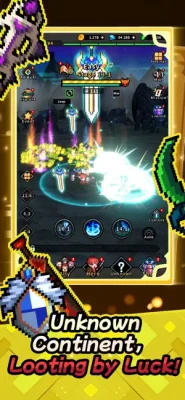
The game combines automatic battles with several interconnected progression systems. Players develop their heroes, identify equipment, collect allies, improve skills, summon cards, and explore dungeons while gradually increasing their combat power.
Its colorful pixel art style gives the fantasy adventure a retro appearance, while its collection systems introduce an element of luck into character development. The result is an idle RPG that rewards regular progression, experimentation, and thoughtful resource management.
Whether you prefer checking in for quick reward collections or spending more time improving your team, Hidden Heroes offers multiple ways to advance through its fantasy world.
Main Features of Hidden Heroes: AFK Idle RPG
1. Automatic Combat and Idle Progression
Hidden Heroes allows battles to run automatically, reducing the need for constant manual control. The idle system also supports character growth while you are away, allowing you to return and collect resources for future upgrades.
2. Unidentified Equipment
One of the game's defining features is unidentified gear. Items may conceal their true potential until they are identified, creating an element of surprise when collecting equipment.
A seemingly ordinary weapon might prove more valuable than expected. This makes equipment identification an important part of the progression system.
3. Mysterious Dungeons
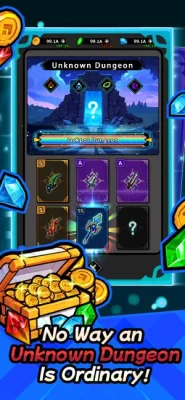
Unidentified dungeons introduce uncertainty into exploration and reward collection. Their appearances do not necessarily reveal the treasures waiting inside, encouraging players to investigate different dungeon opportunities.
4. Unusual Hero and Ally Combinations
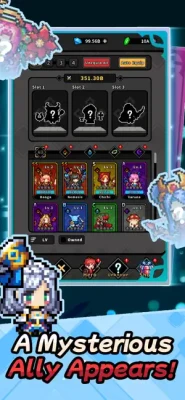
The game features collectible allies with different roles and characteristics. Unexpected combinations, such as a slime acting as a tank or a dragon serving as a healer, add variety to team development.
5. Flashy Skills and Pixel Art Combat
Hidden Heroes combines retro-inspired visuals with energetic special attacks. Skills such as Soul Strike, Hadouken, and Meteor add visual variety to automatic battles and provide additional opportunities to develop your character's combat capabilities.
6. Collectible Cards
Cards featuring creatures and characters such as slimes, dragons, zombies, reapers, and knights add another layer of collection and progression. Summoning and improving cards can contribute to long-term character development.
7. Multiple Progression Systems
Equipment, allies, skills, cards, and other advancement features give players several ways to increase their strength. Additional systems, including relics and dragon companions, expand the progression experience as players advance.
8. Dungeons, Raids, and Competitive Activities
The game includes activities beyond regular battles, with features such as Defense Dungeon, World Raid, and Training Ground providing additional challenges and rewards. Availability and requirements depend on your progression and the current game version.
Understanding the Core Gameplay Systems
Automatic Battles
Automatic combat lets your team fight without requiring you to control every action. Your main responsibility is to improve your characters and ensure that their equipment, skills, allies, and other progression systems are suitable for the challenges ahead.
When you become stuck at a particular stage, examine your overall build before repeatedly attempting the same encounter. A meaningful improvement to your gear or team may make more difference than simply waiting for another battle.
Equipment Identification
Unidentified gear is central to the game's identity. Rather than assuming that an item's appearance tells the whole story, use the identification system to discover its actual value.
Review newly identified equipment carefully. Compare its benefits with your current setup and decide whether it is worth equipping, enhancing, or retaining for future use.
Ally Collection
Allies help define your team's combat capabilities. Different characters may provide different forms of support, damage, or durability.
When building your roster, consider how each ally contributes to the team rather than focusing exclusively on individual rarity. A balanced group with complementary roles can be more useful than a collection of powerful characters that do not address your main weaknesses.
Skill Development
Skills add another layer to character progression. Review their descriptions and consider how they support your team's existing strengths.
Improving offensive capabilities can help you defeat enemies more efficiently, while other available effects may suit specific encounters. Your choice should reflect the content you are attempting and the resources you can reasonably invest.
Card Collection and Growth
Cards provide additional collection and development opportunities. As you acquire new cards, examine their available bonuses and growth options to understand how they contribute to your character.
Avoid treating every new card as an automatic improvement. Consider the actual benefit it offers and how it fits into your current progression.
Dungeon Exploration
Dungeons provide alternative challenges and reward sources. The unidentified dungeon system adds an element of surprise, making exploration an important part of the experience.
Before investing significant resources in dungeon-related progression, review the available entry requirements, rewards, and any restrictions associated with the activity.
Relics and Additional Progression
Relics and other unlocked systems provide further opportunities to strengthen your character. These features become especially useful when ordinary equipment and skill upgrades are no longer enough to solve every progression problem.
Check new systems as they unlock, learn how their bonuses work, and invest in the options that provide the greatest practical benefit to your current build.
Complete Hidden Heroes: AFK Idle RPG Strategy Guide
This strategy guide covers beginner progression, equipment management, team building, skill development, dungeon challenges, and efficient resource use. The recommendations focus on practical decision-making rather than fixed character rankings, since the best choices depend on your collection and current game version.
1. Prioritize Main Stage Progression
Your first objective should be to advance through the main stages as efficiently as possible. Progression helps you access additional rewards and unlock more opportunities to strengthen your account.
Follow this approach:
Push through the current stages while battles remain manageable.
Collect available rewards and review newly unlocked features.
Identify the main reason for any progression slowdown.
Improve the relevant equipment, allies, skills, or cards.
Return to the stage and test your improved setup.
Avoid spending all your resources on one system without considering how other upgrades could help. A balanced approach often makes progression more consistent.
2. Identify Equipment and Evaluate Every Upgrade
Equipment identification is one of the most distinctive mechanics in Hidden Heroes: AFK Idle RPG. Since unidentified items can conceal their true value, avoid judging gear by its appearance alone.
For effective equipment management:
Identify available gear when you can reasonably do so.
Compare the revealed equipment with what your character currently uses.
Prioritize meaningful improvements to combat performance.
Review equipment enhancement costs before investing heavily.
Reassess older equipment as stronger items become available.
The best equipment is not necessarily the item with the most impressive name or appearance. Evaluate its actual benefits and how well it supports your current progression.
3. Build a Balanced Team of Allies
Hidden Heroes encourages players to experiment with unusual ally combinations. Rather than collecting heroes without a plan, think about the roles your team needs.
A useful team-building framework includes:
Damage dealers: Help eliminate enemies and improve your ability to progress through battles.
Defensive allies: Help provide durability and reduce the risk of your team being overwhelmed, where the relevant character abilities support that role.
Support allies: Offer useful supporting effects, including healing where available.
Complementary combinations: Combine allies whose abilities work well together instead of choosing every character independently.
For example, a durable ally paired with a healing companion may provide a different tactical advantage from a team focused entirely on damage.
Experiment with your available roster and compare results. Do not assume that an unusual character is weak simply because it looks less impressive than a traditional fantasy hero.
4. Upgrade Skills With a Clear Objective
Skills contribute to your team's combat performance and provide opportunities to refine your build.
When deciding which skills to improve, consider whether your current problem is insufficient damage, difficulty surviving encounters, or a lack of effective supporting abilities.
Use these principles:
Read skill descriptions before investing resources.
Prioritize improvements that address your immediate weakness.
Consider how skills interact with your selected allies.
Avoid distributing resources across too many unrelated upgrades.
Revisit your skill setup when new options become available.
Skills such as Soul Strike, Hadouken, and Meteor are among the game's featured abilities. Their usefulness depends on their actual effects, available upgrades, and how they fit into your progression.
5. Develop Your Cards Efficiently
Card collection adds another layer to character development. New cards can expand your options, while card growth offers opportunities to improve existing collection systems.
To manage cards effectively, review newly acquired options, examine their available benefits, and prioritize improvements that support your overall build.
The game has introduced card summoning and card growth features, so check the relevant menus for available upgrades and requirements.
Avoid spending every resource immediately after obtaining a new card. Compare the expected benefit with the other improvements available to your account.
6. Explore Unidentified Dungeons
Unidentified dungeons are designed around uncertainty and potentially valuable rewards. Treat them as an important part of your progression rather than assuming that every dungeon offers identical results.
Before entering a dungeon, check its requirements and available rewards. Consider which resources you need most and whether the activity is appropriate for your current strength.
When a dungeon proves difficult, improve your character before repeatedly attempting the same challenge. Better equipment, stronger allies, and more effective skills can help you make better use of future attempts.
7. Use the Training Ground to Improve Progression
Training Ground is an additional progression activity that has received stage expansions through game updates.
Use the content available to your account to earn rewards and assess your current combat strength. If you reach a difficult point, return to your core progression systems and identify which upgrades would offer the greatest benefit.
As your character develops, revisit previously difficult content to determine whether your improved build allows you to advance further.
8. Make the Most of Defense Dungeon
Defense Dungeon provides an additional challenge beyond ordinary stage progression. It is worth incorporating into your routine when the activity is available and its rewards suit your current needs.
Check the dungeon's rules, requirements, and reward structure before participating. The game has also introduced a sweep feature for Defense Dungeon, which can make repeat reward collection more convenient when you meet its requirements.
Use repeat-completion features where available to save time, then spend the resources you collect on meaningful character improvements.
9. Prepare for World Raids
World Raid introduces a broader competitive challenge, including ranking-related features and rewards.
Before participating, strengthen your main team and review your equipment, skills, allies, and other relevant progression systems. The goal is to improve your contribution while maintaining an efficient approach to resource management.
If rankings are important to you, monitor your progress over time instead of expecting immediate results. Competitive performance depends on your overall development and the strength of other participants.
10. Develop Your Dragon Companion
Dragon-related progression adds another layer to character development. The game has introduced a dragon pet growth system, providing additional opportunities to improve your account.
Check the available dragon development and awakening options as you unlock them. Review their costs and benefits before committing valuable resources.
If a dragon-related upgrade offers a useful bonus for your current goals, incorporate it into your progression plan. Otherwise, consider whether your equipment, allies, or skills need attention first.
11. Collect Daily and Event Rewards
Regular reward collection helps support steady growth without requiring constant play.
Make time to check daily missions, attendance rewards, limited-time events, and any available exchange shops. These activities may provide resources that would otherwise require additional grinding.
For the best results:
Claim rewards that are ready to collect.
Review event objectives and their expiration times.
Prioritize achievable tasks with useful rewards.
Check whether event currencies can be exchanged for valuable items.
Avoid spending resources on event offers without comparing their benefits.
The exact events and rewards change over time, so use the current in-game information when planning your routine.
12. Manage Summons and Premium Currency Carefully
Summoning and purchasing options can expand your collection, but they should fit into a broader progression strategy.
Before using valuable currency, consider whether the potential reward addresses a real weakness in your current build. Review the available summoning options, event bonuses, and any displayed rates or guarantees.
Avoid spending simply because a limited-time offer is available. If you prefer free-to-play progression, prioritize rewards from stages, daily activities, dungeons, and events before considering optional purchases.
Best Beginner Strategy for Hidden Heroes
New players can make steady progress by following a simple sequence.
Early game: Advance through the main stages, collect rewards, identify equipment, and learn the basic ally and skill systems.
Developing stage: Improve your equipment, expand your ally collection, strengthen useful skills, and explore newly unlocked dungeons.
Advanced progression: Refine your card collection, investigate relics and dragon development, and participate in additional activities such as Defense Dungeon and World Raid.
Long-term development: Compare the benefits of every major upgrade, improve your weakest progression system, and adapt your team as new characters and features become available.
This approach avoids relying on a single character or upgrade type and gives you more flexibility as the game becomes challenging.
Recommended Daily Routine
A consistent routine can help you collect resources without spending unnecessary time repeating activities.
Collect available idle rewards.
Advance through the main stages while progress remains efficient.
Identify and evaluate new equipment.
Review ally, skill, and card upgrades.
Complete available dungeons and other reward activities.
Claim daily attendance and event rewards.
Check dragon, relic, and other unlocked progression systems.
Reinvest resources into the upgrades that address your current bottleneck.
Adjust this checklist to your available time and the activities currently unlocked on your account.
Common Mistakes to Avoid
Judging Unidentified Gear Too Early
An item's appearance does not necessarily reveal its true value. Identify it and compare its actual benefits before making a final decision.
Building a Team Around Rarity Alone
A powerful individual character does not automatically make the best team. Consider roles, useful effects, and how your allies work together.
Upgrading Everything at Once
Spreading resources across every available system can slow meaningful improvements. Prioritize upgrades that help you overcome your current challenge.
Ignoring Card and Relic Systems
These systems provide additional progression opportunities. Check them as they unlock and determine whether their benefits justify the required investment.
Repeating Difficult Content Without Adjustments
If your team repeatedly fails, examine its weaknesses before trying again. Stronger equipment, better allies, and improved skills may help more than simply repeating the same battle.
Missing Limited-Time Rewards
Event attendance and special objectives can offer valuable resources. Check their availability regularly and complete worthwhile tasks before they expire.
Spending Premium Currency Impulsively
Not every purchase offers equal value. Compare your options and keep your long-term progression goals in mind.
Frequently Asked Questions
What is Hidden Heroes: AFK Idle RPG?
Hidden Heroes: AFK Idle RPG is a fantasy role-playing game developed by Dreamplay Games Inc. It combines automatic combat, idle rewards, collectible allies, unidentified equipment, dungeons, skills, cards, and character progression.
What makes Hidden Heroes different from other idle RPGs?
Its emphasis on unidentified gear, mysterious dungeons, unexpected ally combinations, and collectible cards introduces uncertainty into familiar idle RPG systems. Players must evaluate discoveries and build a team around the options they obtain.
How does unidentified equipment work?
Equipment can remain unidentified until you use the relevant identification system. Once revealed, you can evaluate its actual qualities and decide whether it improves your current setup.
How do I build a strong team?
Choose allies that complement one another. Consider damage, durability, and support rather than focusing only on rarity. Experiment with your available roster and adjust your team when progression becomes difficult.
What are the best skills in Hidden Heroes?
The best skills depend on your available upgrades and current needs. Review their effects, consider how they interact with your allies, and invest in abilities that address your biggest weakness.
How can I progress faster?
Advance through the main stages, collect idle and event rewards, identify equipment, and improve the systems that contribute most to your current build. Participate in available dungeons and other reward activities when they provide useful resources.
Is Hidden Heroes: AFK Idle RPG free to play?
The game is listed as a free download on the Apple App Store and offers optional in-app purchases. Players can review the available purchase options and decide whether they suit their preferences.
Can I make progress while offline?
Yes. The game is designed around automatic battles and idle progression, allowing you to return and collect available rewards. The exact reward conditions and limits depend on the current game systems.
What additional activities are available?
Depending on progression and the current version, activities include Training Ground, unidentified dungeons, Defense Dungeon, World Raid, and other collection and development systems.
Is Hidden Heroes available on iPhone and iPad?
Yes. The Apple App Store lists the game for iPhone and iPad. Its listed requirements include iOS 13.0 or later for iPhone and iPadOS 13.0 or later for iPad.
Does Hidden Heroes receive new content?
The developer has released updates adding allies, card systems, dungeons, relics, raids, dragon progression, and other features. New updates may change available activities, balance, and progression options.
Final Verdict
Hidden Heroes: AFK Idle RPG combines automatic battles and offline progression with a distinctive collection system built around unidentified equipment, mysterious dungeons, unusual allies, and collectible cards. Its pixel art presentation and multiple character development systems provide plenty of opportunities to experiment with different approaches.
For beginners, the best strategy is to advance through the main stages, identify equipment, develop complementary allies, and use rewards to improve the systems that matter most. Experienced players can focus on optimizing their collections, refining team combinations, and taking on more demanding dungeon and raid challenges.
If you enjoy fantasy idle RPGs with automatic combat, collectible heroes, unpredictable rewards, and long-term character progression, Hidden Heroes: AFK Idle RPG offers an interesting alternative to more conventional idle games.
Rate the Game
User Reviews















Popular Games



















 Android
 iOS
 Windows
 Xbox