


Latest Version
September 19, 2025
TINYBUILD LLC
Strategy
iOS
0
Report a Problem
More About :game
Every run is different because the dungeon, enemies, shops and available opportunities change. If your entire army falls, the run ends and you start again with a new dungeon layout. That combination of auto-battler combat, roguelike progression, RPG-style team building and tactical preparation gives Despot's Game its distinctive appeal.
The game is developed by Konfa Games and published by tinyBuild. The iOS version is available for iPhone and iPad, with the current App Store listing offering four levels for free and a one-time purchase to unlock the full game.
What Is Despot's Game?
Despot's Game is a roguelike tactical auto-battler built around one central idea:
Your preparation determines the outcome of the fight.
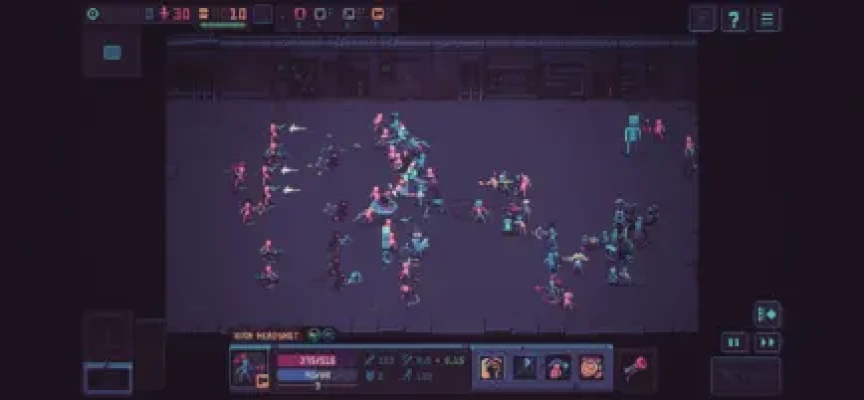
Once combat begins, your humans fight automatically. There is no frantic button-mashing or manual attack system. Your decisions happen before the battle:
- Which humans should join the army?
- Which classes should you build?
- Which weapons should you purchase?
- Which mutations should you choose?
- Who should stand in front?
- Who should stay behind?
- How should you spend your limited resources?
- Which rooms should you explore?
The official game description emphasizes that battles are automatic and that strategy comes from building and preparing the army rather than controlling individual attacks.
Despot's Game Gameplay
A typical run begins with a small group of vulnerable humans.
They are weak, poorly equipped and unlikely to survive for long without your help.
As you progress through the labyrinth, you acquire:
- New humans
- Weapons
- Classes
- Mutations
- Food
- Experience
- Resources
- Special abilities
The objective is to turn that fragile group into a coordinated army capable of defeating increasingly dangerous enemies.
The important part is that quantity alone isn't enough.
A large army with terrible positioning and no class synergy can easily lose to a smaller but better-designed team.
Main Gameplay Features
Roguelike Dungeon Runs
Every run is built around a changing dungeon.
Rooms, enemies, shops and events can vary, meaning you cannot simply memorize one perfect route and repeat it forever. You need to adapt your strategy to what the current run gives you.
Auto-Battler Combat
Combat happens automatically.
Your job is to create the right team and prepare it correctly before the battle begins.
That makes positioning, classes, mutations and equipment extremely important.
Army Building
Your humans can be transformed into specialized combat roles, including fighters, mages, cultists, tanks, healers, ninjas and shooters.
Different combinations produce different team strategies.
Weapons and Equipment
Weapons can dramatically change a unit's usefulness.
The game includes everything from swords and crossbows to deliberately ridiculous equipment such as stale pretzels.
The important question isn't whether an item is powerful by itself.
The question is:
Who benefits most from it?
Mutations
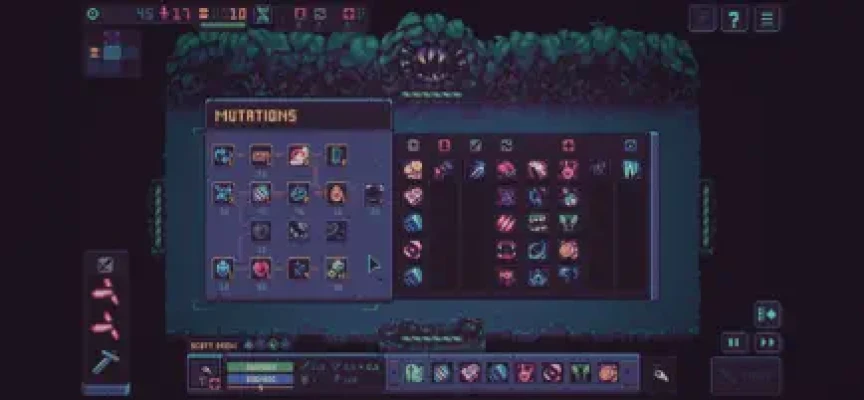
Mutations provide another layer of customization.
They can improve your army, alter how units behave or create powerful interactions with your chosen classes.
Some mutations are especially valuable when combined with a specific team composition.
Class Synergy
A strong army is rarely just a collection of individually powerful units.
You want classes that complement each other.
A frontline tank becomes much more valuable when your backline contains fragile damage dealers.
A healer becomes more important when your army depends on durable frontline units.
A class combination can therefore be stronger than simply purchasing the strongest individual character.
Procedural Enemies and Events
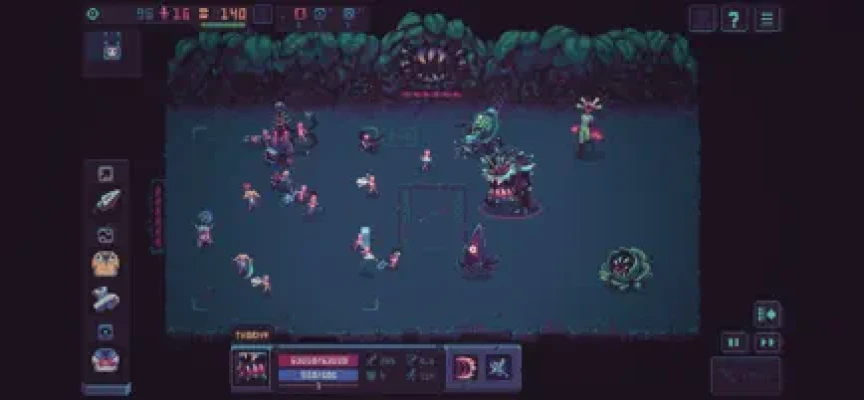
The dungeon includes monsters, traps, bosses, shops and random events. Every room can potentially help your army or make your run much more difficult.
Multiplayer Modes
After progressing through the main game, additional competitive modes become available.
The original App Store description explains that King of the Hill is a multiplayer mode unlocked after beating the game.
The current game description also highlights Brawl and King of the Hill as modes where player-created armies can compete against other squads.
Full Despot's Game Strategy Guide
1. Build a Team, Not a Collection of Units
This is the most important strategic principle.
Don't buy every useful-looking human or item.
Instead, ask whether the purchase contributes to your current team.
For example, if your army already has strong frontline protection, another frontline unit may provide less value than a damage dealer or support character.
Always think about the whole formation.
2. Establish a Frontline
Your frontline should absorb pressure and protect vulnerable units.
Tanks and other durable classes are especially useful here.
Your backline can then focus on dealing damage or providing support.
A team without a reliable frontline can collapse quickly once enemies reach its fragile units.
3. Protect Your Damage Dealers
Damage dealers are valuable because they can eliminate enemies quickly.
But they are often vulnerable.
Place them where they can contribute without being immediately exposed to enemy attacks.
Your strongest attacker is not useful if that unit dies before getting enough time to deal damage.
4. Don't Ignore Healers
Healing may not look as exciting as huge damage numbers, but sustain can determine whether your army survives a long sequence of battles.
A healer becomes especially valuable when combined with durable frontline units.
The longer your tanks remain alive, the more time your damage dealers have to work.
5. Build Around Synergy
Instead of asking:
"What's the strongest class?"
Ask:
"What classes work best together?"
This approach is much more reliable.
A balanced team with complementary abilities can outperform a collection of individually powerful units.
Best Beginner Team Structure
For a new player, a simple structure is:
Frontline: Tanks / durable fighters
Middle: Fighters or flexible damage dealers
Backline: Mages / shooters / support
Support: Healing or utility where available
This isn't a universal winning formation, but it gives you a useful starting point.
The exact composition should change according to the classes, mutations and items offered during each run.
6. Don't Spend All Your Resources Immediately
One of the biggest mistakes in roguelike games is spending everything the moment you receive it.
Keep some resources available for later opportunities.
A shop appearing several rooms later may offer exactly what your team needs.
If you spend everything early, you may be unable to take advantage of it.
7. Evaluate Shops Carefully
Not every shop purchase is worth making.
Before buying something, consider:
- Does it improve my current team?
- Does it complete a class combination?
- Does it replace something weaker?
- Will I still have enough resources afterward?
- Could I find something better later?
A powerful item that doesn't fit your build can be less valuable than a modest item that completes a strong synergy.
8. Upgrade the Weakest Part of Your Army
If your army keeps losing because the frontline collapses, buying another damage dealer won't solve the underlying problem.
Identify the bottleneck.
Is it:
- Defense?
- Healing?
- Damage?
- Positioning?
- Class synergy?
- Equipment?
- Unit count?
Fix that problem first.
9. Don't Chase Every New Class
New classes can be exciting, but changing your entire strategy every time you discover one can make your army weaker.
If your current build is working, only change it when the new option provides a clear improvement.
Consistency is valuable during a difficult run.
10. Think About Mutations Before Choosing Them
A mutation shouldn't be judged in isolation.
Ask:
How does this mutation interact with my current team?
A mutation that is mediocre for one composition may be excellent for another.
This is especially important as your build becomes more specialized.
Mutation Strategy
Mutations are one of the systems that make Despot's Game much deeper than a simple auto-battler.
When choosing a mutation, consider three things:
Immediate Benefit
Does it improve your army right now?
Long-Term Synergy
Will it become stronger as you add more units of a particular class?
Opportunity Cost
What are you giving up by choosing it?
The best choice isn't always the mutation with the biggest visible number.
A mutation that completes your build can be more valuable than one that provides a larger but isolated bonus.
11. Position Units Carefully
Because combat is automatic, positioning is one of the few direct tactical decisions you can make before a fight.
This makes it extremely important.
Frontline units should normally absorb incoming pressure.
Fragile damage dealers should be protected.
Support units should be placed where they can contribute without immediately becoming targets.
If your team repeatedly loses despite having enough damage, experiment with positioning before rebuilding the entire army.
12. Learn From Every Death
A failed run is valuable information.
After losing, ask:
- Which unit died first?
- Did the frontline collapse?
- Was my damage too low?
- Did I have enough healing?
- Did I spend resources badly?
- Did I choose the wrong mutation?
- Was my team too dependent on one class?
Then change one or two things during your next run.
Don't completely abandon everything you learned.
13. Don't Overvalue Army Size
More humans can mean more power, but it can also mean increased costs and a less focused build.
A smaller team with excellent synergy may perform better than a huge army containing unrelated classes.
Think about quality and coordination, not only quantity.
14. Use Sacrifices Strategically
Despot's Game embraces the idea that some humans may not survive.
That doesn't mean you should throw units away randomly.
A sacrifice can make sense if it allows your stronger core to survive or creates a better long-term team.
The key is understanding whether the sacrifice improves the run.
15. Adapt to the Dungeon
Don't enter every run with exactly the same strategy.
The procedural nature of the dungeon means that your available classes, items and events can change.
A strong player adapts.
If the game gives you excellent opportunities for one build, take advantage of them.
16. Prepare for Bosses
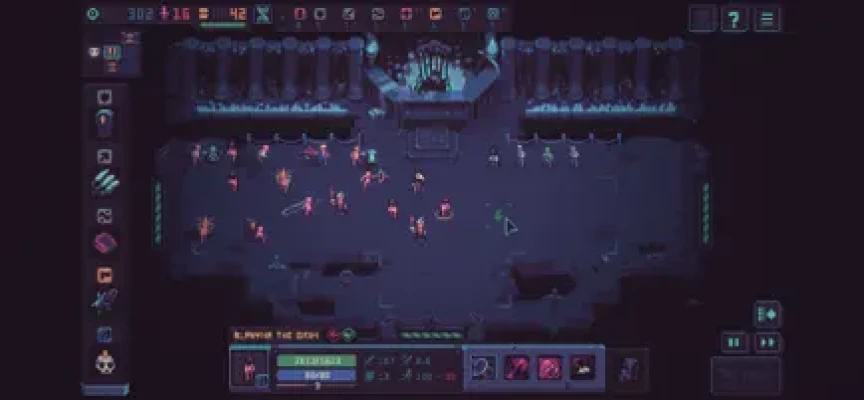
Boss fights are where weak builds tend to collapse.
Before an important boss encounter:
- Check your frontline.
- Review your damage.
- Make sure your support is adequate.
- Improve positioning.
- Spend resources intelligently.
- Avoid entering with a team built around a single fragile strategy.
17. Don't Ignore Food and Economy
The current game description specifically highlights food and economy management as part of the experience.
Resources aren't simply numbers in the corner of the screen.
They determine how many opportunities you can take.
A player who manages the economy well can make better decisions later in the run.
18. Use Experience Wisely
Experience contributes to unit development.
Don't blindly invest in every character equally.
Prioritize the units that are central to your build.
If a tank is protecting your entire backline, improving that tank may provide more value than slightly improving an unimportant damage dealer.
19. Build Around Your Best Core
Once you identify the strongest part of your army, build around it.
For example:
Strong tanks → add support and ranged damage
Strong mages → add protection and mana-related support
Strong ranged attackers → invest in frontline durability
The goal is to turn your best feature into the foundation of the entire army.
20. Know When to Stop Spending
Sometimes the best move is saving resources.
If your team is already strong and the next purchase provides only a minor improvement, keep your resources for a more important opportunity.
This is particularly useful in a roguelike where you cannot predict what the next room will contain.
Advanced Despot's Game Strategy
The Core-and-Support Method
Build your army around a small number of important units.
These are your core.
Everything else should support them.
For example:
Core: Powerful ranged damage
Protection: Tanks
Support: Healing
Utility: Class or mutation effects
This creates a clear purpose for every addition to the army.
The Counter-Build Method
Instead of always following your preferred build, observe what the current dungeon is giving you.
If you repeatedly receive excellent options for a particular class, consider changing your strategy.
A flexible player can turn an unexpected opportunity into a powerful run.
The Economy Method
Think of every purchase as an investment.
A unit that improves your army immediately is useful.
A mutation that improves several future units can be even more valuable.
A completely unrelated purchase is usually wasteful.
How to Survive Longer Runs
Long runs require consistency.
You cannot rely on one lucky battle.
Instead, maintain:
- Reliable frontline defense
- Consistent damage
- Adequate support
- Good positioning
- Efficient spending
- Useful mutations
- A flexible team composition
If one component is missing, the army may eventually reach an opponent that exposes the weakness.
Director's Cut Mode
Director's Cut is a more demanding PvE mode designed for players who want a tougher roguelike challenge.
The mode was reworked in later updates, including changes to resurrection and the consequences of losing the entire team. The developers describe it as requiring strong knowledge of the game's systems and a powerful build.
For beginners, it is better to become comfortable with the standard game before attempting the harder mode.
Brawl and King of the Hill
After learning the core mechanics, multiplayer modes provide another challenge.
The official game information describes Brawl and King of the Hill as modes where your carefully constructed army can be tested against other player-created squads.
This changes the strategy because you're no longer preparing only for predictable dungeon enemies.
You need a build that can handle a wider range of team compositions.
Best Beginner Tips
Tip 1: Build Around Synergy
Don't collect random powerful units.
Tip 2: Protect Your Backline
Damage dealers and support characters need protection.
Tip 3: Maintain a Strong Frontline
If your tanks collapse, the rest of the army can fall quickly.
Tip 4: Save Resources
Don't spend everything in the first few rooms.
Tip 5: Choose Mutations Carefully
Look for combinations that strengthen your whole team.
Tip 6: Watch Your Positioning
Automatic combat makes formation extremely important.
Tip 7: Fix Your Weakest Area
Upgrade the part of your team that causes your losses.
Tip 8: Adapt to Each Run
Procedural dungeons reward flexibility.
Tip 9: Learn From Deaths
Every failed run should teach you something.
Tip 10: Don't Chase Perfection
A good build that works is better than constantly rebuilding in search of a theoretically perfect one.
Common Mistakes
Buying Everything
More equipment doesn't automatically mean a stronger army.
Ignoring Class Synergy
Individual strength matters less when your team has no coherent strategy.
Weak Frontline
Your damage dealers cannot carry a fight if enemies reach them immediately.
Spending Too Early
Future opportunities can be more valuable than immediate upgrades.
Choosing Mutations Randomly
A mutation should contribute to your overall build.
Refusing to Adapt
A strategy that worked in one run may not work in another.
Ignoring Positioning
Auto-battler does not mean strategy-free.
Repeating Failed Builds
If a composition repeatedly fails for the same reason, change the underlying strategy.
Despot's Game Economy Guide
Resource management is one of the most important parts of a successful run.
Before spending, divide purchases into three categories:
Essential
Something that immediately solves a major weakness.
Useful
Something that improves your team but isn't necessary.
Luxury
Something that looks attractive but doesn't significantly improve your current strategy.
Prioritize essential purchases.
How to Build a Balanced Army
A balanced army generally needs:
Defense + Damage + Support + Synergy
You don't necessarily need equal investment in all four.
The exact balance depends on your build.
A defensive team might emphasize tanks and sustain.
An offensive team might prioritize damage while using enough defense to survive.
A magical build might invest heavily in spell-oriented classes and mutations.
The important part is having a plan.
Honest Review
Despot's Game is one of the more interesting mobile strategy games for players who enjoy experimentation.
Its biggest strength is that the battle itself is only the final result of a much larger decision-making process.
You build the army, choose the classes, purchase equipment, select mutations, manage resources and arrange your units. Then you watch the result.
That makes successful victories satisfying because they feel earned through preparation rather than reflexes.
The procedural dungeon also gives the game strong replay value because you cannot simply follow one fixed path every time.
The biggest potential drawback is that the game can feel unforgiving. A poor decision several rooms earlier can eventually destroy an otherwise promising run.
The mobile version also has a free portion rather than offering the entire game without purchase. The current App Store listing says four levels and ten daily Brawl attempts are available for free, with the full version unlocked through a one-time purchase.
For players who enjoy roguelikes, auto-battlers, tactical RPGs and team-building games, however, that depth is a major part of the appeal.
Pros
- Deep army-building system
- Automatic battles with meaningful preparation
- Many class combinations
- Large mutation system
- Procedural dungeon runs
- Strong replayability
- Equipment variety
- Interesting economy decisions
- Multiplayer modes
- Dark humor and distinctive presentation
- Works well for strategy-focused players
Cons
- Can be unforgiving
- Randomness can affect runs
- New players may need time to understand the systems
- Poor early decisions can hurt later
- The free iOS version is limited
- Some players may prefer direct combat instead of auto-battles
Is Despot's Game Worth Playing?
If you enjoy roguelike strategy games, auto-battlers, tactical RPGs, army builders and procedural dungeon games, Despot's Game is worth trying.
The game's biggest attraction is its combination of systems. You aren't simply choosing an attack. You're building an entire fighting machine and watching whether your decisions work.
The procedural dungeon, class combinations, mutations, equipment and automatic battles give each run plenty of room for experimentation.
It is particularly appealing to players who enjoy asking:
"What happens if I combine these things?"
That experimentation is at the heart of the game.
Despot's Game on iPhone and iPad
The App Store version supports iPhone and iPad and requires iOS 13.0 or later. The current listing identifies the game as a Strategy title developed by tinyBuild LLC and rates it 13+.
The listing also indicates frequent cartoon or fantasy violence and infrequent profanity or crude humor.
Frequently Asked Questions
What is Despot's Game?
Despot's Game is a roguelike auto-battler where you build an army of humans, equip them, develop classes and mutations, and guide them through a dangerous procedural dungeon.
Is Despot's Game an auto-battler?
Yes. Battles happen automatically, while the player's main strategic decisions involve team composition, equipment, mutations, positioning and resource management.
Can you control the characters during combat?
No. Combat is automatic. Your strategy happens primarily before the battle begins.
What happens when your army dies?
A normal roguelike run ends and you start a new run with a newly generated dungeon.
What classes can humans become?
The game includes roles such as fighters, mages, cultists, tanks, healers, ninjas and shooters, among others.
What are mutations?
Mutations are special upgrades that modify your units or army and can create powerful combinations with particular classes and builds.
Is Despot's Game multiplayer?
Yes. The game includes multiplayer elements, including Brawl and King of the Hill.
What is King of the Hill?
King of the Hill is a multiplayer mode that becomes available after progressing through the main game.
Is Despot's Game free on iPhone?
The iOS version offers a free portion of the game. The current App Store listing says four levels and ten Brawl attempts per day are available for free, while the full game can be unlocked with a one-time purchase.
Is Despot's Game offline?
The current game listing identifies the game as playable offline while also offering multiplayer features.
Is Despot's Game difficult?
It can be challenging because a poor team composition, weak positioning or inefficient resource management can end a run. The difficulty is part of its roguelike design.
Who developed Despot's Game?
The game was developed by Konfa Games and published by tinyBuild.
Game Information
Game: Despot's Game
Subtitle: Dystopian Army Builder
Developer: Konfa Games
Publisher: tinyBuild
Genre: Strategy, Roguelike, Auto-Battler, Tactical RPG
Platform: iPhone, iPad
Mode: Single-player with multiplayer features
Combat: Automatic
Core Systems: Army building, classes, mutations, equipment, positioning and resource management
Setting: Post-apocalyptic labyrinth
Visual Style: Pixel art / stylized
Age Rating: 13+ on the U.S. App Store
iOS Requirement: iOS 13.0 or later
Free Content: Four levels and ten Brawl attempts per day
Full Version: One-time in-app purchase
Final Despot's Game Strategy Checklist
Before entering a difficult battle, ask yourself:
- Is my frontline strong enough?
- Are my damage dealers protected?
- Do my classes work together?
- Does my equipment match my build?
- Are my mutations actually helping the team?
- Am I spending resources too quickly?
- Is my positioning appropriate?
- What is the weakest part of my army?
- Should I save resources for a better shop?
- Can I adapt my build to what this run is offering?
The key to Despot's Game is understanding that you are not controlling individual attacks — you are designing the army that will fight for you. Build around synergy, protect your core units, spend carefully, adapt to the dungeon and learn from every failed run. Once those principles become second nature, the game's chaotic battles become much easier to read and control.
Rate the Game
User Reviews












Popular Games



















 Android
 iOS
 Windows
 Xbox