
Latest Version
September 19, 2026
SUD Inc.
Simulation
0
com.ansangha.drparking4
Report a Problem
More About :game
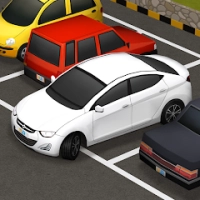
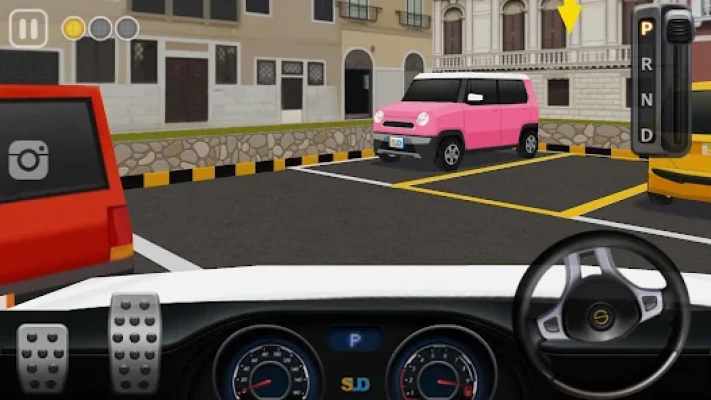
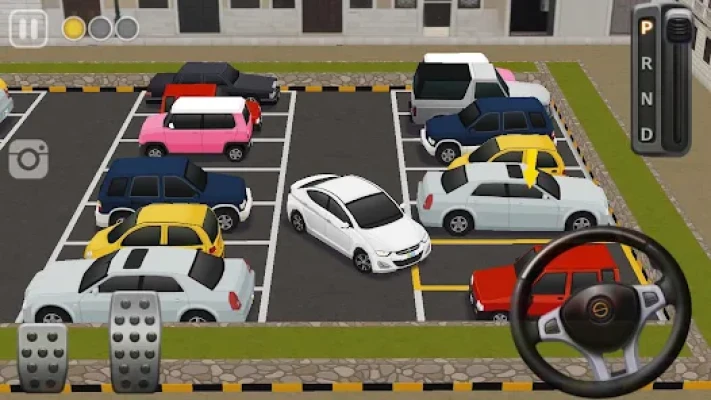
Unlike traditional racing games, the goal in Dr. Parking 4 is not to finish a track as quickly as possible. Success depends on controlling your speed, judging angles, avoiding obstacles, and placing the vehicle accurately inside the parking area.
The game features single-player parking challenges as well as real-time competitive multiplayer. Google Play currently lists 100M+ downloads, a 4.2-star rating, and an Everyone content rating.
Dr. Parking 4 Game Information
| Feature | Details |
|---|---|
| Game | Dr. Parking 4 |
| Developer | SUD Inc. |
| Package ID | com.ansangha.drparking4 |
| Genre | Simulation |
| Subgenre | Parking / Driving |
| Modes | Single-player and multiplayer |
| Multiplayer | Real-time online multiplayer |
| Offline Play | Available for supported gameplay |
| Platform | Android and Windows |
| Content Rating | Everyone |
| Monetization | Ads and in-app purchases |
| Google Play Downloads | 100M+ |
| Google Play Rating | 4.2 stars |
| Google Play Reviews | 793K+ |
| Latest listed update | August 22, 2025 |
These details come from the current Google Play listing.
What Is Dr. Parking 4?
Dr. Parking 4 is built around one simple idea: park the car accurately without hitting anything.
The game turns everyday parking maneuvers into compact driving challenges. Instead of competing primarily for speed, players must learn how steering affects the vehicle's position and how braking changes the final approach.
Its multi-stage structure makes small mistakes important. A turn that is slightly too wide can put the car outside the parking area, while braking too late can result in a collision.
Main Features
Multi-Stage Parking Levels
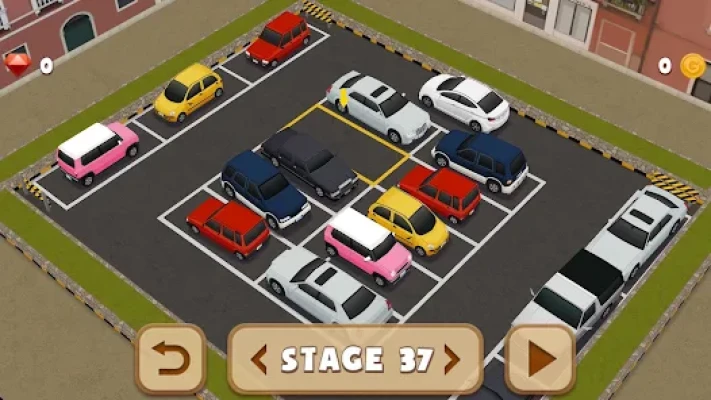
The main single-player experience consists of parking challenges that require careful vehicle control.
Each stage asks you to reach the designated parking position while avoiding collisions.
The difficulty comes from the combination of:
- Tight spaces
- Turning angles
- Narrow routes
- Obstacles
- Reversing
- Precise positioning
- Speed control
The Google Play listing specifically highlights challenging multi-stage levels as one of the game's central features.
Real-Time Online Multiplayer
Dr. Parking 4 also includes real-time online multiplayer, giving the parking simulator a competitive element beyond the single-player stages.
Multiplayer requires a slightly different mindset.
You are not simply trying to complete a parking maneuver correctly. You also need to remain consistent while dealing with the pressure of competing against another player.
A rushed maneuver can easily become a collision.
Parking Controls
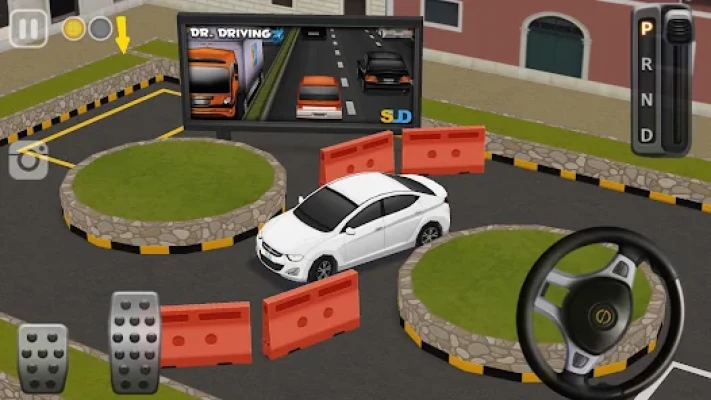
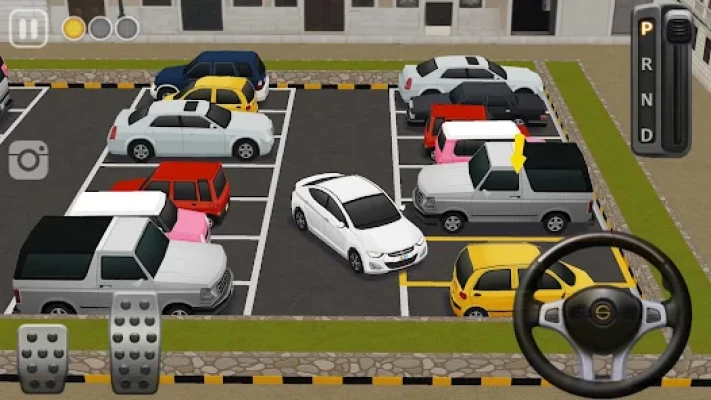
The most important skills in Dr. Parking 4 are steering, acceleration and braking.
You should treat each control separately.
Steering
Steering determines your vehicle's turning path.
Avoid making unnecessarily large steering movements. Small corrections are usually easier to control when approaching a narrow parking space.
Accelerator
The accelerator should be used carefully when entering tight areas.
High speed gives you less time to correct your angle.
Brake
The brake becomes particularly important during the final stage of a parking maneuver.
Do not wait until the car is already inside the parking space to think about stopping.
Plan the stopping point before entering the final position.
How to Park Correctly
A reliable parking routine is:
Approach → slow down → establish the angle → turn → straighten → brake → adjust.
Do not attempt to perform the entire maneuver in one movement.
Instead, divide it into small corrections.
This makes it much easier to understand where the vehicle is going.
Beginner Parking Strategy
Step 1: Slow Down Before the Turn
One of the easiest mistakes is entering a turn too quickly.
Reduce your speed before beginning the important steering movement.
Step 2: Look at the Parking Space
Do not focus exclusively on the front of the vehicle.
Think about where the entire car will end up.
Step 3: Start the Turn Early Enough
If you wait too long before turning, the vehicle may not have enough space to align with the parking area.
Step 4: Straighten the Vehicle
Once the car is aligned with the parking space, reduce steering input.
Step 5: Stop Smoothly
Use the brake instead of relying on a sudden correction at the last second.
Reverse Parking Guide
Reverse parking is one of the most useful skills to master because the vehicle's rear follows a different path from the front.
When reversing:
- Slow the vehicle first.
- Check the available space.
- Begin steering gradually.
- Watch the vehicle's rear position.
- Correct the steering before getting too close to an obstacle.
- Straighten the car as it enters the parking area.
- Brake once the vehicle is properly positioned.
The key is to avoid overcorrecting.
If the car begins moving too far toward one side, make a small steering adjustment rather than immediately turning in the opposite direction as far as possible.
Parallel-Style Parking Strategy
When the parking area is beside a curb or another vehicle, approach the maneuver slowly.
Try to establish enough space for the front of the car to swing without clipping an obstacle.
A good method is:
Position the vehicle → turn toward the space → reverse carefully → straighten → make small corrections.
Do not rush the final alignment.
A slightly slower maneuver is usually easier to control than a fast one.
Camera Control Tips
Camera perspective can dramatically affect how easy a parking maneuver feels.
The Google Play version provides the game as a driving and parking simulator, and player feedback has specifically discussed camera behavior and visibility during parking challenges.
Use the camera angle that gives you the clearest understanding of:
- Vehicle width
- Rear position
- Front corners
- Parking boundaries
- Nearby obstacles
If you cannot judge the distance properly, changing your viewpoint can be more useful than making repeated steering corrections.
How to Avoid Hitting Obstacles
The safest approach is to treat every narrow area as a slow-speed zone.
Keep clearance
Leave enough room between the vehicle and nearby objects.
Do not rely only on the front bumper
The rear of the vehicle can swing into an obstacle while you are turning.
Make smaller corrections
Large steering movements can turn a small positioning error into a collision.
Stop when uncertain
If you are not sure where the vehicle is going, slowing down or stopping gives you time to reassess.
Speed Management
Speed is one of the biggest differences between successful and unsuccessful parking attempts.
Fast driving may feel efficient on an open road, but parking challenges reward precision.
Use:
Higher speed on open sections
and
Low speed near turns, obstacles and parking spaces.
The closer you get to the final parking position, the more valuable precise control becomes.
Dr. Parking 4 Level Strategy
The best way to progress through the stages is to learn the type of maneuver each level is testing.
Simple Forward Parking
Focus on:
- Straight alignment
- Controlled braking
- Centering the vehicle
Turning Parking
Focus on:
- Entry angle
- Steering timing
- Vehicle clearance
Reverse Parking
Focus on:
- Rear movement
- Small steering corrections
- Final alignment
Tight Parking
Focus on:
- Very low speed
- Camera visibility
- Patience
- Multiple small adjustments
How to Handle Difficult Parking Spaces
When a parking space looks extremely tight, do not immediately try to squeeze the vehicle into it.
First determine:
Where should the car be before the final turn?
This starting position often matters more than the final steering movement.
If the approach is wrong, the final turn may be impossible.
Common Mistakes
Turning Too Late
The car reaches the parking space at the wrong angle.
Solution: Begin the maneuver earlier.
Turning Too Quickly
The vehicle swings too far toward an obstacle.
Solution: Use smaller steering inputs.
Entering Too Fast
You run out of time to correct the vehicle.
Solution: Reduce speed before the critical section.
Braking Too Late
The vehicle passes the intended stopping point.
Solution: Begin slowing before entering the final position.
Watching Only the Front
The rear of the vehicle hits something during a turn.
Solution: Consider the entire vehicle's path.
Overcorrecting
Repeated large steering movements make the vehicle oscillate from one side to another.
Solution: Make one small correction, reassess, then correct again.
Full Dr. Parking 4 Strategy Guide
1. Learn the Vehicle's Turning Behavior
Spend some time understanding how quickly the car responds to steering.
You do not need to memorize every movement.
Instead, learn how much space the vehicle needs to make common turns.
2. Approach Parking Spaces Slowly
The final few meters are usually where precision matters most.
Reduce speed before you enter the parking area.
3. Use the Entire Road
Do not always try to make the tightest possible turn.
If the level provides additional space, use it.
A wider approach can create a much easier angle for the final parking maneuver.
4. Think About the Rear Wheels
During a turn, the rear wheels do not follow exactly the same path as the front of the vehicle.
This matters when passing close to walls, barriers or other cars.
5. Straighten Before Stopping
If possible, finish the parking maneuver with the car properly aligned.
Do not depend on a last-second steering correction after you have already stopped.
6. Use Reversing as a Tool
Reversing is not a failure.
Sometimes backing up a little creates the correct angle for a much cleaner parking maneuver.
7. Don't Rush After a Mistake
If your approach is bad, stop and reset your position rather than making several frantic corrections.
Practice Mode Strategy
Practice is useful for learning vehicle control without the pressure of a competitive match.
The Google Play listing identifies offline gameplay among the game's capabilities, while player feedback specifically notes that Practice mode can be played offline.
Use practice sessions to work on:
- Steering
- Braking
- Reversing
- Tight turns
- Camera positioning
- Parking alignment
Instead of simply replaying easy stages, deliberately practice the maneuver that causes you the most trouble.
Multiplayer Parking Tips
Real-time multiplayer changes the pace of the game.
Stay calm
Seeing another player move quickly can encourage you to rush.
Do not let that affect your driving.
Prioritize accuracy
A clean maneuver is more valuable than an uncontrolled attempt to save a few seconds.
Learn the route
After playing a multiplayer challenge several times, pay attention to where the difficult turns occur.
Avoid unnecessary corrections
Fast steering movements can produce mistakes.
Make controlled adjustments even under pressure.
How to Improve Your Parking Skills
A useful training routine is:
Session 1 – Steering
Practice turning into spaces without worrying about speed.
Session 2 – Braking
Practice stopping exactly where you intend.
Session 3 – Reverse Parking
Work on rear positioning and alignment.
Session 4 – Tight Spaces
Practice close-distance maneuvers.
Session 5 – Multiplayer
Apply everything while dealing with competitive pressure.
This creates a more useful learning cycle than simply repeating random stages.
Advanced Parking Techniques
The Wide Approach
When there is sufficient room, approach a parking space from a wider angle.
This can reduce the amount of steering correction required.
The Correction Turn
If the car is slightly misaligned, make a small steering adjustment rather than restarting the entire maneuver.
The Reverse Reset
When the entry angle becomes poor, reverse far enough to create a better setup.
The Slow Finish
Once the vehicle is almost inside the parking space, reduce speed dramatically and focus entirely on alignment.
Dr. Parking 4 Tips for Beginners
- Slow down before difficult turns.
- Do not turn the steering wheel too aggressively.
- Watch the rear of the vehicle.
- Use the camera to judge distances.
- Brake before reaching the final stopping point.
- Use wider approaches when possible.
- Practice reversing.
- Do not rush because another player is moving quickly.
- Reset your position when the angle becomes bad.
- Learn from every collision instead of repeating the same maneuver.
Dr. Parking 4 Progression
The game is structured around multi-stage parking challenges rather than a conventional racing campaign.
The stages gradually test different combinations of driving, turning, reversing and precision parking.
Some player reviews describe completing substantial portions of the stage progression relatively quickly, while other players have requested additional levels and more challenging content. These are individual player experiences rather than an official difficulty assessment.
Graphics and Presentation
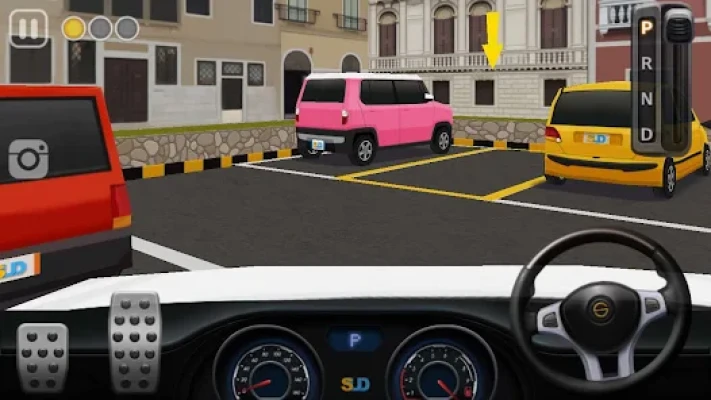
Dr. Parking 4 is designed as a stylized vehicle simulation rather than a full-scale realistic driving simulator.
SUD Inc. promotes the game around improved graphics and challenging parking gameplay, while Google Play categorizes it under simulation, vehicles, parking and driving.
The visual presentation is primarily there to make judging vehicle position and parking spaces easier while keeping the game lightweight and accessible.
Is Dr. Parking 4 Offline?
Dr. Parking 4 is listed by Google Play with offline functionality. However, not every feature necessarily works without an internet connection.
Player feedback specifically identifies Practice mode as an offline option, while the game's real-time multiplayer obviously requires an online connection.
Is Dr. Parking 4 Multiplayer?
Yes.
The game includes real-time online multiplayer, allowing players to compete in parking challenges rather than playing only against the single-player stages.
Is Dr. Parking 4 a Racing Game?
Dr. Parking 4 is primarily a parking and driving simulation, even though some app stores and analytics services place it within broader racing or vehicle categories.
Its core objective is parking accuracy rather than traditional circuit racing. Google Play itself categorizes it as a simulation and parking simulator.
Is Dr. Parking 4 Good for Learning Parking Basics?
The game can help players practice concepts such as steering, reversing, vehicle positioning and judging parking spaces.
However, it should be treated as a game rather than a substitute for real-world driver training.
Several player reviews specifically mention learning or improving parking through the game, although those comments represent individual experiences.
Dr. Parking 4 FAQ
What is Dr. Parking 4?
Dr. Parking 4 is a mobile parking simulation from SUD Inc. featuring multi-stage parking challenges, driving controls and real-time online multiplayer.
How many levels does Dr. Parking 4 have?
The game's progression contains multi-stage parking challenges. Player reviews have referred to reaching Stage 80, although the exact available progression can change between versions or modes.
Can you play Dr. Parking 4 offline?
Yes, Google Play lists offline functionality. Practice mode has also been specifically identified by players as playable offline.
Does Dr. Parking 4 have online multiplayer?
Yes. Real-time online multiplayer is one of the game's advertised features.
Is Dr. Parking 4 free?
The game is listed as free with advertisements and optional in-app purchases.
What is the best way to park in Dr. Parking 4?
Slow down before entering the parking area, establish the correct approach angle, use small steering adjustments, watch the rear of the vehicle and brake gradually once the car is aligned.
How do you reverse park in Dr. Parking 4?
Approach slowly, establish the correct starting angle, reverse while making controlled steering adjustments, then straighten the car as it enters the parking space.
Why do I keep hitting obstacles?
Most collisions happen because the vehicle enters a turn too quickly, the steering correction is too large, or the player is watching only the front of the car.
How can I improve at Dr. Parking 4?
Practice the game's core skills individually: steering, braking, reversing, camera positioning and tight-space parking. Then combine them in increasingly difficult stages.
Final Overview
Dr. Parking 4 takes the familiar task of parking a car and turns it into a series of compact driving challenges. Its appeal comes from the simplicity of the objective: reach the correct space, control the vehicle carefully and avoid collisions.
The most important skills are speed control, steering precision, reversing, camera awareness and positioning. Multiplayer adds another layer by placing those skills under competitive pressure.
If you are struggling with a particular stage, the answer is usually not to drive faster. Slow the approach down, establish a better angle and make smaller corrections. Once those fundamentals become consistent, even tight parking spaces become much easier to handle.
Rate the Game
User Reviews












Popular Games


















 Android
 iOS
iOS Windows
 Xbox
Xbox