
Latest Version
September 16, 2026
Goldoint
Simulation
0
com.metax.obby.escape.run
Report a Problem
More About :game
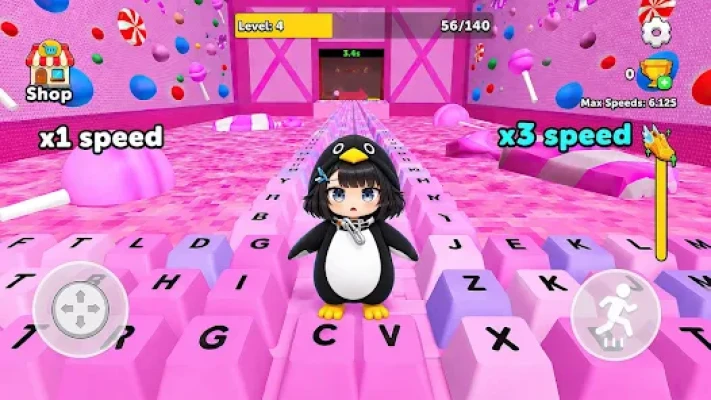
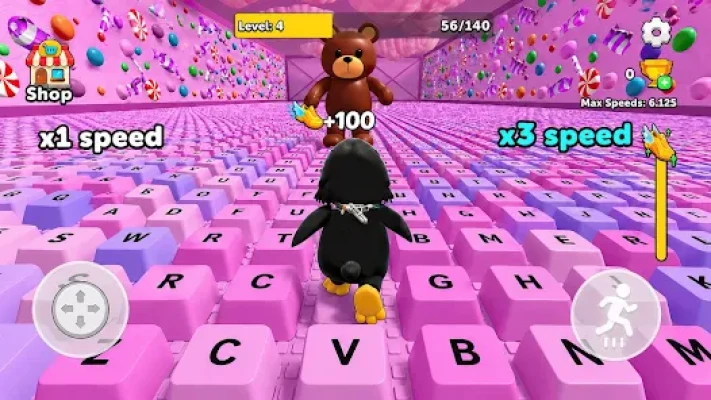
The game combines endless runner action with obby-style platforming. Instead of fighting enemies, your main challenge is the course itself. You need to react quickly, judge jumps carefully, and keep moving before the wave catches you.
The official Google Play listing describes the game as an action-packed survival experience focused on speed, timing, precision, dangerous obstacles, and increasing difficulty.
What Is Gugu Gaga: Keyboard Escape?
Gugu Gaga: Keyboard Escape is a survival running game from Goldoint. The central idea is straightforward: run as far as possible while escaping an approaching tsunami.
The longer you survive, the more demanding the course becomes. Obstacles appear more frequently, the pace increases, and there is less time to react. This makes the game easy to understand but increasingly difficult to master.
The current Google Play listing shows an Everyone content rating with mild fantasy violence, more than 1 million downloads, and an update dated September 8, 2026.
Gugu Gaga: Keyboard Escape Gameplay
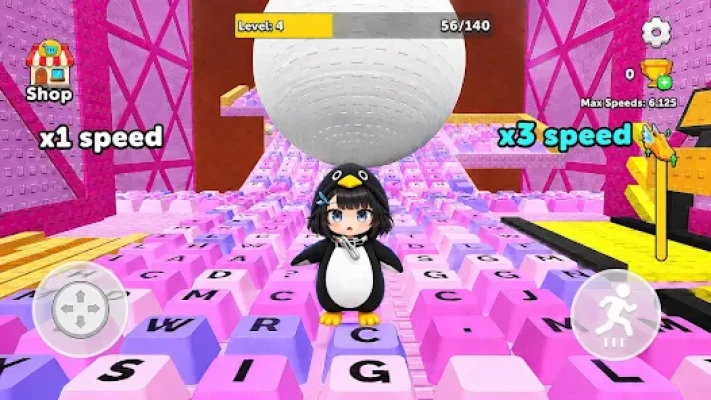
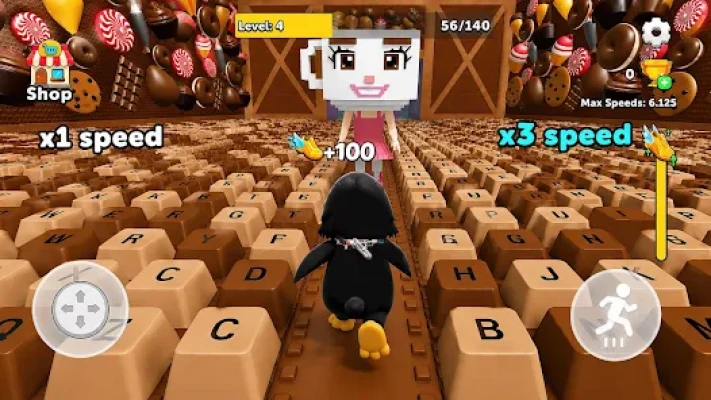
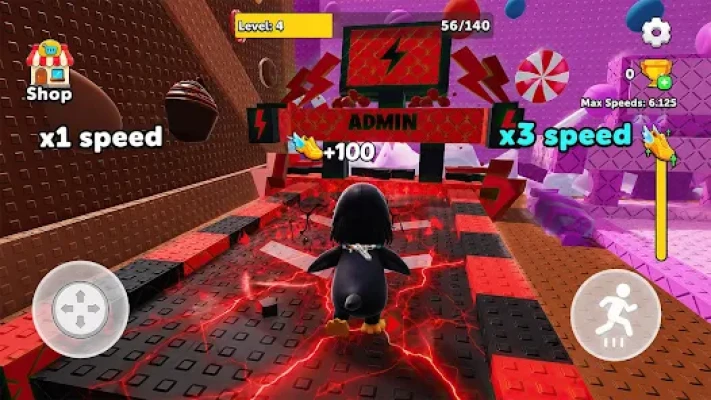
The gameplay revolves around three basic actions: running, jumping, and avoiding obstacles.
Your character moves through a dangerous path while the tsunami remains behind you. The objective is not simply to reach the end of a conventional level. Instead, survival depends on maintaining momentum and making good decisions under pressure.
The course can contain:
- Dangerous gaps
- Unexpected jumps
- Obstacles and traps
- Narrow paths
- Challenging platform sections
- Increasingly frequent hazards
- Sections requiring fast reactions
The official description also emphasizes that the tsunami becomes faster as the run continues, increasing the pressure on the player.
Key Features
Tsunami Escape Gameplay
The approaching wave creates constant pressure. You cannot spend too long studying an obstacle because hesitation can allow the tsunami to catch you.
Obby Obstacle Courses
The game uses familiar obstacle-course mechanics where positioning and jump timing are more important than combat or complex controls.
Fast-Paced Running
As the run develops, the increasing speed forces you to make decisions faster.
Simple Controls
The Google Play listing describes the game as using simple one-touch controls for running and jumping, making the basic gameplay easy to pick up.
Increasing Difficulty
The challenge grows as you survive longer. Obstacles become more frequent and the available reaction time becomes smaller.
High-Score Challenge
Rather than simply completing a short sequence and stopping, the survival format encourages you to keep improving your run and beat your previous performance.
How to Play Gugu Gaga: Keyboard Escape
The basic strategy is simple:
Keep moving → watch the next obstacle → time your jump → land safely → repeat.
The biggest mistake beginners make is concentrating only on the obstacle immediately in front of them. Try to look slightly farther ahead so you can prepare your next movement before reaching the current platform.
Step 1: Learn the Movement
Spend your first few attempts becoming comfortable with the movement and jump timing.
Do not worry about achieving a long run immediately. Understanding how quickly your character responds is more valuable during the first attempts.
Step 2: Watch the Path Ahead
Look beyond your current position whenever possible.
If you see a gap followed by another obstacle, begin planning the second jump before landing from the first.
Step 3: Jump With Purpose
Avoid jumping simply because you can.
A badly timed jump can put you directly into another obstacle. Try to identify where you want to land before pressing the jump control.
Step 4: Keep Your Momentum
The tsunami is the game's biggest source of pressure. Standing still for too long gives you less room to recover.
When the path is safe, maintain your forward movement rather than repeatedly stopping and restarting.
Step 5: React to New Obstacles
As the speed increases, memorizing a single rhythm becomes less reliable.
Instead, develop the habit of quickly identifying:
- Where the next safe platform is
- Whether you need to jump
- How much space you have
- What obstacle comes immediately afterward
Full Strategy Guide
1. Don't Rush Every Jump
Fast gameplay does not mean every action should be rushed.
A controlled jump is usually safer than an early jump made because you are nervous about the tsunami.
Use the available running space before jumping when the course allows it.
2. Look for Safe Landing Areas
The landing is just as important as the jump itself.
Before jumping across a gap, identify the approximate landing position. A jump that technically clears an obstacle can still fail if you land too close to the edge.
3. Use Short Practice Runs
Instead of becoming frustrated by repeated failures, treat every attempt as information.
Ask yourself:
- Where did I fall?
- Was the jump too early?
- Was it too late?
- Did I misjudge the landing?
- Did I react to the obstacle too slowly?
Once you understand the reason for a failure, the next attempt becomes more useful.
4. Prepare for the Second Obstacle
One of the most useful habits in an obby game is thinking one obstacle ahead.
For example, if you are approaching a gap and can already see a hazard immediately after it, do not focus exclusively on clearing the gap.
Plan your landing so you are ready for the next movement.
5. Don't Panic When the Tsunami Gets Close
The wave is designed to create pressure.
When it gets close, players often start jumping too early or making unnecessary movements. That can cause mistakes that would not happen during a calmer run.
Stay focused on the course rather than constantly looking behind you.
6. Learn Repeated Sections
If you encounter similar obstacle patterns repeatedly, use your previous attempt to improve your timing.
The goal is not just to remember that an obstacle exists. Remember when you need to react to it.
7. Keep Your Camera and Character Position Clear
A good view of the upcoming path makes platforming easier.
Whenever possible, keep the character positioned so that the next obstacle is clearly visible. Avoid making unnecessary camera or movement adjustments immediately before a difficult jump.
8. Prioritize Survival Over Style
If the game presents a difficult section, take the safest available route.
Trying to make unnecessary risky movements can end a strong run. Your first objective should be staying alive.
Once you become comfortable with a section, you can experiment with faster movement.
Advanced Survival Tips
Use Rhythm to Improve Timing
Many obstacle courses become easier when you recognize their movement rhythm.
Instead of reacting randomly, observe the timing of platforms and hazards. Once you understand the pattern, your movements become more deliberate.
Make Small Corrections
Large movement changes can be difficult to control during a fast run.
When approaching a narrow landing, smaller corrections are often safer than dramatic directional movements.
Expect the Game to Get Faster
Do not treat the early portion of a run as representative of the entire challenge.
The official description specifically notes that the tsunami moves faster and obstacles become more frequent as you progress.
Don't Repeat the Same Mistake
If you fail at the same obstacle several times, change your approach.
Try a slightly earlier jump, a later jump, a different position, or a different pace. Repeating exactly the same action usually produces exactly the same result.
Beginner Mistakes to Avoid
Jumping too early:
You may clear the first hazard but miss the intended landing area.
Stopping unnecessarily:
The tsunami continues to create pressure while you hesitate.
Watching only the character:
Looking slightly ahead gives you more time to react.
Panic jumping:
Rapidly pressing the jump control without reading the course can make difficult sections harder.
Ignoring previous attempts:
Every failed run can teach you something about obstacle timing.
Taking unnecessary risks:
A safe route is usually preferable when your main goal is survival.
How to Get Better at Gugu Gaga: Keyboard Escape
Improvement comes from combining three skills:
Reaction: Recognize hazards quickly.
Timing: Jump at the correct moment.
Positioning: Put your character in the right place before the next obstacle.
If you improve these three areas, your runs should become more consistent even as the game gets faster.
Gugu Gaga: Keyboard Escape Controls
The Google Play listing describes the game as using simple one-touch controls for running and jumping. The game's current listing is available for Android and Windows.
The control system is intentionally simple, allowing you to concentrate on obstacle timing instead of learning a complicated control scheme.
Difficulty and Progression
Gugu Gaga: Keyboard Escape starts with an accessible concept, but surviving for longer becomes progressively more demanding.
The difficulty comes primarily from speed and reaction time. As the tsunami moves faster and obstacles appear more frequently, you have less opportunity to recover from mistakes.
This creates a straightforward progression:
Learn the controls → understand obstacles → improve timing → survive longer → chase a better run.
Who Will Enjoy Gugu Gaga: Keyboard Escape?
This game is particularly suited to players who enjoy:
- Obby games
- Parkour challenges
- Endless runners
- Escape games
- Survival games
- Platforming challenges
- Quick-reaction gameplay
- Short, repeatable runs
It can also appeal to younger players because the core controls are simple and the game carries an Everyone rating on Google Play.
Honest Gameplay Impressions
The strongest part of Gugu Gaga: Keyboard Escape is its simple concept. You immediately understand what you need to do: keep moving, avoid obstacles, and stay ahead of the tsunami.
That simplicity also makes mistakes easy to understand. When a run ends, you can usually identify the obstacle or timing error that caused the failure and attempt it again.
The increasing speed gives the game its tension. A section that feels comfortable early in a run can become much harder once there is less time to react.
Gugu Gaga: Keyboard Escape Tips for High Scores
If your goal is to achieve longer runs, concentrate on consistency rather than taking unnecessary risks.
Tip 1: Learn difficult sections before trying to move quickly.
Tip 2: Watch the next obstacle while completing the current one.
Tip 3: Use your available running distance before difficult jumps.
Tip 4: Avoid unnecessary jumps.
Tip 5: Stay calm when the tsunami approaches.
Tip 6: Study every failed attempt.
Tip 7: Practice the sections where your timing is weakest.
Tip 8: Once your survival becomes consistent, gradually increase your pace.
Frequently Asked Questions
What is Gugu Gaga: Keyboard Escape?
Gugu Gaga: Keyboard Escape is a survival obby and endless parkour-style game in which players run through obstacle courses while escaping an approaching tsunami.
Is Gugu Gaga: Keyboard Escape difficult?
The basic gameplay is easy to understand, but the challenge increases as the tsunami becomes faster and obstacles appear more frequently.
What is the main objective?
The main objective is to survive as long as possible by running, jumping, and avoiding the obstacles while staying ahead of the tsunami.
Does the game have simple controls?
Yes. The official listing describes simple one-touch controls designed for running and jumping.
Is Gugu Gaga: Keyboard Escape available on Android?
Yes. Google Play currently lists the game for Android, with Windows availability also shown on the store page.
Does the game get faster?
Yes. The game's description states that the tsunami moves faster and obstacles become more frequent as you progress.
Is Gugu Gaga: Keyboard Escape an obby game?
Yes. Its gameplay combines survival, escape, parkour, and obby obstacle-course mechanics.
Final Thoughts
Gugu Gaga: Keyboard Escape keeps its formula straightforward: run forward, overcome obstacles, and stay ahead of the approaching tsunami.
The real challenge comes from how quickly the situation becomes more demanding. Better reaction time, smarter jumping, and careful positioning can turn short attempts into much longer survival runs.
If you enjoy obby games, parkour challenges, escape games, endless runners, and fast-paced obstacle courses, Gugu Gaga: Keyboard Escape offers a simple gameplay loop with plenty of room to improve.
Rate the Game
User Reviews







Popular Games

















 Android
 iOS
iOS Windows
 Xbox
Xbox