

Latest Version
September 13, 2026
Brocker Bus Studio
Simulation
Android
0
com.paint.hidenseek.camoguys
Report a Problem
More About :game
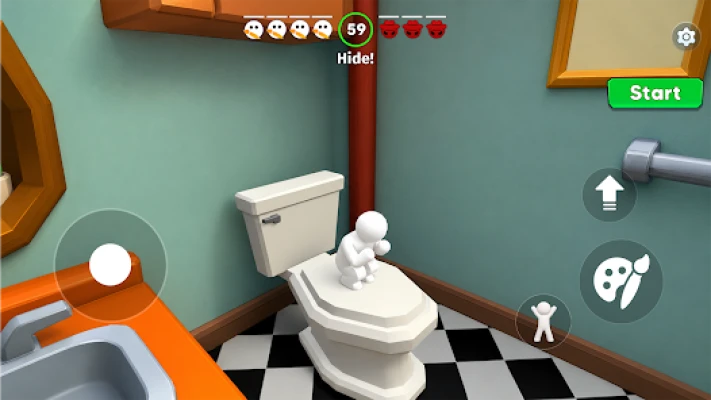
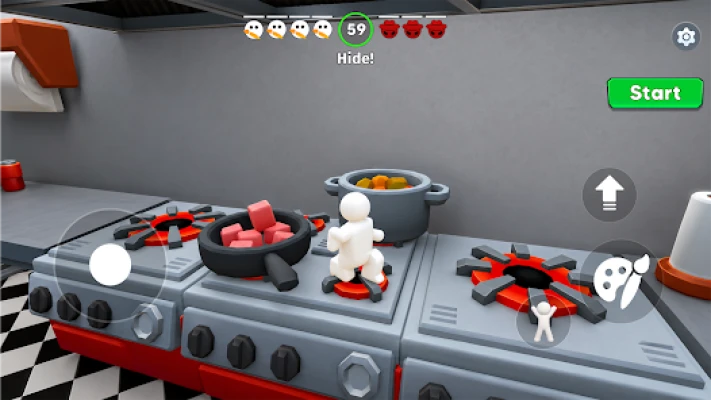
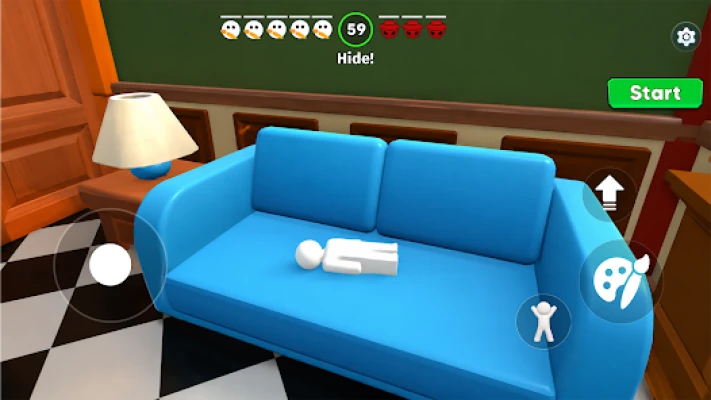
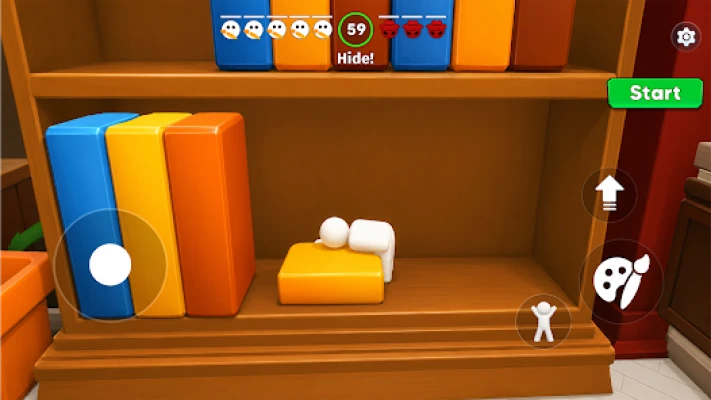
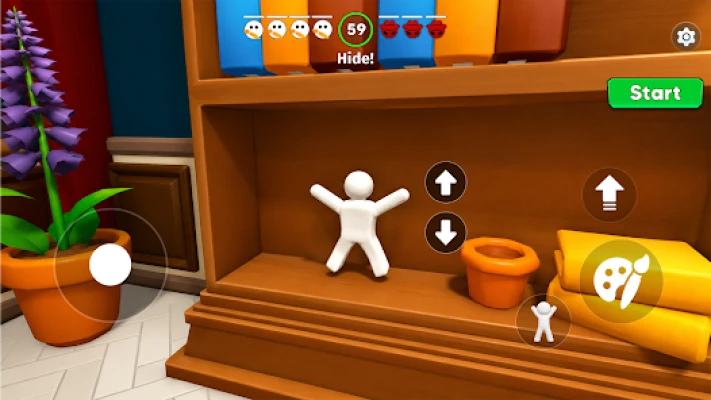
Each level challenges you to study the map, choose a suitable hiding location, mix or match colors, and become difficult to spot. Walls, floors, objects, and other parts of the environment can all become potential camouflage opportunities.
The game combines hide and seek, camouflage, color matching, observation, and casual simulation gameplay into short and accessible challenges.
The Google Play listing currently shows 100K+ downloads, an Everyone content rating, ads, and an August 15, 2026 update.
What Is Paint Hide & Seek: Camo Guys?
Paint Hide & Seek: Camo Guys turns a familiar game of hide and seek into a camouflage challenge.
Your character needs to blend into the environment rather than simply finding the darkest or most distant corner of a map. The better your colors match the surroundings, the harder you can be to notice.
The game encourages players to think about:
- Color matching
- Positioning
- Hiding spots
- Environmental details
- Movement
- Observation
- Timing
Every level introduces a new environment where you need to decide how and where to hide.
Game Information
| Feature | Details |
|---|---|
| Game | Paint Hide & Seek: Camo Guys |
| Developer | Brocker Bus Studio |
| Genre | Simulation / Casual |
| Platform | Android |
| Content Rating | Everyone |
| Downloads | 100K+ |
| Contains Ads | Yes |
| Latest listed update | August 15, 2026 |
| Main Gameplay | Hide and seek, camouflage, color matching |
| Package | com.paint.hidenseek.camoguys |
Google Play lists the game under Simulation and describes its main gameplay as painting, hiding, and blending into the background.
How to Play Paint Hide & Seek: Camo Guys
The basic gameplay is easy to understand, but finding an excellent hiding position requires careful observation.
Step 1: Study the Environment
Before choosing where to hide, look around the entire area.
Check:
- Walls
- Floors
- Furniture
- Boxes
- Decorative objects
- Corners
- Large structures
- Areas with similar colors
Don't immediately choose the closest hiding spot.
Step 2: Find a Matching Color
Once you've selected a potential hiding location, determine which colors dominate that area.
The goal is to make your character visually blend with the environment.
A good hiding place with a poor color match can be worse than an ordinary hiding place with excellent camouflage.
Step 3: Paint Your Character
Use the available color options to make your character resemble the surrounding environment.
Pay attention to the dominant shade rather than focusing on a tiny detail.
If you're hiding near a blue wall, for example, a color that is completely different from the wall can make you stand out immediately.
Step 4: Choose Your Position Carefully
Color is only part of the camouflage.
Your position matters too.
Try to place your character:
- Against a similarly colored surface
- Behind or beside objects
- Away from open areas
- Near shapes that naturally break up your outline
- Where your character is less visually obvious
Step 5: Stop Moving When Necessary
Movement can reveal a character that would otherwise be difficult to notice.
Once you have found a strong position, unnecessary movement can make your camouflage less effective.
Think of the environment as part of your disguise.
Full Strategy Guide
1. Don't Always Pick the Closest Object
The nearest object isn't necessarily the best hiding place.
Take a moment to scan the map and compare several possible locations.
A slightly farther location may offer a much better color match and stronger visual cover.
2. Match the Largest Surface Around You
When choosing a color, focus on the largest visible surface surrounding your character.
If you're next to a large wall, matching the wall can be more useful than matching a small decoration beside it.
Large areas determine the overall visual impression.
3. Use Corners Wisely
Corners can provide useful camouflage because they reduce the amount of your character that is exposed.
However, don't assume every corner is safe.
A corner with a completely different color can make you more noticeable.
The best corner combines position + color + visual cover.
4. Look for Similar Shapes
Color isn't the only thing that makes camouflage work.
Pay attention to the shape of nearby objects.
If your character can sit beside objects with similar colors and shapes, your outline becomes less obvious.
This is especially useful in colorful maps filled with furniture and decorations.
5. Avoid Empty Spaces
Open areas are usually poor hiding locations because your character becomes easier to distinguish from the surroundings.
If you have a choice between:
Open floor + perfect color
and
Object-filled area + good color
the second option can often provide better visual protection.
6. Think Like the Seeker
Before hiding, imagine that you are searching the map.
Ask:
"Where would I look first?"
Avoid obvious locations.
If an object looks like the perfect hiding place because it is directly in front of you, it may also be the first location another player would inspect.
7. Use Color Contrast to Your Advantage
You don't always need to find an exact color.
Sometimes the environment contains several similar shades.
Look for a location where your character's color doesn't create a sharp outline against the background.
A close color match can be more effective than trying to find a theoretically perfect color in a visually complicated area.
8. Pay Attention to Lighting
Bright and dark areas can change how colors appear.
A color that seems perfect in one part of the map may look noticeably different somewhere else.
When possible, compare your character directly against the surface where you intend to hide.
9. Don't Change Position Without a Reason
Once you've found an effective hiding spot, don't move simply because another location looks interesting.
Changing positions can expose you.
Instead, move only when you have identified a clearly stronger location.
10. Learn From Failed Hiding Spots
If you're found quickly, don't simply restart and choose another random location.
Ask why the hiding spot failed.
Was the color wrong?
Was too much of the character visible?
Was the position too open?
Was the location too obvious?
Understanding the reason for failure will help you improve much faster.
Advanced Camouflage Techniques
Blend With the Background, Not Just the Object
A common beginner mistake is focusing on one object.
Instead, look at the complete visual area around your character.
If the wall, floor, and nearby objects share similar colors, position yourself where your character naturally fits into the overall scene.
Break Up Your Silhouette
Even a good color match can fail if the character's outline is obvious.
Try to hide beside objects that interrupt the visible shape of your character.
This makes it harder to immediately recognize the character as a separate object.
Choose Unusual Hiding Locations
Predictable hiding spots are easier to check.
Once you understand the basic mechanics, start experimenting with less obvious locations.
The ideal hiding place is one that:
- Matches your color.
- Provides visual cover.
- Doesn't look like an obvious hiding location.
- Keeps your character relatively still.
Use the Environment as a Disguise
Don't think of the map as scenery.
Think of it as your camouflage toolkit.
Every wall, floor, object, and decorative element potentially provides a different color and hiding opportunity.
Best Tips for Beginners
If you're just starting, remember these rules:
Look before you hide.
A quick scan can reveal better locations.
Match colors carefully.
Your camouflage is strongest when your character resembles the surrounding surface.
Avoid open spaces.
Being surrounded by empty floor makes you easier to identify.
Use objects for cover.
Visual obstruction can make your character harder to recognize.
Don't move unnecessarily.
Movement can attract attention.
Think like a seeker.
If a hiding location looks obvious to you, it may be obvious to someone searching.
Common Mistakes to Avoid
Hiding in the First Available Spot
The first location you see may be convenient but not effective.
Matching the Wrong Color
A hiding place is only useful if your character blends with it.
Ignoring Your Outline
Even when the color is close, a clearly visible character shape can give away your position.
Choosing an Empty Area
Large open spaces provide little visual protection.
Moving Too Much
Constant movement can undo otherwise good camouflage.
Using the Same Strategy Every Time
Different environments require different approaches. Adapt your hiding method to the map rather than repeating one location pattern.
What Makes Paint Hide & Seek: Camo Guys Fun?
The main attraction is the combination of a familiar childhood game with a color-matching mechanic.
Traditional hide and seek is primarily about choosing a location. Here, you also have to think about how your character looks once you get there.
That creates two connected decisions:
Where should I hide?
and
How should I look while hiding there?
This makes each level a small camouflage puzzle.
Graphics and Atmosphere
Paint Hide & Seek: Camo Guys uses colorful environments designed around visual recognition and camouflage.
Because the gameplay depends on distinguishing your character from the surroundings, the colors and objects in each environment are an important part of the challenge.
The result is a lighthearted presentation rather than a dark or frightening hide-and-seek experience.
Difficulty
The controls and concept are easy to understand, but the challenge increases as you become more familiar with the basic strategy.
At first, you may simply look for a matching color.
With more experience, you'll naturally start considering:
- Visibility
- Position
- Object shapes
- Background colors
- Movement
- Search patterns
- Alternative hiding spots
That progression makes the game more interesting than simply choosing a random place to stand.
Is Paint Hide & Seek: Camo Guys Worth Playing?
If you enjoy casual games with simple mechanics and quick challenges, Paint Hide & Seek: Camo Guys has an appealing concept.
The camouflage mechanic gives traditional hide and seek an extra layer of strategy without making the controls complicated.
It is particularly suitable for players who enjoy color games, casual simulation games, hide-and-seek games, observation challenges, and relaxing mobile gameplay.
Pros and Cons
Pros
- Creative take on hide and seek
- Easy-to-understand gameplay
- Color matching adds a strategic element
- Colorful environments
- Encourages observation
- Simple controls
- Suitable for casual play
- Everyone content rating
- 100K+ Google Play downloads at the time of checking
Cons
- Contains advertisements
- Gameplay is intentionally simple
- Players looking for complex progression may want a deeper experience
- Success depends heavily on visual observation and camouflage
Frequently Asked Questions
What is Paint Hide & Seek: Camo Guys?
Paint Hide & Seek: Camo Guys is a casual hide-and-seek game where you paint your character to match the environment and try to avoid being discovered.
How do you win in Paint Hide & Seek: Camo Guys?
The key is to find a strong hiding position, match your character's colors to the environment, minimize visibility, and avoid unnecessary movement.
What is the best hiding strategy?
Look for a location that combines a close color match with visual cover. Don't simply choose the nearest object or most obvious hiding spot.
Does color matter in Paint Hide & Seek?
Yes. Matching your character to the surrounding environment is one of the game's central mechanics.
Is Paint Hide & Seek: Camo Guys free?
The game is available on Google Play and contains ads.
Is Paint Hide & Seek: Camo Guys suitable for children?
Google Play currently gives the game an Everyone content rating.
What devices can run the game?
Paint Hide & Seek: Camo Guys is an Android game available through Google Play. The game's current listing identifies it as a mobile title.
Final Verdict
Paint Hide & Seek: Camo Guys gives the classic hide-and-seek formula a simple but clever makeover. Instead of relying only on a hiding location, you have to make your character visually disappear into the environment.
The best players learn to combine color matching, positioning, visual cover, observation, and patience.
If you enjoy casual games where a simple idea creates short strategic challenges, this is a fun title to consider.
Rate the Game
User Reviews




Popular Games


















 Android
 iOS
iOS Windows
 Xbox
Xbox