

Latest Version
September 29, 2025
Solus Games, LLC
Sports
iOS
0
Report a Problem
More About :game
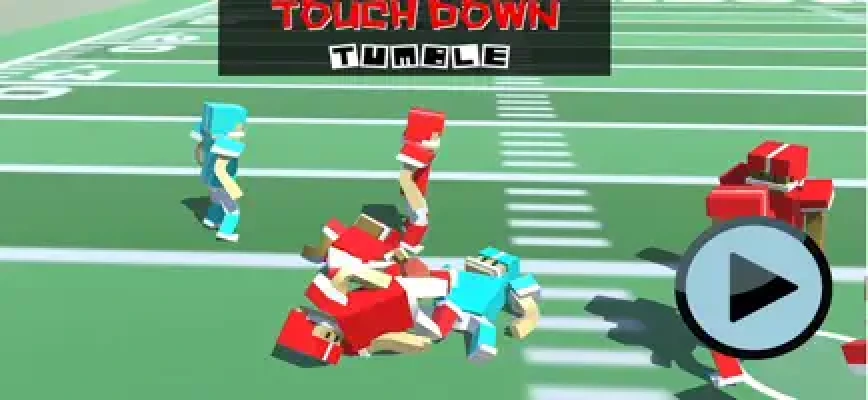
Instead of trying to simulate every aspect of professional football, Touchdown Tumble focuses on making individual plays easy to understand while leaving room for experimentation. You can run the ball, throw passes, avoid defenders and work your way through different challenges.
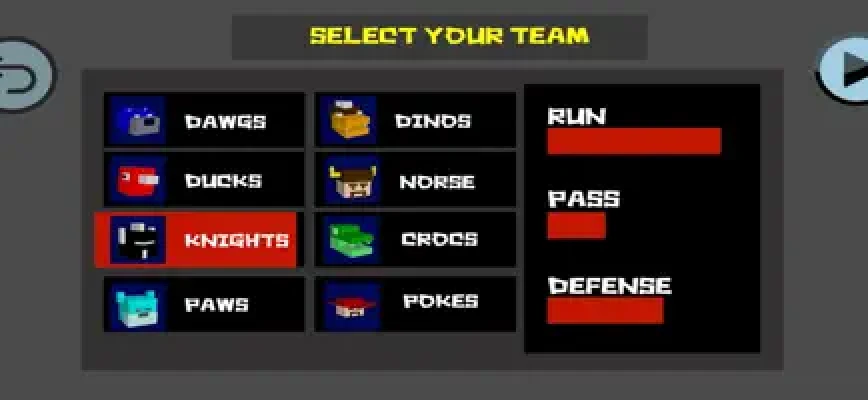
The game also includes exhibition games and a full-season League Play experience featuring several different teams.
What Is Touchdown Tumble?
Touchdown Tumble is a football arcade game for iPhone and iPad where the objective is simple: move the ball downfield, create scoring opportunities and finish drives with touchdowns.
Its physics-based gameplay gives plays a less predictable feel than a traditional football simulator. Running and passing require you to read the defense, choose your target and react quickly when the play develops.
The game is especially focused on offense, with running and passing forming the core of the experience.
Touchdown Tumble Features
Dynamic Football Physics
The game uses physics-driven football action, giving players a more arcade-like experience. Player movement, passing and collisions all contribute to the outcome of each play.
Run, Pass and Jump
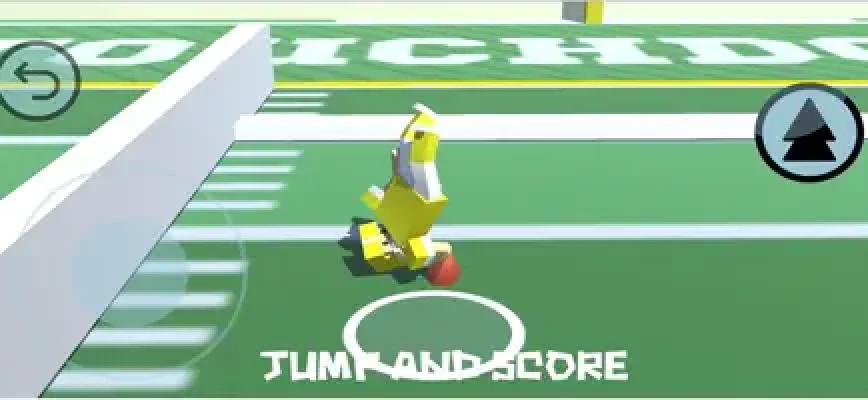
Three of the game's central actions are running, passing and jumping.
Learning when to use each one is important. A well-timed pass can turn a short play into a big gain, while a well-controlled run can help you steadily move toward the end zone.
Challenge Modes
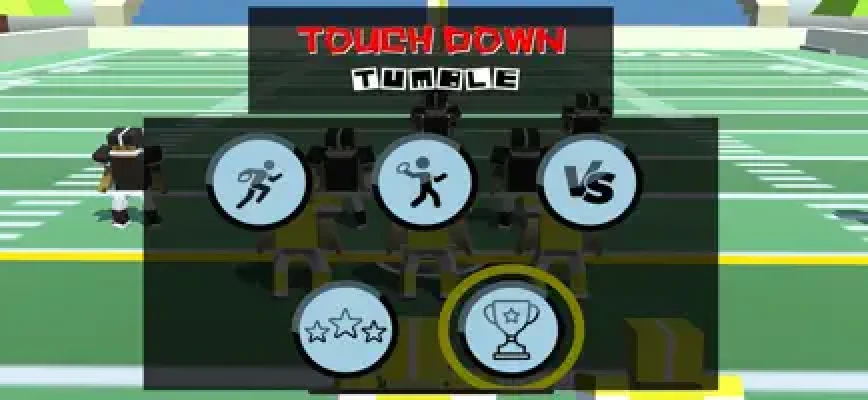
Touchdown Tumble includes several challenge-oriented modes designed to test different football skills.
These are useful for practicing individual parts of your game rather than immediately committing to a full season.
Exhibition Games
Exhibition games provide a straightforward way to play football without the longer commitment of a full League Play season.
League Play
League Play lets you play through an entire season against several different teams.
This gives the game a longer progression structure and makes each matchup part of a larger season.
Defensive AI Variety
The game's documented updates added different defensive formations and behaviors, including outside-run defensive plays and robber passing plays designed to stop short routes.
That means you cannot expect the same offensive play to work perfectly against every defensive setup.
How to Play Touchdown Tumble
The basic gameplay loop is straightforward:
- Select a game or challenge.
- Start the offensive play.
- Read the defensive setup.
- Choose whether to run or pass.
- Move the ball into open space.
- Avoid defenders.
- Reach the end zone or gain enough yards for the next down.
- Adjust your strategy based on the defense.
The most important skill is learning to make decisions quickly.
A football play can change within seconds, so having a plan before the snap is useful, but knowing when to abandon that plan is equally important.
Complete Touchdown Tumble Strategy Guide
1. Read the Defense Before Passing
One of the biggest mistakes new players make is deciding where to throw before looking at the defensive alignment.
Instead, scan the field first.
Look for:
- Open receivers
- Deep coverage
- Defenders near the line
- Gaps between defenders
- Short routes
- Potential pressure
- Areas where your receiver can gain separation
Once you identify the open area, make the pass rather than forcing the ball toward a covered receiver.
2. Use Short Passes When the Defense Plays Deep
If the defense is protecting against deeper throws, short routes can become useful.
The game's updates specifically mention deeper passing and changes to pass coverage designed to create better balance between passing and defense.
When defenders move deeper downfield, look underneath them.
A short completion can still be valuable if it keeps the drive moving.
3. Don't Force Every Throw
A spectacular deep pass is satisfying, but forcing long throws into coverage can quickly destroy a drive.
Before throwing, ask:
Is the receiver open?
If the answer is no, look for another option.
This is particularly important against defensive schemes designed to intercept short routes.
4. Learn to Recognize Robber Defense
Touchdown Tumble's updates introduced robber passing plays designed to stop short routes.
This means a short pass that normally looks safe may become dangerous if a defender is positioned to jump the route.
When you see this type of coverage:
- Look beyond the first receiver.
- Check deeper routes.
- Avoid throwing directly toward the robber defender.
- Wait for a better passing window.
- Consider running if the defense leaves space underneath.
5. Use the Run When the Defense Gives You Space
Passing should not be your automatic choice.
If the defense is heavily focused on coverage, running can provide an opportunity to gain yards.
Watch for:
- Open running lanes
- Defensive players moving away from the line
- Outside space
- Gaps created by the defensive alignment
If the middle is crowded, look for space toward the outside.
The developers have specifically added outside-run defensive plays, so defensive formations can be designed to counter this approach.
6. Don't Run Directly Into Traffic
A common arcade-football mistake is running straight ahead even when several defenders are already positioned in the lane.
Instead, identify the least congested path.
Your goal isn't necessarily to move in a perfectly straight line.
Use the available space.
A few extra seconds of lateral movement can sometimes turn a short gain into a much larger play.
7. Use Jumping at the Right Moment
Jumping is one of the game's basic offensive actions.
Don't use it automatically.
A jump is most useful when you have identified a specific obstacle or want to alter the way your player approaches a defender.
If you jump too early, you may lose control of the play. If you jump without a clear purpose, you can make your movement less predictable.
Practice the timing during challenge modes before relying on it during important League Play games.
8. Think About Down-and-Distance
Even in an arcade football game, not every play needs to produce a huge gain.
Sometimes the best decision is simply to move the ball forward.
If you need only a few yards, prioritize a safe play.
If you're facing a long third-down situation, you may need to consider a more aggressive pass.
This simple distinction can make your League Play performance much more consistent.
9. Use Deeper Passing Carefully
The game introduced deeper passing as part of its balancing changes.
Deep passes can produce major gains, but they also give the defense more opportunity to react.
Before attempting a deep throw:
- Check the safety position.
- Make sure your receiver has room.
- Avoid throwing directly into coverage.
- Lead the receiver when possible.
- Release the ball at the appropriate moment.
A deep pass should be an intentional decision rather than a desperate one.
10. Develop a Reliable Passing Rhythm
Passing can feel difficult initially because you need to aim and release quickly.
One App Store reviewer specifically described the passing controls as sensitive and suggested that pre-aiming would make them easier to control.
Rather than constantly making large adjustments, try to develop a small, repeatable aiming motion.
Practice:
Locate receiver → aim → adjust → release
With repetition, the sequence becomes faster and more natural.
League Play Strategy
League Play is where Touchdown Tumble becomes more than a collection of individual football challenges.
You play through a full season against different teams.
The best approach is to treat every game as its own matchup.
Early in the Season
Use early games to learn:
- Passing timing
- Defensive tendencies
- Running lanes
- Your preferred offensive plays
- How different teams defend
Don't become dependent on one play.
Mid-Season Strategy
As you become more comfortable, start mixing your offense.
For example:
Run → short pass → run → deep pass
Changing your approach makes it harder to predict what you're trying to accomplish.
Late-Game Strategy
When you're ahead, you don't necessarily need to take unnecessary risks.
Protect the lead by:
- Choosing safer plays
- Avoiding forced passes
- Taking available yardage
- Keeping possession
- Avoiding turnovers
When you're behind, the opposite applies: you may need to accept more risk and attempt bigger plays.
Challenge Mode Tips
Challenge modes are useful because they isolate particular football skills.
Use them to practice:
Passing
Work on accuracy and timing.
Running
Practice identifying open lanes.
Movement
Learn how the player responds to directional controls.
Jumping
Develop better timing around defenders.
Decision Making
Practice choosing between running and passing quickly.
Instead of simply trying to complete challenges, use them as training sessions for League Play.
Touchdown Tumble Passing Guide
Passing is arguably one of the most important skills to master.
Short Pass
Use short passes when:
- A receiver is open underneath.
- The defense is playing deep.
- You need a reliable gain.
- You want to maintain possession.
Medium Pass
Medium routes are useful when you can identify a clear passing window between defenders.
Deep Pass
Use deep passes when:
- The receiver has room.
- The defense is vulnerable deep.
- You need a large gain.
- The risk is justified by the situation.
The game's passing system has been expanded to allow deeper throws, while defensive coverage was adjusted to balance them.
Touchdown Tumble Running Guide
Running is more than simply moving toward the end zone.
Look for Gaps
Identify where defenders aren't positioned.
Change Direction Carefully
Sudden movement can help you find space, but unnecessary direction changes can also slow your progress.
Use the Outside
If the middle is crowded, check the edges.
Don't Chase Huge Plays Every Time
A consistent five- or ten-yard gain can be more useful than repeatedly attempting a risky run.
How to Score More Touchdowns
If you're struggling to score, use this basic formula:
Read the defense → choose the safest open option → gain yards → repeat → attack the end zone when the opportunity appears.
Near the goal line, defensive behavior becomes particularly important. The game's update history specifically notes improvements to AI decisions when close to scoring.
Don't assume the same play that worked in midfield will work near the end zone.
Touchdown Tumble Offensive Tips
Mix Run and Pass
A predictable offense is easier to defend.
Attack Open Space
Don't throw or run directly toward defenders when another route is available.
Use Deep Throws Selectively
Big plays can change a game, but failed deep passes can waste valuable opportunities.
Watch Defensive Alignment
The defense provides information before the play develops.
Stay Patient
You don't have to score on every single play.
Touchdown Tumble Defensive Strategy
The current App Store description focuses primarily on offensive gameplay, and player feedback has requested additional defensive control.
The documented game updates, however, show that defensive AI is part of the game's balance. These updates added different defensive coverages, outside-run defenses and robber plays.
Therefore, learning how the AI reacts to your offensive decisions is an important part of becoming better at the game.
Touchdown Tumble Game Information
Game: Touchdown Tumble
Developer: Solus Games, LLC
Genre: Sports
Style: Retro arcade football
Platforms: iPhone and iPad
Language: English
Age Rating: 9+
Size: 115.7 MB
Requires: iOS 12.0 or later
In-App Purchases: Yes
Game Center: Not specifically listed in the current App Store information
App Store ID: 6466640916
The App Store currently lists Touchdown Tumble as a free Sports game with in-app purchases. The listed purchase includes League Play & Challenges for $1.99.
Touchdown Tumble Controls
The game is designed around straightforward football controls for running, passing and jumping.
Because passing requires directional aiming, controlling the quarterback accurately is particularly important.
If the passing controls initially feel sensitive, spend time practicing without worrying about the final score. One player review specifically noted that aiming could feel difficult because of the sensitivity of the controls.
Touchdown Tumble Pros and Things to Know
Highlights
- Retro arcade football presentation
- Dynamic physics
- Running and passing gameplay
- Jumping mechanics
- Challenge modes
- Exhibition games
- Full-season League Play
- Multiple defensive behaviors
- Short games designed for quick sessions
- Free to download
The developers have stated that quarter length was changed to 1:30, producing games of roughly six to eight minutes.
Things Players Should Know
The current U.S. App Store listing shows a 3.1/5 rating from 64 ratings. Recent reviews include requests for features such as jukes, hurdles, additional plays, defensive control and multiplayer. These are player requests rather than features currently documented as available.
The game's last listed version history update is version 1.04 from February 9, 2024, with earlier updates adding challenge and League Play changes and gameplay balancing.
Frequently Asked Questions
What is Touchdown Tumble?
Touchdown Tumble is a retro arcade American football game featuring physics-based gameplay, running, passing, jumping, challenge modes, exhibition games and League Play.
Is Touchdown Tumble available on iPhone?
Yes. The App Store lists the game for iPhone and iPad and states that it requires iOS 12.0 or later.
Does Touchdown Tumble have a season mode?
Yes. League Play allows players to compete through an entire season against several different teams.
Can you pass the ball in Touchdown Tumble?
Yes. Passing is one of the game's primary mechanics, and updates have expanded the passing system to allow deeper throws.
Can you run the ball?
Yes. Running is one of the core gameplay mechanics, alongside passing and jumping.
Does Touchdown Tumble have challenge modes?
Yes. The game includes several skills and challenge modes, and League Play & Challenges are also available as an in-app purchase according to the App Store listing.
Is Touchdown Tumble multiplayer?
The current App Store description does not list online multiplayer as a feature. Recent player reviews have requested multiplayer functionality, so it should not be presented as a currently confirmed feature.
How long is a Touchdown Tumble game?
The game's update notes state that quarters were changed to 1 minute 30 seconds, producing games that take approximately six to eight minutes.
Final Touchdown Tumble Strategy
The key to Touchdown Tumble is learning to make quick decisions without becoming predictable.
Read the defense before the play, look for open space, mix running and passing, use short throws when coverage is deep, and save aggressive deep passes for situations where the potential reward justifies the risk.
For League Play, consistency matters across an entire season. Learn how different defensive formations respond to your offense, recognize robber coverage, and don't force a big play when a safe gain is available.
Once you understand the passing controls and begin recognizing defensive patterns, Touchdown Tumble becomes much easier to approach strategically. Its combination of retro football presentation, dynamic physics, short games and League Play gives it a distinct arcade-style identity.
Rate the Game
User Reviews















Popular Games



















 Android
 iOS
iOS Windows
 Xbox
Xbox