


Latest Version
October 11, 2026
DAERI SOFT Inc
Sports
Android
0
com.daerigame.volleygirls
Report a Problem
More About :game
You follow Ji-su Han, a first-year student who discovers her passion for volleyball and helps a team of rookies work toward championship glory. As you progress, you recruit players from different schools, improve their attributes, learn their signature moves, and compete in leagues and tournaments.
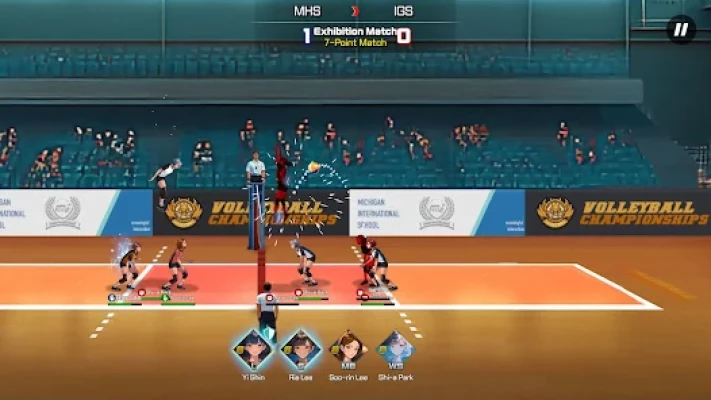
Unlike a simple sports game where you only control the ball, Volley Girls gives you control over all four positions on the court: Wing Spiker, Middle Blocker, Setter, and Libero. Timing, positioning, aiming, and team composition all influence how well you perform.
The game also includes Normal and Pro control modes, a dynamic skill system, customizable cosmetics, and an offline practice mode for playing against schools across the C-to-S ranks.
Story and High School Volleyball Setting
The story follows Ji-su Han as she begins her volleyball journey and helps a group of inexperienced players develop into serious competitors. The team's progress is about more than winning matches: players build friendships, overcome challenges, and learn to work together under pressure.
The school setting gives each match a sense of rivalry. Different schools provide new opponents and recruiting opportunities, while league seasons and knockout tournaments create clear goals for your team.
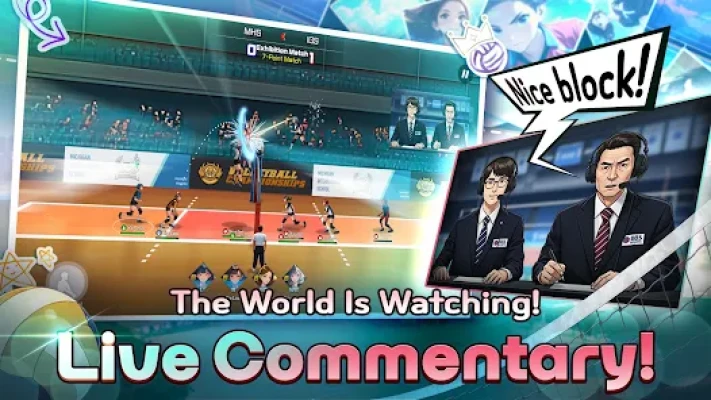
The anime-inspired presentation, gym introductions, and energetic commentary add to the atmosphere. Every rally can become a turning point, whether you are trying to save a difficult shot, block an opponent's spike, or score the point that sends your team into the next round.
Main Features of Volley Girls: High School Story
1. 4-on-4 Volleyball Gameplay
Matches use four positions: Wing Spiker, Middle Blocker, Setter, and Libero. Each position contributes differently to the rally, so learning their roles is essential.
You control serves, sets, spikes, and defensive plays through responsive button controls. The game rewards good timing and accurate decisions rather than relying only on player strength.
2. Full Control of Every Position
Volley Girls allows you to take control of all four positions. This creates opportunities to influence a rally from the serve through the final attack.
You need to understand when to prepare a set, when to attack, and when to focus on defense. Learning the purpose of each position will help you make better decisions during fast exchanges.
3. Quick Attacks and Precision Spiking
Quick-attack tosses help you create faster offensive opportunities, while spike-aiming guides help you target your attacks.
Instead of sending every spike in the same direction, use the aiming guide to choose a useful target. Changing your attack placement can make your offense less predictable and help you respond to different defensive setups.
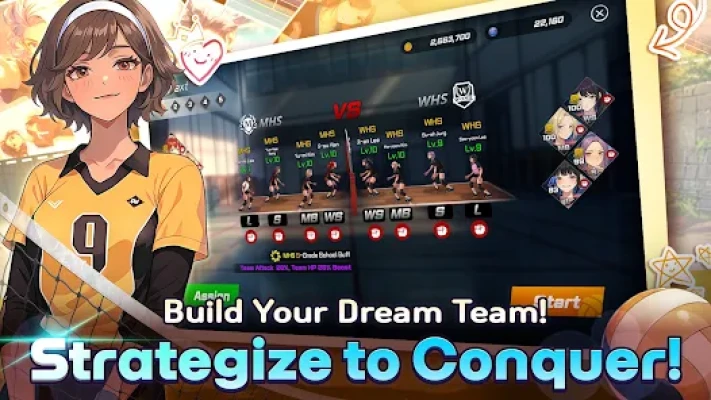
4. Build Your Dream Team
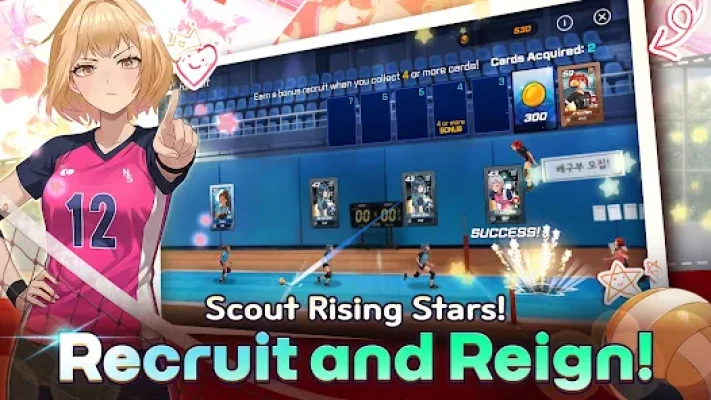
Recruit players with different abilities from multiple schools. Position-based card packs give you opportunities to strengthen particular areas of your lineup.
Team building is not just about collecting the strongest individual players. You should also consider position coverage, player attributes, special abilities, and school combinations.
5. School Buffs
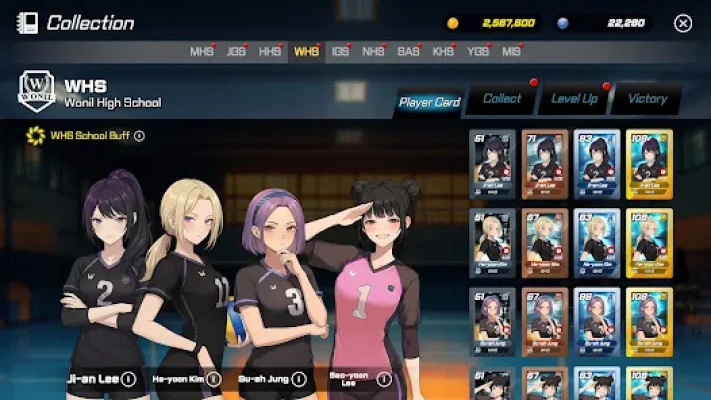
Fielding four teammates from the same school activates School Buffs. These bonuses make school identity an important part of roster planning.
A team built around a shared school can benefit from its bonus, while a mixed-school lineup may give you more flexibility when filling specific positions. Compare the advantages of both approaches as your roster develops.
6. Story, League, and Tournament Modes
The story mode follows Ji-su and her teammates as they work toward becoming championship contenders. League seasons provide ongoing competitive goals, while playoffs and knockout tournaments test your ability to win under pressure.
These modes offer different ways to progress and earn rewards. Work through the story to develop your team, then use your improved roster to tackle more demanding competitions.
7. Elemental Skills and Signature Moves
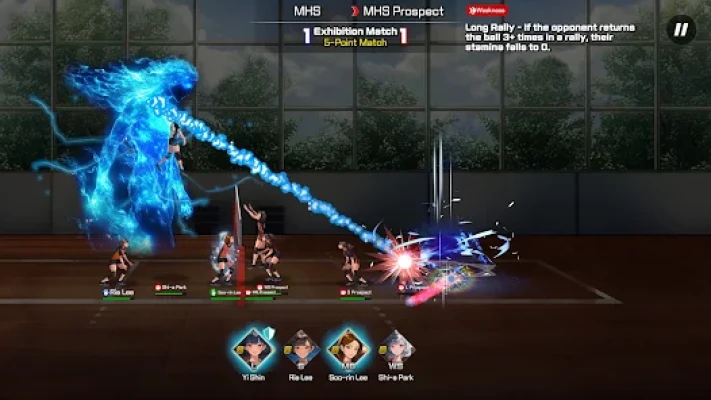
Players can use distinctive techniques such as flaming spikes, lightning serves, and powerful blocks. The game features more than a dozen elemental techniques with effects that can increase damage, extend combos, or apply damage over time.
Learning when to use these abilities adds another layer of strategy. A special move can be particularly valuable during an important rally, but using abilities without considering the situation may waste their potential.
8. Normal and Pro Controls
Volley Girls offers two control modes to accommodate different levels of experience. Normal controls are a useful starting point for learning the basics, while Pro controls provide an option for players who want a more demanding experience.
Choose the mode that lets you make reliable decisions. You can experiment with a more advanced control style once you understand the timing of serving, setting, spiking, and defense.
9. Player Training and Attribute Upgrades
Training improves your players and helps prepare the team for tougher opponents. Attribute combinations matter because different roles have different responsibilities.
Rather than upgrading everyone equally, identify the positions that most need improvement. Stronger attacking players can help finish rallies, while a dependable setter and defensive lineup can make your overall performance more consistent.
10. Offline Practice Matches
The game includes an offline mode that lets you play practice matches against schools from C to S rank without a network connection.
This is useful for players who want to practice at their own pace or play in situations where an internet connection is unavailable. Offline practice also provides a way to become more familiar with the controls and different opponents.
11. Cosmetics and Customization
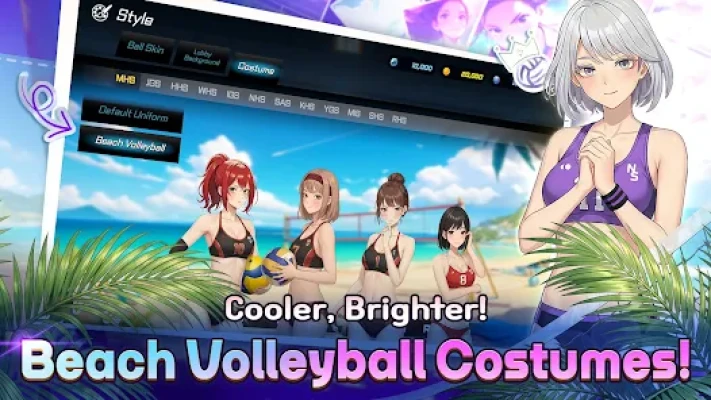
You can customize items such as ball skins and lobby backgrounds. The game also includes character costumes, allowing you to personalize the presentation of your team.
These options add variety to the experience, although gameplay improvements should generally take priority when you are spending limited progression resources.
Gameplay: How Volley Girls Works
The main gameplay loop combines real-time volleyball matches with team development. You serve, set up attacks, aim spikes, block opposing attacks, and defend against incoming shots. Winning matches helps you advance through the story, leagues, and tournaments.
Between matches, you recruit players, improve attributes, collect position-based card packs, and refine your lineup. As your roster grows, you can experiment with different school combinations and activate School Buffs by fielding four teammates from the same school.
Special abilities add another strategic layer. Elemental techniques can strengthen attacks or create useful effects during a rally, but they work best when used with a clear plan.
Success therefore depends on three connected elements: understanding volleyball fundamentals, building a balanced team, and developing the right players for your preferred style.
Complete Volley Girls Strategy Guide
1. Learn the Four Court Positions
Understanding each position is the foundation of good volleyball strategy.
Wing Spiker: A key attacking role that helps finish rallies with spikes.
Middle Blocker: Supports the defense at the net and helps stop opposing attacks.
Setter: Creates attacking opportunities by preparing the ball for teammates.
Libero: Focuses on defensive coverage and keeping the rally alive.
Each position contributes to the team's overall performance. A lineup with powerful attackers may still struggle if it cannot set up reliable attacks or defend effectively.
Spend time learning how each position works during matches. Once you understand the roles, you can make better recruiting and upgrade decisions.
2. Practice Serving Before Chasing Powerful Attacks
A serve starts every rally and gives you the first opportunity to apply pressure. Learn the controls and timing before focusing on advanced techniques.
Try to develop a consistent serving routine. Pay attention to the result of each serve and experiment with the available options as you become more comfortable.
Special serves can add extra pressure, but basic consistency is valuable while you are learning. A reliable serve helps you begin rallies without making unnecessary mistakes.
Serving tips:
Learn the serving controls in practice matches.
Watch how your chosen technique affects the rally.
Experiment with special serves as you become more confident.
Avoid using advanced techniques before you understand their timing.
3. Use the Setter to Create Better Attacks
A good attack often begins with a well-timed set. Instead of treating the setter as a minor part of the lineup, think of this position as the link between defense and offense.
Pay attention to when your team has a suitable opportunity to prepare an attack. A rushed or poorly timed set may make it harder to finish the rally effectively.
Quick-attack tosses can help you create faster offensive plays. Practice their timing and use them when the situation supports a quick transition from setup to spike.
4. Aim Your Spikes Carefully
Volley Girls includes precision aiming guides for spikes, giving you more control over attack placement.
Do not automatically aim every attack at the same location. Watch how the rally develops and choose a target that makes sense for the current situation.
Varying your spike placement can make your attacks harder to anticipate. Practice using the aiming guide until you can select targets without losing track of the rally.
Spiking strategy:
Learn the timing of your attacking controls.
Use aiming guides to select a target.
Mix up attack placement rather than repeating one pattern.
Practice quick attacks to improve your offensive rhythm.
Develop your main attacking player as your team grows.
5. Improve Blocking and Defense
Defense is just as important as scoring. Even a powerful attack-focused lineup can lose if it allows opponents to score too easily.
The Middle Blocker helps defend the net, while the Libero supports defensive coverage. Learn how these positions contribute to a rally and avoid focusing exclusively on the Wing Spiker.
When an opponent repeatedly scores in a particular way, consider whether your lineup and player development need adjustment. Improving defensive consistency can give your team more chances to build an effective counterattack.
6. Build a Balanced Starting Lineup
A strong roster should cover all four positions. Avoid concentrating exclusively on recruiting attackers while neglecting the players who support them.
Review your available players and identify the weakest part of your lineup. If your team struggles to prepare attacks, improve the players involved in setting up plays. If opponents score too easily, look at your defensive positions.
Team-building priorities:
Fill all four positions with suitable players.
Develop a dependable setter.
Maintain effective attacking options.
Give defense enough attention.
Compare player attributes before investing resources.
Reassess your lineup when you reach stronger opponents.
7. Decide Between a School Team and a Mixed Roster
School Buffs activate when you field four players from the same school. This gives you a clear decision when building your team.
A school-focused lineup can benefit from the relevant bonus, while a mixed roster may allow you to select players based on individual strengths and position needs.
Do not assume one approach is always superior. Compare the players you have available and consider whether the school bonus makes up for any weaknesses in the lineup.
As your collection grows, test both approaches in practice matches and use the results to guide your decisions.
8. Recruit Players with a Purpose
Position-based card packs can help you develop the areas where your team needs improvement. Before recruiting or investing in a player, consider how that player fits your lineup.
A new character may look attractive, but the most useful addition is often the one who fills a genuine gap. If your current team lacks reliable defense, another attacker may not solve your immediate problem.
Review your roster regularly and set a clear recruiting goal. This makes it easier to use your available resources without constantly changing direction.
9. Upgrade Player Attributes Strategically
Player training helps your team compete against stronger schools and progress through more difficult modes.
Focus on attributes that support each player's role. Attack-focused players should contribute to your scoring strategy, while defensive players need to support your ability to keep rallies alive.
Avoid upgrading every player equally if resources are limited. Prioritize your core lineup, then expand your investments as your team becomes more established.
After a major upgrade, test your team in a match and see whether the improvement addresses the problem you were trying to solve.
10. Use Elemental Skills at the Right Time
Special abilities such as flaming spikes, lightning serves, and powerful blocks add variety to the game. Some techniques can increase damage, extend combos, or apply damage-over-time effects.
The important part is understanding each ability's purpose. Read the skill descriptions and learn which situations make an ability useful.
Avoid activating a special move simply because it is available. Consider whether it can help you score, interrupt an opponent's momentum, or improve your position in a rally.
Skill strategy:
Learn each player's signature abilities.
Understand the effect of each elemental technique.
Match skills to the player's role.
Practice timing before relying on advanced moves.
Develop the players whose abilities fit your lineup.
11. Choose Normal or Pro Controls Based on Your Experience
Normal controls are a sensible starting point for beginners. They allow you to learn the flow of a match without immediately taking on the added demands of a more advanced control style.
Once you can serve, set, spike, and defend consistently, try Pro controls if you want a greater challenge.
There is no need to switch simply because a mode sounds more advanced. Choose the control scheme that helps you make reliable decisions and enjoy the matches.
12. Progress Through Story Mode First
The story mode follows Ji-su and her teammates as they develop from inexperienced players into serious competitors. It provides a natural way to learn the game and work toward new goals.
Use story progression to practice your skills, strengthen your roster, and collect rewards. When you reach a difficult match, review your lineup and training before trying again.
Story mode also gives your team a clear progression path before you focus on more demanding league and tournament challenges.
13. Approach Leagues and Tournaments Carefully
League seasons, playoffs, and knockout tournaments provide opportunities to test your team under greater pressure.
Before entering a difficult competition, check that your four positions are adequately developed and that your main players have useful skills. A lineup that performs well against weaker opponents may need more training before it can handle stronger teams.
Treat each defeat as a chance to identify a weakness. Sometimes you need better player development; other times, the issue may be timing, attack placement, or an ineffective team combination.
14. Make Offline Practice Count
Offline practice matches are useful for learning controls and trying out different lineups. The mode supports matches against schools from C to S rank, allowing you to practice without a network connection.
Use practice sessions to test one specific idea at a time. For example, you might focus on spike placement, learn the timing of a special serve, or compare two possible lineups.
Practicing with a clear goal helps you understand what works and makes your match performance more consistent.
15. Build a Simple Daily Routine
A routine helps you make progress without spending all your time deciding what to do next.
Suggested routine:
Check available story and league objectives.
Review your team's weakest position.
Train your core players when resources allow.
Practice serving, setting, and spiking.
Try an available tournament or league match.
Review recruiting opportunities and position-based card packs.
Experiment with School Buffs if your roster allows it.
Use offline practice to test a new technique or lineup.
Adjust this routine to your available time. Consistent improvement is more important than completing every possible activity in one session.
Common Volley Girls Mistakes to Avoid
Ignoring the setter: Strong attackers need reliable setup opportunities. Develop your setter alongside your main scorers.
Building an attack-only roster: Defense matters. Keep the Middle Blocker and Libero roles in mind when improving your team.
Repeating the same spike placement: Use aiming guides and vary your attacks to make your offense less predictable.
Ignoring School Buffs: Four teammates from the same school can activate a bonus. Consider this when comparing different lineups.
Recruiting without a plan: Focus on the positions your team needs rather than collecting players without considering their role.
Spending resources on every player: Prioritize your main lineup and expand your investments as your resources grow.
Using special skills without understanding them: Learn each ability's effects and practice its timing.
Moving to Pro controls too early: Build confidence with the controls before increasing the challenge.
Skipping practice: Offline practice can help you refine techniques and compare lineups without needing a live connection.
Is Volley Girls: High School Story Worth Playing?
Volley Girls: High School Story is a good option for players who enjoy anime-inspired sports games and want more control than a simple volleyball arcade game provides. Its 4-on-4 matches combine direct control, team development, special skills, and tactical decisions.
The ability to recruit players from different schools adds a collection element, while School Buffs give roster building a strategic purpose. Story mode, leagues, and tournaments provide several ways to progress, and offline practice makes it easier to learn the controls at your own pace.
The game may be less appealing to players who prefer realistic volleyball simulation or who do not enjoy developing a roster over time. Its special abilities and player progression also give it a more stylized feel than a traditional sports simulator.
Pros
4-on-4 volleyball with control of all four positions.
Anime-inspired story featuring Ji-su Han and her teammates.
Multiple schools and recruitable players.
School Buffs add depth to team building.
Precision spike aiming and quick-attack options.
More than a dozen elemental techniques.
Story, league, playoff, and tournament modes.
Normal and Pro control options.
Offline practice matches against schools from C to S rank.
Player training and cosmetic customization.
Cons
Team development requires time and planning.
Managing four positions may take practice for beginners.
Recruiting and roster building can involve random rewards.
Special skills may feel less realistic to players seeking simulation-style volleyball.
Ads and optional in-app purchases are included.
Frequently Asked Questions
What is Volley Girls: High School Story?
Volley Girls: High School Story is an anime-inspired volleyball game developed by DAERI SOFT. It combines 4-on-4 matches, player recruitment, team training, special abilities, story progression, leagues, and tournaments.
Is Volley Girls free to play?
Yes. The game is free to download and includes advertisements and optional in-app purchases.
How many players are on the court?
The game features 4-on-4 volleyball. You control the Wing Spiker, Middle Blocker, Setter, and Libero positions.
Can you control every position?
Yes. The game lets you control all four positions, giving you influence over serves, sets, spikes, blocks, and defensive plays.
What are School Buffs?
School Buffs are bonuses activated when you field four teammates from the same school. They are an important consideration when planning your roster.
How do you build a strong team?
Start by filling all four positions, then improve your weakest areas. Develop your main attackers, maintain reliable setting and defense, and compare school bonuses with the benefits of a mixed lineup.
What are elemental skills?
Elemental skills are special techniques, including flaming spikes, lightning serves, and powerful blocks. Their effects can improve attacks, extend combos, or apply damage over time.
Does Volley Girls have an offline mode?
Yes. The game includes an offline practice mode that lets you play against schools from C to S rank without a network connection.
What is the difference between Normal and Pro controls?
Normal controls provide a more accessible starting point, while Pro controls offer an option for players who want a more demanding control experience.
Is Volley Girls suitable for casual players?
Yes. It offers different control modes and offline practice, making it accessible to players who want to learn gradually. Team development and tournament progression can provide longer-term goals for those who want more challenge.
Final Verdict
Volley Girls: High School Story combines fast 4-on-4 volleyball matches with anime-style storytelling, player collection, special abilities, and team-building strategy. Its strongest feature is the way court positioning and roster development work together: winning requires more than powerful spikes, because setting, blocking, and defense also matter.
For beginners, the best strategy is to learn all four positions, build a balanced lineup, practice spike placement, and develop players who support your team's needs. Once you understand the controls and team systems, leagues and tournaments provide rewarding goals as you help Ji-su and her teammates chase championship success.
Rate the Game
User Reviews















Popular Games



















 Android
 iOS
iOS Windows
 Xbox
Xbox