


Latest Version
October 03, 2026
Gryphon Games UG
Sports
iOS
0
Report a Problem
More About :game
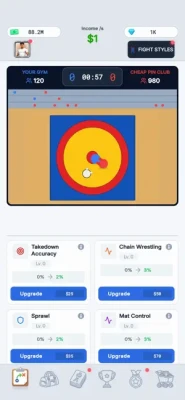
The game combines idle progression, sports management, tycoon-style development, and fighting-game presentation. Your gym continues generating income while you're away, while completed upgrades and newly recruited fighters give you more ways to strengthen your roster.
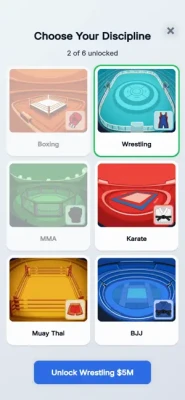
There are currently six combat sports disciplines:
- Boxing
- MMA
- Wrestling
- Karate
- Muay Thai
- Brazilian Jiu Jitsu
Each discipline has its own fighters, arena, and style of competition.
What Is Fight Star?
Fight Star puts you behind the scenes of a growing combat-sports organization.
Your objective is to transform inexperienced fighters into champions while expanding the strength and income of your gym.
The main gameplay loop is:
Recruit → Train → Equip → Fight → Earn → Upgrade → Advance
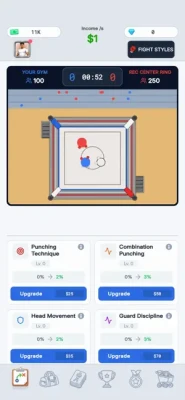
Unlike a traditional boxing or MMA game, you aren't primarily responsible for manually throwing punches or controlling movement. Instead, you prepare your fighters and watch the bouts unfold in real time.
This makes Fight Star particularly suited to players who enjoy idle games, sports management games, tycoon games, boxing games, and MMA-themed progression systems.
Six Combat Sports in Fight Star
Boxing
Boxing is built around punches, combinations, knockdowns, and knockout victories.
Develop fighters capable of producing consistent offensive pressure while improving their overall abilities and equipment.
MMA
MMA expands the combat system beyond striking. Fighters can use punches, kicks, takedowns, and submissions.
Building a well-rounded fighter is particularly important because fights can end through different techniques.
Wrestling
Wrestling emphasizes grappling and takedown-based combat.
A fighter's ability to control an opponent can be just as important as raw striking power.
Karate
Karate provides another striking-focused discipline with its own fighters and arena.
Pay attention to the development of fighters specifically assigned to this discipline rather than treating every sport as identical.
Muay Thai
Muay Thai adds another specialized striking discipline to your gym.
Developing appropriate fighters and equipment for each discipline helps your overall gym progress.
Brazilian Jiu Jitsu
Brazilian Jiu Jitsu focuses heavily on grappling and submissions.
The discipline gives the game another distinct combat style beyond traditional striking competitions.
The six disciplines and their different bout styles are part of Fight Star's current official game description.
Fight Star Beginner Strategy Guide
1. Build Your Core Roster First
When you start the game, resist the temptation to invest heavily in every fighter.
Instead, identify the fighters currently contributing the most to your progression.
Concentrate your early resources on them.
A strong core roster is more useful than having many underdeveloped fighters.
2. Train Before Chasing New Fighters
Recruiting new fighters is exciting, but a new fighter isn't automatically more valuable than a well-developed member of your existing roster.
Before spending resources on another recruitment, ask:
- Does my current team need a replacement?
- Is my existing fighter close to an important upgrade?
- Will the new fighter significantly improve my progression?
- Do I have enough resources to develop them?
This prevents your gym from becoming overloaded with fighters that you don't have enough resources to train.
Fighter Training Guide
Training is one of the most important parts of Fight Star.
The basic principle is simple:
Invest in fighters that are actually moving your gym forward.
As fighters become stronger, they can help you win more bouts and advance through the career ladder.
Prioritize:
- Your active fighters
- Important level upgrades
- Skills and techniques
- Equipment
- Secondary fighters
The game specifically allows players to level up fighters and unlock skills and techniques as part of character development.
Skills and Techniques
Fighters aren't defined only by their basic statistics.
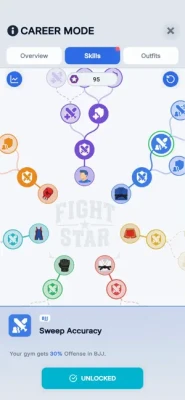
Fight Star includes skills and techniques that can be unlocked as your fighters develop.
When improving a fighter, consider their discipline and fighting style before investing heavily in upgrades.
A useful approach is to develop fighters around their strengths rather than trying to make every fighter perform identically.
Fight Star Equipment Guide
Equipment is another major part of fighter progression.
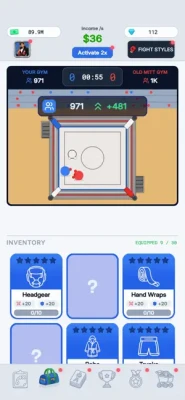
The game lets you equip fighters with combat gear such as:
- Gloves
- Wraps
- Mouthguards
- Other equipment
You can also customize your fighters with outfits and different looks.
Equipment Strategy
Don't simply equip an item because it is new.
Compare its usefulness for the fighter you're developing.
Prioritize equipment for:
- Your main fighters
- Fighters competing in difficult leagues
- Fighters approaching important progression walls
- Characters you expect to use long-term
How to Manage Your Gym
Your gym is effectively the center of your progression.
You need to balance three things:
Fighter development + income + competitive progression
If you spend everything on recruitment, you may lack resources for training.
If you spend everything on training, you may struggle to expand your roster.
If you ignore your income progression, future upgrades can become slower.
A balanced approach keeps your gym moving forward consistently.
Idle Earnings Strategy
Idle income is one of Fight Star's defining systems.
Your fighters continue training and your gym continues earning while you're away.
That means you don't need to constantly remain inside the game.
A useful routine is:
Log in → Collect earnings → Upgrade → Fight → Check recruitment → Leave the game
Then return later and repeat the process.
Beginner Tip
Don't leave accumulated rewards unclaimed for unnecessarily long periods. Your idle income is one of your main sources of progression.
Fight Star League Progression
Fight Star has a career ladder with ten leagues in every combat discipline. Winning bouts allows you to collect trophies and improve your income multipliers.
This gives each discipline its own progression path.
League Strategy
Don't think only about reaching the next league.
You also want to make sure your fighters are strong enough to remain competitive after advancing.
Before attempting a difficult progression step:
- Upgrade your main fighters.
- Improve their skills.
- Check their equipment.
- Collect available idle income.
- Use your resources efficiently.
- Then challenge the next stage.
How to Win More Fights
Since the bouts play out automatically, preparation matters more than manual controls.
Before an important fight:
Check Fighter Strength
Make sure your selected fighter has enough development.
Upgrade Equipment
Look for useful gear improvements.
Improve Skills
Use available training resources.
Keep Your Income Growing
More income means more opportunities to upgrade.
Choose the Right Fighter
Different combat disciplines have different styles, so make sure you are developing the appropriate fighter for the competition.
Watching Fight Star Bouts
One interesting feature of Fight Star is that fights aren't simply reduced to a results screen.
The game presents real-time 2D fights where players can watch fighters exchange punches, land combinations, score knockdowns, perform takedowns, and finish bouts through knockouts or submissions.
This gives the management experience more personality than a completely numbers-based simulator.
Boxing Strategy
For boxing, focus on building fighters capable of consistent striking performance.
Useful priorities include:
- Fighter development
- Skills
- Equipment
- Consistent income
- League progression
Watch the bouts to understand how your fighter performs rather than judging the character solely from a single statistic.
MMA Strategy
MMA is more varied because fights can involve striking, takedowns, and submissions.
When developing an MMA fighter, consider their overall capability rather than focusing exclusively on one type of attack.
A well-developed MMA fighter should be prepared for different fight situations.
Wrestling Strategy
Wrestling focuses more heavily on grappling and takedown-based combat.
If you're progressing through wrestling leagues, make sure the fighters assigned to this discipline receive dedicated investment rather than sharing all resources with striking-focused fighters.
Karate Strategy
Karate provides another distinct discipline within the gym.
Build dedicated fighters for the sport and improve them consistently instead of constantly switching resources between unrelated fighters.
Muay Thai Strategy
Muay Thai gives your gym another specialized striking path.
Develop fighters specifically for the discipline and maintain their equipment as the league difficulty increases.
Brazilian Jiu Jitsu Strategy
Brazilian Jiu Jitsu revolves heavily around grappling and submissions.
Because the discipline differs considerably from boxing, don't assume that the same fighter-development approach will produce identical results.
Build dedicated BJJ fighters and develop them specifically for that competition.
Fight Star Recruitment Guide
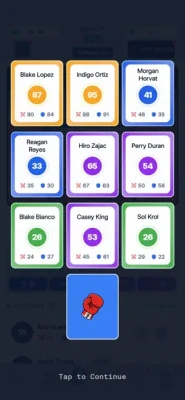
Recruitment allows you to expand your stable of fighters.
When deciding whether to recruit, consider:
- Current roster strength
- Discipline requirements
- Fighter quality
- Available resources
- Upgrade costs
- Long-term usefulness
The game describes recruitment as a central part of building a deeper stable of fighters, with every collected fighter contributing to gym strength and idle income.
Best Way to Spend Resources
A common mistake in idle management games is spending resources whenever they become available.
Instead, create priorities.
Early Game
Focus on:
Core fighter → Training → Essential equipment → Progression
Mid Game
Start balancing:
Multiple disciplines → Better fighters → Skills → Equipment → League advancement
Later Game
Your resources can be distributed across:
- Multiple disciplines
- Higher-level fighters
- Equipment
- Skills
- Club participation
- Season activities
Fight Star Season Pass
Fight Star includes a Season Pass where players complete tasks, earn season points, and progress through reward levels. Rewards can include fighters, equipment, and cash.
Season Pass Strategy
Don't wait until the end of a season to discover that you missed easy objectives.
Check the available tasks regularly.
Prioritize objectives that can be completed naturally while progressing through your normal gameplay.
Fight Star Club Guide
Fight Star also includes Clubs.
You can join a Club and work alongside other managers from around the world while developing your own gym.
Joining a Club can make the game feel more social and gives you another layer of long-term progression beyond individual fighter development.
Choosing a Club
Look for a group with:
- Active members
- Regular participation
- Friendly communication
- Players who continue progressing
- Consistent activity
An inactive Club offers fewer reasons to participate socially.
Daily Fight Star Routine
A simple routine can keep your gym progressing without requiring long sessions.
Daily Checklist
1. Collect idle income
Take your accumulated gym earnings.
2. Train your fighters
Use available resources on your main roster.
3. Check equipment
Equip useful upgrades.
4. Attempt league progression
Push forward when your fighters are ready.
5. Recruit if necessary
Expand your roster when a new fighter actually benefits your gym.
6. Check Season Pass tasks
Complete available objectives.
7. Visit your Club
Check club activity and communication.
8. Leave the game running
Allow idle progression to continue until your next session.
Common Fight Star Mistakes
Upgrading Too Many Fighters
Dividing resources across your entire roster can slow your primary progression.
Ignoring Equipment
A strong fighter with outdated equipment may not perform as well as expected.
Recruiting Without a Plan
More fighters are useful, but only if you can develop them.
Ignoring Idle Income
Idle earnings are one of the game's central progression mechanics.
Advancing Too Quickly
Moving through leagues before your fighters are ready can create difficult progression walls.
Forgetting Season Tasks
Season Pass rewards can provide additional fighters, equipment, and cash.
Ignoring Other Disciplines
The long-term goal is not simply to dominate one sport. Fight Star encourages players to build champions across six combat disciplines.
Fight Star Features
Six Combat Sports
Fight across:
- Boxing
- MMA
- Wrestling
- Karate
- Muay Thai
- Brazilian Jiu Jitsu
Fighter Recruitment
Expand your stable by drawing new fighters.
Fighter Training
Level up fighters and unlock skills and techniques.
Equipment
Use gloves, wraps, mouthguards, outfits, and other gear to develop your fighters.
Real-Time 2D Bouts
Watch your fighters compete through animated combat sequences.
League Progression
Climb ten leagues in each discipline.
Idle Earnings
Continue generating income while away.
Clubs
Join other managers and develop your gym alongside them.
Season Pass
Complete tasks and collect seasonal rewards.
Fight Star Atmosphere
Fight Star presents combat sports through a casual management and idle-game format.
The game doesn't ask you to spend every minute controlling a fighter. Instead, the atmosphere comes from building a gym, recruiting promising athletes, watching them compete, and gradually turning them into champions.
The real-time 2D fights add visual excitement while the management systems keep the long-term focus on progression.
Fight Star Graphics and Combat
The fights are presented in 2D real-time sequences, showing punches, combinations, knockdowns, throws, takedowns, and submissions depending on the discipline.
This approach gives the game more of a sports-management feel than a traditional manually controlled fighting game.
Fight Star Free-to-Play Information
Fight Star is free to download and includes optional in-app purchases.
The current App Store listing includes purchases such as:
- No Ads
- Welcome Pack
- Fight Pass
- Player Packs
- Premium Fund
- Gear Packs
- Sprint Pass
- Gem packs
- Double Income Booster
The listing also identifies loot boxes, advertising, messaging/chat, and cartoon or fantasy violence among its content information.
Players who prefer not to spend can focus on idle earnings, normal progression, recruitment opportunities, and available free rewards.
Fight Star iPhone and iPad Requirements
The current App Store listing supports iPhone and iPad and requires iOS 15.0 or later. The listed application size is approximately 390.3 MB.
Supported languages currently include:
- English
- French
- German
- Japanese
- Korean
- Simplified Chinese
- Spanish
- Traditional Chinese App Store
Fight Star Pros and Considerations
Highlights
- Six different combat sports
- Boxing and MMA management
- Fighter recruitment
- Fighter training
- Skills and techniques
- Equipment system
- Real-time 2D fights
- Idle income
- Ten leagues per discipline
- Clubs
- Season Pass
- Casual management gameplay
- Long-term progression
Things to Consider
- It is primarily a management and idle game rather than a traditional fighting game.
- You don't manually control individual fighters throughout the bouts.
- Progression depends heavily on upgrades and resource management.
- The game includes advertising, loot boxes, chat/messaging, and optional purchases.
Fight Star FAQ
What is Fight Star - Team Manager Idle?
Fight Star is an idle combat-sports management game where you build a fighting gym, recruit fighters, train them, equip them, and guide them through competitive leagues.
How many sports are in Fight Star?
The game currently features six disciplines: Boxing, MMA, Wrestling, Karate, Muay Thai, and Brazilian Jiu Jitsu.
Is Fight Star a boxing game?
Boxing is one of its six combat disciplines, but Fight Star is broader than a boxing game because it also includes MMA, wrestling, karate, Muay Thai, and Brazilian Jiu Jitsu.
Is Fight Star an MMA game?
MMA is one of the game's six combat disciplines. However, the overall game is a combat-sports management simulator rather than a dedicated MMA fighting game.
Can I control the fighters during fights?
Fight Star focuses on management rather than traditional manual controls. The bouts play out in real time while you watch your fighters fight, strike, grapple, knock down opponents, or finish bouts.
Does Fight Star have idle rewards?
Yes. Fighters continue training and the gym continues earning while you're away.
How many leagues are in Fight Star?
The game currently has a career ladder of ten leagues in every combat discipline.
Does Fight Star have clubs?
Yes. Players can join Clubs and work alongside other managers while developing their gyms.
Does Fight Star have a Season Pass?
Yes. Players can complete tasks, earn season points, and progress through Season Pass rewards that include fighters, gear, and cash
Is Fight Star free to play?
Yes. Fight Star is free to download and offers optional in-app purchases.
Can I play Fight Star on iPhone?
Yes. The current App Store listing supports iPhone and requires iOS 15.0 or later.
What is the best way to progress in Fight Star?
Focus your resources on your strongest core fighters, keep them trained and equipped, collect idle income regularly, advance through leagues when your roster is ready, and use Season Pass and Club opportunities to add more resources.
Rate the Game
User Reviews














Popular Games

















 Android
 iOS
iOS Windows
 Xbox
Xbox