




Latest Version
September 25, 2026
MoonDrip FZ-LLC
Sports
iOS
0
Report a Problem
More About :game
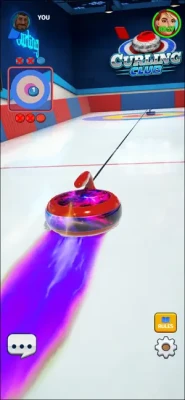
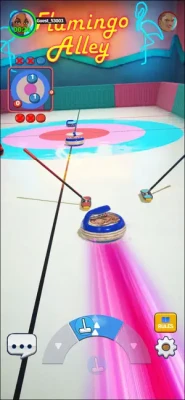
Curling Club is a mobile PvP sports game based on curling, designed around short real-time matches against other players.
The core challenge is not simply getting a stone close to the center. Every throw can change the position of several stones, so a seemingly successful shot can create an opportunity for your opponent.
The App Store describes the game as combining precision, strategy, timing, realistic physics, tactical plays, and competitive online matches.
The basic match philosophy is:
Aim → control power → place or strike → evaluate the ice → respond to your opponent
That makes positioning just as important as raw accuracy.
Main Gameplay Features
Real-Time PvP Matches
Curling Club lets you compete against friends or players from around the world in online PvP matches.
Because matches are competitive, you cannot rely on a fixed sequence of shots. Your opponent's previous throw changes the situation you face on your next turn.
Precision Stone Sliding
The central skill is controlling the stone.
You need to judge:
- Direction
- Power
- Distance
- Position in the house
- Existing stones
- The likely response from your opponent
The App Store emphasizes smooth controls and realistic physics as part of the game's curling experience.
Tactical Plays
Curling Club is not simply a target-shooting game.
You can use stones offensively to knock opponents away or defensively to protect your own scoring stones.
Multiple Ice Rinks
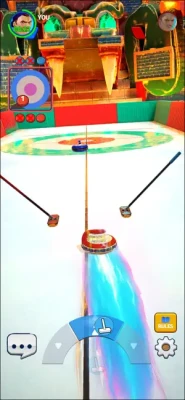
The game features multiple ice rink and arena designs, giving progression and competition a changing visual setting.
Custom Stones and Avatars
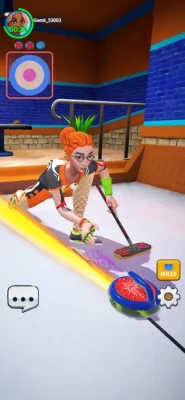
Players can customize their curling experience with different stone designs and player avatars. Equipment can also be upgraded.
Battle Pass and Seasonal Events
The game includes seasonal events, Battle Pass progression, daily missions, and rewards. The App Store's current event listing also shows a Fighter Season featuring a Fighter skin and special emojis.
Global Rankings
Winning matches earns rewards and contributes toward competitive progression, with global leaderboards and ranking systems providing an additional long-term goal.
Complete Curling Club PvP Strategy Guide
1. Master Power Before Trying Complicated Shots
The first skill you should develop is consistent shot strength.
Aiming accurately does not help much if your stone consistently stops short or travels too far.
Spend your early matches learning three basic power levels:
Soft: Useful for controlled positioning.
Medium: Useful for normal scoring attempts.
Strong: Useful when you need to travel farther or remove an opposing stone.
You do not need to memorize an exact power percentage. Instead, learn how the stone behaves on the current rink and adjust from your previous throw.
2. Stop Thinking Only About the Center
The center of the house is valuable, but it should not automatically be your only target.
Sometimes the better move is to place a stone where it becomes difficult for your opponent to remove.
For example, a stone positioned slightly away from the center can create a more awkward response than one sitting directly in the obvious scoring position.
The goal is not simply:
“Get closest to the center.”
It is:
“Create the best position for my next shot.”
3. Protect Your Scoring Stone
Once you have a good scoring position, think about how your opponent can attack it.
The App Store specifically highlights protecting scoring shots as one of the game's tactical options.
If your stone is vulnerable, use subsequent throws to make the opponent's direct route more difficult.
A protected scoring position can force your opponent to attempt a more complicated shot.
4. Learn When to Knock a Stone Out
Knocking out an opponent's stone is one of the most important offensive tools.
But not every opposing stone needs to be removed immediately.
Before attempting a knockout, consider:
- Is the stone currently scoring?
- Is it blocking your preferred route?
- Could your shot accidentally damage your own scoring position?
- What position will remain after the collision?
- Can your opponent immediately replace it?
A knockout is most valuable when it improves the overall position of the end, not merely when it removes a stone.
5. Use Your Opponent's Stones Against Them
An opponent's stone can sometimes become an obstacle that helps you.
If your own stone is protected by another stone or the opponent has created a difficult cluster, think about the angles available for your next shot.
Do not automatically clear the ice.
Sometimes the best strategy is to exploit the existing arrangement.
6. Avoid Giving Away Easy Knockouts
A common beginner mistake is placing a scoring stone in an exposed position.
If the opponent has a clear path to your stone, they may be able to remove it with a relatively simple shot.
After placing a stone, immediately ask:
“If I were my opponent, where would I hit this?”
That one question can improve defensive play dramatically.
7. Build a Shot-by-Shot Plan
Do not plan only your current throw.
Try to think at least one shot ahead.
For example:
Shot 1: Establish a scoring position.
Opponent: Attempts to remove it.
Shot 2: Replace or protect your position.
Opponent: Opens another angle.
Shot 3: Attack the exposed stone.
Curling becomes much more strategic when you think about the response your throw is likely to create.
8. Use Strong Shots Carefully
Powerful throws can be useful for clearing stones, but maximum strength is not automatically the best option.
A strong shot can:
- Miss the intended target
- Travel too far
- Disrupt your own position
- Create a better opportunity for the opponent
Use strong shots when the objective genuinely requires them.
If you only need to reposition a stone, a controlled throw is usually easier to manage.
9. Develop a Reliable Placement Shot
Every competitive player should have a comfortable placement shot.
Practice sending a stone toward a chosen area of the house without trying to hit anything.
This builds your understanding of:
- Distance
- Power
- Direction
- Stopping position
Once you can reliably place a stone, more complicated tactical shots become easier.
10. Learn From Missed Shots
A missed shot contains useful information.
If your stone stops short:
Increase power slightly.
If it travels too far:
Reduce power.
If it reaches the right distance but misses the intended position:
Adjust your aim rather than dramatically changing strength.
Avoid changing several variables simultaneously. Otherwise, you will not know which adjustment actually fixed the problem.
11. Adapt to the Match Instead of Following a Script
There is no perfect sequence of throws that works against every opponent.
A defensive opponent may require patience.
An aggressive opponent may create opportunities for counterattacks.
A player who repeatedly targets your scoring stones may need to be handled by stronger defensive positioning.
The game is built around reacting to your opponent's decisions, so adaptability is one of the most important competitive skills.
12. Use Defense When You Are Already Ahead
If you have a favorable scoring position, you do not always need to make an aggressive play.
Sometimes the best choice is to make the opponent's next shot harder.
Think about:
How can I make the current advantage difficult to remove?
That may be more valuable than attempting a flashy knockout.
13. Attack When the Opponent Is Exposed
The opposite situation is also important.
If the opponent has a valuable stone sitting in an exposed position, consider removing it before trying to establish your own scoring position.
A successful knockout can completely change the balance of the house.
14. Control the Center Carefully
The center is naturally important because stones near it have strong scoring potential.
However, placing everything directly in the center can make your strategy predictable.
Use different positions around the house depending on the situation.
A slightly offset stone can sometimes:
- Block an opponent's path
- Protect another stone
- Create a difficult angle
- Force a more precise response
15. Think About the Next Collision
Whenever you attempt a knockout, do not stop thinking at the moment of impact.
Ask:
Where will my stone go afterward?
A successful hit that removes an opponent's stone may still be a poor shot if your own stone then leaves the scoring area.
The best collision is one that improves your position after both stones move.
Advanced Shot Strategy
Guarding
Place a stone where it can make a direct attack on your scoring stone more difficult.
This is useful when you already have a strong position and want to protect it.
Takeout
Use a stronger throw to collide with and remove an opponent's stone.
This is useful when an opposing stone threatens your scoring position.
Draw
Focus on placing your stone accurately rather than hitting another stone.
This is one of the most important fundamental skills because it teaches precise power and placement.
Freeze-Style Positioning
Try to position your stone close to another stone so that attacking it becomes more complicated.
The closer and more awkward the arrangement, the more difficult it may be for an opponent to remove the desired stone cleanly.
How to Improve Your Aim
Use a simple practice routine.
Step 1
Choose a target area.
Step 2
Estimate the required power.
Step 3
Make the throw.
Step 4
Observe where the stone stops.
Step 5
Adjust only one variable.
If the distance was correct but the position was wrong, change the direction.
If the direction was good but the stone stopped too early, increase power.
This creates a more consistent understanding of the game's physics.
How to Beat Aggressive Players
An aggressive opponent may constantly attempt takeouts.
Do not respond by making every shot equally aggressive.
Instead:
- Establish a useful scoring position.
- Make it difficult to attack.
- Watch where the opponent's stone finishes.
- Use their exposed positions against them.
- Take the knockout when it creates a genuine advantage.
Aggressive play creates opportunities, but it also creates risks.
How to Beat Defensive Players
Against a defensive opponent, patience becomes more valuable.
Do not rush into unnecessary collisions.
Build your position gradually and look for openings.
If the opponent has created a cluster of stones, consider whether you can use the arrangement to your advantage rather than immediately trying to clear everything.
Equipment and Customization
Curling Club allows players to unlock stone designs, upgrade equipment, and customize their player avatar.
When approaching equipment progression, distinguish between:
Cosmetic customization
and
Performance-related progression.
If your objective is competitive improvement, prioritize systems that directly help your match performance before spending resources simply to change appearance.
Battle Pass and Seasonal Events
Seasonal content adds another layer to the normal PvP loop.
The game's App Store history lists:
- Seasonal Battle Pass
- Exclusive rewards
- Special events
- Daily missions
The current listing also advertises a Fighter Season with a Fighter skin and special emojis.
A practical approach is to combine event tasks with your normal matches.
If a daily objective can be completed while playing your usual PvP games, there is little reason to treat it as a separate grind.
Ranking and Leaderboard Strategy
Winning consistently is more important than chasing spectacular individual shots.
To climb competitive rankings:
- Reduce unnecessary mistakes.
- Improve your basic draw accuracy.
- Learn reliable knockout shots.
- Protect favorable positions.
- Study why you lose.
- Avoid repeating the same failed shot without adjustment.
The game's global leaderboard system provides an additional competitive progression layer.
Beginner Tips
Tip 1: Learn Power First
Consistent strength is the foundation of accurate curling.
Tip 2: Aim for Position, Not Just the Center
The best location depends on the situation.
Tip 3: Protect Good Stones
Do not give your opponent an easy knockout.
Tip 4: Do Not Knock Everything Out
A collision should improve your overall position.
Tip 5: Think One Shot Ahead
Always consider the opponent's likely response.
Tip 6: Adjust Gradually
Change one variable at a time after a miss.
Tip 7: Watch the House
The arrangement of existing stones determines your options.
Tip 8: Stay Patient
Not every throw needs to be aggressive.
Tip 9: Practice Draws
Accurate placement is useful in almost every match.
Tip 10: Learn From Losses
Identify whether the problem was power, placement, timing, or decision-making.
Advanced Competitive Tips
Create Difficult Angles
A stone does not need to be perfectly centered to be valuable.
Look for positions that force your opponent to approach from an awkward angle.
Use Clusters Carefully
Several stones close together can either protect your position or create a dangerous mess.
Before throwing into a cluster, consider how the collision might affect every nearby stone.
Do Not Panic After Losing a Position
One bad throw does not necessarily decide the match.
Look at the new arrangement and find the best available response.
Make Your Opponent Solve the Problem
Strong defensive play forces the opponent to attempt difficult shots.
Instead of trying to win every exchange immediately, sometimes your objective should be to leave the opponent with fewer easy options.
Curling Club PvP Game Information
| Information | Details |
|---|---|
| Game | Curling Club: PvP Multiplayer |
| Subtitle | Real Ice Slide Mastery |
| Developer | MoonDrip FZ-LLC |
| Category | Sports |
| Platforms | iPhone, iPad |
| Minimum OS | iOS 15.0 |
| Size | 370.7 MB |
| Age Rating | 4+ |
| Languages | English + 32 more |
| Business Model | Free with in-app purchases |
| Multiplayer | Real-time online PvP |
| Main Mechanics | Stone sliding, placement, power, tactics |
| Customization | Stones, avatars, equipment |
| Events | Seasonal events and Battle Pass |
| Competition | Global rankings and leaderboards |
| Game Center | Achievements |
The App Store also lists advertising, messaging/chat, and user-generated content.
Recent Updates
The current App Store listing shows version 1.2.1, with update notes describing gameplay improvements and bug fixes. Version 1.1.10 added improvements before the game's full 1.0.0 launch, while the 1.0.0 notes introduced the core PvP, leaderboard, customization, Battle Pass, events, and daily-mission features.
The game is therefore still receiving ongoing improvements, so event content, balancing, and available cosmetics can change.
Player Feedback
The U.S. App Store listing currently shows 4.6/5 from 912 ratings.
Reviews include players who describe the game as relaxing and competitive, while other reviews mention advertisements, distractions, or occasional freezing. These are individual player reports rather than a universal experience.
The game's Google Play listing also shows substantial player activity, with more than 10,000 reviews at the time of the retrieved listing.
Pros and Cons
Pros
- Real-time online PvP
- Simple controls with strategic depth
- Realistic stone physics
- Tactical knockout play
- Defensive positioning
- Multiple ice arenas
- Customizable stones
- Player avatar customization
- Equipment progression
- Seasonal events
- Battle Pass
- Daily missions
- Global rankings
- Game Center achievements
Cons
- Competitive matches can be unforgiving for beginners
- Accurate power control takes practice
- Some situations involve luck alongside player skill
- Advertising is part of the experience
- Some players have reported freezing or performance issues
- Seasonal content can add additional progression objectives
Frequently Asked Questions
What is Curling Club: PvP Multiplayer?
It is a real-time mobile curling game where players compete against other players online using precision shots, tactical positioning, and stone knockouts.
Is Curling Club multiplayer?
Yes. The game is built around real-time online PvP matches against friends or players around the world.
How do I win at Curling Club?
Focus on accurate power control, stone placement, defensive positioning, and choosing the right moment to knock out an opponent's stone.
How do I improve my shots?
Practice controlling power first. Once you understand how far different power levels send the stone, refine your aim and positioning.
Should I always aim for the center?
No. The best target depends on the current arrangement of stones. A slightly offset stone may provide better protection or create a more difficult position for your opponent.
Can I knock out opponent stones?
Yes. Tactical play includes knocking opponent stones away while protecting your own scoring shots.
Are there different arenas?
Yes. The game includes multiple ice rink and arena designs.
Can I customize my curler?
Yes. Players can customize stones and player avatars and upgrade equipment.
Does Curling Club have events?
Yes. It includes seasonal events, Battle Pass progression, and daily missions.
Does Curling Club have rankings?
Yes. The game features global leaderboards and a ranking system.
Does Curling Club support Game Center?
Yes. The App Store lists Game Center support with achievements.
Final Curling Strategy
The biggest mistake in Curling Club: PvP Multiplayer is treating every throw as a simple accuracy challenge.
The stronger approach is to think about position, power, and the opponent's next move at the same time.
Place stones where they are difficult to attack. Protect valuable positions. Use takeouts when removing an opponent creates a genuine advantage. Avoid unnecessary high-power shots, and learn from every throw that stops too early or travels too far.
Most importantly, do not try to win every exchange with an aggressive shot. Sometimes the strongest play is simply to leave your opponent with a difficult problem.
Control the power, read the ice, protect your stones, choose your collisions carefully, and build your advantage one throw at a time.
Rate the Game
User Reviews









Popular Games

















 Android
 iOS
iOS Windows
 Xbox
Xbox