
Latest Version
October 08, 2026
World Sports Arena
Sports
0
com.action.one.shot.flick.soccer
Report a Problem
More About :game
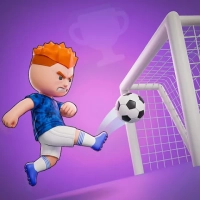
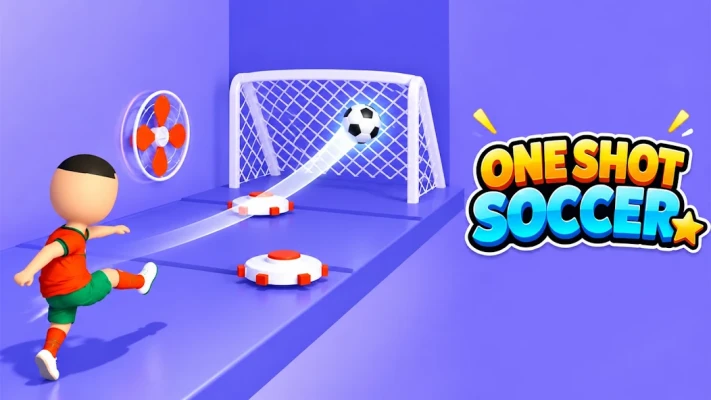
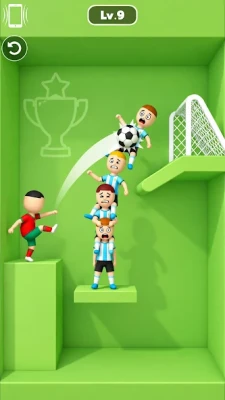
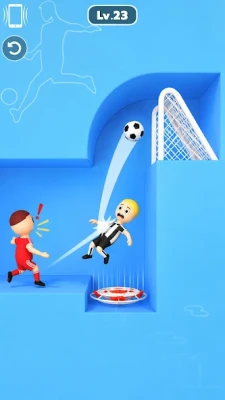
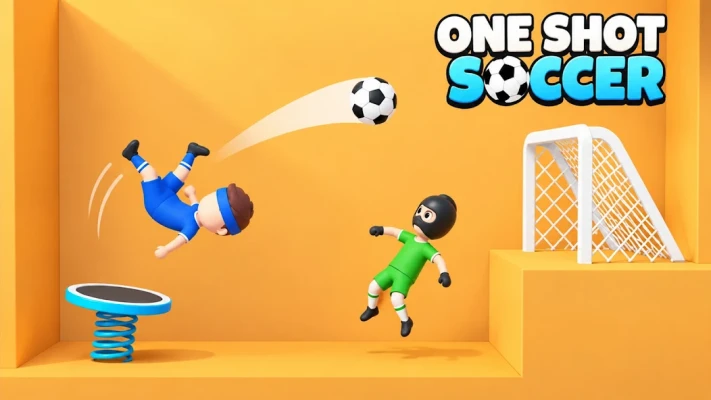
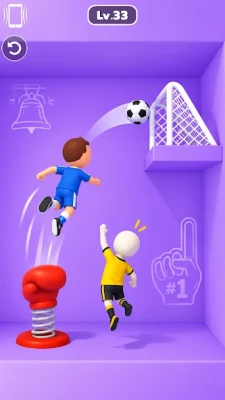
Instead of playing a traditional 90-minute football match, the game focuses on short soccer challenges where aiming, timing, swipe control, and precision are the keys to success. Each level presents a goal-scoring puzzle, with obstacles and moving elements making otherwise simple shots much harder.
The game is easy to understand from the first attempt. You aim the ball, swipe to take the shot, and try to find the perfect path into the goal. As the challenges become more complicated, simply shooting toward the net is no longer enough. You need to study the level, predict movement, and choose the right moment to strike.
One Shot Soccer: Swipe & Score is particularly suitable for players who enjoy quick sports games, soccer puzzles, precision challenges, and simple controls with increasingly demanding levels.
Game Information
Game Title: One Shot Soccer: Swipe & Score
Developer: World Sports Arena
Package ID: com.action.one.shot.flick.soccer
Genre: Sports
Style: Casual soccer / football puzzle
Main Gameplay: One-shot goal challenges
Controls: Swipe
Core Skills: Aiming, timing, precision, and trajectory control
Age Rating: Everyone / 3+
Android Requirement: Android 7.1 or later
Latest version reported: 1.7
Main Challenge: Score goals while dealing with obstacles and moving objects
The game was updated during 2026, with later version information reporting minor bug fixes and improvements.
What Is One Shot Soccer: Swipe & Score?
One Shot Soccer is essentially a soccer shooting puzzle game.
Every level gives you a specific scoring situation. Your task is to figure out how to get the ball past the obstacles and into the goal.
The concept sounds straightforward, but the difficulty comes from the limited nature of each attempt. You cannot simply keep shooting until you eventually find the right angle. You have to understand the position of the ball, the goal, the obstacles, and any moving objects before committing to the shot.
That makes every level feel like a small puzzle.
How to Play One Shot Soccer
The basic controls are simple.
Step 1: Study the Field
Before swiping, look at the complete level.
Identify:
The position of the ball
The goal
Stationary obstacles
Moving obstacles
Open shooting lanes
Possible rebound paths
The safest shooting angle
Do not rush into the first shot you see.
Step 2: Choose Your Angle
The direct path to the goal is not always the best option.
If an obstacle blocks the center, look for an alternative route around it.
Step 3: Swipe Carefully
Use the swipe direction to control the shot.
A small change in the direction of your swipe can significantly change the ball's trajectory.
Step 4: Control Your Power
The ideal shot is not necessarily the strongest shot.
You need enough power to reach the goal while maintaining the trajectory required to avoid obstacles.
Step 5: Watch Moving Objects
Some levels contain moving obstacles. In these situations, timing becomes just as important as aiming.
Wait for the opening instead of forcing the shot.
The Most Important One Shot Soccer Strategy
The best general strategy is:
Aim first, shoot second.
Many failed attempts happen because players immediately swipe without examining the level.
Take a moment to understand the route.
Ask yourself:
Where does the ball need to travel before it reaches the goal?
Once you know the route, determine the swipe that can produce that trajectory.
How to Score More Goals
Use Smaller Adjustments
Large swipes can create large changes in trajectory.
When you are already close to the correct angle, make small adjustments rather than completely changing the direction.
Don't Always Shoot Straight
A straight shot may be the obvious choice, but obstacles can make it impossible.
Look for indirect routes.
Watch the Obstacles
An obstacle isn't necessarily just something to avoid.
Depending on the level design, it can determine the route you need to take to reach the goal.
Think About the Entire Shot
Do not concentrate only on where the ball starts.
Imagine the complete journey:
Ball → obstacle → opening → goal
This helps you choose a more reliable angle.
How to Deal With Moving Obstacles
Moving obstacles are one of the biggest tests of timing.
If you shoot immediately, an obstacle may move into the ball's path.
Instead, watch the movement pattern.
Look for:
The direction of movement
The time required for an obstacle to clear
How long the opening remains available
Whether multiple obstacles move together
Once you understand the pattern, time your swipe for the safest opening.
Timing Tips
Perfect timing is especially important when a level contains moving objects.
Don't confuse speed with good timing.
Sometimes the best move is to wait.
A good sequence is:
Watch the obstacle.
Identify its movement pattern.
Find the opening.
Position your intended trajectory.
Wait for the right moment.
Swipe smoothly.
Follow the ball's path.
This is much more reliable than repeatedly shooting as quickly as possible.
How to Handle Difficult Shots
Some levels are designed around tricky shooting angles.
When a shot looks difficult, break it into smaller problems.
First determine where the ball must go.
Then determine how to get it there.
For example:
Goal is blocked → find open lane → calculate angle → control swipe → shoot
This approach makes complicated levels much easier to understand.
One Shot Soccer Obstacle Strategy
Obstacles are a major part of the game's challenge. The current game description specifically highlights crazy obstacles, moving obstacles, and goal puzzles.
There are two basic ways to approach them.
Avoid the Obstacle
If there is enough space around it, simply choose a safer route.
This is usually the preferred strategy.
Use a More Precise Angle
When there is only a small opening, precision becomes more important than power.
Reduce the size of your swipe and focus on sending the ball through the available space.
How to Improve Your Swipe Accuracy
Your swipe should be deliberate rather than random.
Practice making:
Short horizontal swipes
Short diagonal swipes
Longer directional swipes
Controlled changes in angle
The objective is to develop a feel for how swipe direction affects the ball.
Once you understand this relationship, difficult shots become much more predictable.
Common Beginner Mistakes
Shooting Too Quickly
The biggest mistake is failing to study the level before shooting.
Using Too Much Power
A powerful shot can easily miss the intended route.
Ignoring Moving Obstacles
If an obstacle is moving, its current position may not be the same when the ball reaches it.
Changing the Angle Too Much
Small adjustments are often enough.
Focusing Only on the Goal
The goal is the final destination, but the path to the goal is what determines whether you score.
Repeating the Same Failed Shot
If a shot fails repeatedly, change the angle, power, or timing.
How to Solve Goal Puzzles
Some stages can be treated almost like physics puzzles.
Instead of thinking:
"How do I kick the ball into the goal?"
Think:
"What path can the ball take to reach the goal?"
This subtle change in perspective can make challenging levels much easier.
Look for:
Open spaces
Clear shooting lanes
Gaps between obstacles
Safe angles
Timing windows
Potential deflections
Advanced Shooting Tips
Once you become comfortable with the controls, start focusing on precision rather than simply completing levels.
Predict Before You Swipe
Try to visualize the ball's trajectory.
Use the Environment
Study every object on the field.
An obstacle can sometimes influence the route you need to take.
Wait for Better Opportunities
If a moving obstacle blocks the ideal path, patience can be more effective than attempting a risky shot.
Keep Your Swipes Consistent
Consistency helps you understand how different swipe lengths and directions affect the ball.
Best Strategy for Hard Levels
When a level becomes frustrating, use this process.
1. Stop Shooting Randomly
Take a moment to study the layout.
2. Find the Main Obstacle
Determine what is preventing a direct shot.
3. Find the Safest Route
Look for the largest available opening.
4. Determine the Required Angle
Work backward from the goal.
5. Adjust Power
Use enough force to reach the target without ruining the trajectory.
6. Watch Moving Elements
If something moves, wait for the correct opening.
7. Make One Controlled Attempt
Execute the shot rather than constantly changing your plan.
Precision vs Power
One Shot Soccer rewards precision more than simply hitting the ball as hard as possible.
A powerful shot is useful when distance is the main problem.
Precision becomes more important when:
The goal is partially blocked
There is a narrow opening
Obstacles are nearby
Moving objects are involved
The required angle is unusual
The best players learn when to use power and when to prioritize control.
How to Get Better at One Shot Soccer
Improvement comes from understanding your mistakes.
After missing a shot, identify the exact reason.
Was the:
Angle too wide?
Swipe too strong?
Ball too slow?
Timing too early?
Timing too late?
Path blocked?
Opening too narrow?
Once you identify the problem, the next attempt becomes more useful.
This is much better than simply repeating the same swipe.
Difficulty and Progression
The game starts with a simple concept, but the challenge comes from increasingly complicated goal situations.
Early stages allow you to learn the basic relationship between swiping and shooting.
Later challenges can introduce more complicated obstacle arrangements and moving objects, requiring greater precision and timing. The game's description specifically emphasizes new challenges, moving obstacles, and goal puzzles.
The result is a progression from basic shooting to more puzzle-like soccer challenges.
Graphics and Atmosphere
One Shot Soccer: Swipe & Score focuses on gameplay rather than attempting to simulate a full professional football match.
The presentation supports quick sessions, with each level placing attention on the ball, the goal, and the obstacles.
That focused design fits the game's one-shot concept particularly well.
Is One Shot Soccer Easy to Play?
Yes. The basic swipe controls are simple to understand.
However, simple controls do not mean every level is easy.
The difficulty comes from using those controls accurately.
You can understand the controls almost immediately, but mastering difficult angles and moving obstacles takes practice.
Is One Shot Soccer a Soccer Simulation?
No.
This is not a traditional soccer simulation.
There are no full 11-player matches, tactical formations, team management systems, or conventional football seasons at the center of the experience.
Instead, it is a casual soccer shooting game focused on individual goal-scoring challenges.
Who Should Play One Shot Soccer?
One Shot Soccer: Swipe & Score is a good choice for players who enjoy:
Casual soccer games
Football shooting games
Swipe games
Soccer puzzle games
Precision challenges
Short gaming sessions
Goal-scoring challenges
Physics-based sports gameplay
Games that are easy to learn
Players looking for realistic football matches or complex team-management systems should look elsewhere.
Pros and Cons
Pros
Very simple controls
Easy to understand
Quick gameplay sessions
Focused soccer shooting mechanics
Increasingly challenging levels
Moving obstacles add variety
Goal puzzles encourage strategic thinking
Good choice for casual football fans
Cons
Gameplay is focused primarily on shooting challenges
Players looking for full soccer matches may find it limited
Difficult shots can require repeated attempts
Precision becomes increasingly important in later challenges
Best Tips at a Glance
Study the level before shooting.
Find the safest route to the goal.
Don't automatically shoot straight.
Use controlled swipes.
Avoid unnecessary power.
Watch moving obstacles.
Learn their movement patterns.
Wait for the right opening.
Make small angle adjustments.
Think about the complete ball trajectory.
Learn from every missed shot.
Change your strategy when a shot repeatedly fails.
Frequently Asked Questions
What is One Shot Soccer: Swipe & Score?
One Shot Soccer: Swipe & Score is a casual soccer game where players aim and swipe to score goals while solving different shooting challenges.
How do you play One Shot Soccer?
Study the level, aim the ball toward the goal, and swipe in the desired direction to take the shot.
Is One Shot Soccer difficult?
The controls are easy to learn, but later challenges require increasingly accurate timing, positioning, and shooting.
How do you beat difficult levels?
Study the obstacles first, identify a safe path, control the swipe direction, and wait for the correct timing when moving obstacles are involved.
What is the best strategy for One Shot Soccer?
The best strategy is to analyze the complete ball trajectory before shooting rather than immediately aiming directly at the goal.
Does One Shot Soccer use swipe controls?
Yes. Swipe controls are the central method for aiming and taking shots.
Does One Shot Soccer have moving obstacles?
Yes. The game's description specifically mentions moving obstacles as part of its challenges.
What makes One Shot Soccer different from normal football games?
Instead of full soccer matches, the game focuses on individual one-shot goal challenges, making each level a short precision puzzle.
What Android version does One Shot Soccer support?
Available version information lists Android 7.1 and later.
Who developed One Shot Soccer: Swipe & Score?
The game is developed by World Sports Arena.
Final Verdict
One Shot Soccer: Swipe & Score takes one of the most satisfying moments in football — scoring a perfectly placed goal — and turns it into a collection of short, focused challenges.
Its strength is its simplicity. You don't need to learn complicated controls or manage an entire team. You simply need to understand the shot, read the obstacles, choose the right angle, and make the swipe.
As the levels become more demanding, timing and precision become increasingly important. Players who enjoy casual soccer games, swipe mechanics, and puzzle-like challenges should find plenty to enjoy.
The key to success is simple:
Don't just aim for the goal. Plan the entire shot.
Rate the Game
User Reviews









Popular Games


















 Android
 iOS
iOS Windows
 Xbox
Xbox