



Latest Version
February 12, 2025
Habby
Role Playing
0
com.habby.souls
Report a Problem
More About :game
The game's combat is based around positioning heroes on a battlefield and choosing combinations that work together. Rather than relying purely on fast reactions, SOULS rewards players who understand hero roles, formations, skills and team synergy.
The current game offers more than 60 heroes, giving players a substantial roster to experiment with when creating different teams.
What Makes SOULS Different?
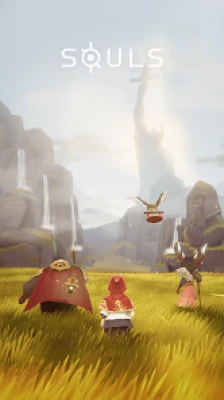
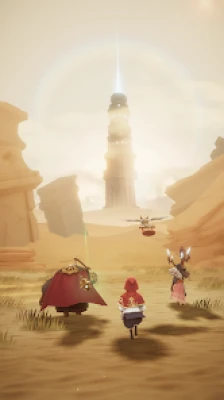
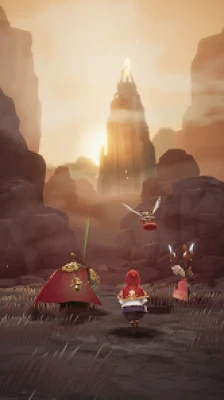
SOULS has a distinctive visual style and focuses heavily on strategic formation building.
The main gameplay loop revolves around:
- Collecting heroes
- Building a five-hero formation
- Positioning characters on the battlefield
- Combining complementary abilities
- Upgrading heroes
- Improving equipment and progression systems
- Clearing campaign stages
- Taking on additional challenges
- Collecting rewards
- Building stronger teams over time
The combat system looks simple at first, but team composition becomes increasingly important as enemies become stronger.
SOULS Gameplay
SOULS uses tile-based combat, meaning the position of your heroes matters.
Before a battle begins, you need to think about where each character should stand.
A durable frontline hero may need to absorb incoming attacks while damage dealers remain protected behind them.
Support characters can also become much more valuable when positioned where their abilities can benefit the rest of the team.
This means that winning is not simply about having the strongest individual hero.
A well-designed team can perform considerably better than a collection of powerful characters that do not work well together.
SOULS Team Building Strategy
A balanced team is usually the safest starting point.
Think about your lineup in terms of roles rather than simply selecting your five highest-rated heroes.
A practical formation can include:
- Frontline defender
- Secondary frontline or durable fighter
- Main damage dealer
- Secondary damage dealer
- Support or healer
The exact combination depends on the heroes available to you.
The important principle is balance.
If your team has enormous damage but no way to survive, it will struggle.
If your team can survive indefinitely but cannot eliminate enemies, it will also struggle.
SOULS Formation Guide
Formation is one of the most important strategic elements in SOULS.
Front Row
Place durable heroes in positions where they can absorb attacks and protect weaker characters.
Middle Positions
These can be useful for characters that need reasonable protection while still participating actively in combat.
Back Row
Long-range damage dealers and fragile support heroes generally benefit from being protected from direct attacks.
Don't Copy a Formation Blindly
A formation that works against one enemy lineup may not work against another.
When you lose, consider whether the problem is actually your hero selection or simply their positioning.
Sometimes moving one character can make a surprisingly large difference.
How to Choose the Best SOULS Heroes
There is no permanent universal list of the five best heroes because balance, upgrades, available characters and team composition all matter.
Instead of asking only:
"Which hero is strongest?"
Ask:
"Which hero makes my current team stronger?"
This is a much more useful question.
A hero that provides healing, protection, crowd control or useful buffs can be more valuable to your lineup than another damage dealer.
SOULS Hero Synergy
Hero synergy should be one of your biggest considerations.
For example, a team built around a powerful damage dealer can benefit greatly from heroes that keep that character alive or improve their effectiveness.
Similarly, a defensive lineup may need additional damage if battles consistently reach the point where enemies outlast your team.
When testing a hero, consider:
- What role does the hero perform?
- Who benefits from the hero's abilities?
- Does the hero improve your formation?
- Does the hero solve an existing weakness?
- Does the hero work well with your current damage dealers?
- Is the hero worth investing resources into?
SOULS Upgrade Strategy
One of the biggest mistakes new players can make is spreading resources too thinly.
You will eventually have many heroes, but you should not necessarily invest heavily in all of them.
Instead, identify your primary team and prioritize those characters.
A sensible progression order is:
Main team → core heroes → important equipment/progression → secondary heroes → experimental teams
This gives you a reliable group capable of progressing through difficult content.
Don't Waste Resources on Every Hero
Having a large roster is one of SOULS' strengths, but it can also create a resource-management problem.
If you constantly switch your main team and invest in every new character, your strongest lineup may fall behind.
Before committing resources to a hero, ask whether you actually expect to use that character regularly.
Testing is good.
Spreading your entire resource pool across dozens of characters is not.
SOULS Combat Strategy
Before every difficult battle, look at the enemy formation.
Don't immediately press the battle button.
Check:
- Enemy positions
- Enemy damage dealers
- Defensive units
- Support characters
- Dangerous abilities
- Which side is likely to be attacked first
Then adjust your formation.
If the enemy has a dangerous backline attacker, consider how you can disrupt or survive that threat.
If an enemy frontline is extremely durable, make sure your team has enough damage to eventually break through.
How to Beat Difficult SOULS Stages
When you reach a stage that repeatedly defeats you, don't automatically assume you need more power.
Try changing the strategy first.
Step 1: Change Your Formation
Move vulnerable heroes away from immediate danger.
Step 2: Change Your Team
Try replacing one character rather than rebuilding everything.
Step 3: Identify the Main Threat
Find the enemy responsible for most of your losses.
Step 4: Counter That Threat
Use a hero or formation that reduces the impact of the dangerous enemy.
Step 5: Upgrade Your Core Team
If strategic changes are not enough, strengthen your main characters.
Step 6: Try Again
Return to the stage after making meaningful changes.
This is much more efficient than repeatedly using the same failed formation.
SOULS Beginner Tips
1. Build a Core Team
Choose a small group of heroes and develop them consistently.
2. Learn Every Hero's Role
Don't judge characters only by their overall rating.
Understand what each hero actually contributes.
3. Pay Attention to Positioning
Tile placement can change how a battle develops.
4. Protect Your Damage Dealers
Your strongest attacker cannot help if they are eliminated immediately.
5. Don't Ignore Support Heroes
Healing, buffs and utility can be just as important as raw damage.
6. Experiment Before Spending Heavily
Try a hero in different formations before committing significant resources.
7. Change Your Formation When You Lose
A failed battle provides useful information.
8. Don't Rush Progression
Strengthening your account can make later stages much easier.
SOULS Advanced Team Building
Once you understand the basics, stop thinking of your team as five separate characters.
Think of it as one system.
Your frontline should create enough time for your backline to operate.
Your damage dealers should be protected.
Your support characters should be positioned so their abilities actually benefit the team.
Your entire formation should have a clear purpose.
For example:
Defensive formation:
Frontline durability + healing + sustained damage.
Aggressive formation:
High damage + offensive support + enough protection to survive.
Control-oriented formation:
Disruption + crowd control + reliable damage.
The strongest approach depends on your available heroes and the enemy lineup.
SOULS Resource Management
Resource management becomes increasingly important as your account develops.
Avoid spending everything simply because you have enough resources for an upgrade.
Prioritize improvements that strengthen your primary team.
A good rule is:
Permanent core improvement > temporary convenience > experimental upgrade
This keeps your progression focused.
SOULS Campaign Strategy
Campaign progression should be treated as your primary source of long-term account development.
When a stage is easy, use it to build momentum.
When you encounter a difficulty spike, stop and evaluate your team.
Don't automatically change every character.
Instead, identify the exact reason you're losing.
Are your heroes dying too quickly?
Is your damage too low?
Is a particular enemy causing the problem?
Is your formation exposing a weak character?
Answering these questions often reveals the best solution.
SOULS Idle Progression
SOULS is categorized as an idle RPG, so account progression isn't limited to active battles.
Use your available rewards and progression systems consistently.
Even small improvements become meaningful when accumulated over time.
This is especially useful when you reach a difficult campaign wall.
Instead of forcing the same stage repeatedly, allow your account to become stronger before returning.
SOULS Dungeon and Challenge Strategy
Beyond normal campaign progression, SOULS has expanded with additional challenge content.
Recent updates have introduced and adjusted several systems, including Tower of Traps, Tower of Nightmares, Dimensional Rift and other endgame activities. The August 2026 update information also notes changes to Tower of Traps difficulty and an expansion of Tower of Nightmares from 300 to 400 floors.
These activities are useful because they test your team in different ways.
A formation that performs well in one activity may not necessarily be ideal for another.
That is why maintaining a flexible roster is useful once your main team is established.
SOULS Primal Beast Strategy
The latest 4.3.0 update introduced the Primal Beast Battle System, allowing players to summon a Primal Beast in the Abyssal Cave for a tougher challenge.
The update also introduced:
- New hero Shabeck
- New pet Manti
- Five new artifacts
- New Primal Beast boss
- Third Anniversary events
- Limited anniversary rewards
This new content gives advanced players additional reasons to optimize their teams rather than relying exclusively on campaign progression.
SOULS Artifacts and Pets
As your account develops, don't think only about heroes.
Newer progression systems such as artifacts and pets can add additional layers to team building.
When choosing which systems to improve, prioritize options that benefit your primary formation.
An upgrade is most valuable when it improves the characters you actually use.
How to Progress Faster in SOULS
A reliable progression routine looks like this:
- Maintain a strong core formation.
- Push campaign stages when progression is comfortable.
- Collect available idle rewards.
- Upgrade your primary heroes.
- Improve relevant progression systems.
- Complete additional challenges when available.
- Experiment with new heroes.
- Return to difficult stages after strengthening your account.
This approach prevents you from becoming overly dependent on one battle strategy.
Common SOULS Mistakes
Mistake 1: Using the Five Highest-Rated Heroes
Individual strength does not guarantee team synergy.
Mistake 2: Ignoring Formation
A powerful hero placed in the wrong position can become ineffective.
Mistake 3: Investing in Too Many Heroes
Your resources are more valuable when concentrated.
Mistake 4: Ignoring Enemy Composition
Every battle should begin with a quick look at what you're fighting.
Mistake 5: Repeating the Same Failed Setup
If a formation fails repeatedly, change something.
Mistake 6: Ignoring Support Characters
A good support hero can dramatically improve the performance of your main damage dealers.
SOULS Best Strategy for Free Players
You don't need to constantly chase every new character to build a strong account.
Free-to-play players should focus particularly on resource efficiency.
Prioritize:
- Your strongest obtainable heroes
- Reliable team synergy
- Campaign progression
- Free rewards
- Daily activities
- Event rewards
- Useful progression systems
Avoid spending resources simply because a new character looks impressive.
Build around what you already have.
SOULS Endgame Strategy
Endgame progression is less about discovering one perfect team and more about having several useful answers.
Different game modes can place different demands on your roster.
Your long-term objective should therefore be:
Strong main team + useful secondary heroes + flexible formations
This gives you more options when new content arrives.
SOULS Pros and Cons
Pros
- Beautiful dark fantasy art style
- More than 60 heroes
- Strategic tile-based combat
- Deep team-building possibilities
- Multiple progression systems
- Idle RPG elements
- Large variety of formations
- Regular updates and events
- Additional endgame challenges
- Strong character-focused gameplay
Cons
- Progression can become grind-heavy
- Large rosters can make resource management complicated
- Some stages can create significant difficulty walls
- Players may need multiple team configurations for advanced content
- The number of progression systems can feel overwhelming for beginners
The game currently has more than 5 million downloads, and third-party tracking reports more than 100,000 Google Play reviews, reflecting a substantial player base.
Is SOULS Worth Playing?
If you enjoy hero-collection RPGs, idle games, dark fantasy adventures and strategic team-building, SOULS is worth trying.
Its biggest strength is the combination of attractive artwork and relatively simple combat rules with increasingly complex team-building decisions.
The game doesn't require fast reflexes.
Instead, success comes from understanding your heroes, positioning them correctly and building a formation that can handle the enemy in front of you.
The continuing addition of heroes, pets, artifacts and challenge content also gives experienced players reasons to keep improving their roster.
SOULS FAQ
What is SOULS?
SOULS is a dark fantasy RPG from Habby featuring hero collection, tile-based combat, strategic formations and idle progression.
How many heroes are in SOULS?
The official game description says there are more than 60 heroes available to collect and use.
Is SOULS an idle RPG?
Yes. SOULS combines idle RPG progression with strategic hero-based combat.
Is SOULS a strategy game?
Yes. Formation placement, hero selection and skill combinations are central parts of the combat system.
What is the best SOULS team?
There isn't one permanent best team for every player and every game mode. The strongest lineup depends on your available heroes, upgrades, formation and the enemies you're facing.
How do I beat a difficult SOULS stage?
Start by changing your formation and identifying the enemy causing the most trouble. If that doesn't work, adjust your hero lineup and then strengthen your core characters.
How important is positioning in SOULS?
Positioning is extremely important because the game uses tile-based combat. Placing a hero in a different position can change who receives attacks and how effectively abilities are used.
What was added in the latest SOULS update?
Version 4.3.0 introduced the Primal Beast Battle System, new hero Shabeck, pet Manti, five new artifacts and third-anniversary content.
Does SOULS have endgame content?
Yes. The game has multiple challenge systems, including Tower of Nightmares, Tower of Traps and Dimensional Rift content.
Is SOULS free to play?
SOULS is available as a free game with optional in-app purchases listed on Google Play.
Final SOULS Strategy Advice
The most important lesson in SOULS is simple:
Don't build the strongest five heroes. Build the strongest five-hero team.
Those two things are not always the same.
Pay attention to positioning, protect your important damage dealers, use durable heroes to absorb pressure and select support characters that improve the entire formation.
When you hit a difficult stage, don't immediately spend everything on upgrades. First look at the battlefield and determine why you're losing.
A small formation change can sometimes accomplish more than a major resource investment.
As your roster grows, maintain a strong primary team while developing useful secondary heroes for specialized challenges. This gives you the flexibility needed for the increasingly varied content added to SOULS.
Rate the Game
User Reviews













Popular Games

















 Android
 iOS
iOS Windows
 Xbox
Xbox