


Latest Version
November 05, 2026
Ourpalm Co.
Role Playing
iOS
0
Report a Problem
More About :game
What Is Titan Rush: Survival?
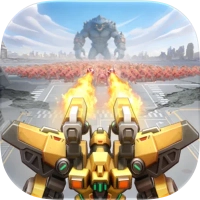
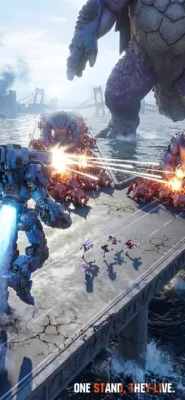
Titan Rush: Survival is a strategy and role-playing game developed by Ourpalm Co. It takes place in a devastated world where rising tides have swallowed cities and mysterious creatures known as Chimera threaten the remaining human population.
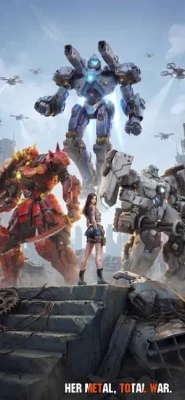
You take the role of a Titan Commander responsible for leading humanity's resistance. Your mission is to rescue survivors, rebuild a shelter, develop powerful mechanical weapons, and defend against increasingly dangerous enemies.
The game combines several interconnected systems. You can construct production facilities, manage survivors, research technology, customize mechs, recruit commanders, and explore dangerous environments.
Combat is built around the relationship between your Titans and commanders. Different mechanical components provide different combat possibilities, while commanders contribute active tactical abilities and passive bonuses. Choosing suitable combinations can improve your team's performance against different enemies.
Your shelter is equally important. It provides the resources and infrastructure needed to maintain your mechs and support your growing community. You must assign survivors to important jobs, upgrade production facilities, and strengthen your defenses.
Alliance cooperation adds a multiplayer dimension. You can join or create an alliance, exchange resources and blueprints, build frontline outposts, and coordinate deployments against powerful Chimera leaders.
The result is a survival strategy experience that rewards careful planning, mechanical customization, resource management, and teamwork.
Main Features of Titan Rush: Survival
Giant Mech Battles
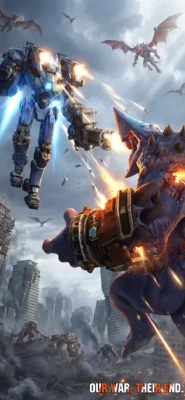
The main attraction is the opportunity to pilot powerful Titans against dangerous Chimera creatures.
You enter battlefields filled with hostile enemies and use your mechanical equipment to fight for humanity's survival. Different weapons and components support different combat approaches, allowing you to experiment with your preferred style.
Customizable Mech Construction
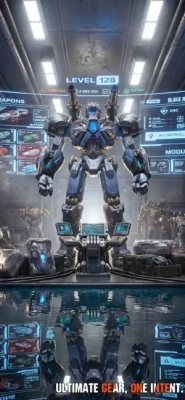
Titan Rush: Survival allows you to customize your mech using different components.
You can modify several parts, including the head, torso, and weapon attachments. These combinations let you develop machines suited to different situations.
Possible combat approaches include:
Melee-focused attacks.
Aggressive close-range combat.
Heavy firepower suppression.
Targeted airstrike attacks.
Specialized combinations for different enemies.
Experimenting with components helps you discover which configurations work best for your available resources and combat objectives.
Recruitable Commanders
Commanders are important characters who support your Titans during combat.
Each commander has unique passive abilities and active tactical skills. These abilities can influence how your team performs during difficult encounters.
You can combine different commanders and Titans to activate synergy bonuses. Building an effective team therefore requires more than choosing the strongest individual character.
Underground Shelter Management
Your shelter is the center of your survival operations.
You can construct and upgrade facilities such as:
Hydro farms.
Desalination plants.
Refineries.
Power plants.
Research facilities.
Defensive structures.
These buildings provide the resources and infrastructure needed to support your frontline mechs and growing survivor population.
Survivor Assignments
Survivors are valuable members of your community. They can be assigned to production, research, and defensive responsibilities.
Choosing suitable assignments helps maintain your shelter's operations. As your defenses improve, additional roles can become available.
Managing survivors effectively is important because every assignment contributes to the survival of your community.
Exploration of Flooded Cities
The world outside your shelter contains dangerous locations and valuable discoveries.
You can pilot your Titan through half-submerged skyscrapers, abandoned subway tunnels, and other damaged environments.
Exploration gives you opportunities to encounter Chimera, complete combat objectives, and discover resources needed for further development.
Tactical Combat and Positioning
Battles require more than simply deploying a powerful mech.
Positioning, commander abilities, and the combination of mechanical components all influence combat performance.
Learning when to use tactical skills and how to organize your forces can help you defeat stronger enemies.
Alliance Cooperation
You can join an existing alliance or create your own group.
Alliances allow players to share resources, exchange blueprints, construct frontline outposts, and coordinate mech deployments.
Some of the most challenging enemies and valuable rewards require cooperation between multiple commanders.
Alliance Technology and Rankings
Alliance development adds another long-term progression system.
Members can work toward unlocking alliance technology and improving their group's overall capabilities.
Participating in alliance activities also creates opportunities to compete in rankings and earn recognition.
Seasonal Content
The game's seasonal updates introduce additional challenges and progression opportunities.
Season 1 introduced new mechs, exclusive monsters, a snow-covered world map, limited-edition equipment, seasonal events, and cross-server battles.
The seasonal environment also includes a castle temperature mechanic, adding another consideration to the survival experience.
Gameplay Mechanics Explained
Mech Assembly
Mech assembly is one of the most important systems in the game.
You can customize your Titan by changing its major components and weapon attachments. Each combination can support a different approach to combat.
Instead of focusing on one configuration for every situation, consider the type of enemies you expect to face.
A close-range setup may be suitable for aggressive encounters, while a configuration built around heavy firepower may be more useful against certain groups of enemies.
Commander Skills
Commanders contribute two important types of abilities: passive skills and active tactical skills.
Passive abilities provide ongoing benefits, while active skills can be used during combat to influence the battle.
Combining suitable commanders with compatible Titans can activate synergy bonuses. This makes team composition an important part of your strategy.
Shelter Production
Your shelter requires a steady supply of power, minerals, and other resources.
Hydro farms, desalination plants, refineries, and power plants support different parts of your economy.
Upgrading these facilities helps improve your production capabilities and maintain the resources required for military development.
Survivor Management
Survivors can be assigned to production, research, or defense missions.
Their assignments influence how efficiently your shelter operates. You should regularly review available roles and make sure important facilities have the support they need.
Exploration and Combat Missions
Exploration takes you into dangerous environments where Chimera attacks and other challenges await.
Your mech configuration and commander lineup should match the mission whenever possible.
Successful operations can help you acquire resources and components needed to strengthen your forces.
Alliance Development
Alliance cooperation connects individual progression with group objectives.
Members can exchange resources, share blueprints, build outposts, and coordinate deployments.
Alliance technology and group activities help improve the capabilities of the entire organization.
How to Play Titan Rush: Survival
Begin Your Commander Journey
Start by following the opening tutorial and learning the basic systems. Pay attention to the instructions for shelter construction, resource collection, mech deployment, and combat.
Develop Your Shelter
Construct essential facilities and begin upgrading your production infrastructure. Your shelter needs a reliable supply of resources to support future operations.
Assign Your Survivors
Organize your available survivors and assign them to production, research, or defense responsibilities.
Build Your First Mech
Become familiar with the available mech components. Experiment with different combinations to understand how weapons and equipment influence combat.
Recruit Commanders
Recruit commanders and examine their passive and active skills. Look for combinations that work well with your available Titans.
Enter the Battlefield
Deploy your mech against Chimera enemies. Pay attention to positioning and use commander abilities at appropriate moments.
Explore Dangerous Areas
Pilot your Titan through flooded cities and abandoned underground environments. Complete available objectives and look for opportunities to obtain useful resources.
Strengthen Your Shelter
Use collected resources to upgrade production facilities and improve your defenses. Continue developing the infrastructure needed for long-term survival.
Join an Alliance
Find an active alliance or create your own. Participate in cooperative activities and coordinate deployments against stronger threats.
Prepare for Advanced Challenges
As your development improves, experiment with more specialized mech configurations, stronger commanders, and coordinated alliance strategies.
Complete Titan Rush: Survival Strategy Guide
Build a Strong Shelter First
Your shelter is the foundation of your entire operation.
Without reliable production, you may struggle to maintain your mechs, improve your technology, or support your survivors.
Start by developing essential facilities. Focus on buildings that provide power, minerals, and other resources needed for future upgrades.
Avoid spending all your resources on facilities that do not contribute to your immediate objectives. A balanced shelter will support more consistent progress.
Prioritize Resource Production
Resources are required for construction, upgrades, research, and military development.
Hydro farms, desalination plants, refineries, and power plants each support different aspects of your economy.
Check which resources are limiting your progress and prioritize the facilities responsible for producing them.
For example, if you frequently run out of power, improving your power production should become a priority. If mineral shortages are slowing your mech development, focus on the relevant production infrastructure.
Assign Survivors Carefully
Survivors should be treated as an important part of your shelter's economy.
Assign them to the roles that support your current needs. Production assignments help maintain resources, research assignments support technological development, and defensive assignments contribute to shelter protection.
Review your assignments regularly as your priorities change.
Do not overlook survivor management while concentrating on combat. A well-organized shelter makes it easier to maintain a strong military.
Understand Mech Components
Mech customization is more effective when you understand the purpose of each component.
The head, torso, and weapon attachments contribute to your machine's overall configuration. Experiment with different combinations and observe their performance in combat.
Do not assume that one combination will be ideal for every encounter.
Build configurations around your preferred combat style and the challenges you expect to face.
Choose a Combat Style
The game supports several combat approaches, including melee combat, aggressive attacks, heavy firepower, and targeted airstrikes.
Each approach can be useful in different situations.
A melee-focused configuration may suit players who prefer direct confrontation. A firepower-oriented setup may be more appropriate when you want to emphasize ranged damage.
Try different combinations before committing valuable resources to extensive modifications.
Collect Rare Components
Rare components are important for improving your mechanical equipment.
Combat and exploration can provide opportunities to unlock valuable parts used for modifications.
When you obtain a new component, consider whether it improves your current setup or supports a different combat configuration.
Avoid changing your entire mech without a clear reason. Compare available options and invest in components that contribute to your long-term strategy.
Build a Balanced Commander Team
Commanders can significantly influence combat results.
Each character has unique passive and active abilities, so choosing a lineup requires attention to how those skills work together.
Look for commanders whose abilities complement your preferred mech configuration.
A team with useful combinations and synergy bonuses can be more effective than a collection of individually powerful characters with incompatible abilities.
Make Good Use of Active Skills
Active tactical skills are important tools during difficult battles.
Do not use every ability automatically as soon as it becomes available. Consider the current battlefield situation and choose the moment when a skill can provide the greatest benefit.
Pay attention to enemy movements, incoming attacks, and the condition of your team.
Well-timed abilities can help you control difficult encounters more effectively.
Pay Attention to Positioning
Positioning is a key part of the game's tactical combat.
A strong mech configuration does not guarantee victory if your deployment strategy is poor.
Observe the battlefield and consider how your units are positioned in relation to the enemies.
Use commander abilities and suitable mechanical combinations to respond to dangerous attacks and prevent Chimera from overwhelming your forces.
Upgrade Your Shelter Defenses
Your shelter must remain protected while your forces operate outside.
Improve available defensive structures and unlock additional defensive roles as your shelter develops.
Do not focus exclusively on production. A strong economy is valuable, but it needs protection from incoming threats.
Balance your defensive development with the resources you invest in mechs and technology.
Explore Regularly
Exploration is an important way to develop your forces and discover new opportunities.
Visit available locations, complete objectives, and fight Chimera when your squad is prepared.
Flooded skyscrapers and abandoned subway tunnels provide distinctive environments for your operations.
Before entering a difficult area, consider whether your mech and commander lineup are strong enough for the expected threats.
Prepare for Powerful Chimera Leaders
Some Chimera enemies are more dangerous than ordinary opponents and may require coordinated mech deployments.
Before attempting these encounters, improve your equipment, review commander skills, and make sure your alliance is prepared when cooperation is required.
Do not rush into difficult battles without understanding the available requirements.
Join an Active Alliance
An active alliance can provide important advantages throughout your progression.
Look for a group whose members participate regularly, communicate clearly, and cooperate during important activities.
Alliance members can share resources, exchange blueprints, and work together to establish frontline outposts.
The value of an alliance comes from cooperation, not simply from the number of members.
Contribute to Alliance Technology
Alliance technology provides a shared development path.
Participate in group activities and contribute toward the technology tree whenever possible.
Stronger alliance capabilities can improve the group's ability to respond to difficult threats and compete in rankings.
Coordinate Frontline Deployments
Some encounters require multiple commanders to work together.
Coordinate your mech deployments with alliance members instead of sending forces without a shared plan.
Discuss which targets should be prioritized and make sure participating players understand their roles.
Organized cooperation is particularly valuable when confronting powerful Chimera leaders.
Manage Resources for Long-Term Growth
Avoid spending every available resource as soon as it becomes available.
Keep enough supplies for important shelter upgrades, mech modifications, and research.
Before committing to an expensive project, consider how it will improve your overall development.
This approach helps prevent unnecessary delays and allows you to respond to new challenges.
Adapt to Seasonal Challenges
Seasonal content can introduce new environmental conditions, monsters, mechs, and competitive activities.
Season 1 introduced a snow-covered world map and a castle temperature mechanic.
When a new season begins, review the available rules and objectives before committing resources.
Check which limited-edition rewards are available and decide which activities best support your goals.
Advanced Tips and Tricks
Develop Your Economy Before Expanding Too Quickly
A large collection of facilities is not useful if you cannot maintain their resource requirements. Strengthen production before committing to expensive expansion plans.
Keep Several Mech Configurations in Mind
Different enemies may require different combat approaches. Experiment with available components and develop setups that suit different situations.
Focus on Commander Synergy
Look beyond individual skill descriptions. Consider how passive abilities, active skills, and Titan combinations work together.
Avoid Wasting Rare Components
Before modifying a mech, evaluate whether the new component provides a meaningful improvement. Save valuable materials for equipment that supports your main strategy.
Use Skills at Important Moments
Active tactical skills are more valuable when used with a clear purpose. Watch the battlefield and choose moments when they can influence the outcome.
Review Survivor Assignments
Your shelter's needs change as it develops. Move your available workforce toward the areas that currently require the most support.
Coordinate Before Difficult Alliance Battles
Discuss deployment plans with alliance members before attacking powerful enemies. A coordinated operation is more effective than several unrelated attempts.
Keep Your Defenses Up to Date
Do not allow your shelter to fall behind while you focus on mech upgrades. Continue improving available defenses as your base grows.
Participate in Seasonal Events
Seasonal activities can introduce exclusive rewards and new challenges. Review the requirements and prioritize activities that offer useful progression opportunities.
Learn From Difficult Battles
If a fight does not go as planned, review your mech setup, commander lineup, positioning, and skill timing. Make targeted adjustments rather than changing everything at once.
Common Mistakes to Avoid
Ignoring Shelter Development
Focusing only on combat can leave your production facilities behind. Maintain a strong economic foundation.
Using Random Mech Components
Changing equipment without considering its purpose can result in an inefficient configuration. Build around a clear combat approach.
Recruiting Commanders Without Planning
A large collection of characters does not automatically create a strong team. Consider their abilities and potential synergies.
Ignoring Active Skills
Commanders provide tactical abilities that can influence battles. Learn how and when to use them.
Assigning Survivors Without Priorities
Poor workforce management can slow production, research, and defense. Review your assignments regularly.
Neglecting Rare Components
Valuable components should be used strategically. Avoid unnecessary modifications that do not improve your main setup.
Exploring Beyond Your Strength
Difficult areas and powerful enemies can overwhelm an unprepared team. Strengthen your equipment and commanders before attempting major challenges.
Ignoring Alliance Cooperation
Playing without an organized group can make some cooperative objectives more difficult. Find an active alliance and participate.
Forgetting Seasonal Mechanics
New seasons can introduce different environmental rules and special activities. Read the event information before making major decisions.
Spending Resources Without a Plan
Unplanned upgrades can delay important development. Keep your priorities clear and maintain a resource reserve.
What Is New in Season 1?
Season 1 introduces additional content and changes to the game's world.
The official update information highlights several additions:
A snow-covered world map.
A castle temperature mechanic.
New season-exclusive monsters.
Limited-edition mechs.
Cross-server battle mode.
Seasonal events and rewards.
Season Points that can be exchanged for special rewards.
These additions provide new objectives for players who want to continue developing their shelters and mechanical forces.
Because seasonal activities may have specific schedules and requirements, check the in-game announcements for the latest rules before participating.
Is Titan Rush: Survival Difficult?
Titan Rush: Survival is relatively approachable when you first begin because the game introduces its main systems gradually.
However, the experience becomes more demanding as you develop your shelter, customize your mechs, recruit commanders, and encounter stronger Chimera enemies.
The difficulty comes from balancing several interconnected systems. You must maintain production, improve equipment, manage survivors, research new technologies, and prepare for combat.
Multiplayer activities introduce another challenge because successful alliance operations require communication and coordination.
Players who plan their development and understand the relationship between their shelter, commanders, and Titans will generally have a better foundation for tackling advanced content.
Who Should Play Titan Rush: Survival?
Titan Rush: Survival may appeal to players who enjoy:
Giant robot and mech combat.
Post-apocalyptic survival games.
Base building and shelter management.
Customizable mechanical equipment.
Hero and commander recruitment.
Tactical battles against monsters.
Resource production and technology research.
Exploration of flooded cities.
Multiplayer alliance warfare.
Seasonal strategy events.
Long-term character and equipment progression.
It may be less suitable for players who prefer short casual games without construction systems, resource management, competitive activities, or optional in-app purchases.
Frequently Asked Questions
What is Titan Rush: Survival?
Titan Rush: Survival is a post-apocalyptic strategy game where players pilot giant mechs, rescue survivors, rebuild shelters, fight Chimera creatures, and cooperate with other commanders.
Who developed Titan Rush: Survival?
The game is developed by Ourpalm Co.
Is Titan Rush: Survival free to play?
The game is free to download, but it includes optional in-app purchases.
What is the main objective?
Your main objective is to help humanity survive by developing a shelter, strengthening your Titans, recruiting commanders, and fighting dangerous Chimera enemies.
Can you customize your mechs?
Yes. You can customize your Titans using different components, including the head, torso, and weapon attachments.
What combat styles are available?
The official description highlights melee combat, aggressive attacks, heavy firepower suppression, and targeted airstrikes.
Who are the commanders?
Commanders are characters with unique passive abilities and active tactical skills. They can be combined with Titans to activate synergy bonuses.
Can you build and upgrade a shelter?
Yes. You can construct and upgrade hydro farms, desalination plants, refineries, power plants, and defensive facilities.
What do survivors do?
Survivors can be assigned to production, research, and defensive responsibilities that support your shelter.
Where can you explore?
You can pilot Titans through half-submerged skyscrapers, abandoned subway tunnels, and other dangerous environments.
Can you join an alliance?
Yes. Players can join or create alliances to share resources, exchange blueprints, build frontline outposts, and coordinate combat operations.
What are alliance technologies?
Alliance technology is a shared development system that allows members to improve their group's capabilities.
How do you defeat powerful Chimera enemies?
Improve your mech components, build effective commander combinations, use tactical skills carefully, and coordinate with other players when necessary.
What was introduced in Season 1?
Season 1 introduced new mechs, new monsters, a snow-covered world map, a castle temperature mechanic, cross-server battles, and limited-edition seasonal rewards.
Is Titan Rush: Survival suitable for children?
The App Store assigns the game a 16+ age rating. Its listing includes content notes for weapons, violence, mature themes, loot boxes, messaging, and user-generated content. Parents should review these details before allowing younger players to access it.
Does Titan Rush: Survival include in-app purchases?
Yes. The game offers optional in-app purchases, including different package options.
What devices support Titan Rush: Survival?
The App Store listing supports iPhone and iPad devices running iOS 15.0 or later and iPadOS 15.0 or later.
Final Verdict
Titan Rush: Survival combines mech customization, tactical combat, shelter management, exploration, and multiplayer cooperation in a post-apocalyptic world.
Its strongest feature is the connection between mechanical development and survivor management. Building a powerful Titan is only one part of the experience. You must also maintain production facilities, assign survivors, recruit commanders, improve defenses, and cooperate with other players.
The best approach is to establish a reliable shelter economy first, develop a focused mech configuration, and build commander teams with complementary abilities. As your strength increases, explore more dangerous areas and work with your alliance to overcome powerful Chimera enemies.
For players who enjoy giant robot battles, survival strategy, base building, and cooperative warfare, Titan Rush: Survival offers a varied experience with plenty of systems to explore and develop.
Rate the Game
User Reviews













Popular Games



















 Android
 iOS
 Windows
 Xbox