
Latest Version
October 29, 2026
uCool
Role Playing
0
com.ucool.hero
Report a Problem
More About :game
Game Overview
Game Title: Heroes Charge
Developer: uCool
Genre: Action Role-Playing Game (RPG), Fantasy Strategy, Hero Collection
Platform: Android, with a Windows-compatible option listed on Google Play
Game Mode: Single-player progression and competitive multiplayer
Setting: The fantasy world of Kron
Core Gameplay: Recruit heroes, develop their abilities, collect equipment, complete quests, fight enemies, participate in PvP battles, and cooperate with guild members.
Monetization: Free to play with optional in-app purchases.
Content Rating: Everyone 10+ on Google Play.
Main Objective: Assemble a strong team of heroes, improve their combat abilities, overcome increasingly difficult challenges, and earn rewards through campaign missions, arena battles, guild activities, and special events.
What Is Heroes Charge?
Heroes Charge is a fantasy RPG built around collecting heroes and developing a team that can handle different types of combat encounters. Rather than relying on a single character, players assemble a group of fighters whose individual abilities contribute to the team's overall performance.
The adventure takes place in Kron, where dangerous enemies, challenging quests, and powerful opponents await. Each hero brings a distinct set of strengths to battle. Some excel at close-range combat, others specialize in ranged attacks, and others use magic or supportive abilities to influence the fight.
The main appeal of Heroes Charge comes from the relationship between hero development and team strategy. Recruiting new characters expands your options, but developing the right combination of heroes is just as important as collecting them. Skills, equipment, survivability, and the timing of powerful abilities can all affect the outcome of a battle.
Players can progress through quests alone, challenge opponents in the PvP Arena, join a guild, and participate in special events. These activities provide different ways to test a team's strength and earn resources for further development.
Heroes Charge is particularly suited to players who enjoy character collection, fantasy combat, incremental progression, and tactical decisions about which heroes deserve their limited upgrade materials.
Main Features of Heroes Charge
Hero Collection and Development
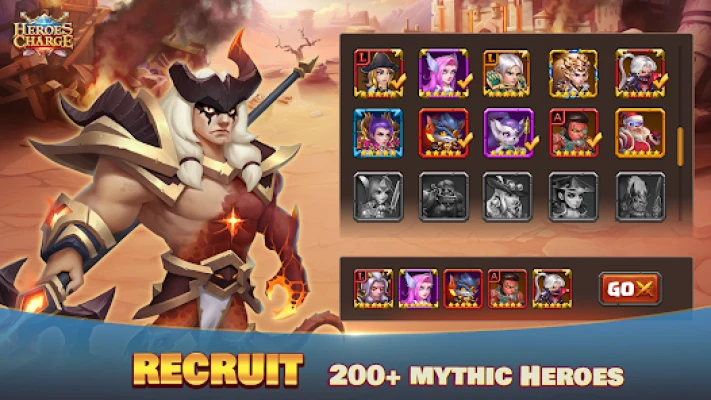
Heroes are at the center of the entire experience. The game features a diverse roster of characters, including melee fighters, agile archers, and powerful mages. Recruiting additional heroes gives players more choices when building teams for different encounters.
Each hero should be evaluated according to their abilities, combat role, and usefulness within a particular lineup. A character who performs well in one situation might be less effective against enemies that exploit the same weaknesses.
Developing a collection of complementary heroes is therefore more valuable than simply gathering characters without a clear plan.
Fast-Paced Fantasy Battles
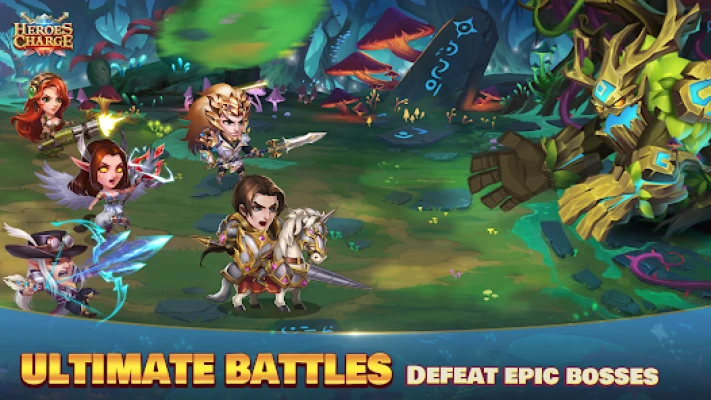
Combat focuses on bringing a prepared team into encounters against waves of enemies or challenging opponents. Success depends on the strength of the lineup, the abilities available to each character, and how effectively the team handles incoming damage.
As enemies become more difficult, players need to pay closer attention to team composition and hero development instead of relying exclusively on raw power.
Hero Skills and Upgrades
Hero abilities determine how characters contribute to battle. Improving these skills can increase damage, strengthen defensive capabilities, or improve the effectiveness of other combat functions.
Skill upgrades are especially important when they support a hero's main role. A damage dealer needs reliable offensive output, while a frontline character benefits from abilities that help it survive and protect the rest of the team.
Equipment and Character Progression
Equipment sets help strengthen heroes and improve their combat performance. Collecting the right items and investing in the characters used most frequently can make a substantial difference as campaign difficulty increases.
Equipment progression also encourages players to think about the long-term value of their resources. Strengthening a dependable core team is generally more efficient than spreading every item across a large collection of underdeveloped heroes.
Campaign Quests and Exploration
Campaign missions provide a structured way to explore the world of Kron, encounter enemies, earn rewards, and develop the roster. These battles also give players opportunities to learn how their heroes perform against different opponents.
Campaign progression is an important foundation for the rest of the game because it supports continued development and helps identify weaknesses in the main lineup.
PvP Arena Competition
The PvP Arena lets players test their teams against other players. These battles introduce a competitive dimension in which hero selection, team synergy, and overall development can determine the result.
A team that performs well against computer-controlled enemies may need adjustments to compete effectively in the Arena. Players should study unsuccessful battles and use those results to improve their lineup.
Guilds and Cooperative Play
Players can create or join guilds to participate in social and competitive activities. Guild membership adds another layer to progression by connecting individual development with group participation.
An active guild can also provide a more engaging experience for players who enjoy sharing advice, coordinating activities, and working toward common rewards.
Special Events and Additional Challenges
Special events offer alternative combat challenges and opportunities to earn rewards. Their objectives may differ from standard campaign missions, encouraging players to experiment with heroes they do not normally use.
Checking available event activities regularly can help players make better use of their playing time and focus on rewards that support their current progression goals.
Understanding the Main Hero Roles
A balanced team should cover several combat responsibilities. The precise effectiveness of individual characters depends on their current abilities, upgrades, and the encounter being attempted.
Frontline Fighters
These heroes specialize in close-range combat and help absorb enemy pressure. Their survival gives other team members more time to deal damage or use their abilities. Prioritize durability when a frontline character repeatedly falls too early.
Ranged Damage Dealers
Archers and similar heroes can contribute damage from a distance. They are useful when a team needs dependable offensive pressure, but their performance can suffer if the frontline cannot keep enemies under control.
Mages and Spellcasters
Magic-focused heroes provide specialized offensive abilities and can be valuable against particular enemy formations. Their usefulness depends on their skills, survivability, and how well their abilities complement the rest of the team.
Support and Utility Heroes
Characters with healing, protection, control, or other utility effects can help a team survive difficult encounters. When available in your roster, they may provide more value than adding another damage dealer to an already fragile lineup.
These are general role categories for understanding team composition, not a claim that every category is represented by a specific named hero or that every encounter requires all four roles.
Full Strategy Guide for Heroes Charge
Getting Started: Build a Strong Foundation
The early stages are the best time to learn the game's progression systems and establish a reliable core team. Instead of trying to develop every hero you unlock, concentrate on a small group that can handle most of your current challenges.
Focus on these priorities:
Complete available campaign missions to unlock progression opportunities and collect resources.
Upgrade the heroes you use most often rather than distributing materials across your entire roster.
Improve important skills whenever doing so provides a meaningful combat advantage.
Collect and equip useful gear as it becomes available.
Explore the available game modes to understand which activities provide resources your team needs.
Check your current objectives before spending valuable currencies or consumable items.
Early progress is most efficient when every upgrade supports a clear purpose. If a team repeatedly fails because its frontline collapses, improving survivability is usually more useful than upgrading a secondary damage dealer.
Building the Best Team Composition
There is no universally perfect team for every encounter. The most effective lineup depends on the heroes you own, their development levels, and the enemies you face.
A practical team-building approach is to combine complementary combat roles.
Frontline protection: Start with a dependable character capable of taking incoming damage. If your frontline cannot survive long enough, your other heroes may be defeated before they can contribute effectively.
Consistent damage: Include heroes that can deal reliable damage throughout the encounter. A team with strong protection but insufficient offensive power may survive for a long time without finishing the battle.
Specialized abilities: Use magic, ranged attacks, or other specialized skills when they address the threats presented by a particular encounter.
Additional utility: When appropriate heroes are available, consider support or control abilities that improve team survival or reduce the enemy's ability to fight effectively.
After assembling a lineup, test it against several types of opponents. Keep the characters that consistently contribute and replace those whose abilities do not fit the team's needs.
How to Upgrade Heroes Efficiently
Hero development is one of the most important long-term systems in Heroes Charge. However, using every available resource immediately can leave your roster underpowered when a difficult stage demands a different approach.
Prioritize your main lineup.
Choose a core group that performs reliably in campaign battles and other regular activities. Invest most of your commonly available upgrade materials in these heroes before developing secondary characters.
Upgrade important skills.
Consider how often a skill contributes to a hero's role. An ability that increases reliable damage, protects the frontline, or provides valuable utility may offer more practical benefit than an upgrade with little impact on your usual encounters.
Keep equipment progression balanced.
Improve the equipment of heroes who need it most. Offensive characters benefit from stronger damage output, while frontline fighters need sufficient durability to remain effective. Avoid leaving your main tank significantly behind the rest of the team.
Develop additional heroes selectively.
Secondary heroes become valuable when they solve a particular problem, such as an encounter that your regular lineup cannot handle. Develop them when you have a clear reason rather than upgrading them simply because they are available.
Campaign Strategy: Winning Difficult Missions
Campaign progression is more than a test of your team's overall strength. It is also an opportunity to identify weaknesses and learn which heroes work well together.
When you encounter a difficult stage, follow a consistent process.
Study the failed battle.
Determine whether your team lost because the frontline fell too quickly, the enemy inflicted excessive damage, or your lineup could not defeat opponents efficiently.
Change one major factor at a time.
Try improving a key hero, changing one team member, or adjusting your skill timing. Making several changes simultaneously can make it difficult to understand what actually improved your performance.
Strengthen the weakest part of the lineup.
If your team survives but deals too little damage, prioritize offense. If enemies defeat your heroes early, focus on protection, durability, or other suitable defensive options.
Repeat challenging stages when useful.
Replay available missions that provide resources your main team needs. This allows you to strengthen your lineup without wasting upgrades on characters that are not currently important.
Advance when your team is ready.
Repeatedly attempting a stage with a clear power or survivability disadvantage can consume time without delivering meaningful progress. Improving your heroes first is often the better approach.
Skill Timing and Combat Decisions
Heroes Charge combines character progression with the use of powerful combat abilities. Using those abilities effectively can help you overcome battles that initially appear difficult.
Avoid using every available powerful ability immediately if a more dangerous enemy is about to appear.
Prioritize threatening enemies when your team's skills allow you to eliminate them efficiently.
Observe which opponents cause the most damage or disrupt your formation.
Pay attention to whether your heroes survive long enough to use their important abilities.
Experiment with different lineups when a particular encounter consistently defeats your main team.
The best timing depends on the heroes involved and the mechanics of each battle. Rather than following a fixed sequence in every encounter, learn which abilities have the greatest impact on the situation.
PvP Arena Strategy
The PvP Arena requires a slightly different approach from campaign progression. Instead of preparing for predictable stages, you must build a lineup that can perform against competing player teams.
Develop a dependable Arena team.
Use heroes that work well together and have received sufficient upgrades. A collection of individually powerful characters will not necessarily form an effective competitive lineup.
Pay attention to team balance.
An aggressive team may defeat opponents quickly but struggle against stronger defensive formations. A more durable lineup can survive longer but may lack the damage needed to secure a victory. Find a balance that suits your available heroes.
Learn from unsuccessful matches.
If your frontline repeatedly falls early, improve its survivability or reconsider the formation. If the enemy survives your attacks too easily, look for ways to increase offensive pressure.
Choose opponents thoughtfully when the game permits.
Review available opponent information and avoid treating every matchup as equally favorable. A team that appears weaker overall may still have abilities that counter your preferred strategy.
Invest in long-term consistency.
Competitive progress benefits from a well-developed core roster. Improve the heroes that consistently contribute to Arena victories instead of constantly switching to characters with minimal investment.
Guild Strategy and Cooperative Progression
Guild activities can complement individual progression by providing access to group challenges, competitive activities, and associated rewards.
For the best results, join a guild that matches your activity level and participate in its available activities regularly.
Review guild activities and their requirements.
Contribute consistently instead of waiting until the end of an event.
Learn from experienced players when choosing heroes or planning upgrades.
Coordinate with guild members when activities involve team participation.
Use guild-related rewards to strengthen your primary lineup whenever appropriate.
A well-developed guild roster can also encourage experimentation. You may discover useful character combinations by observing how other players approach difficult encounters.
Special Events: How to Get More Value
Special events provide additional challenges beyond standard campaign missions. Their rewards can be useful for strengthening heroes, but the best activities to prioritize depend on your current goals.
Before committing your time or resources, review the available objectives and rewards.
If your main team lacks important upgrade materials, focus on activities that supply those resources. If you are working toward a particular hero, prioritize relevant opportunities when they are available.
Avoid spending premium currency simply because an event is active. First determine whether its rewards are valuable enough to justify the cost.
Event schedules and rewards can change, so use the objectives displayed in your current game version rather than relying on outdated event information.
Free-to-Play Progression Tips
Heroes Charge is free to start, with optional in-app purchases. Players who prefer not to spend money should be especially careful about resource allocation.
Save premium currency for meaningful opportunities. Avoid spending it impulsively on minor conveniences if a more valuable use may become available.
Make daily progress where practical. Regular participation in available missions and activities can help build resources over time.
Invest in a core roster. A smaller, well-developed group of heroes is generally more useful than a large roster of underpowered characters.
Use rewards strategically. Prioritize resources that directly support your current progression bottleneck.
Be selective with optional purchases. Paid items are not automatically the most efficient choice. Consider their cost and practical benefit before committing money.
Accept gradual progression. Building a competitive roster without spending may require patience, particularly when facing experienced opponents or advanced content.
Common Mistakes to Avoid
Even a promising team can struggle when resources are distributed poorly or battles are approached without a clear strategy.
Upgrading too many heroes at once
Spreading materials across the entire collection slows the development of your strongest characters. Concentrate on a core lineup first.
Ignoring defensive weaknesses
Adding more damage dealers does not solve a problem caused by a frontline that falls too early. Diagnose the actual reason for defeat before spending resources.
Using the same team for every encounter
Different enemies may require different abilities and team compositions. Adjust your lineup when the current approach stops working.
Neglecting equipment
Hero levels alone do not determine combat effectiveness. Appropriate equipment and skill upgrades also contribute to performance.
Spending resources without a plan
Premium currency and scarce upgrade materials are more valuable when used to solve specific problems. Decide what your roster needs before spending them.
Ignoring guilds and events
Focusing exclusively on campaign missions can cause you to miss other progression opportunities. Explore the available activities and choose those that fit your goals.
Chasing every newly acquired hero
A new character may look appealing, but immediate investment is not always worthwhile. Compare the hero's potential contribution with the resources needed to develop them.
Advanced Tips for Long-Term Progress
Establish a Clear Upgrade Order
Use a consistent priority system to decide where resources should go.
First priority: Team survival
Ensure your frontline and other essential heroes can survive long enough to contribute.
Second priority: Reliable damage
Strengthen your primary damage dealers so the team can finish battles efficiently.
Third priority: Skills and utility
Improve the abilities that make the greatest difference to your preferred team composition.
Fourth priority: Roster expansion
Develop alternative heroes when you need them for new encounters, competitive matchups, or specialized activities.
This is a flexible framework rather than a rigid rule. If your team already survives comfortably, additional defensive upgrades may be less valuable than improving damage or control.
Identify Your Current Progression Bottleneck
At any stage, ask yourself what is preventing further progress.
If your team dies too quickly, improve survivability.
If enemies survive for too long, improve damage output.
If a specific enemy causes repeated defeats, experiment with a more suitable lineup.
If upgrades are stalled, focus on activities that provide the resources you lack.
If Arena performance is inconsistent, review team synergy and matchup weaknesses.
If progression feels slow, reduce unnecessary spending and concentrate on your most important objectives.
Is Heroes Charge Worth Playing?
Heroes Charge is worth considering for players who enjoy fantasy RPGs with collectible characters, team development, equipment upgrades, and competitive battles. Its combination of campaign progression, guild participation, and PvP gives players several ways to develop their rosters and test different strategies.
The game is particularly appealing to people who enjoy improving a team over time and experimenting with different character combinations. Players who prefer strategic preparation and gradual character development may find its progression systems rewarding.
However, the experience may be less suitable for players who dislike extensive upgrade systems, recurring resource management, or optional in-app purchases. Competitive progression can also demand considerable time and investment, depending on individual goals.
Before committing to long-term play, consider whether its collection and upgrade mechanics match your preferred style of gaming.
Frequently Asked Questions
What type of game is Heroes Charge?
Heroes Charge is a fantasy action RPG that combines hero collection, character development, equipment upgrades, campaign quests, PvP competition, guild activities, and special events.
Who developed Heroes Charge?
Heroes Charge was developed by uCool.
Can you play Heroes Charge for free?
Yes. The game is free to start and offers optional in-app purchases. Players can choose whether to spend money, although progression speed and competitive goals may vary.
How do you get stronger heroes in Heroes Charge?
Recruit heroes, improve their skills, collect useful equipment, and invest resources in characters that complement your main team. Consistent development is more effective than upgrading every hero without a plan.
What is the best team in Heroes Charge?
There is no single lineup that is guaranteed to work best in every situation. The ideal team depends on your available heroes, their upgrades, and whether you are playing campaign missions, Arena battles, or other activities.
How can beginners progress faster?
Complete available missions, focus on a dependable core team, upgrade important skills, use equipment effectively, and prioritize activities that provide resources your roster needs.
Is the PvP Arena important?
The Arena provides a competitive way to test your lineup against other players. It can also support progression through its available rewards, making it worth considering alongside campaign and guild activities.
Should you join a guild?
Joining an active guild is a good option if you want to participate in cooperative or competitive activities and make use of available guild-related rewards.
Does Heroes Charge have in-app purchases?
Yes. The game offers optional purchases. Players should review costs carefully and decide whether a purchase offers enough value for their goals.
What is the best strategy for difficult battles?
Identify why your team is losing, improve the weakest part of the lineup, and adjust your hero selection when necessary. A balanced team with suitable upgrades often performs better than a collection of powerful but poorly coordinated characters.
Final Overview
Heroes Charge combines fantasy combat, hero collection, tactical team building, and long-term character progression in a single RPG experience. Its strongest appeal lies in developing a roster, discovering useful hero combinations, overcoming campaign challenges, and competing in the Arena or alongside a guild.
The most effective approach is to build a dependable core team, invest resources carefully, learn from difficult battles, and expand your roster when new challenges demand different strategies. With thoughtful upgrades and consistent participation in useful activities, players can steadily improve their teams and enjoy more of what the world of Kron has to offer.
Rate the Game
User Reviews












Popular Games



















 Android
 iOS
 Windows
 Xbox