





Latest Version
October 29, 2026
HypeHype Inc.
Role Playing
Android
0
com.frogmindgames.destinymirror
Report a Problem
More About :game
Game Overview
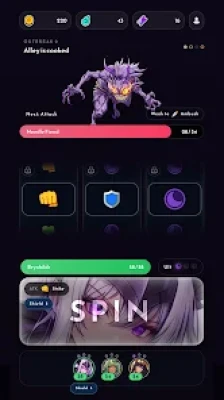
Destiny Mirror is a battle spinner RPG published by HypeHype Inc. The game places players in a fantasy world where a disastrous mistake releases one billion devils, leaving the protagonist responsible for dealing with the consequences.
To resolve the crisis, players use the Destiny Mirror to summon legendary figures reborn as Destinies. With Lilith as an ally and a debt owed to the Dark Lord, each battle becomes another step toward restoring order and paying off the infernal obligation.
Unlike a conventional turn-based RPG that relies entirely on selecting individual attacks, Destiny Mirror uses a spinner-based battle system. The team you assemble influences the outcomes of Battle Spins, making character selection and lineup planning important parts of the experience.
Coins and souls provide resources for strengthening your lineup, while tickets allow you to summon more Destinies. These systems encourage players to develop their collection and improve their combat potential over time.
The game is an evolving release, so its available characters, combat features, events, and progression systems may change with future updates. Its central appeal is the combination of character collection, strategic preparation, and fast-paced fantasy battles.
Main Features of Destiny Mirror
Spinner-based RPG combat
Battle devils through a fast-paced combat system built around Battle Spins. Your selected lineup influences the battle outcomes, making team preparation an important part of your strategy.
Legendary Destinies
Reincarnate legendary figures into powerful Destinies and expand your collection. Each new summon creates another opportunity to develop your team and experiment with different lineups.
Strategic team building
Choose which Destinies to include in your lineup before entering battle. Your selection affects your potential Battle Spin outcomes, so building a balanced team is an important part of progression.
Coins and souls
Earn coins and souls through gameplay to strengthen your lineup. Managing these resources carefully helps you improve your battle performance over time.
Character summoning
Use tickets to summon additional Destinies. Expanding your collection gives you more options when planning your team and developing new strategies.
Lilith and the Dark Lord
The game's fantasy storyline revolves around working with Lilith while repaying your debt to the Dark Lord. Your battles are tied to the consequences of the disaster you accidentally caused.
Ongoing development
Destiny Mirror is an evolving game. Additional Destinies, battle features, events, and improvements may become available through future updates.
Understanding the Battle Spinner System
The Battle Spin system is the central gameplay mechanic in Destiny Mirror. Rather than relying exclusively on conventional turn-based commands, the game uses spinner-based combat to determine battle outcomes.
Your lineup matters because the Destinies you select influence the results you can achieve during Battle Spins. This creates a connection between collecting characters and making strategic decisions.
The goal is not simply to summon as many characters as possible. You should also learn how your available Destinies work together, improve your lineup with earned resources, and make adjustments when your current team struggles against opponents.
Because the game is still evolving, exact spinner probabilities, individual character statistics, and advanced combat formulas should be learned from the current in-game information rather than assumed.
Complete Strategy Guide for Destiny Mirror
Learn the Core Gameplay Loop
When you first start playing, focus on understanding the basic progression cycle. Destiny Mirror revolves around fighting devils, earning resources, strengthening your lineup, and summoning additional Destinies.
Each part supports the others. Battles help you earn the resources needed for progression, while an improved lineup can prepare you for future encounters.
Avoid trying to understand every system immediately. Begin with the basic combat mechanics and gradually explore character summoning, upgrades, and team composition as they become available.
Pay attention to tutorials, mission instructions, and explanations shown within the game. These provide the most reliable information about the current version's mechanics.
Build a Strong Initial Lineup
Your starting lineup forms the foundation of your early progress. Instead of choosing characters randomly, consider how your available Destinies contribute to the team's overall performance.
Look at the descriptions and abilities provided in the game. If characters have different combat roles, try to create a lineup that combines complementary strengths rather than relying entirely on one type of ability.
When a battle becomes difficult, review your current selection before assuming that you simply need more resources. A different lineup may produce better results, depending on how the game's Battle Spin system interacts with your characters.
Avoid making large investments based only on a character's appearance or rarity unless the game provides evidence that these qualities improve performance.
Understand How Battle Spins Affect Strategy
Battle Spins make team preparation especially important. Since your lineup influences possible battle outcomes, the decisions you make before combat can affect how effectively you handle enemies.
Start by observing how your current lineup performs in several battles. Notice which combinations seem effective and which encounters consistently cause problems.
If the game provides combat results, ability descriptions, or other battle feedback, use that information to understand what happened. Small adjustments to your lineup may help you improve without requiring a complete rebuild.
Do not assume that every spin guarantees a particular outcome or that one lineup will always outperform every alternative. Learn the system through the mechanics presented in the game and adjust your expectations as you gain experience.
Summon Destinies Strategically
Summoning is one of the main ways to expand your options in Destiny Mirror. Tickets allow you to obtain additional Destinies, increasing the number of characters available for team building.
Before using your tickets, consider what your current lineup needs. If you have limited character options, expanding your collection can give you more flexibility. If you already have a workable team, strengthening your existing characters may be the more immediate priority.
Check the available summoning information and any displayed character details before committing your resources. If the game introduces limited-time banners or special summoning events, review their terms rather than assuming that every summon has the same value.
Most importantly, avoid building your entire strategy around the expectation of obtaining one specific character. Make the best use of the Destinies you actually have.
Manage Coins and Souls Carefully
Coins and souls are important progression resources because they help strengthen your lineup.
During the early stages, prioritize improvements that make your current team more effective. Spreading resources across every available option can leave you without enough currency to make a meaningful upgrade when you need one.
Check which upgrades are available, what they cost, and how they affect your characters. If a particular upgrade directly improves a character you frequently use, it may offer more immediate value than investing in a character who rarely appears in your lineup.
Keep some flexibility in your resource decisions. New summons and future progression requirements may change which characters deserve investment.
A sensible approach is to strengthen a dependable core team first, then expand your investments as your collection and understanding of the game grow.
Know When to Upgrade and When to Summon
One of the most important decisions in a collection-based RPG is choosing between improving existing characters and obtaining new ones.
Summoning expands your options, but a larger collection does not automatically create a stronger lineup. Existing characters may become more useful when you invest in their available upgrades.
If your current team consistently handles battles, consider whether a focused upgrade would provide more value than another random addition.
If you lack suitable characters for your lineup or need more flexibility, summoning may be worthwhile.
Review your progress regularly and choose the option that addresses your most immediate weakness rather than spending resources simply because they are available.
Prepare for Difficult Devil Encounters
As you face more demanding battles, your initial lineup may no longer perform as effectively as it did earlier.
When a fight becomes difficult, identify the problem before changing everything. Determine whether your team needs more investment, whether another available Destiny might fit better, or whether you need to understand the Battle Spin mechanics more clearly.
Use the game's character descriptions and combat feedback to guide your decisions. Make one or two changes at a time so you can better understand their effects.
If the game allows you to replay earlier encounters, use them to test your lineup and become familiar with how your characters perform.
A methodical approach makes it easier to improve than repeatedly changing the entire team without understanding the results.
Make the Most of Lilith's Role
Lilith is an important ally in the game's premise, accompanying the protagonist during the effort to repay the Dark Lord's debt.
Pay attention to the story and the instructions presented as you progress. Narrative developments may introduce new objectives or explain why particular battles matter.
However, do not assume that Lilith functions as a directly controllable party member or has a particular set of combat abilities unless those mechanics are explicitly shown in the game.
Understanding the distinction between a story character and a playable Destiny will help you make more informed decisions about team composition.
Progress Through the Story Efficiently
The game's central objective is to deal with the consequences of releasing one billion devils and repay the Dark Lord's debt.
Treat available battles and objectives as opportunities to learn the game's systems while progressing through the story.
Complete the tasks currently available to you before spending too much time on speculative strategies for later content. Early objectives may introduce important mechanics or provide resources that make subsequent encounters easier.
When progress slows, return to the fundamentals: strengthen your core lineup, review your available Destinies, and use your resources thoughtfully.
Since Destiny Mirror is an early release that may receive additional content, the available storyline and progression structure can change over time.
Adapt to Updates and New Features
An evolving RPG can introduce new characters, combat mechanics, and events that affect established strategies.
Check the game's update information when new content becomes available. New Destinies may create additional team-building options, while changes to combat systems could affect which strategies work best.
Avoid assuming that a lineup or resource strategy will remain optimal forever. Instead, learn the mechanics of new features and evaluate how they fit into your current progression.
A flexible approach will help you adapt as the game develops.
Advanced Tips for Better Results
Focus on a dependable core team. Invest in a lineup you understand instead of spreading resources across every Destiny you obtain.
Read character descriptions. Use the abilities and information displayed in the game to make informed team-building decisions.
Learn from each battle. Review combat outcomes and adjust your lineup when you encounter repeated difficulties.
Balance collection and upgrades. New characters provide flexibility, while upgrades can improve the effectiveness of characters you already use.
Save resources with a purpose. Before spending coins, souls, or tickets, consider how the investment supports your current goals.
Avoid unverified tier lists. Character rankings and recommendations may become outdated, especially while the game is receiving new features.
Experiment with different lineups. Test available combinations to discover which ones work best for your current opponents.
Follow the in-game instructions. Tutorials and updated character descriptions are more reliable than assumptions about undocumented mechanics.
Common Mistakes to Avoid
Summoning Without a Plan
Using every ticket as soon as it becomes available can leave you with fewer options when you want to pursue a particular summoning opportunity. Understand the available choices before spending tickets.
Upgrading Too Many Characters
Investing in every Destiny can divide your resources and slow the development of your strongest lineup. Concentrate on characters you regularly use.
Ignoring Team Composition
A collection full of characters does not guarantee a strong team. Consider how your chosen Destinies work together and whether your lineup addresses the challenges you face.
Assuming Every Battle Is Purely Random
The game uses spinner-based combat, but the lineup also influences battle outcomes. Pay attention to how team selection affects your results rather than treating every defeat as bad luck.
Spending Resources Without Checking Upgrade Details
Read the costs and effects of available improvements before investing. Understanding what an upgrade actually provides helps you prioritize effectively.
Following Outdated Advice
Because Destiny Mirror is still developing, older guides may describe mechanics or features that have changed. Verify important details against the current version of the game.
Is Destiny Mirror Worth Playing?
Destiny Mirror is an interesting option for players who enjoy fantasy RPGs, character collection, and unconventional combat systems.
Its battle spinner mechanic gives team preparation a distinctive role, while summoning legendary figures as Destinies creates a progression loop built around collecting and strengthening characters.
The story adds a playful premise to the experience: after accidentally unleashing one billion devils, you must fight your way through the consequences while working with Lilith and repaying a debt to the Dark Lord.
Players who enjoy experimenting with team lineups, collecting characters, and gradually improving their combat capabilities may find the game appealing.
However, Destiny Mirror is still an evolving release. Players should expect its content and systems to develop over time rather than assume that it already offers the depth of a long-established RPG.
Frequently Asked Questions
What is Destiny Mirror?
Destiny Mirror is a fantasy battle spinner RPG in which players summon legendary Destinies, build strategic lineups, fight devils, and collect resources to strengthen their teams.
Who published Destiny Mirror?
The game is published by HypeHype Inc. and is associated with HypeHype Oy.
What is the main objective?
The protagonist accidentally releases one billion devils and must deal with the resulting disaster while repaying a debt to the Dark Lord.
What are Destinies?
Destinies are legendary figures reincarnated for battle. Players summon them and use them to build lineups that influence Battle Spin outcomes.
How does combat work?
Combat uses a spinner-based system. Your selected lineup influences battle outcomes, so choosing and strengthening your Destinies is an important part of preparation.
How do you obtain more Destinies?
The game uses tickets to summon additional Destinies. The available summoning options and character details can be checked in the current version.
What are coins and souls used for?
Coins and souls are resources earned through gameplay that help strengthen your lineup and improve your team's progression.
Who is Lilith?
Lilith is an ally in the game's story who helps the protagonist work through the consequences of the devil disaster and repay the Dark Lord.
Is Destiny Mirror still being developed?
Yes. Its published description identifies the game as an evolving release, with more Destinies, battle features, events, and improvements planned.
What is the best strategy for beginners?
Learn the Battle Spin system, build a dependable lineup, invest in useful upgrades, and summon additional Destinies strategically. Use combat feedback to understand your weaknesses and improve your team gradually.
Final Verdict
Destiny Mirror combines fantasy storytelling, legendary character summoning, resource management, and spinner-based combat into a distinctive RPG experience. Its unusual premise and strategic lineup system give players several ways to approach battles and develop their collection.
For the best results, focus on understanding how your Destinies influence Battle Spins, invest in a reliable core team, and use coins, souls, and tickets with clear goals in mind. As new content and features arrive, remain flexible and adapt your strategies to the game's current mechanics.
Rate the Game
User Reviews












Popular Games



















 Android
 iOS
 Windows
 Xbox