

Latest Version
October 28, 2026
Funovus
Role Playing
0
com.funovus.pocket.quest
Report a Problem
More About :game
Game Overview
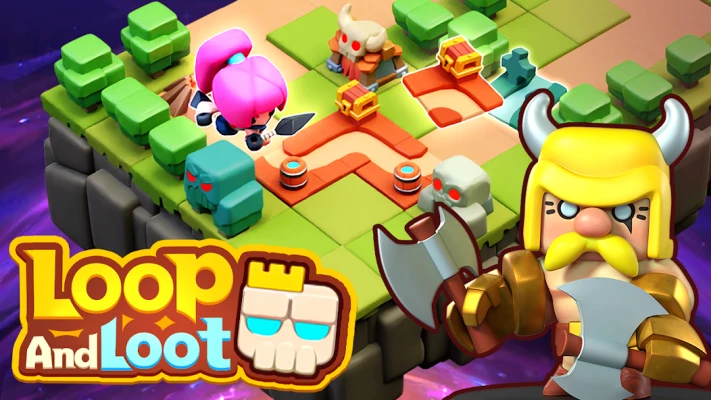
Loop & Loot™: Merge RPG takes a different approach to traditional role-playing games by allowing players to shape the world their character explores. Instead of simply following a fixed route, players make decisions about which terrain, buildings, and enemies to place. These choices influence the adventure and create opportunities to earn rewards.
Developed by Funovus, the game combines roguelite progression with idle gameplay and deck-building elements. Every run gives players an opportunity to collect coins, gather loot, face monsters, and work toward a better result. Artifacts and talents provide additional ways to improve survival and strengthen future attempts.
The central challenge is learning how to balance risk, rewards, and world development. Players who plan carefully can build more effective environments, make better upgrade choices, and progress more consistently through the game's challenges.
Main Features of Loop & Loot™: Merge RPG
Strategic World Building
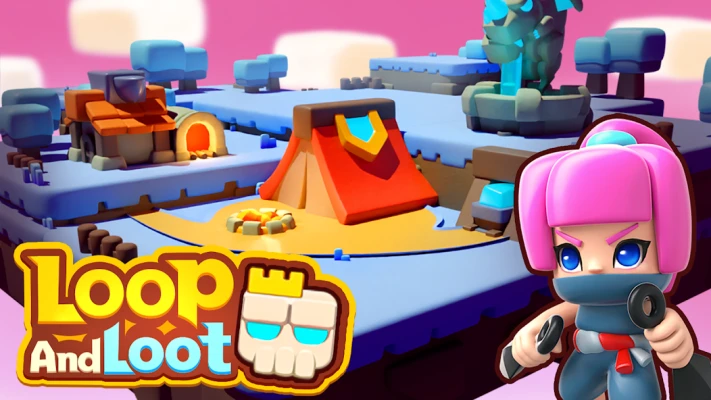
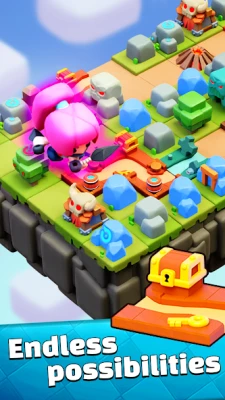
World building is one of the game's defining mechanics. Players place different terrain pieces, buildings, and enemies to create an environment for their character's journey.
The arrangement of these elements matters because it influences the challenges and opportunities encountered during a run. Experimenting with different combinations helps players discover more effective ways to collect rewards and manage difficult encounters.
Roguelite Progression
Each run provides a fresh opportunity to test strategies and improve performance. Defeats can reveal weaknesses in a build, while successful attempts help players understand which choices work best.
This repeatable gameplay loop encourages experimentation instead of relying on a single fixed strategy.
Idle RPG Mechanics
The game incorporates idle role-playing elements, making it suitable for players who enjoy gradual progression alongside strategic decision-making. Players can focus on preparing their world, choosing upgrades, and improving their results over repeated adventures.
Artifacts and Talents
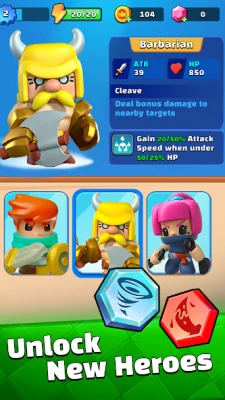
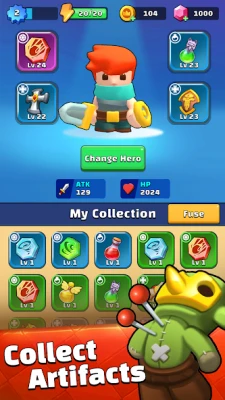
Artifacts and talents offer ways to strengthen your character and improve survival. Selecting upgrades that complement one another can make a substantial difference during difficult encounters.
Understanding which improvements address your current weaknesses is essential for developing a reliable strategy.
Coins and Valuable Loot
Collecting coins and loot is a major objective during each run. These rewards contribute to progression and encourage players to consider which encounters are worth pursuing.
Efficient resource collection requires balancing immediate rewards against the risks of facing stronger enemies.
Different Worlds and Monster Encounters
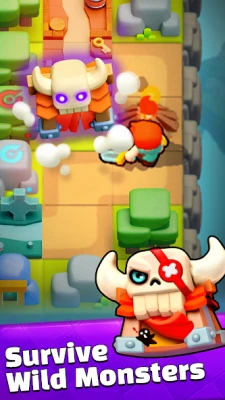
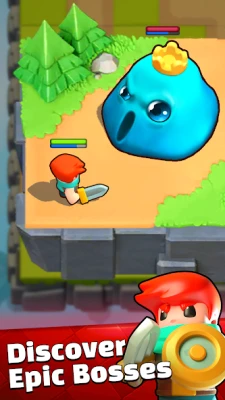
Loop & Loot™: Merge RPG features different worlds and hundreds of monsters. This variety encourages players to adapt their approach as they encounter new challenges.
Rather than depending on one build for every situation, successful players learn to adjust their world layouts and upgrades to suit the demands of each adventure.
Complete Gameplay Guide
Understanding the Core Gameplay Loop
The gameplay revolves around building your world, starting an adventure, collecting rewards, facing enemies, and improving your future attempts.
Before a run begins, consider what you want to achieve. You might prioritize earning coins, exploring a new environment, collecting valuable loot, or improving your overall performance.
Once the adventure starts, observe how your chosen layout affects encounters and rewards. Use the results to decide which elements should remain and which need to change before your next attempt.
A clear objective makes every decision more meaningful and helps prevent resources from being spent without a specific purpose.
How to Build an Effective World
An effective world should support your immediate goals without creating unnecessary risks.
Start by learning how individual terrain types, buildings, and enemies affect your adventure. Avoid changing too many elements simultaneously when experimenting with a new layout, because it becomes harder to identify which changes improve your results.
Consider the balance between challenge and reward. A difficult enemy may provide a worthwhile opportunity, but only if your character has enough strength and the appropriate upgrades to handle the encounter.
As you gain experience, develop different layouts for different objectives instead of relying on the same arrangement in every situation.
Choosing the Right Artifacts and Talents
Artifacts and talents should be selected according to your current needs and long-term plans.
If your character frequently loses battles because of insufficient durability, prioritize improvements that support survival. If you survive comfortably but struggle to defeat enemies efficiently, focus on offensive benefits.
Consider how different upgrades work together. A combination of complementary improvements can be more effective than several unrelated bonuses.
Avoid choosing upgrades simply because they appear powerful. The best option is the one that addresses a genuine weakness or supports the strategy you are trying to develop.
Managing Coins and Loot
Resource management plays an important role in long-term progression.
Collect rewards consistently, but do not assume that every encounter is worth the risk. Stronger enemies may offer better rewards, yet an unsuccessful fight can undermine an otherwise productive run.
Review the value of available upgrades before spending coins. Prioritize improvements that make future adventures easier or increase your ability to earn rewards.
Over time, identifying efficient reward opportunities will help you progress without wasting valuable resources.
Exploring New Worlds
New worlds introduce additional environments and monster encounters, encouraging players to adjust their strategies.
Before advancing into unfamiliar territory, review your current build and consider whether it is prepared for more demanding challenges. Pay attention to the enemies you encounter and identify which abilities or upgrades would make future battles easier.
A strategy that works well in one environment may be less effective in another. Remaining flexible is essential for continued progress.
Full Strategy Guide for Loop & Loot™: Merge RPG
Best Beginner Strategy
New players should focus on understanding how world building, combat, and progression work together.
Begin with simple layouts and gradually experiment with different terrain and building combinations. Learn which upgrades provide the greatest practical benefits and how enemies respond to the environment you create.
Rather than trying to achieve the highest possible score immediately, concentrate on building a consistent approach. Collect rewards, review your results, and improve the weakest part of your strategy after each run.
This method creates a solid foundation for tackling harder challenges later.
How to Maximize Rewards
The best way to improve your rewards is to understand the relationship between risk and potential gain.
Focus on encounters that your current build can handle reliably. Pursuing difficult enemies without adequate preparation can waste time and reduce the overall value of a run.
Evaluate opportunities according to your current strength, available upgrades, and remaining objectives. If a particular approach repeatedly produces good results, refine it before attempting more difficult variations.
Consistency is often more valuable than taking unnecessary risks in pursuit of a single exceptional run.
How to Improve Combat Efficiency
Combat efficiency depends on preparation, suitable upgrades, and the ability to recognize weaknesses.
When an encounter becomes difficult, consider whether your character lacks offensive power, survival support, or a suitable combination of improvements.
Make targeted adjustments instead of rebuilding your entire strategy after every defeat. Small changes can help you identify the cause of a problem and make future attempts more effective.
As you face stronger monsters, continue evaluating your build rather than assuming that earlier choices will remain sufficient.
How to Make Permanent Progress
Roguelite progression rewards players who learn from repeated attempts.
Use each run to discover which layouts provide useful rewards, which enemies present the greatest danger, and which upgrades contribute most to your success.
Prioritize improvements that support multiple future adventures. Long-term benefits can be more valuable than temporary advantages that only help in a narrow situation.
Even an unsuccessful run can provide useful information. The key is to identify what went wrong and make a deliberate adjustment before trying again.
Advanced World-Building Tactics
Experienced players should treat world building as a strategic system rather than a decorative feature.
Create layouts that match your objectives. A setup designed to collect rewards safely may differ considerably from one intended to test your combat strength.
Experiment with terrain and building placement in controlled steps. Observe how each adjustment affects encounters and use those observations to refine your approach.
It is also important to recognize when a layout has reached its limits. If a particular arrangement consistently produces difficult encounters without sufficient rewards, change it rather than repeatedly relying on the same plan.
Resource Management for Long-Term Success
Efficient resource management helps maintain steady progress.
Spend coins on upgrades that solve current problems or improve your future runs. Avoid making purchases without considering their practical value.
Balance offensive and defensive improvements according to the challenges you face. A character that deals substantial damage but cannot survive difficult encounters may struggle just as much as one that survives comfortably but takes too long to defeat enemies.
Review your results regularly and direct resources toward the improvements that make the greatest difference.
Common Mistakes to Avoid
Ignoring world placement: Terrain, buildings, and enemies are central to the game's strategy. Poor planning can create unnecessary challenges.
Choosing upgrades randomly: Select artifacts and talents that support your current build instead of collecting unrelated bonuses.
Taking unnecessary risks: Difficult encounters are not always worthwhile. Evaluate whether the potential rewards justify the danger.
Repeating failed strategies: If the same approach repeatedly produces poor results, identify the underlying problem and adjust your layout or upgrades.
Spending resources without a plan: Consider the long-term value of improvements before committing your coins.
Using one strategy everywhere: Different environments and enemies may require different tactics. Adapt your approach as the adventure develops.
Ignoring lessons from previous runs: Every attempt provides information that can help improve your next one. Use that knowledge instead of repeating the same mistakes.
Tips for Experienced Players
Experienced players can improve their results by focusing on consistency, careful experimentation, and efficient resource use.
Develop several approaches rather than relying on one universal layout. Learn which upgrades complement each other and prioritize combinations that address the demands of a particular run.
Pay attention to the point where an otherwise successful adventure begins to become difficult. Identifying that turning point can reveal whether you need stronger upgrades, a different environment, or better resource allocation.
It is also worth distinguishing between short-term success and long-term progression. A run that produces fewer immediate rewards may still be useful if it teaches you how to handle a difficult enemy or reveals a more effective strategy.
The strongest approach is one that can be adjusted as your understanding of the game improves.
Frequently Asked Questions
What is Loop & Loot™: Merge RPG?
Loop & Loot™: Merge RPG is a roguelite idle RPG developed by Funovus. It combines world building, deck-building decisions, monster encounters, loot collection, and character progression.
How does world building work?
Players place terrain, buildings, and enemies to shape the environment their character explores. Different arrangements create opportunities to experiment with challenges, rewards, and progression.
What are artifacts and talents?
Artifacts and talents are upgrades that help players become stronger and improve their chances of surviving difficult encounters. Selecting complementary improvements can support more effective builds.
How can beginners improve quickly?
Learn the basic mechanics, experiment with simple world layouts, collect rewards consistently, and choose upgrades that address your weaknesses. Use each run to identify what should change in your next attempt.
Is Loop & Loot™: Merge RPG an idle game?
Yes. The game incorporates idle RPG mechanics alongside roguelite and deck-building elements. Players can combine gradual progression with strategic decisions about world construction and upgrades.
Does the game offer different environments?
Yes. The game features different worlds and a wide variety of monsters, providing opportunities to adapt your strategy and explore different challenges.
Is Loop & Loot™: Merge RPG suitable for casual players?
Its combination of gradual progression, replayable adventures, and accessible strategic concepts can appeal to casual players as well as fans of more involved role-playing games.
What is the best strategy for earning more loot?
Focus on encounters that match your current strength, improve your build before taking unnecessary risks, and develop world layouts that support reliable progression. Consistent rewards are often more useful than unpredictable high-risk attempts.
Is Loop & Loot™: Merge RPG worth playing?
Players who enjoy fantasy RPGs, roguelite challenges, idle progression, and strategic world building may find the game appealing. Its distinctive feature is the ability to influence your adventure through environmental placement rather than relying exclusively on traditional combat.
Final Thoughts
Loop & Loot™: Merge RPG combines fantasy exploration, strategic world building, monster battles, and roguelite progression in an adventure where thoughtful decisions can make every run more rewarding.
The key to success is understanding how the environment, artifacts, talents, and available resources work together. Start with manageable challenges, develop a reliable strategy, and use the lessons from each attempt to improve future runs.
Whether you enjoy experimenting with world layouts, collecting valuable loot, or finding better ways to overcome powerful monsters, Loop & Loot™: Merge RPG offers plenty of opportunities to refine your approach and discover new strategies.
Rate the Game
User Reviews













Popular Games



















 Android
 iOS
 Windows
 Xbox