
Latest Version
January 18, 2026
ABI GLOBAL LTD.
Puzzle
iOS
0
Report a Problem
More About :game
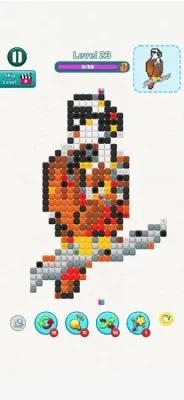
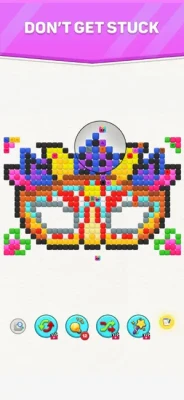
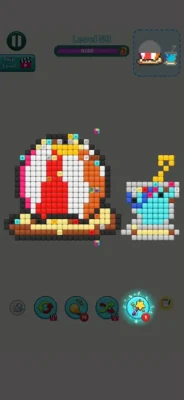
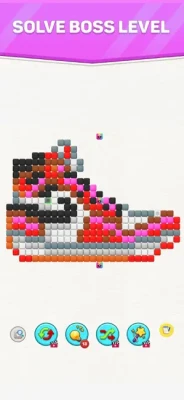
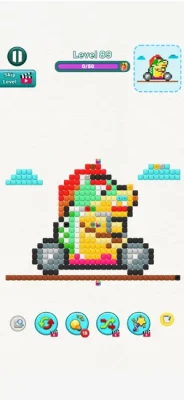
The game combines bright shapes, increasingly complex patterns, and a straightforward touch-based interface. Its description emphasizes hundreds of levels, colorful designs, problem-solving challenges, and a simple-to-learn but harder-to-master experience.
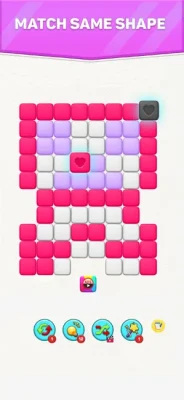
The main objective is to take the available shapes and place matching ones into the corresponding grey blocks until those blocks are completely filled. When the board becomes more complicated, choosing the correct order becomes just as important as identifying the correct shape.
Shape Match Puzzle Game Information
- Game: Shape Match Puzzle
- Developer: ABI GLOBAL LTD.
- Genre: Puzzle / Casual
- Platform: iPhone, iPad and iPod touch
- Release: October 2024
- Latest listed version: 1.3
- Last listed update: November 7, 2024
- Price: Free
- Age Rating: 9+
- Languages: English
- Gameplay style: Shape sorting and color matching
- Main challenge: Complete matching blocks by arranging identical shapes
- Boosters: Available for difficult situations
- In-App Purchases: Available
- Monetization: Free with advertising and optional purchases
The available App Store tracking information lists version 1.3 as the latest recorded version and notes that the update included additional levels.
How to Play Shape Match Puzzle
The core gameplay is easy to learn.
You are presented with different shapes and matching target blocks. Your job is to identify which shapes belong together and place them into the appropriate grey area.
A successful placement gradually fills the target block. Once the required shape is completely matched, you can move on to the remaining targets.
The important part is order. A move that looks correct immediately may make another section of the board harder to complete later.
Basic Gameplay Steps
- Examine the entire puzzle before making a move.
- Identify the shapes that have obvious matching destinations.
- Look for targets that are partially blocked or difficult to access.
- Start with moves that open up more of the board.
- Group identical shapes whenever possible.
- Avoid filling an important space too early if it restricts another move.
- Continue until every required block is completed.
Full Shape Match Puzzle Strategy Guide
1. Study the Whole Board First
Don't immediately move the first shape you notice.
Spend a few seconds looking across the entire puzzle. Identify the available shapes, their matching destinations, and any areas where one move could interfere with another.
This small pause can prevent unnecessary mistakes.
2. Match the Most Obvious Shapes First
If one shape has an unmistakable destination, it can usually be a good starting point.
Simple matches help reduce the number of objects on the board and make the remaining puzzle easier to understand.
3. Think About the Order of Your Moves
Shape Match Puzzle is not only about recognizing identical objects.
The order in which you sort them can determine whether the remaining pieces are easy or awkward to place.
Before committing to a move, ask:
“What will this board look like after I make this move?”
That question becomes increasingly useful on complicated levels.
4. Avoid Blocking Useful Spaces
A common mistake in sorting puzzles is completing one area without considering what happens around it.
If a target is positioned near several other pieces, think about whether filling it will restrict your next move.
When two choices seem equally good, choose the one that leaves more room for future moves.
5. Work With Groups
When several identical shapes are available, treat them as a group rather than solving each piece independently.
Look for:
- Matching shapes
- Matching colors
- Partially completed blocks
- Groups that can be completed together
- Shapes that are difficult to access
This creates a clearer picture of the puzzle.
6. Prioritize Difficult Shapes
Some pieces are more troublesome than others because their matching destinations may become harder to access later.
If you notice a difficult-to-place shape, consider solving it before spending too many moves on easy matches.
This is particularly helpful when several target areas compete for the same space.
7. Don't Rush Easy Levels
Early levels can encourage players to play automatically.
That habit can become a problem when the puzzles become more complicated.
Use the easier stages to develop a consistent process:
Observe → identify → plan → move → reassess.
8. Look for the Final Piece
When a block is nearly complete, pay special attention to the missing shape.
Sometimes the final piece determines which earlier move should have been made.
If you are close to finishing but one section remains unresolved, stop making random moves and identify exactly what that section needs.
9. Use Boosters Carefully
The game includes boosters intended to make difficult puzzles easier.
Don't automatically use a booster whenever a level becomes confusing.
First try to determine whether the problem is caused by:
- A missed matching shape
- Incorrect move order
- A blocked area
- A piece placed too early
- Failure to inspect the complete board
Save helpful resources for situations where they genuinely prevent progress.
10. Reset Your Thinking When Stuck
If several moves aren't working, continuing to make random placements usually doesn't help.
Instead, stop and reconsider the entire puzzle.
Ask yourself:
- Which target is actually the hardest?
- Which shape has the fewest possible destinations?
- Did I fill something too early?
- Is there a different order I haven't tried?
- Which move would give me more space?
Changing your approach is often more effective than repeating the same pattern.
Best Tips for Difficult Levels
Tip 1: Don't Focus on One Area Only
Look at the complete board before concentrating on a single target.
Tip 2: Solve Restricted Areas Early
If a particular target may become difficult to reach later, consider handling it before easier sections.
Tip 3: Keep Future Moves in Mind
A good move is not simply one that works now. A better move also leaves useful options for the next few moves.
Tip 4: Avoid Random Tapping
When a puzzle becomes difficult, random actions can make the board harder to understand. Make every move for a reason.
Tip 5: Use Empty Space Strategically
Open areas can be valuable because they give you more flexibility while sorting the remaining shapes.
Tip 6: Learn From Failed Attempts
A failed move is useful information. Remember what it changed and use that information when trying the puzzle again.
Shape Match Puzzle Booster Strategy
Boosters can be especially useful when a puzzle reaches a point where normal sorting becomes difficult.
A good approach is to reserve them for:
- Nearly completed but blocked puzzles
- Complicated arrangements
- Situations where one incorrect placement has created a difficult position
- Levels where identifying the next move is particularly challenging
Don't use every booster simply because it is available.
Learning the underlying sorting pattern will help you handle more puzzles without relying on assistance.
Common Mistakes to Avoid
Filling the First Available Block
The first possible match isn't always the best match.
Ignoring the Remaining Shapes
Always think about what pieces will remain after your current move.
Making Too Many Moves Without a Plan
If several moves are made without understanding their consequences, the puzzle can become unnecessarily complicated.
Saving Every Difficult Move Until the End
Some difficult pieces should be handled earlier because their positions can become more restrictive.
Using Boosters Too Quickly
Try to understand the puzzle before spending a helpful resource.
Shape Match Puzzle Level Strategy
There is no single trick that solves every level.
Instead, approach each puzzle as a small logic problem.
Early Levels
Use the early stages to understand:
- Shape recognition
- Matching rules
- Block completion
- Basic sorting
- Move order
Intermediate Levels
Start paying more attention to:
- Limited space
- Multiple identical shapes
- Move sequences
- Difficult target positions
- Future consequences
More Difficult Levels
Slow down and analyze the complete arrangement before acting.
At this stage, the goal isn't simply to find a matching shape. You need to determine which matching move should happen first.
Shape Match Puzzle Review
Shape Match Puzzle's biggest strength is its accessible concept. The basic objective can be understood quickly, while the increasing arrangements give the sorting mechanic more depth.
The colorful presentation also fits the casual puzzle format, making it suitable for short play sessions.
The game description specifically promotes hundreds of levels and a simple-to-play, harder-to-master structure, while available store-tracking information shows a strong player rating on the iOS listing.
Pros
- Simple matching concept
- Colorful shapes and visual presentation
- Hundreds of puzzle levels
- Easy to understand
- Gradually more challenging sorting situations
- Boosters for difficult puzzles
- Suitable for short puzzle sessions
Cons
- Some levels can become repetitive
- Difficult arrangements may require trial and error
- Advertising is part of the free experience
- Optional purchases are available
Who Should Play Shape Match Puzzle?
Shape Match Puzzle is a good fit for players who enjoy:
- Sorting games
- Color-matching puzzles
- Casual brain teasers
- Logic challenges
- Short mobile gaming sessions
- Relaxing but increasingly challenging puzzles
If you prefer games based on planning rather than fast reflexes, its simple sorting mechanic provides an easy entry point.
Shape Match Puzzle Tips for Beginners
If you're just starting, remember these five rules:
Look first. Don't make an immediate move.
Match carefully. Confirm that the shape belongs to the intended target.
Think ahead. Consider your next move before committing to the current one.
Protect space. Avoid creating unnecessary restrictions.
Use boosters wisely. Save them for genuinely difficult situations.
Frequently Asked Questions
What is Shape Match Puzzle?
Shape Match Puzzle is a casual logic game centered around sorting colorful shapes into their corresponding matching blocks. The game features hundreds of levels and booster tools for difficult situations.
How do you play Shape Match Puzzle?
The basic objective is to sort identical shapes into their corresponding grey blocks until the required blocks are completely filled.
Is Shape Match Puzzle free?
Yes. The game is listed as free to download, while available information also indicates advertising and optional in-app purchases.
Does Shape Match Puzzle have boosters?
Yes. The game's description mentions boosters that can help when players become stuck on difficult puzzles.
How can I solve difficult Shape Match Puzzle levels?
Start by studying the complete board, identify restricted areas, plan the order of your matches, and avoid filling spaces that could interfere with future moves.
What is the best strategy for Shape Match Puzzle?
The most useful general approach is to think several moves ahead rather than simply matching the first shape you see. Prioritize restricted pieces and preserve useful space whenever possible.
What devices support Shape Match Puzzle?
The available listing information identifies iPhone, iPad and iPod touch as supported devices, with iOS 13.0 or later listed by third-party App Store tracking services.
Final Thoughts
Shape Match Puzzle takes a straightforward idea—sorting identical shapes—and turns it into a progressively more demanding logic challenge.
The key to making consistent progress is not speed. Take time to inspect the board, consider the order of your moves, protect useful spaces, and deal with difficult pieces before they become a problem.
Once you stop treating each move as an isolated match and start thinking about the entire arrangement, the later puzzles become much easier to approach.
Rate the Game
User Reviews








Popular Games



















 Android
 iOS
 Windows
 Xbox