





Latest Version
January 18, 2026
ABI GLOBAL LTD.
Puzzle
iOS
0
Report a Problem
More About :game
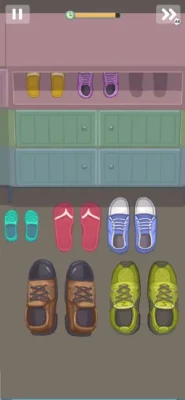
The appeal comes from variety. One level may ask you to organize objects, while another focuses on cleaning, arranging, sorting, or interacting with something in a particular way. The game combines these activities with ASMR-style sound effects, vibration, and relaxing background music to create a calm atmosphere.
The US App Store listing currently shows 4.7 stars from about 116K ratings, with an age rating of 4+, and identifies ABI GLOBAL LTD. as the developer.
Satisdom Game Information
| Information | Details |
|---|---|
| Game | Satisdom |
| Developer | ABI GLOBAL LTD. |
| Genre | Casual |
| Platform | iPhone, iPad |
| Main Style | Relaxing mini-games and satisfying puzzles |
| Controls | Tap, drag, slide and draw |
| Puzzle Types | Sorting, tidying, anti-stress activities, object interactions |
| Audio | ASMR sound effects and relaxing music |
| Age Rating | 4+ |
| Price | Free with in-app purchases |
| iOS Requirement | iOS 13.0 or later |
| iPad | Supported |
| Languages | English plus 7 additional languages |
| App Size | 347 MB |
The App Store listing states that Satisdom requires iOS 13.0 or later and supports iPhone and iPad.
What Is Satisdom?
Satisdom is built for players who enjoy short, uncomplicated activities with a strong emphasis on satisfying interactions.
Rather than giving you a single traditional puzzle system, it presents a collection of mini-games. The official description mentions categories including anti-stress puzzles, sorting, tidying, funny toys, and cute objects.
That variety is important because it changes how you approach each level.
You might need to:
- Tap objects in the correct place
- Drag something into position
- Slide objects along a path
- Draw or interact with a shape
- Sort items
- Tidy a messy arrangement
- Complete a small logic task
- Interact with a toy or object
- Find the satisfying solution through experimentation
The controls are intentionally simple, but some puzzles can still require observation and patience.
How to Play Satisdom
Satisdom does not have one universal control system for every level.
Instead, the game teaches you what kind of interaction a particular mini-game expects.
Tap
Use tapping when the level responds to individual objects or buttons.
Drag
Dragging is useful when an object needs to be moved into a particular position.
Slide
Sliding challenges require you to move an object smoothly along the available space.
Draw
Some activities involve drawing or tracing an interaction rather than simply tapping an item.
The App Store specifically describes the core interactions as tap, drag, slide, and draw.
The most important beginner habit is therefore:
Look at the objects first, then decide which interaction makes sense.
Don't start tapping randomly.
Complete Satisdom Strategy Guide
1. Observe Before Touching Anything
Many Satisdom puzzles are designed to look obvious at first.
That can make players rush.
Before interacting with the screen, look for:
- Objects that appear out of place
- Repeating patterns
- Empty spaces
- Groups that need sorting
- Items that appear connected
- Objects that can be dragged
- Elements that react visually when touched
A few seconds of observation can often reveal the intended interaction.
2. Identify the Goal of the Level
Ask yourself:
What would a finished version of this screen look like?
This is especially useful for tidying and sorting puzzles.
For example, if several objects are scattered around an area, don't immediately move the nearest object. First determine what arrangement appears natural or organized.
Once you understand the final state, the individual moves become easier.
3. Use the Environment as a Hint
Satisdom often relies on visual cues rather than complicated instructions.
Look at:
- Colors
- Shapes
- Empty spaces
- Object orientation
- Repeated items
- Alignment
- Size differences
- Obvious containers or destinations
The level itself usually contains clues about what should happen.
4. Don't Assume Every Level Is a Logic Puzzle
Some levels are designed around interaction rather than traditional problem solving.
If a puzzle seems too simple, experiment with the objects.
Try:
- Tapping
- Dragging
- Sliding
- Moving an object around another
- Interacting with something that looks decorative
The game's broad mini-game structure means the intended solution can change considerably from one level to another.
5. Solve Sorting Levels Systematically
Sorting puzzles are easier when you establish a rule before moving anything.
Possible rules can include:
- Color
- Size
- Shape
- Type
- Position
- Order
- Matching pairs
Instead of moving objects randomly, identify the organizing principle first.
Then complete one group at a time.
Useful sorting method
Identify the categories → choose one category → clear its objects → repeat
This reduces unnecessary movement.
6. Tackle Tidying Levels From the Outside In
When a screen looks messy, start with objects that clearly belong somewhere.
Don't spend too much time on tiny details at the beginning.
A useful approach is:
- Identify the largest misplaced items.
- Put obvious objects into their natural locations.
- Clear the central area.
- Handle smaller objects.
- Finish with decorative or less obvious pieces.
This makes the screen progressively easier to understand.
7. Look for Hidden Interactions
Sometimes the solution is not immediately visible.
If nothing seems to work, inspect:
- Corners
- Containers
- Drawers
- Objects behind other objects
- Areas that look interactive
- Items that change when touched
Try interacting with the environment instead of focusing only on the most obvious object.
8. Slow Down When a Puzzle Seems Random
A common mistake is increasing the number of taps when the solution isn't obvious.
That usually makes things worse.
Instead:
Stop → inspect → identify the pattern → test one interaction
If the interaction produces a useful response, continue.
If nothing changes, rethink the intended action.
Tips for Satisdom Sorting Puzzles
Sorting levels are among the easiest places to apply a repeatable strategy.
Start With the Most Obvious Group
If one category is clearly recognizable, handle it first.
This gives you more space and makes the remaining objects easier to evaluate.
Don't Move Objects Without a Destination
Before dragging an item, know where it belongs.
This prevents unnecessary rearrangement.
Use Size and Shape Together
If color alone doesn't explain the arrangement, compare shape and size.
Sometimes the intended order becomes clear only when multiple visual characteristics are considered.
Check the Whole Screen
Do not assume the first visible group is the only part of the solution.
Look at every available object before committing to a sequence.
Tips for Tidying Levels
Satisdom's tidying activities are designed around the satisfaction of turning a messy arrangement into an organized one.
The easiest way to approach these levels is to think like you're organizing a real room or workspace.
Ask:
- What belongs together?
- What has an obvious storage location?
- Which objects are blocking others?
- What should be aligned?
- What looks unfinished?
Then gradually restore order.
A useful rule:
Solve obvious placement first, perfection second.
Once the major objects are positioned correctly, the remaining details are easier to identify.
How to Handle Tricky Satisdom Levels
Some players have reported finding certain later puzzles unexpectedly difficult. One App Store reviewer, for example, described being stuck on a level involving sorting utensils because several possible arrangements seemed plausible.
When you encounter a puzzle like this, don't assume that the most visually obvious arrangement is necessarily correct.
Try this process:
Step 1: Identify every possible rule
Could the objects be organized by:
- Size?
- Color?
- Type?
- Direction?
- Quantity?
- Position?
Step 2: Look for a repeated relationship
If two objects clearly belong together, use them as your starting clue.
Step 3: Test one complete group
Don't rearrange everything at once.
Move one category into the arrangement you think is correct and see whether the game responds.
Step 4: Reconsider the objective
Sometimes the goal isn't to create the arrangement you personally consider the neatest. The level may expect a particular interaction or sequence.
Satisdom ASMR and Relaxing Gameplay
The atmosphere is an important part of Satisdom.
The App Store listing highlights ASMR sound effects, relaxing background music, touch interaction, and vibration.
These elements are designed to complement the puzzle interactions.
For the best experience, players who enjoy this style may prefer:
- Headphones or comfortable speakers
- Lower screen brightness
- A quiet environment
- Short play sessions
- Taking time with each interaction
The game is less about rushing toward a high score and more about completing small satisfying tasks.
How to Use Hints Effectively
Hints can be especially useful when a puzzle has an unclear objective.
But don't use a hint immediately.
First try:
- Identify the obvious objects.
- Test the simplest interaction.
- Look for visual patterns.
- Check whether another object is blocking the intended action.
- Only then consider using a hint.
The App Store version history shows that additional hints have been added in past updates, indicating that hints are an established part of the game's progression.
Common Satisdom Mistakes
Tapping Everything
Random tapping can hide the actual logic of a puzzle.
Assuming Every Level Uses the Same Rule
Satisdom deliberately mixes different mini-game categories.
Moving Objects Without a Plan
Dragging an item somewhere simply because you can move it may make the final arrangement harder to understand.
Ignoring Visual Clues
Colors, shapes, spacing, and object placement often provide important hints.
Rushing Because the Puzzle Looks Easy
Some of the simplest-looking levels can be surprisingly tricky because their intended interaction isn't immediately obvious.
Spending Hints Too Quickly
Try to understand the puzzle first.
Advanced Satisdom Puzzle Techniques
The Final-State Method
Instead of asking:
"What should I move first?"
Ask:
"What should the finished screen look like?"
Then work backward.
This is particularly useful for sorting and tidying levels.
The One-Change Method
When you're unsure what to do, make one change and observe the result.
If it helps, continue.
If it doesn't, return to the previous idea rather than making five more random moves.
The Grouping Method
When several objects are visible, mentally group them according to:
- Color
- Shape
- Function
- Size
- Location
One of these relationships may reveal the puzzle's intended solution.
The Space-Clearing Method
If the screen is crowded, move the objects with the clearest destinations first.
Creating open space makes hidden relationships easier to see.
Satisdom Features
According to the App Store listing, Satisdom includes:
- Relaxing mini-games
- Anti-stress puzzle activities
- Sorting challenges
- Tidying activities
- Cute objects and toys
- Tap interactions
- Drag interactions
- Slide interactions
- Drawing interactions
- ASMR sound effects
- Relaxing background music
- Vibration and touch feedback
- A variety of puzzle categories
- Additional levels and hints through updates
The listing also shows optional purchases including ad-removal options, event packs, and level packs.
Satisdom Updates and Content
The App Store version history shows multiple updates that added levels and hints while also fixing bugs and improving the game. The listed version history includes version 1.8.2 in January 2025 and version 1.8.0 in December 2024, while the listing currently displays version 16.1 dated June 8, 2025.
This indicates that the game's content has been expanded over time rather than remaining a fixed collection of launch puzzles.
Satisdom Pros and Cons
Pros
- Large variety of mini-games
- Simple controls
- Relaxing presentation
- Sorting and tidying puzzles
- ASMR sound effects
- Background music
- Touch and vibration feedback
- Suitable for short sessions
- Supports iPhone and iPad
- Regularly expanded level content
Cons
- Some puzzles can be unexpectedly unclear
- Different levels may require completely different approaches
- Advertising can interrupt play for some users
- Optional purchases are available
Player feedback on the App Store is generally positive, but some reviews specifically criticize the frequency of advertisements. For example, several reviews mention ads appearing between levels or during progression. These are individual user reports rather than a universal experience.
Frequently Asked Questions
What is Satisdom?
Satisdom is a casual collection of relaxing and satisfying mini-games involving sorting, tidying, object interaction, and other small puzzle activities.
How do you play Satisdom?
The game uses simple interactions such as tapping, dragging, sliding, and drawing, with the required action varying between mini-games.
Is Satisdom a puzzle game?
Yes. It combines casual mini-games with sorting, tidying, anti-stress activities, and other puzzle-like interactions.
Is Satisdom relaxing?
Relaxation is a central part of its presentation. The game uses ASMR effects, relaxing music, vibration, and satisfying interactions to create a calmer playing experience.
Does Satisdom have hints?
Yes. Hints are part of the game, and the App Store version history shows that additional hints have been added in updates.
Is Satisdom available on iPhone?
Yes. It is available for iPhone and iPad and requires iOS 13.0 or later.
Is Satisdom free?
The App Store lists Satisdom as free with optional in-app purchases.
Does Satisdom contain advertisements?
Yes. The listing includes advertising-related information and offers purchases that remove ads.
What should I do when a Satisdom level is confusing?
Stop making random moves and inspect the entire screen. Look for patterns involving color, shape, size, placement, or grouping, then test one interaction at a time.
Final Thoughts
Satisdom is built around a simple idea: small interactions can be satisfying when the objective is clear and the presentation feels relaxing.
Its biggest distinction is variety. Instead of repeating one puzzle mechanic, it moves between sorting, tidying, object interactions, and other casual mini-games. The combination of tap, drag, slide, and draw controls keeps the individual activities easy to understand while allowing each level to feel somewhat different.
The best way to approach Satisdom is not to rush. Look at the whole screen, identify the likely goal, and then make deliberate movements. When a level becomes confusing, stop experimenting randomly and start looking for the visual relationship that connects the objects.
For players who enjoy satisfying puzzles, relaxing mini-games, sorting challenges, tidying activities, and ASMR-style gameplay, Satisdom offers a broad collection of short activities that can be played at a comfortable pace.
Rate the Game
User Reviews














Popular Games



















 Android
 iOS
 Windows
 Xbox