
Latest Version
March 01, 2026
TrueIntrovertBeijing Technology Co., Ltd
Strategy
iOS
0
Report a Problem
More About :game
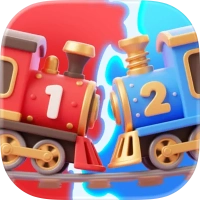
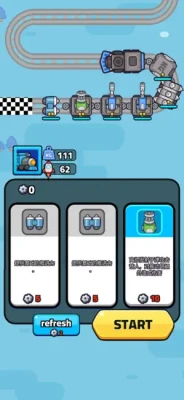
Rail Combat takes the familiar idea of tower-based strategy and places it on a railway battlefield.
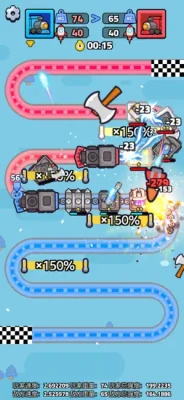
Instead of defending a stationary base, you command a tower-equipped train and face another player's combat train. The objective is to overpower your rival through a combination of pushing strength, tower placement, and tactical decisions.
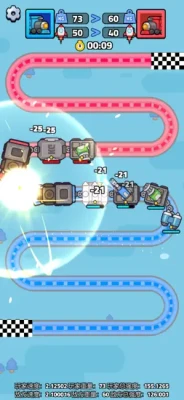
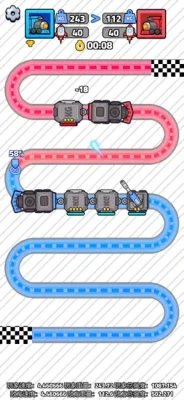
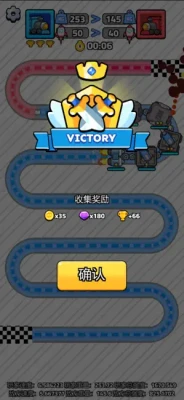
The game's defining mechanic is its collision-based combat system. Two trains meet on the track, and the stronger tactical setup can push the opponent toward their station.
This creates a distinctive combination of:
- PvP strategy
- Train combat
- Tower defense mechanics
- Tactical positioning
- Push-and-pull battles
- Competitive progression
- Best-of-five matches
Rail Combat is developed by True Introvert (Beijing) Technology Co., Ltd. and is available for iPhone and iPad.
Gameplay Overview
Each battle revolves around two opposing tower trains.
Your objective is to create a stronger train configuration and use it to overpower your opponent. The battle isn't simply about having the strongest individual tower. You need to understand how different tower types work together and how your deployment affects the collision.
The basic gameplay loop involves:
- Building your train lineup.
- Selecting suitable towers.
- Deploying towers onto train cars.
- Engaging the opposing train.
- Managing push-and-pull momentum.
- Adjusting your strategy between rounds.
- Winning enough rounds to take the match.
- Advancing through the competitive ranks.
The Unique Collision Combat System
The most distinctive feature of Rail Combat is its collision combat.
Two trains enter the same battlefield and clash directly. Instead of simply reducing an enemy health bar, the battle revolves around pushing the opposing train backward.
This creates a different kind of strategic question:
Do you need more attack power, greater weight, or stronger propulsion?
The answer can change depending on your opponent's setup.
A well-balanced train may outperform a train that focuses entirely on one attribute.
Tower Types
Rail Combat features three important tower categories:
Propulsion Towers
Propulsion towers contribute to the train's ability to push against its opponent.
They are particularly important when your strategy relies on gaining and maintaining forward momentum.
Weight Towers
Weight towers strengthen the physical presence of your train during collisions.
A heavier setup can be valuable when you need to resist an opponent's pushing power or improve your ability to force them backward.
Attack Towers
Attack towers provide offensive combat capability and help you apply additional pressure during battles.
The best results often come from combining attack power with suitable propulsion and weight rather than relying exclusively on one tower type.
Strategic Tower Deployment
Tower placement matters because each train is effectively your battlefield.
Before deploying a tower, consider:
- What your opponent is likely to build
- Whether you need more attack power
- Whether your train needs additional weight
- Whether propulsion should be prioritized
- How your current lineup works as a complete system
The goal is not simply to fill every available position.
Instead, construct a train that has a clear tactical purpose.
Best-of-Five Showdowns
Rail Combat uses best-of-five showdowns, meaning a match can extend across several rounds.
This changes the way you should approach PvP.
Winning one round is useful, but understanding your opponent's strategy and adapting during the match can be even more important.
A player who loses an early round can potentially recover by changing their tower configuration or adjusting their tactical approach.
The official App Store description specifically highlights best-of-five battles as a test of consistency and adaptability.
Rank Progression and Leagues
Rail Combat includes competitive rank progression.
As you advance, you encounter increasingly challenging opponents and compete for higher positions in the game's league structure.
The progression system gives players a reason to keep improving their train rather than treating each battle as an isolated match.
Your long-term objective is to climb the ranks and establish yourself as one of the strongest commanders on the tracks.
Main Features
PvP Train Battles
Challenge opponents in direct train-versus-train strategic combat.
Collision-Based Gameplay
Use pushing power and tactical tower combinations to force opponents backward.
Three Core Tower Roles
Build around Propulsion, Weight, and Attack towers.
Best-of-Five Matches
Adapt across multiple rounds rather than relying on a single successful encounter.
Competitive Rank Progression
Climb into higher leagues and face stronger opponents.
Fast-Paced Strategy
Matches are designed to be easy to understand while still offering room for deeper tactical decisions.
Game Theme and Atmosphere
Rail Combat has a competitive mechanical theme centered around armored trains, railway tracks, and direct confrontation.
The railway becomes the battlefield, while each train acts as a mobile fortress packed with specialized towers.
The result is a compact tactical atmosphere where every collision represents a contest between two different strategies.
Game Story
Rail Combat does not appear to focus on a traditional narrative campaign or character-driven story.
Instead, the game's competitive structure provides its progression: assemble your battle train, defeat opponents, rise through leagues, and prove that your tactical setup can dominate the tracks.
Characters
Rail Combat does not emphasize traditional playable heroes.
The central "characters" of each match are effectively the trains and towers themselves.
Your role is that of a commander responsible for building and deploying the strongest possible combat convoy.
Weapons and Combat Systems
The game's offensive system revolves around its tower categories.
Attack towers provide direct offensive capability, while Propulsion and Weight towers influence the physical battle between the two trains.
This means Rail Combat is less about collecting conventional weapons and more about creating an effective combat configuration.
Controls and Interface
Rail Combat is designed for touchscreen play on iPhone and iPad.
The controls focus on strategic selections rather than complicated movement systems.
Players primarily make decisions involving:
- Tower selection
- Tower deployment
- Train configuration
- Tactical adaptation
- Match progression
The relatively simple interaction model allows players to concentrate on strategy.
How to Play Rail Combat
Step 1: Understand Your Train
Before entering serious competition, learn what each tower category contributes to your overall setup.
Step 2: Create a Balanced Configuration
Avoid building a train that depends entirely on one statistic.
Step 3: Watch Your Opponent
Try to identify whether the opposing train is emphasizing attack, weight, propulsion, or a combination.
Step 4: Adapt
If your initial configuration struggles, rethink the balance instead of repeatedly using the same approach.
Step 5: Think Across the Entire Match
Because battles use a best-of-five structure, one lost round doesn't necessarily mean the match is over.
Step 6: Focus on Long-Term Rank Progression
As opponents become stronger, successful strategies need to become more refined.
Beginner's Guide
New players should begin by learning the relationship between the three main tower categories.
Don't immediately assume that Attack towers are always the most important.
A successful train needs to perform as a complete unit. If your offensive power is strong but your train cannot effectively compete in collisions, you may struggle against a well-balanced opponent.
A good beginner strategy is therefore to experiment with balanced configurations before specializing.
Advanced Strategy Tips
1. Build Around Your Opponent
PvP strategy becomes much more effective when you respond to what the other player is doing.
2. Don't Overcommit to Attack
Attack power is important, but the collision system means physical strength and propulsion can also determine the outcome.
3. Use the Best-of-Five Format
Treat each round as information. A difficult first round can reveal weaknesses in your setup.
4. Adapt Between Rounds
If an opponent consistently defeats your train in the same way, change your configuration rather than repeating the same strategy.
5. Develop Multiple Builds
Having more than one viable approach can make you less predictable.
6. Balance Power and Resistance
A strong train needs both offensive pressure and the ability to withstand opposing pressure.
Game Progression System
Progression in Rail Combat is centered around competitive advancement and stronger opponents.
As you improve and climb the ranks, the game becomes increasingly focused on strategic adaptation.
The official description states that players can upgrade their towers, advance to higher leagues, and face tougher opponents.
Game Modes
The primary experience is competitive PvP train combat.
The best-of-five battle format provides the main match structure, while rank progression gives the overall experience a longer-term competitive objective.
The App Store description does not list a separate campaign, story mode, or single-player mode.
Difficulty
Beginner: Easy to understand, with straightforward tower roles.
Intermediate: Requires better understanding of tower combinations and opponent behavior.
Advanced: Demands adaptation, balanced train construction, and strong decision-making across multiple rounds.
The game's mechanics are simple enough to learn quickly, but its PvP format creates room for considerably deeper strategy.
Player Experience and Reviews
The current U.S. App Store listing shows a 1.8/5 rating from four ratings. Because the sample is very small, this score should be interpreted cautiously rather than as a broad measure of the overall player base.
The available reviews include complaints about difficulty and progression, while another reviewer described the game as fun but expressed frustration about locked features.
For a game page, it is better to present this feedback transparently rather than implying widespread consensus from only a handful of ratings.
Updates and Version History
Rail Combat received a series of updates during 2025.
The App Store lists:
- Version 1.0 — May 28, 2025
- Version 1.01 — June 1, 2025
- Version 1.02 — June 3, 2025
- Version 1.03 — July 20, 2025
- Version 1.04 — July 21, 2025
- Version 1.05 — August 2, 2025
- Version 1.06 — August 5, 2025
- Version 1.07 — August 6, 2025
- Version 1.08 — August 8, 2025
- Version 1.0.9 — August 13, 2025
Most updates listed bug fixes, while version 1.03 added new content and fixed bugs.
Technical Details
- Game: Rail Combat
- Genre: Strategy / PvP
- Developer: True Introvert (Beijing) Technology Co., Ltd.
- Platform: iPhone and iPad
- Price: Free
- Language: English
- Age Rating: 18+
- App Size: 140.8 MB
- iPhone Requirement: iOS 12.0 or later
- iPad Requirement: iPadOS 12.0 or later
- Mac: Requires macOS 11.0 or later with Apple M1 chip or later
- Apple Vision: Requires visionOS 1.0 or later
- Content: Infrequent cartoon or fantasy violence
- Advertising: Contains advertising
Accessibility
The App Store currently states that the developer has not indicated specific accessibility features for Rail Combat.
Privacy Information
Apple's listing says the developer indicates that data such as location, identifiers, user content, usage data, and diagnostics may be collected or used for purposes including advertising, analytics, personalization, and app functionality. Apple also notes that these privacy practices are developer-provided and have not been verified by Apple.
Pros and Cons
Pros
- Original train-versus-train concept
- Direct PvP competition
- Interesting collision-based combat
- Three distinct tower roles
- Best-of-five match structure
- Competitive league progression
- Easy-to-learn core mechanics
- Strategic room for adaptation
Cons
- Very small number of App Store ratings
- Current U.S. App Store rating is low
- Some players report difficulty spikes
- Some features may remain locked through progression
- Advertising is present
- Limited narrative content
Who Should Play Rail Combat?
Rail Combat is best suited to players who enjoy:
- PvP strategy games
- Train games
- Tower strategy
- Competitive mobile games
- Tactical battles
- Short PvP matches
- League progression
- Build-based strategy
- Head-to-head competition
It is particularly interesting for players who want something different from conventional tower defense.
Similar Game Experiences
Players searching for train strategy games, PvP tower games, competitive strategy games, and mobile tactical games may find Rail Combat appealing.
Its biggest distinction is the combination of tower deployment and physical train collisions, giving the game a mechanical push-and-pull system that differs from traditional tower defense.
Expert Rating
Gameplay: 8.0/10
Strategy: 8.4/10
Innovation: 8.5/10
PvP Design: 8.2/10
Controls: 8.0/10
Replay Value: 7.8/10
Overall: 8.2/10
This is an editorial assessment based on the game's advertised mechanics and available App Store information, not an average of user ratings.
Final Verdict
Rail Combat stands out by turning a railway into a competitive tactical battlefield. Instead of traditional bases and lanes, players command tower-equipped trains and attempt to push their opponents backward through a combination of attack, propulsion, weight, and tactical deployment.
The best-of-five structure gives each match additional depth because players have opportunities to learn from earlier rounds and adapt their strategy.
The concept is particularly appealing to fans of PvP strategy games, tower combat, train games, and competitive mobile battles.
However, the current App Store review sample is extremely small and includes criticism about difficulty and locked features, so prospective players should keep that limited feedback in mind.
Frequently Asked Questions
What is Rail Combat?
Rail Combat is a PvP strategy game where two tower-equipped trains battle head-to-head using attack, weight, and propulsion towers.
Is Rail Combat free?
Yes. Rail Combat is listed as a free game on the U.S. App Store.
Can I play Rail Combat on iPhone?
Yes. Rail Combat supports iPhone and requires iOS 12.0 or later.
Can I play Rail Combat on iPad?
Yes. The game is designed for iPad and requires iPadOS 12.0 or later.
Is Rail Combat multiplayer?
The core game is presented as competitive PvP, with opposing tower trains facing each other in direct battles.
What are Propulsion towers?
Propulsion towers are one of the game's three principal tower categories and contribute to the train's pushing capabilities.
What are Weight towers?
Weight towers are designed around the physical collision aspect of train combat and contribute to the train's strength during push-and-pull encounters.
What are Attack towers?
Attack towers provide offensive combat capability and form one of the three primary tower categories.
How do Rail Combat matches work?
The game uses best-of-five showdowns, allowing players to compete across multiple rounds and adapt their strategies.
Does Rail Combat have a ranking system?
Yes. Players can advance through ranks and leagues while facing increasingly challenging opponents.
Does Rail Combat contain ads?
Yes. The current App Store listing states that the game contains advertising.
Rate the Game
User Reviews







Popular Games

















 Android
 iOS
iOS Windows
 Xbox
Xbox