


Latest Version
September 27, 2024
RED BRIX COMPUTER SYSTEMS
Puzzle
0
com.integragames.openhouse.android
Report a Problem
More About :game
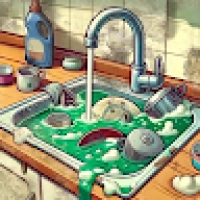
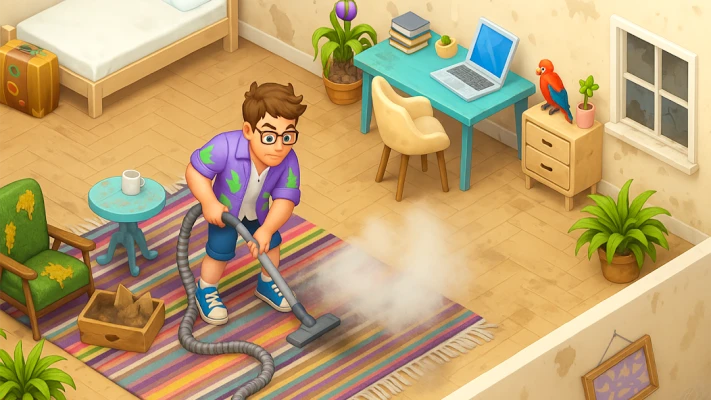
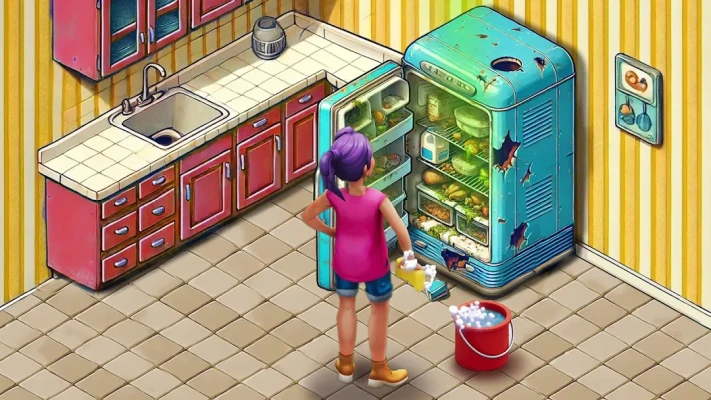
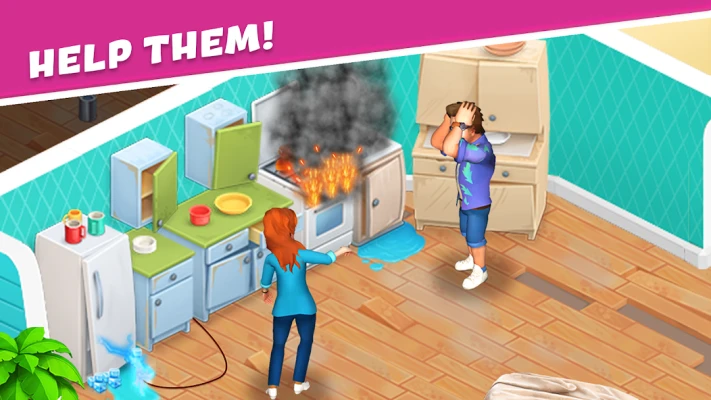
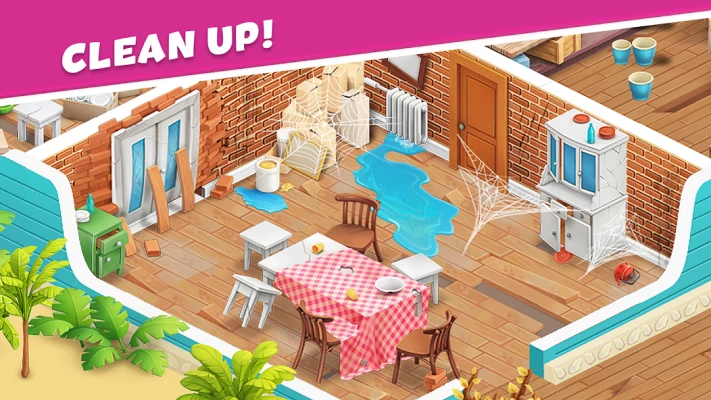
The basic idea is straightforward: complete colorful match-3 levels to earn the resources needed to renovate different areas of an old mansion. As you progress, new rooms, story chapters, design choices, and activities become available.
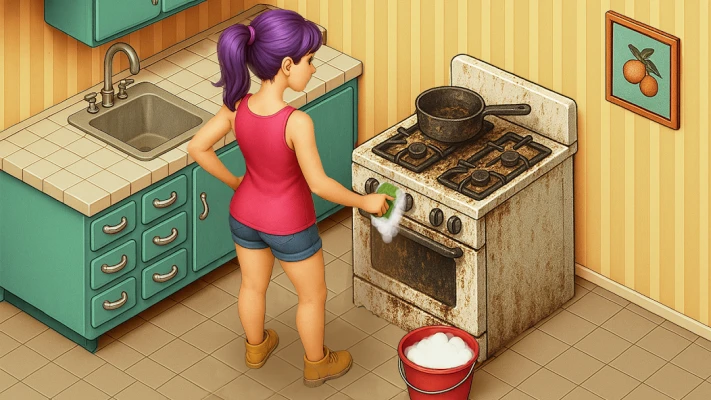
The current Google Play listing describes a large mansion containing areas such as the kitchen, hall, orangery, and garage, along with thousands of design possibilities. It also features a fluffy cat and a parrot as part of the game's world.
The game is developed by RED BRIX COMPUTER SYSTEMS, is available on Android and Windows, and is classified by Google Play as Puzzle, Match 3, Match 3 Adventure, and Casual. It supports single-player and offline play and contains advertisements and in-app purchases.
What Is Open House: Match 3 Puzzles?
Open House is a match-3 renovation game where puzzle solving and home decoration are connected.
Instead of playing match-3 levels simply for a high score, you use your progress to help transform a rundown mansion into a customized home.
The gameplay loop is:
Enter a match-3 level.
Complete the required objectives.
Earn the rewards from the level.
Use those rewards for renovation or story progression.
Unlock another section of the mansion.
Make design choices.
Continue through the story and additional events.
This combination gives the game two distinct activities: solving puzzles and building the mansion.
Open House Game Information
| Feature | Details |
|---|---|
| Game Title | Open House: Match 3 Puzzles |
| Developer | RED BRIX COMPUTER SYSTEMS |
| Genre | Puzzle / Match 3 / Casual |
| Main Gameplay | Match-3 puzzles and mansion renovation |
| Platform | Android, Windows |
| Game Mode | Single-player |
| Offline | Yes |
| Content Rating | PEGI 3 |
| Downloads | 10M+ |
| Google Play Rating | 4.2 stars |
| Reviews Shown | 67.7K |
| Monetization | Ads and in-app purchases |
| Main Areas | Kitchen, hall, orangery, garage and other mansion spaces |
| Pets | Cat and parrot |
| Latest Google Play Update | September 1, 2026 |
Current Google Play information lists the game at 10M+ downloads with a 4.2-star rating and 67.7K reviews.
How to Play Open House
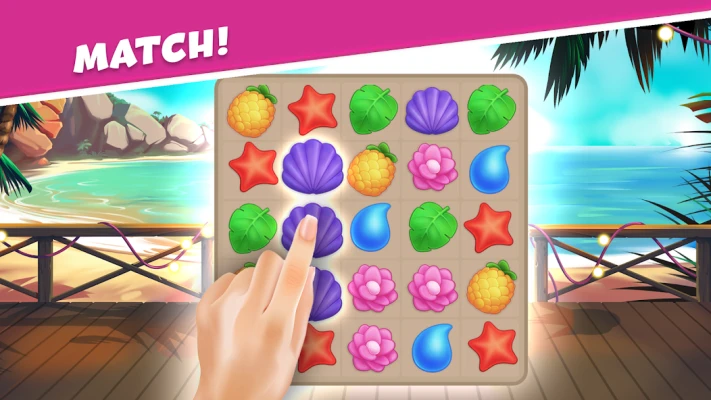
The match-3 portion follows a familiar principle: swap adjacent pieces to create matching groups and clear them from the board.
However, simply making any available match isn't always the best strategy.
Before moving a piece, consider:
The level's objective
The number of moves available
Where special pieces can be created
Whether a match will open the board
Whether a move can trigger a chain reaction
Which obstacles need to be removed first
The official listing specifically highlights unique boosters and explosive combinations, so learning how to create and use powerful combinations is an important part of progression.
Open House Match-3 Strategy Guide
1. Read the Level Objective First
Don't start making matches immediately.
First determine what the level wants you to accomplish.
Objectives may require you to:
Clear particular pieces
Remove obstacles
Collect specific objects
Reach a target
Clear sections of the board
Complete multiple objectives simultaneously
A move that creates a large number of matches isn't necessarily useful if it doesn't contribute toward the actual objective.
2. Look for Special Matches
One of the most important match-3 skills is recognizing opportunities to create powerful pieces.
Instead of making the first three-piece match you see, scan the board for moves that can produce a stronger combination.
Prioritize opportunities that:
Clear a large area
Hit multiple objectives
Remove difficult obstacles
Create another special piece
Trigger a chain reaction
A single carefully planned move can sometimes accomplish more than several ordinary matches.
3. Create Combos Near Obstacles
If an obstacle is difficult to remove, don't waste moves making matches far away from it.
Try to create powerful pieces close to the obstacle.
This can allow one activation to affect multiple targets.
The general principle is:
Create power where you need it, not simply where it is easiest.
4. Don't Always Make Matches at the Top
Players often make the first obvious match they see.
This can be a mistake.
In many match-3 situations, lower-board moves can cause pieces above them to fall into new positions.
That creates additional opportunities without spending another move.
Before making a simple upper-board match, check whether a lower move could produce a more useful cascade.
5. Use Cascades to Your Advantage
A cascade happens when one match causes new pieces to fall into another matching arrangement.
Cascades are valuable because one move can produce multiple effects.
Look for:
Potential three-piece matches after pieces fall
Special-piece opportunities
Large empty areas
Chains that can hit several objectives
The more you learn to predict falling pieces, the less you need to rely on random moves.
6. Save Powerful Boosters for the Right Moment
Boosters can be extremely useful on difficult levels, but using one simply because it is available can waste an important resource.
Before using a booster, ask:
Will this move solve the main problem with the board?
If the answer is no, wait.
A booster that clears an insignificant section may look impressive but provide little progress.
7. Combine Special Pieces
Special pieces become particularly valuable when combined.
Whenever possible, consider whether two powerful pieces can be brought together.
A combination can potentially:
Clear a large section
Remove several obstacles
Create a cascade
Change the board dramatically
Complete multiple objectives
However, don't spend several moves forcing a combination if the level can already be completed efficiently.
8. Work on the Hardest Objective First
If a level has multiple objectives, identify the one that is most difficult to complete.
For example, if one objective is easy and another requires reaching a difficult corner of the board, concentrate your strategy around the difficult objective.
The easy objective may complete naturally while you work on the harder one.
9. Watch Your Remaining Moves
Don't wait until the final few moves to discover that you have ignored one objective.
Periodically check:
Remaining moves
Remaining targets
Obstacles
Available special pieces
A good match-3 player is always thinking about the relationship between progress and remaining moves.
10. Avoid Wasting Moves
A move should ideally accomplish something useful.
A weak move may:
Create a match with no strategic value
Move pieces away from your target
Destroy a potential special-piece opportunity
Consume a move without affecting an important objective
When several moves are available, choose the one that improves the overall board position.
Advanced Match-3 Techniques
Think Two Moves Ahead
You don't need to predict the entire level.
Simply ask:
"What board will this move create?"
Then look for your next opportunity.
This prevents impulsive moves and makes cascades easier to exploit.
Prioritize Board Opening
Some levels begin with a restricted playing area.
In that situation, opening the board can be more valuable than immediately attacking the final objective.
More available spaces mean:
More possible matches
More special-piece opportunities
Larger cascades
Greater control over the board
Build Special Pieces Near the Center
When possible, creating powerful pieces near the center of a large playable area can increase their eventual impact.
A special piece placed in a corner may have limited reach, while one in a central area can affect much more of the board.
Mansion Renovation Strategy
The match-3 levels are only half of the Open House experience.
The other major component is transforming the mansion.
Google Play describes the ability to furnish and decorate numerous rooms, with thousands of design options and the ability to change designs.
This means your renovation decisions are part of the game's long-term progression and personalization.
How to Approach Mansion Design
Start With a Theme
Before selecting individual furniture pieces, decide what kind of room you want.
For example:
Modern
Traditional
Cozy
Bright
Elegant
Rustic
A consistent theme makes individual design choices easier.
Think About Color Balance
Avoid choosing every item independently.
Instead, consider:
Wall color
Flooring
Furniture
Decorative objects
Lighting
Accent colors
A room usually looks more cohesive when these elements work together.
Don't Feel Locked Into Your First Design
The Google Play listing specifically says that designs can be changed, so experimentation is part of the experience.
If you eventually decide that a room doesn't work, changing its design is part of the game's intended customization system.
Mansion Areas
The official listing specifically mentions areas including:
Kitchen
A natural place for functional furniture, cabinets, tables, appliances, and decorative details.
Hall
The hall helps establish the first impression of the mansion and can work well with coordinated furniture and lighting.
Orangery
The orangery provides an opportunity to emphasize plants, natural colors, and a brighter atmosphere.
Garage
The garage gives the mansion a more practical and mechanical area and can contrast with the home's more decorative rooms.
The mansion continues beyond these areas, with the game designed around discovering and renovating additional parts of the property.
Story and Characters
Open House isn't only a decoration simulator.
The official description says that progressing through match-3 levels unlocks additional chapters in the friends' story.
This creates a simple progression structure:
Puzzle → Renovation → Story → New Area → More Puzzles
That connection gives your match-3 victories a purpose beyond simply completing another board.
Pets in Open House
The mansion also includes animal companions.
The Google Play listing specifically mentions:
A fluffy cat
A naughty parrot
These pets contribute to the light-hearted atmosphere of the game.
They are also part of what separates Open House from a purely mechanical match-3 game.
Events and Special Activities
Open House regularly features additional activities beyond the standard renovation progression.
The current Google Play listing shows a School Tour event involving merging items and earning prizes. It also currently promotes an Abandoned Lighthouse update.
Events can change over time, so players should check the game's current event screen rather than relying on an old guide.
How to Handle Difficult Match-3 Levels
Eventually, you may encounter a level where the available moves seem insufficient.
Instead of immediately using every booster, follow this process.
Step 1: Identify the Main Obstacle
Determine what is actually preventing completion.
Step 2: Check the Board for Special Matches
Look for combinations that can affect multiple targets.
Step 3: Examine the Lower Board
A lower match may create a useful cascade.
Step 4: Avoid Unnecessary Matches
Every move should contribute toward your objective.
Step 5: Preserve Useful Special Pieces
Don't activate them simply because you can.
Step 6: Use Boosters Strategically
If the board has reached a genuine deadlock, use a booster where it has maximum impact.
Step 7: Reconsider the Opening
If you repeatedly fail a level, try a different first few moves.
How to Use Boosters Efficiently
A good booster should solve a problem.
For example, use one when it can:
Remove a large obstacle group
Reach an inaccessible target
Create a major cascade
Combine with another powerful piece
Save a level that is otherwise unlikely to finish
Avoid using boosters simply to make a normal level faster.
Preserving resources can become increasingly useful when levels become more demanding.
Managing Coins and Other Resources
Open House is a progression-based free-to-play game with in-app purchases.
Because of that, resource management matters.
Instead of spending everything immediately:
Complete available levels.
Collect rewards.
Prioritize required renovation tasks.
Save useful resources for difficult situations.
Avoid unnecessary purchases.
Use free opportunities when available.
The game's current listing confirms both advertisements and in-app purchases.
Ads and Optional Rewards
Player experiences with ads vary.
One older Google Play review described ads as optional and said the player received coins and additional booster opportunities for watching them, while more recent reviews focus on level difficulty and booster requirements. These are individual player experiences rather than a universal description of how every player experiences the game.
If an optional reward is available, consider whether the reward is actually useful before watching an advertisement.
Open House Difficulty
The game's difficulty can become a significant part of the experience.
Recent Google Play reviews include complaints that some later levels require many attempts or boosters, while another older review similarly described difficulty increasing after reaching higher levels. These comments reflect individual player experiences rather than a verified statement that every level has the same difficulty curve.
For players reaching difficult stages, the most useful response is usually to improve board-reading and booster management rather than simply making faster moves.
Beginner Tips for Open House
Tip 1: Read the objective
Know what you actually need to clear.
Tip 2: Look for combinations
Don't settle for the first basic match.
Tip 3: Check the lower board
It may create better cascades.
Tip 4: Save boosters
Use them when they solve a real problem.
Tip 5: Clear obstacles strategically
Attack the parts of the board that restrict your movement.
Tip 6: Watch your move count
Don't discover too late that one objective remains.
Tip 7: Experiment with designs
The mansion is meant to reflect your choices.
Tip 8: Don't rush renovation decisions
Take time to build a consistent room theme.
Tip 9: Check events
Special activities can provide additional rewards and gameplay variety.
Tip 10: Change your approach when stuck
If the same opening keeps failing, try another sequence.
Common Mistakes
Making the First Available Match
The first available match isn't necessarily the most useful.
Activating Boosters Immediately
A booster can have much greater value when used in combination.
Ignoring the Level Objective
Clearing random pieces doesn't guarantee completion.
Forgetting About Cascades
A lower-board move can create several automatic matches.
Spending Resources Too Quickly
Save useful resources for genuinely difficult situations.
Choosing Furniture Without a Theme
A room can become visually inconsistent if every item is selected independently.
Honest Gameplay Assessment
Open House combines two familiar mobile-game systems effectively: match-3 puzzles and home renovation.
The strongest part of the design is the connection between the two. Completing a puzzle gives you a reason to keep playing because your rewards contribute to the mansion's transformation and story progression.
The decoration system also gives players considerable freedom. The official listing advertises thousands of design options and the ability to change designs, making the mansion more personal than a fixed decoration sequence.
The main point to consider is the difficulty curve. Recent reviews include complaints about needing multiple attempts or boosters on some levels, while other players have praised the game's graphics and storyline. Those reviews represent individual experiences and can vary considerably depending on progression level.
The game is therefore most suited to players who enjoy a combination of casual puzzle solving, gradual progression, storytelling, and interior decoration.
Pros and Cons
Pros
Match-3 puzzles combined with home renovation
Large mansion to restore
Thousands of design options advertised
Multiple rooms and areas
Story progression connected to gameplay
Cute cat and parrot companions
Boosters and explosive combinations
Regular events and additional activities
Single-player gameplay
Offline support
Available on Android and Windows
Cons
Contains ads and in-app purchases
Later levels can become challenging
Some players report heavy reliance on boosters at higher levels
Progression can require repeated attempts
Players who prefer pure puzzle games may find the renovation/story elements distracting
The current Google Play page shows 4.2 stars from 67.7K reviews, while the visible reviews include both positive comments about the game's presentation and negative comments about later-level difficulty.
Latest Update
Google Play currently lists September 1, 2026 as the game's latest update date. The current store page says the update improves stability and performance.
The listing also currently promotes A New Day! The Abandoned Lighthouse! as an available update/activity and displays a School Tour event involving merging items and earning prizes. Because these events are time-sensitive, their availability can change.
Frequently Asked Questions
What is Open House: Match 3 Puzzles?
Open House is a match-3 puzzle and mansion renovation game where players complete colorful puzzles to unlock renovation, decoration, story, and additional gameplay content.
How do you play Open House?
Swap and match pieces to complete the objective of each puzzle. The rewards from successful levels help you renovate and decorate the mansion.
Is Open House a match-3 game?
Yes. Google Play classifies it as Puzzle and Match 3, as well as Match 3 Adventure and Casual.
Can you decorate the mansion?
Yes. The game offers thousands of design options and allows players to change designs.
Which rooms can you renovate?
The official listing specifically mentions the kitchen, hall, orangery, garage, and other mansion areas.
Does Open House have a story?
Yes. Completing match-3 levels unlocks additional chapters involving the game's characters and their story.
Does Open House have pets?
Yes. The game features a fluffy cat and a parrot.
Is Open House offline?
Google Play currently lists Open House as supporting offline play.
Is Open House free?
The game is free to play but contains advertisements and optional in-app purchases.
Why are some Open House levels difficult?
Later levels can require more careful planning because objectives, obstacles, limited moves, and board layouts make simple matches less effective. Recent player reviews specifically mention difficulty and booster requirements, although these reports represent individual experiences.
What is the best strategy for difficult levels?
Study the objective first, look for powerful combinations, prioritize obstacles that restrict the board, use cascades, preserve boosters, and avoid wasting moves on matches that don't contribute to the objective.
Final Thoughts
Open House: Match 3 Puzzles blends match-3 puzzles with the satisfying process of restoring and decorating a large mansion.
The core strategy is to stop thinking of every match as equally valuable. Look at the objective, identify the most important area of the board, search for combinations, and make each move contribute toward the level's actual goal.
Outside the puzzles, the mansion system gives the game a creative side. You can furnish rooms, experiment with different designs, follow the characters' story, and discover additional areas as your progress continues.
For difficult stages, patience becomes especially important. Preserve boosters, look for cascades, and change your opening strategy when repeated attempts produce the same result.
With its combination of match-3 puzzles, mansion renovation, interior design, story progression, pets, and events, Open House offers a broader experience than a traditional match-3 game.
Rate the Game
User Reviews










Popular Games



















 Android
 iOS
 Windows
 Xbox