

Latest Version
January 01, 2026
AH GAME STUDIO
Puzzle
iOS
0
Report a Problem
More About :game
What Is Merge Chain: Letter Matching?
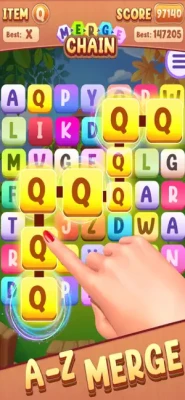
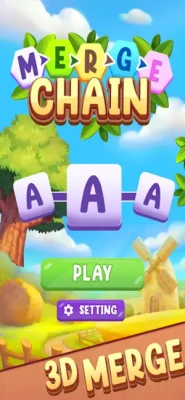
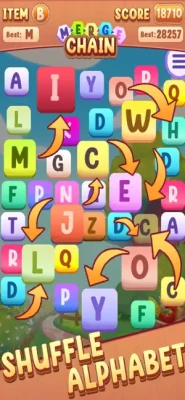
Merge Chain is a casual puzzle game built around the idea of alphabet evolution through merging. Players drag and combine matching letters, and when three or more identical letters are merged, they evolve into the next letter in the sequence.
Core gameplay loop:
- Match identical letters
- Merge 3+ to evolve them
- Create higher-tier alphabet chains
- Manage limited board space
- Continue until target letters or score goals are reached
As levels progress, the board becomes tighter and requires more strategic placement and foresight.
Key Features
Alphabet Merge System
Combine identical letters to evolve them into higher alphabetical levels.
Chain Reaction Mechanics
Merges can trigger continuous upgrades when placed strategically.
3D Puzzle Environment
Letters exist in a spatial layout, making positioning important.
Progressive Difficulty
Higher levels introduce:
- Limited space
- More letter types
- Faster decision pressure
Casual Yet Strategic Gameplay
Easy to learn but requires planning for advanced levels.
How to Play Merge Chain
Basic Controls
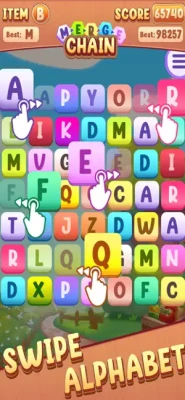
- Drag letters on the board
- Match identical letters
- Merge 3 or more to upgrade them
- Continue building higher alphabet chains
- Clear or optimize board space
Beginner Walkthrough
Step 1: Focus on Simple Matches
At the start:
- Only merge obvious identical letters
- Avoid random placements
- Learn how chain upgrades work
Consistency is more important than speed.
Step 2: Understand Letter Progression
Each merge creates a higher-level letter:
- A + A + A → B
- B + B + B → C
- And so on
Planning ahead helps avoid board blockage.
Step 3: Manage Board Space
Space is your most important resource:
- Avoid filling the board randomly
- Keep open areas for future merges
- Don’t trap high-value letters
Complete Level Strategy Guide
Early Levels
Focus on:
- Learning merge mechanics
- Simple 3-letter combinations
- Understanding evolution patterns
Mistakes are forgiving here.
Mid Game Levels
Challenges increase:
- More scattered letters
- Limited space
- More planning required
Strategy:
- Group similar letters early
- Avoid isolating single letters
- Build merge zones in open areas
Advanced Levels
High-level gameplay requires:
- Predicting merge chains several moves ahead
- Avoiding board lock situations
- Creating controlled merge clusters
- Efficient space management
One bad placement can block progression.
Advanced Strategies
1. Always Build Merge Zones
Keep dedicated areas where letters can be safely combined.
2. Avoid Random Placement
Random moves quickly fill the board and reduce options.
3. Chain Merges When Possible
Set up multiple merges that trigger one after another.
4. Prioritize High-Level Letters
Protect advanced letters instead of merging them too early.
5. Think 2–3 Moves Ahead
Advanced gameplay is about planning, not reacting.
Common Mistakes to Avoid
Filling the Board Too Early
This is the most common failure reason.
Merging Without Planning
Random merges reduce long-term options.
Ignoring Chain Setup
Players often miss multi-step merge opportunities.
Blocking High-Level Letters
Poor placement can trap important pieces.
High Score Strategy
To maximize performance:
- Keep board space open
- Build controlled merge clusters
- Trigger chain reactions when possible
- Avoid unnecessary merges
- Plan ahead instead of reacting
Efficiency beats speed in merge puzzle games.
Why Players Enjoy Merge Chain
Merge Chain is appealing because it combines relaxing gameplay with strategic depth. Watching letters evolve through merging creates a satisfying progression loop, while increasing difficulty keeps players engaged. The game rewards logical thinking and spatial awareness rather than fast reflexes.
Frequently Asked Questions
What is the main goal?
Merge identical letters to create higher-level alphabet chains and clear puzzle objectives.
Is the game hard?
It starts simple but becomes more strategic as space becomes limited.
What causes most failures?
Poor space management and random placement decisions.
How do I improve quickly?
Focus on planning merges and keeping the board organized.
Is it more luck or skill?
Mostly skill-based, especially in later levels.
Rate the Game
User Reviews











Popular Games


















 Android
 iOS
iOS Windows
 Xbox
Xbox