



Latest Version
October 15, 2026
Codigames
Adventure
Android
0
com.codigames.idle.lumberjack
Report a Problem
More About :game
What Is Lumberjack Life: Idle Forest?
Lumberjack Life: Idle Forest combines resource gathering, idle progression, crafting, exploration, and nighttime survival. You begin in a modest forest clearing with basic tools. By gathering materials and improving your equipment, you gradually unlock more valuable resources and venture into increasingly mysterious regions.
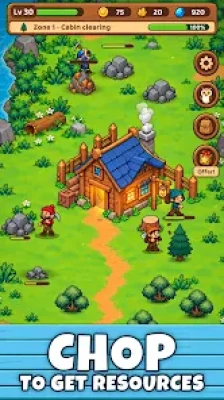
The core gameplay is easy to understand: hold your finger on a resource to gather it, collect what you earn, and turn those materials into better equipment. As your tools improve, you can work through tougher resources and progress farther into the forest.
What makes the game more interesting than a simple tree-chopping simulator is the contrast between peaceful daytime work and the dangers that emerge at night. Your progress is not limited to gathering wood. You also need to develop your equipment, manage materials, and prepare for encounters with the forest's Terrors.
Main Features of Lumberjack Life: Idle Forest
Chop Trees, Mine Ore, and Catch Fish
Gather different types of resources throughout the forest. Wood is only the beginning: mining and fishing provide additional materials that support your progression and crafting system.
Idle Progress While You Are Away
Your lumberjack can continue working while the game is closed. Depending on the task assigned, your worker gathers resources so you can return later and collect the results.
Explore 20 Forest Zones
Progress through a series of increasingly challenging environments, from the starting clearing to unusual locations such as crystal caves, the arcane grove, the spectral mist, the star plateau, and the abyssal chasm. New areas introduce more valuable materials and tougher progression requirements.
Discover 11 Material Tiers
Gather increasingly valuable resources as you improve your equipment and explore deeper regions. Better materials help support the next stage of your development.
Upgrade Your Lumberjack
Develop your worker through multiple upgrade lines, improving the efficiency of resource gathering and helping you make better use of every expedition.
Craft and Improve Tools
Use the workshop, forge, refinery, and anvil-related systems to improve your equipment. Better tools make it possible to handle tougher resources and advance through the forest.
Survive the Night
The forest has a more dangerous side. Nighttime encounters introduce Terrors that you must confront as you progress. Building a stronger character and improving your equipment helps you prepare for these fights.
Prestige and Permanent Progression
When you reach a progression ceiling, the winter reset system lets you start another cycle while retaining important long-term rewards. Memories and Milestones help preserve progress and make later runs more efficient.
Play at Your Own Pace
The game supports both active resource gathering and idle progression. You can spend time tapping and holding to gather resources directly, then leave the lumberjack to work while you take a break.
How to Play Lumberjack Life: Idle Forest
Gather your first resources. Hold your finger on trees and other available resources to begin collecting materials.
Build up your supplies. Gather enough wood, ore, and fish to support your current progression needs.
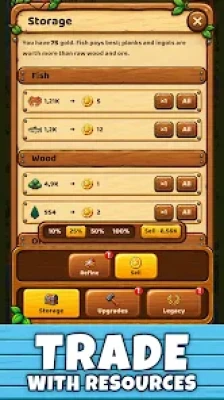
Use the cabin and crafting systems. Refine gathered materials and turn them into improvements for your equipment.
Upgrade your tools. Better equipment allows you to gather more demanding resources and reach new areas.
Unlock new zones. Clear the current area and advance into the next environment when you meet its requirements.
Assign idle work. Let your lumberjack continue gathering while you are away from the game.
Prepare for nighttime threats. Improve your equipment and character before challenging the Terrors.
Use long-term progression wisely. When you reach the point where a reset becomes worthwhile, preserve your permanent rewards and begin a stronger new cycle.
Complete Lumberjack Life: Idle Forest Strategy Guide
1. Upgrade Your Tools Before Chasing Rare Materials
Better tools are one of the most important investments in Lumberjack Life: Idle Forest. Early resources help you get started, but progress eventually depends on your ability to gather materials from tougher areas.
When progress slows, look at your equipment before spending time repeatedly collecting the same basic resources. Improving your tools can make future gathering more productive and help you reach the next stage of the forest.
Best tip: Treat tool upgrades as investments in future progress, not simply as another expense.
2. Balance Active Gathering With Idle Progress
The game supports two approaches to resource collection. Active gathering lets you collect resources directly, while your lumberjack can continue working when you leave the game.
Use active play when you need to make a focused push toward an upgrade or unlock. Use idle time to build up resources without spending your entire session repeating the same action.
When you return, collect the accumulated resources and decide what to improve next. This simple routine helps keep progress moving without requiring constant attention.
3. Choose Your Lumberjack's Task Carefully
Your worker can focus on activities such as chopping, mining, or fishing. The best assignment depends on what your current progression requires.
If your next tool upgrade needs more wood, prioritize chopping. If you are short on ore for equipment improvements, direct your attention toward mining. If fishing materials are needed for your current crafting or progression goals, make that your priority.
Avoid assigning tasks without considering what you plan to do with the results.
Best tip: Check your next upgrade requirements before leaving the lumberjack to work offline.
4. Gather Resources in the Right Order
Wood, ore, and fish each have a role in the broader progression system. Instead of collecting one resource indefinitely, review your immediate needs and divide your efforts accordingly.
A practical routine is to:
Gather enough basic resources to unlock early improvements.
Improve the tools that support more efficient gathering.
Collect the materials required for your next equipment upgrade.
Explore the next available zone.
Repeat the process with the new resources you discover.
This approach gives each gathering session a clear purpose and helps prevent wasted effort.
5. Understand the Value of Better Materials
The forest contains multiple material tiers, with later resources generally offering greater value and requiring better tools. Reaching a new tier can improve your earning potential and open additional opportunities for equipment progression.
However, do not assume that the rarest material is always the most useful thing to collect. If your next important upgrade requires a more common resource, collecting that resource may be the fastest way forward.
Focus on the material that helps you achieve your next meaningful improvement.
6. Use the Workshop and Refinery Effectively
Gathering materials is only one part of progression. The workshop, refinery, forge, and other equipment systems help turn collected resources into useful improvements.
Whenever you unlock a new crafting option, review what it requires and what it provides. A new tool may allow you to gather better materials, while a refinement or equipment improvement may make your existing resources more useful.
Do not leave newly unlocked crafting options unexplored. They may provide the improvement you need to move beyond a difficult progression point.
7. Temper and Improve Equipment Strategically
Equipment improvement systems, including the anvil, add another layer to your progression. When you can strengthen your tools further, consider which improvement will have the greatest effect on your next objective.
If gathering has become slow, prioritize equipment improvements that support resource collection. If you are preparing for dangerous nighttime encounters, focus on the available upgrades that best support your ability to handle those challenges.
Avoid spending every resource as soon as it becomes available. Keep your next major upgrade in mind and save what you need to complete it.
8. Explore New Zones as Soon as You Are Ready
Each new zone offers a different environment and access to more advanced resources. Moving forward is important because remaining in an early area limits your access to later materials.
Still, unlocking a new zone does not mean you should ignore your equipment. If gathering becomes inefficient or nighttime encounters prove difficult, take time to improve your tools before pushing farther.
A good progression cycle is to unlock an area, learn which resources matter there, improve your equipment, and then continue toward the next zone.
9. Do Not Overlook Fishing
Fishing is part of the resource-gathering system, alongside chopping and mining. It is easy to focus exclusively on wood because it is central to the lumberjack theme, but a balanced approach can help when your progression requires different materials.
Check whether fish are needed for your current objectives before assigning all your gathering time to other tasks. Maintaining a useful supply of different resources can reduce the need to stop and change your strategy later.
10. Prepare for the Nighttime Terrors
The forest becomes more dangerous after dark, and the game features named Terrors that provide important combat challenges.
Do not treat these encounters as an afterthought. Build up your equipment and improve your overall progression before attempting difficult fights. If you struggle against a Terror, identify whether the main problem is insufficient preparation or difficulty handling the encounter itself.
A stronger set of tools and well-planned progression can make later challenges more manageable. Learn from each attempt rather than repeatedly entering a fight without making any improvements.
11. Make Daytime Progress Count
The gathering side of the game gives you an opportunity to prepare for what happens at night. Use productive periods to build resources, improve equipment, and address weaknesses before facing the forest's more dangerous inhabitants.
Rather than spending all your time collecting whichever resource is easiest to obtain, create a short list of objectives. For example, you might gather materials for an upgrade, unlock a new area, and then prepare for the next Terror encounter.
Having a clear goal makes the transition from resource gathering to nighttime challenges feel more purposeful.
12. Understand the Winter Reset and Prestige System
Lumberjack Life: Idle Forest includes a reset system in which winter can restart the forest while preserving important long-term progression. This is a form of prestige: some progress begins again, but selected rewards remain available to strengthen future cycles.
A reset is most useful when your current progress has slowed and the permanent rewards can meaningfully improve your next run.
Before resetting, consider:
Which permanent rewards you will retain.
Which progress will need to be repeated.
Whether your current run has more useful upgrades left to unlock.
How your retained Memories and Milestones will improve the next cycle.
Do not reset merely because the option is available. Make sure the long-term benefits justify starting the forest over.
13. Spend Memories and Milestones With a Plan
Memories and Milestones are central to long-term progression because they help preserve useful advantages across resets.
When selecting permanent improvements, think about which parts of the early game slow you down most. Improvements that make tools more effective, increase resource value, or reduce the amount of repeated work can make later cycles more efficient.
The best choice depends on the options available to you and the way you play. Prioritize permanent bonuses that solve a recurring problem rather than choosing upgrades without a clear objective.
14. Manage Your Resources Instead of Spending Everything
Resource management becomes more important as upgrades grow more demanding. Spending all your materials on a minor improvement may delay an important tool upgrade or prevent you from advancing to another zone.
Before making a purchase or crafting decision, check what you are saving for. If a major upgrade is close, consider gathering the remaining materials instead of spending them elsewhere.
You can still make smaller improvements when they provide an immediate benefit. The key is to balance short-term gains with the next major milestone.
15. Avoid Common Progression Mistakes
Collecting without a goal: Gathering is more useful when you know which upgrade or unlock the resources will support.
Ignoring equipment: Better tools help you progress into more demanding areas. Upgrade them when gathering becomes inefficient.
Leaving the wrong task assigned: Your lumberjack's offline work should match your current resource shortage.
Neglecting secondary resources: Ore and fish can matter alongside wood. Check your requirements before focusing on one material.
Entering dangerous encounters unprepared: Improve your equipment and progression before challenging difficult Terrors.
Resetting too early: Consider what you will retain and whether a fresh cycle will provide a meaningful advantage.
Forgetting to collect idle earnings: Return to the game periodically to collect accumulated resources and put them toward useful upgrades.
Spending materials impulsively: Keep enough resources available for important improvements instead of buying every upgrade immediately.
16. Beginner Strategy: Build a Strong Foundation
New players should focus on understanding the relationship between gathering, crafting, and tool progression.
Start by collecting basic materials and improving your equipment whenever a useful upgrade becomes available. Learn how the lumberjack's assigned task affects offline progress, and check your resource totals when returning to the game.
Explore new zones as you become ready, and make a habit of checking what your next upgrade requires. You do not need to optimize every decision immediately. A steady cycle of gathering, improving equipment, and unlocking new areas will help you understand the game's progression.
17. Mid-Game Strategy: Improve Efficiency
Once you have access to more resources and crafting options, efficiency becomes more important than simply collecting larger quantities.
Review the resources required by your next few upgrades. Assign your lumberjack to the most useful task, use active gathering when you need a quick boost, and explore new zones when your tools are ready.
At this stage, it is also worth paying more attention to the nighttime encounters. Your equipment and preparation should develop alongside your resource-gathering progress.
18. Advanced Strategy: Plan Around Permanent Progress
Later progression rewards players who understand how their current actions affect future cycles.
Avoid treating each run as an isolated attempt. Consider how equipment upgrades, resource efficiency, zone unlocks, and permanent Milestones work together. If your current cycle is no longer producing useful progress, evaluate whether the prestige system can help you make a stronger start.
The long-term goal is to reduce repeated work and reach valuable areas more efficiently each time you begin again.
Best Tips for Faster Progress
Upgrade your tools whenever a meaningful improvement becomes available.
Assign your lumberjack according to your current material needs.
Use active gathering when you need resources quickly.
Take advantage of offline progress between sessions.
Collect wood, ore, and fish according to your upgrade requirements.
Explore new zones to access better resources.
Learn how the workshop, refinery, forge, and anvil support progression.
Prepare your equipment before nighttime encounters.
Save resources for important upgrades rather than spending them randomly.
Consider the long-term benefits before triggering a winter reset.
Spend permanent progression rewards on improvements that save time in future cycles.
Pros and Cons of Lumberjack Life: Idle Forest
Pros
Combines active resource gathering with idle progression.
Offers several gathering activities, including chopping, mining, and fishing.
Tool upgrades give resource collection a clear sense of advancement.
Multiple zones provide new environments and increasingly valuable materials.
Crafting and equipment systems add depth beyond basic tapping.
Nighttime Terrors provide challenges beyond resource management.
Prestige progression gives long-term goals across repeated cycles.
One-handed portrait controls suit casual mobile play.
Cons
Resource gathering can become repetitive if you prefer constant action.
Some upgrades require repeated collection of materials.
Progress may slow when your equipment is not strong enough for the next stage.
Players who focus only on gathering may be unprepared for nighttime encounters.
The reset system requires some planning to get the most value from permanent rewards.
Game Information
Game title: Lumberjack Life: Idle Forest
Developer: Codigames
Platform: Android
Genre: Idle adventure, resource management, crafting, survival
Core activities: Chopping trees, mining ore, fishing, refining materials, upgrading tools, exploring zones, and fighting Terrors.
Controls: Tap-and-hold resource gathering with one-handed play.
Progression systems: Tool upgrades, crafting, offline production, zone unlocks, permanent perks, and prestige.
Offline progress: Yes, the lumberjack can continue assigned work while you are away.
Internet requirement: The game listing describes offline play without an internet connection.
Monetization: Free to play with ads and in-app purchases, according to the Google Play listing.
Frequently Asked Questions
What is Lumberjack Life: Idle Forest?
It is an idle adventure game where you gather wood, mine ore, catch fish, craft better equipment, and explore a mysterious forest while preparing for dangerous nighttime encounters.
How do you collect resources?
Hold your finger on an available resource to gather it. You can collect resources actively or assign your lumberjack to work while you are away.
Does Lumberjack Life: Idle Forest continue when you close the game?
Yes. The game supports offline progress, allowing your lumberjack to continue assigned gathering activities while you are away.
How do you unlock new forest zones?
Gather resources, improve your tools, and meet the requirements for progression. Clearing areas opens access to deeper parts of the forest and more valuable materials.
What is the purpose of upgrading tools?
Better tools help you gather more advanced resources and progress into tougher areas. They are essential for keeping resource collection efficient as the game develops.
What are the Terrors?
Terrors are dangerous nighttime enemies that provide combat challenges as you progress. Preparing your equipment and strengthening your character helps you handle these encounters.
What does the winter reset do?
The winter system lets you restart the forest after reaching a progression ceiling while retaining important long-term rewards. Those rewards can make future cycles more efficient.
Is Lumberjack Life: Idle Forest an idle game or an adventure game?
It combines both. Idle mechanics let your lumberjack collect resources while you are away, while exploration, crafting, equipment upgrades, and nighttime enemies add adventure and survival elements.
Can you play Lumberjack Life: Idle Forest offline?
The game listing describes the game as playable without an internet connection. Specific online-dependent features, if introduced in future versions, may differ.
Final Verdict
Lumberjack Life: Idle Forest is a relaxed resource-gathering adventure with more depth than its simple controls initially suggest. Chopping trees, mining ore, and fishing provide the foundation, while crafting, tool upgrades, new zones, and nighttime Terrors give players reasons to keep developing their character.
The most effective strategy is to gather with a purpose, keep your tools improving, use offline progress intelligently, and prepare for dangerous encounters rather than focusing entirely on resources. When progress slows, permanent upgrades and well-timed prestige can help make the next journey through the forest more productive.
Rate the Game
User Reviews















Popular Games



















 Android
 iOS
iOS Windows
 Xbox
Xbox