
Latest Version
September 12, 2026
Secret Mode
Adventure
iOS
0
Report a Problem
More About :game
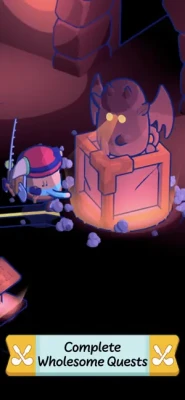
The game combines relaxed exploration with light puzzles and Metroidvania-style progression. New equipment and abilities open previously inaccessible paths, meaning that returning to an earlier area can reveal something completely new.
There is no combat-focused progression or stressful timer pushing you forward. Pine Hearts is designed around curiosity, exploration and completing small acts of kindness.
What Is Pine Hearts?
Pine Hearts is a cozy adventure and exploration game developed by Hyper Luminal Games and published by Secret Mode.
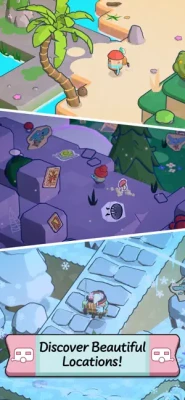
Its world is inspired by the Scottish Highlands and childhood holiday experiences, although the game deliberately gives the setting a bright, sunny interpretation. The reserve contains beaches, caves, golf courses, caravan parks, castle ruins, catacombs and numerous interconnected paths.
The basic gameplay loop is:
Explore → meet characters → accept quests → discover tools → unlock new routes → revisit old areas → uncover memories → continue the journey.
The game rewards players who are willing to wander away from the obvious path.
Pine Hearts Story
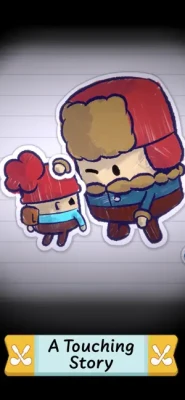
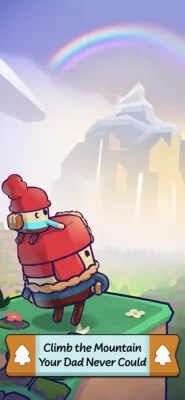
The story follows Tyke as he returns to Pine Hearts and begins a journey connected to the memory of his father.
The subject matter involves family loss and grief, but the game approaches it with warmth rather than turning the experience into a relentlessly sad adventure.
Memories from childhood are gradually brought back as Tyke explores familiar places and interacts with the world around him.
This gives the adventure a second purpose.
You aren't simply exploring a park.
You're exploring a collection of memories.
That emotional element is one of the main reasons Pine Hearts feels different from a standard exploration game. Apple describes it as a thoughtful story about honoring the memory of Tyke's late father.
The Pine Hearts World
The nature reserve is designed as an interconnected environment rather than a collection of completely separate levels.
You will discover:
- Campsites
- Sandy beaches
- Rock pools
- Caves
- Golf courses
- Caravan parks
- Castle ruins
- Catacombs
- Walking trails
- Hidden shortcuts
- Puzzle areas
- Quest locations
The world is full of paths that may initially appear useless.
Later, after gaining a new ability, those same paths can become important.
That is the heart of Pine Hearts' exploration design.
Metroidvania-Style Progression
Pine Hearts uses a light version of Metroidvania-style exploration.
You don't necessarily have everything you need when you first reach an area.
Instead, you gradually obtain equipment and abilities that allow Tyke to interact with previously inaccessible parts of the environment.
This creates a satisfying loop:
See something unreachable → remember its location → continue exploring → gain a new ability → return → discover what was hidden.
If you find an obstacle that you can't currently overcome, don't assume you've missed an important item.
Sometimes the correct answer is simply:
Come back later.
Beginner Guide
1. Explore Before You Rush
Pine Hearts is designed for exploration.
Don't feel pressured to follow the most obvious objective immediately.
Look around.
Check paths that seem unnecessary.
Walk behind buildings.
Investigate unusual objects.
Talk to characters.
The world frequently rewards curiosity.
2. Remember Blocked Areas
If you find a path that appears inaccessible, mentally mark it.
You don't need to spend ten minutes trying to force your way through.
Instead, continue your adventure and return after unlocking new equipment.
This saves time and makes backtracking much more productive.
3. Talk to Characters
NPCs are an important part of Pine Hearts.
Many characters have their own small problems, requests or stories.
Helping them is often more interesting than simply following the main objective.
Side quests also give you additional reasons to revisit locations.
Quest Strategy
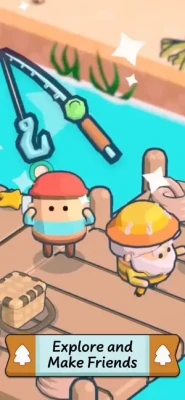
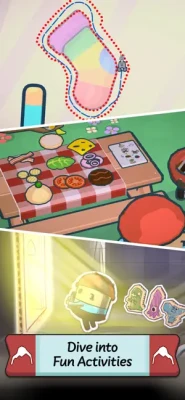
Pine Hearts contains a wide variety of quirky tasks.
You may find yourself:
- Judging a vegetable competition
- Helping a ghost
- Conducting a brass band
- Rebuilding a whale-watching boat
- Rescuing bees
- Setting camera traps
- Searching for Viking treasure
These activities aren't just filler.
They reinforce the game's central idea of exploring the world and helping the people who live there.
Best approach
When you enter a new region:
Talk to everyone → accept available tasks → explore nearby areas → complete obvious objectives → return later for anything that requires an ability you don't have yet.
How to Handle Puzzles
Pine Hearts deliberately keeps its puzzles relatively gentle.
You generally don't need to perform complicated combinations or memorize huge sequences.
Instead, puzzles tend to rely on:
- Environmental clues
- Objects in the surrounding area
- Newly unlocked abilities
- Movement
- Exploration
- Understanding how an item interacts with the environment
If you're stuck, don't immediately assume there is a hidden complicated solution.
First ask:
"Do I actually have the ability needed to solve this yet?"
That question will save a lot of unnecessary wandering.
The Best Puzzle-Solving Method
When you encounter an obstacle:
Step 1: Identify the obstacle
What exactly is preventing you from progressing?
Step 2: Look around
Check nearby objects and paths.
Step 3: Look for an interaction
Something nearby may provide the solution.
Step 4: Check your abilities
If nothing works, you may need an ability that you haven't unlocked yet.
Step 5: Leave a mental note
Return later.
This is much more effective than repeatedly attempting the same action.
Ability Progression
New equipment and abilities are central to exploration.
Whenever you obtain a new ability, don't only use it at the location where you received it.
Think backward.
Ask:
"Where have I seen an obstacle that this ability might solve?"
This simple habit can lead to several useful discoveries.
A new ability may unlock:
- A shortcut
- A collectible
- A side quest
- A hidden area
- A memory
- A previously inaccessible path
Backtracking Strategy
Backtracking is not wasted time in Pine Hearts.
The map is deliberately designed around interconnected routes and shortcuts.
However, you should backtrack intelligently.
Good time to backtrack
- You just unlocked a new ability.
- You remember a clearly blocked path.
- A quest specifically points you toward an older area.
- You are looking for collectibles.
- You want to complete unfinished side quests.
Bad time to backtrack
- You haven't unlocked anything new.
- You're randomly checking every location.
- You don't remember seeing any relevant obstacle.
The best rule is:
New ability = good reason to revisit old areas.
Collectibles and Exploration
Pine Hearts rewards players who explore beyond the main route.
Some players report returning to completed regions to search for missing collectibles and side quests, which is a good indication of how the game's progression encourages revisiting earlier locations.
If you want to complete as much as possible:
- Explore each region thoroughly.
- Talk to NPCs.
- Finish available quests.
- Remember inaccessible areas.
- Revisit regions after unlocking abilities.
- Check side paths rather than staying on the main route.
Don't worry if you don't collect everything on your first visit.
The game is designed to make revisiting worthwhile.
Memory and Story Sections
The memory sequences are an important part of Tyke's journey.
They provide context for his relationship with his father and help explain why the locations of Pine Hearts matter so much.
Some players find these sections less intuitive than the normal exploration, so don't worry if the memory mechanics initially feel different from the rest of the game.
The important thing is to pay attention to the surrounding clues and story rather than treating the memories as conventional action levels.
How to Explore Each Region Efficiently
When arriving in a new area, use this routine.
First pass
Explore the obvious paths.
Second pass
Talk to NPCs and identify available quests.
Third pass
Look for unusual objects and blocked paths.
Fourth pass
Complete the tasks you can currently solve.
Later
Return after unlocking new equipment or abilities.
This approach keeps exploration organized without turning the game into a checklist.
Tips for Finding Hidden Areas
Look for environmental details that seem slightly out of place.
For example:
- A narrow side path
- An unusual object
- A suspicious gap
- A blocked route
- A path behind a building
- An interaction that doesn't seem immediately useful
- An area that looks accessible but isn't
Pine Hearts is a game where curiosity is often more useful than speed.
Dog and Crab Interactions
Yes, you can interact with the wildlife.
Pine Hearts specifically highlights the ability to pet dogs and pat crabs.
These interactions aren't the game's main progression system, but they fit perfectly with its relaxed atmosphere.
If you see an animal, it's worth checking whether Tyke can interact with it.
Quest Examples
The quests are deliberately varied and often humorous.
Vegetable Competition
One task involves judging a vegetable competition.
Brass Band
Another quest asks you to conduct a brass band.
Ghost
You can help a ghost with its problem.
Whale-Watching Boat
You can contribute to rebuilding a whale-watching boat.
Bees
Some quests involve rescuing wayward bees.
Monster Camera Trap
One particularly playful activity involves setting camera traps to catch a monster.
Viking Treasure
Exploration can even lead to Viking treasure.
These quests help prevent the world from feeling like a simple walking simulator.
How to Approach Side Quests
Don't think of side quests as optional chores.
They are one of the best ways to experience Pine Hearts.
Side quests:
- Introduce new characters.
- Give you reasons to explore.
- Reveal humorous situations.
- Encourage revisiting old areas.
- Add more context to the park.
- Make the world feel inhabited.
If you enjoy the game's atmosphere, completing side quests is strongly recommended.
Pine Hearts Exploration Strategy
A useful mental map looks like this:
Main path
↓
Discover side route
↓
Find blocked area
↓
Remember location
↓
Continue story
↓
Unlock ability
↓
Return to blocked area
↓
Open shortcut or discover secret
This is the core of Pine Hearts' exploration design.
How to Avoid Getting Lost
The interconnected world can occasionally make it difficult to remember where everything is.
A simple solution is to use landmarks.
Instead of trying to remember exact paths, remember locations by distinctive features:
- The campsite
- The beach
- The golf course
- The castle
- A particular NPC
- A major building
- A recognizable trail
Then connect the nearby objectives mentally.
Accessibility Features
Pine Hearts has an unusually strong collection of accessibility options.
The game includes options such as:
- Simplified controls
- Colour-blocking
- Black-and-white mode
- High-contrast modes
- Visual-effects toggles
- Font scaling
- Full input remapping
- Reduced-motion options
The developers have also described accessibility controls covering gameplay, UI and visual support.
If an interaction feels uncomfortable or difficult to read, check the accessibility settings before changing your entire play style.
Best Settings for a Relaxed Playthrough
For players who want the calmest possible experience:
- Use simplified controls if preferred.
- Reduce visual effects if they become distracting.
- Increase font size if text is difficult to read.
- Use high contrast when environmental objects are difficult to distinguish.
- Enable reduced motion if you're sensitive to screen movement.
These options are there to make the experience more comfortable rather than changing the core adventure.
Pine Hearts Mobile Version
The iPhone and iPad version uses a try-before-you-buy model.
The first two areas—Reflection Point and the Campsite—provide around 20–25 minutes of gameplay. The full adventure can then be unlocked through a one-time in-app purchase. The App Store currently lists the full-game purchase at $4.99 and says there are no ads.
This is useful because you can experience the basic exploration and presentation before deciding whether to purchase the complete game.
Pine Hearts Gameplay Tips
Tip 1: Don't Rush
The game is designed to be enjoyed at a relaxed pace.
Tip 2: Talk to Everyone
NPCs are an important source of quests and story.
Tip 3: Remember Obstacles
If something is inaccessible, come back later.
Tip 4: Use New Abilities Everywhere
A newly unlocked ability may solve an old problem.
Tip 5: Explore Side Paths
Some of the best discoveries are away from the main route.
Tip 6: Finish Quests
Side quests provide much of the game's personality.
Tip 7: Revisit Old Areas
Backtracking becomes valuable after unlocking new equipment.
Tip 8: Look for Interactions
Try interacting with unusual objects rather than simply walking past them.
Tip 9: Don't Worry About Perfect Completion
You can return to areas later.
Tip 10: Enjoy the Story
The emotional journey is just as important as the exploration.
Common Beginner Mistakes
Trying to Force Every Locked Area
If an obstacle clearly requires something you don't have, leave it.
Better approach: remember the location and return later.
Ignoring Side Characters
You can miss some of the game's funniest and most memorable moments.
Better approach: speak with NPCs whenever you enter a new area.
Following Only the Main Objective
This makes the world feel smaller than it actually is.
Better approach: explore nearby paths before continuing.
Forgetting About New Abilities
Players sometimes unlock an ability and immediately continue the story.
Better approach: think about previously inaccessible locations.
Trying to Finish Everything Immediately
Pine Hearts is designed around gradual exploration.
Better approach: allow the map to unfold naturally.
Full Beginner Walkthrough Strategy
Early Game
Start by learning the basic movement and interaction controls.
Explore the initial area carefully and talk to the available characters.
Don't worry about finding every collectible immediately.
Your main goal is to understand how Pine Hearts handles exploration and quests.
Campsite
The Campsite is one of the first major areas available in the mobile trial.
Use it as your introduction to:
- NPC interactions
- Side quests
- Environmental exploration
- Basic puzzles
- Movement
- The game's cozy atmosphere
The Campsite is also a useful reference point when navigating the surrounding world.
Mid-Game Exploration
Once you have gained additional equipment and abilities, start revisiting areas you previously explored.
Look for:
- New shortcuts
- Blocked paths
- Collectibles
- New interactions
- Side quests
- Previously inaccessible locations
This is where Pine Hearts begins to feel much more like a Metroidvania.
Later Areas
As you progress toward the mountain, the story and exploration begin to connect more strongly.
Don't focus solely on reaching the next objective.
Continue helping characters and investigating areas around you.
The journey itself is the main attraction.
Is Pine Hearts Difficult?
Pine Hearts is intentionally low-stress.
There is no emphasis on combat or punishing failure.
Its challenges come primarily from exploration, light puzzles and remembering how different parts of the world connect.
That makes it a good choice for players who want an adventure without constant pressure.
The Steam version is similarly categorized around relaxing exploration, puzzles, narrative, family-friendly gameplay and a cozy atmosphere.
Pine Hearts Pros and Cons
Pros
- Beautiful cozy atmosphere
- Relaxing exploration
- Heartfelt story
- Strong sense of place
- Metroidvania-style progression
- Lots of quirky side quests
- Memorable characters
- Gentle puzzles
- Interconnected world
- New abilities make revisiting worthwhile
- Dogs and crabs can be interacted with
- Excellent accessibility options
- No advertising on the mobile version
- Affordable one-time full-game unlock
Cons
- Some players may find the pace too slow.
- The memory sections can feel less intuitive than the normal exploration.
- Players looking for combat will find very little traditional action.
- Some areas may encourage repeated backtracking.
- Collectibles can be difficult to locate without thorough exploration.
- The game is relatively short compared with large open-world adventures.
The iOS listing currently shows a 4.5/5 rating and an Editors' Choice designation, while the PC version has also received a very positive reception.
Is Pine Hearts Worth Playing?
Yes, especially if you enjoy cozy exploration games such as A Short Hike, narrative adventures and gentle puzzle games.
Pine Hearts isn't trying to compete with large action RPGs.
Its appeal comes from smaller things:
A character remembering his father.
A stranger who needs help.
A hidden path.
A dog waiting to be petted.
A previously inaccessible area that suddenly becomes reachable.
A quiet bench where you can simply stop and look around.
Those moments give Pine Hearts its personality.
Pine Hearts vs Traditional Adventure Games
| Feature | Pine Hearts |
|---|---|
| Combat | Minimal / not the focus |
| Exploration | Major focus |
| Puzzles | Gentle |
| Story | Strong |
| Side quests | Extensive |
| Progression | Ability-based |
| World design | Interconnected |
| Difficulty | Relaxed |
| Multiplayer | No |
| Tone | Cozy and emotional |
| Main objective | Explore, help, remember and climb |
Pine Hearts Best Strategy
The best overall strategy can be summarized in one sentence:
Explore freely, help the people you meet, remember inaccessible locations and return whenever a new ability opens another part of the world.
You don't need to rush.
You don't need a perfect build.
You don't need to memorize complicated combinations.
Pine Hearts rewards patience and curiosity.
Pine Hearts FAQ
Is Pine Hearts free on iPhone?
Yes. The iOS version is free to download and lets you play the first two areas for approximately 20–25 minutes. The full game is unlocked through a one-time purchase.
How much does the full Pine Hearts game cost on iPhone?
The current U.S. App Store listing shows a $4.99 Purchase Full Game in-app purchase.
Does Pine Hearts have ads?
No. The App Store specifically states that the mobile version has no ads.
What type of game is Pine Hearts?
Pine Hearts is a cozy narrative adventure focused on exploration, gentle puzzles, quests and ability-based progression.
Is there combat in Pine Hearts?
Combat is not the focus. The game emphasizes exploration, puzzles, quests and helping characters.
What is the story about?
The story follows Tyke as he explores Pine Hearts and reconnects with memories of his late father. It is ultimately a story about family, memories, loss and moving forward.
Is Pine Hearts an open-world game?
It is better described as an interconnected exploration world rather than a huge open-world RPG. The different areas are connected by paths, shortcuts and unlockable routes.
What are the main abilities used for?
New equipment and abilities allow Tyke to access areas and shortcuts that were previously unavailable.
Should I complete side quests?
Yes. Side quests are one of the best ways to experience Pine Hearts' characters, humor and world.
Can I revisit previous areas?
Yes. Revisiting locations is an important part of progression because newly unlocked abilities can reveal previously inaccessible paths.
Can you pet the dogs?
Yes. Petting dogs is one of the game's deliberately wholesome interactions.
Can you interact with crabs?
Yes. Pine Hearts also lets Tyke pat crabs.
Does Pine Hearts have accessibility options?
Yes. It offers simplified controls, colour-blocking, high contrast, black-and-white mode, font scaling, visual-effect controls and input remapping, among other options.
Is Pine Hearts suitable for children?
The App Store currently gives Pine Hearts an age rating of 4+, although the story deals with family loss and grief in a gentle way.
Is Pine Hearts worth buying?
If you enjoy relaxing exploration, cozy adventures and story-driven games, the $4.99 full-game unlock makes Pine Hearts an easy game to try before committing to the complete experience.
Final Verdict
Pine Hearts is a cozy adventure built around exploration rather than combat.
Its interconnected map, gentle puzzles and ability-based progression give you plenty of reasons to revisit places you've already explored, while the quests and characters make the nature reserve feel alive.
But its strongest feature is the story.
Tyke's journey through Pine Hearts is really a journey through memories, family and loss. The game handles those themes with a warm, approachable tone instead of relying on dramatic action.
If you're looking for a relaxing adventure game with puzzles, exploration, side quests, collectibles, emotional storytelling and a charming world, Pine Hearts is well worth trying.
Rate the Game
User Reviews














Popular Games


















 Android
 iOS
iOS Windows
 Xbox
Xbox