


Latest Version
September 22, 2026
THQ Nordic Mobile GmbH
Adventure
iOS
0
Report a Problem
More About :game
The game combines classic point-and-click adventure gameplay with visual-novel storytelling, investigation, interrogation and puzzle elements. The current iOS version lets players try the beginning of the adventure before unlocking the full game.
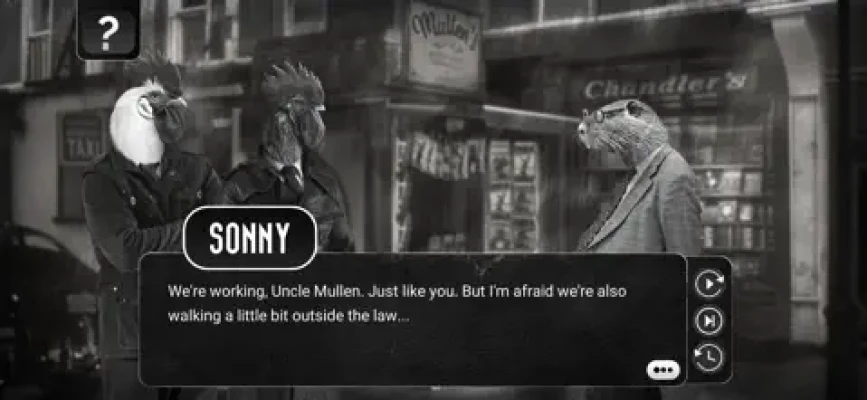
The unusual world is populated by anthropomorphic animals, but the mystery itself takes inspiration from classic film noir. Expect shady characters, suspicious conversations, hidden clues, dangerous criminals and plenty of dark humor.
Game Information
| Feature | Details |
|---|---|
| Game | Chicken Police: Try & Buy |
| Full Game | Chicken Police – Paint it RED! |
| Genre | Adventure / Detective / Point-and-Click |
| Setting | Clawville |
| Developer | The Wild Gentlemen |
| Mobile Publisher | HandyGames / THQ Nordic Mobile |
| Platforms | iPhone and iPad |
| Category | Adventure |
| Age Rating | 13+ |
| Size | About 1.3 GB |
| Players | Single-player |
| Languages | English + 7 more |
| Gameplay Style | Investigation, dialogue, exploration, interrogation and puzzles |
| Characters | 30+ voiced characters |
| Spoken Dialogue | More than 8 hours |
| Cutscenes | 20+ |
| Business Model | Free Try & Buy with in-app purchases |
The current App Store listing identifies the game as an adventure title for iPhone and iPad and highlights more than 30 voiced characters, over eight hours of spoken dialogue, more than 20 cutscenes, clues, collectibles and a complex interrogation system.
Meet the Chicken Police
Sonny Featherland and Marty MacChicken were once a legendary detective duo.
Years later, their partnership has fallen apart. Sonny is no longer the detective he once was, while Marty has continued to maintain his reputation.
A strange case brings the two back together.
What starts as an unusual investigation gradually develops into a much larger mystery involving the inhabitants and hidden power structures of Clawville.
The story deliberately combines serious crime-noir themes with absurd animal characters, creating a setting that is both funny and surprisingly dark.
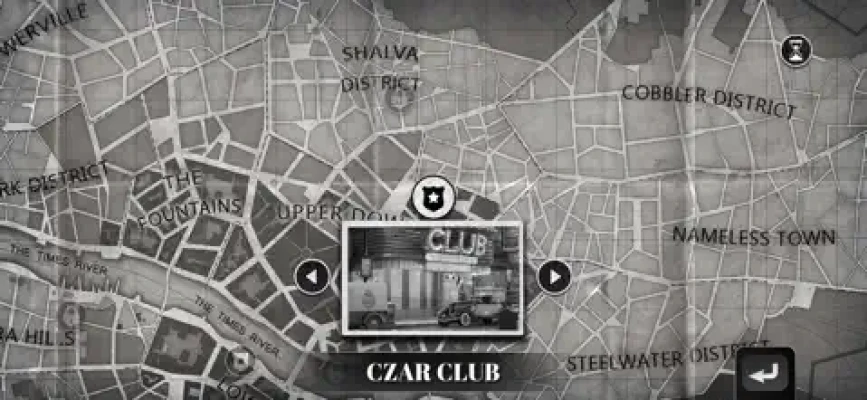
Explore Clawville
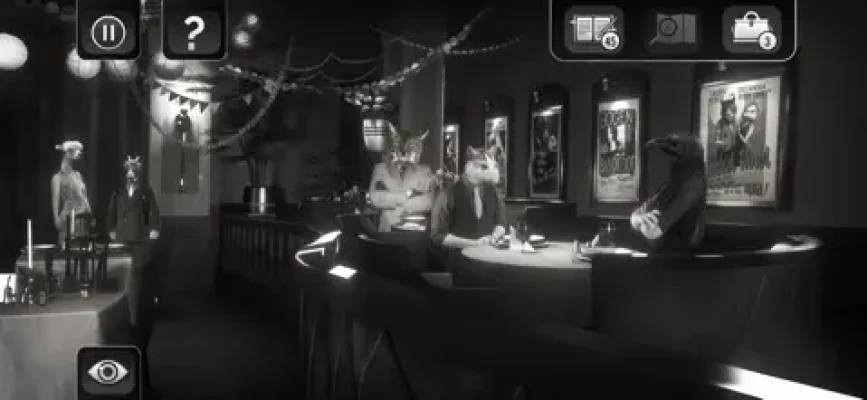
Clawville is one of the most important parts of the experience.
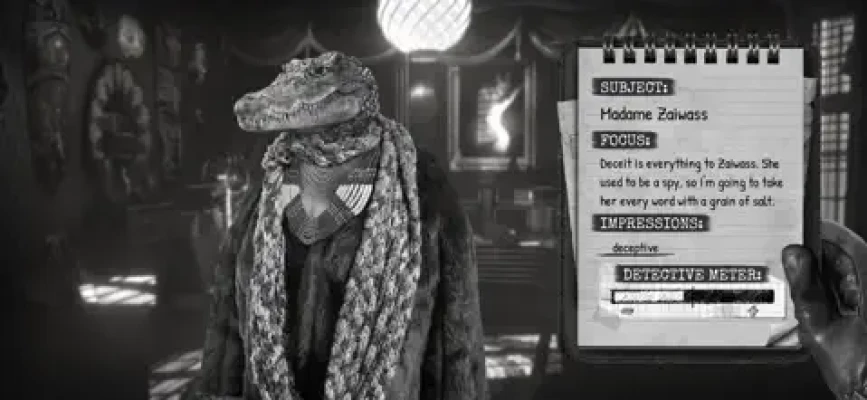
Instead of moving through a conventional action-game world, you'll investigate locations, speak with residents and examine objects for information.
The game features more than 30 locations that can change as the story progresses.
When visiting an area, don't immediately leave after finding the obvious clue.
Look around.
Talk to everyone.
Examine interesting objects.
Return to locations after important story events.
Optional conversations can provide additional background information and sometimes help you understand characters more clearly.
Core Gameplay
The basic investigation loop is:
Explore → Observe → Question → Investigate → Collect Clues → Interrogate → Connect Information → Advance the Case
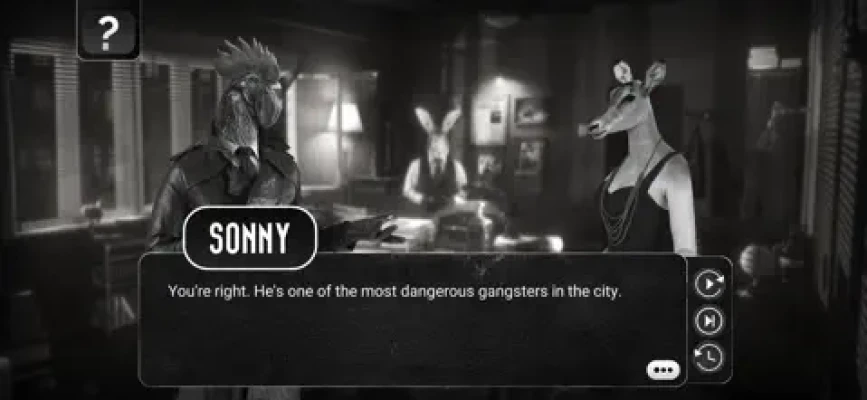
The game is dialogue-heavy, so paying attention to conversations is much more important than reflexes.
If you're looking for a fast-paced action game, this isn't the main focus.
If you enjoy detective stories, mystery adventures and character-driven games, the investigation system is where much of the experience comes from.
How to Investigate Properly
1. Examine Every Important Location
When entering a new location, move the cursor around the environment.
Look for:
- Objects
- Documents
- Signs
- Environmental details
- Characters
- Evidence
- Interactive areas
Don't assume the first obvious object is the only thing worth examining.
2. Talk to Everyone
Some characters may initially appear unimportant.
Speak to them anyway.
Conversations can reveal:
- Names
- Relationships
- Locations
- Motives
- Rumors
- Previous events
- Potential suspects
- Additional investigation leads
The game contains more than 30 fully voiced characters, making conversations one of the central parts of the experience.
3. Use the Investigation Assistance
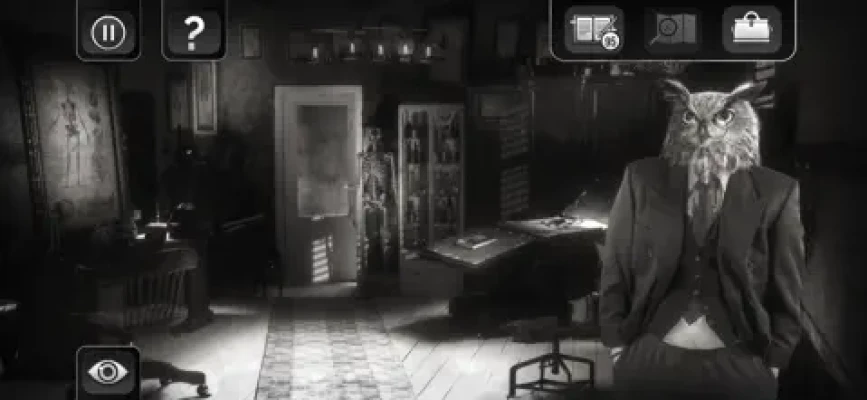
If you're unsure what to examine, the game provides an eye-style interaction indicator that can reveal points of interest.
Don't be afraid to use it.
A detective game should test your ability to connect information, not force you to click every pixel on the screen.
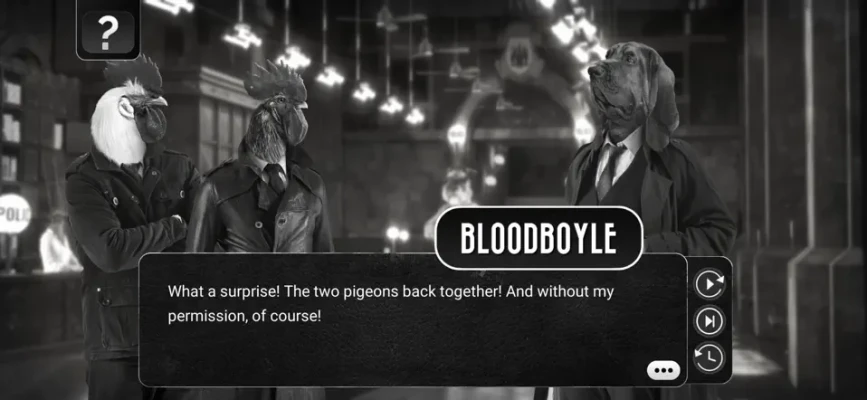
4. Pay Attention to Dialogue
Dialogue is arguably the most important source of information.
Listen for:
- Contradictions
- Names
- Locations
- Relationships
- Suspicious statements
- Changes in tone
- Information that conflicts with earlier conversations
Sometimes a seemingly casual sentence becomes important later.
Interrogation Guide
Interrogations are one of the game's defining mechanics.
When questioning a suspect, you are given different questions or approaches.
The objective isn't simply to ask everything available.
You want to select questions that are relevant to the information you already have.
The interrogation system evaluates your questioning choices, making these sequences more interactive than ordinary dialogue.
Before interrogating
Review what you already know.
Ask:
- What does this character claim?
- What evidence contradicts them?
- What information do I need?
- Which questions are likely to pressure them?
During interrogation
Don't rush.
Think about the character's previous statements.
If the person has already provided information, use it when deciding what to ask next.
Best Interrogation Strategy
A useful approach is:
Listen → Identify contradictions → Ask targeted questions → Compare answers → Follow new leads
Avoid treating every interrogation like a guessing game.
Instead, approach it as a conversation where you're trying to establish whether the suspect's story makes sense.
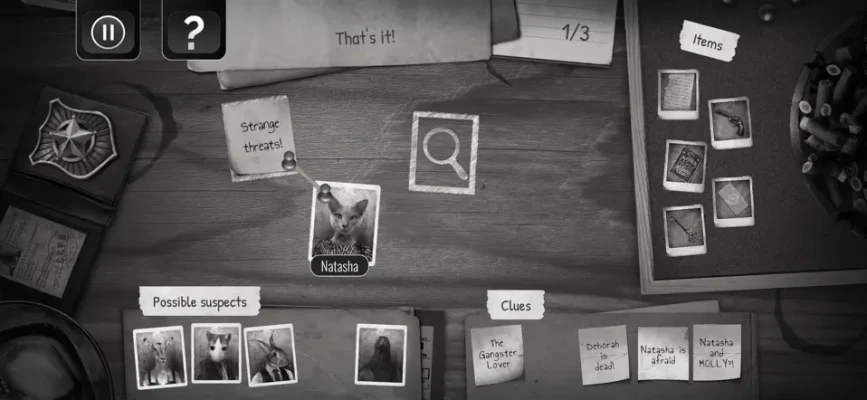
How to Find Clues
Clues generally come from several sources:
Characters
Talking to people can reveal information about suspects and locations.
Objects
Environmental objects may provide evidence or background details.
Documents
Written material can reveal names, relationships or events.
Interrogations
Suspects may reveal information that changes your understanding of the case.
Exploration
Returning to familiar locations can sometimes produce additional dialogue or interactions.
Keep Track of Information
One of the easiest mistakes is assuming you will remember every name and relationship.
There are many characters in Clawville.
When you discover something important, mentally categorize it:
Person → Relationship → Location → Claim → Evidence
For example:
Character A → knows Character B → works at Location C → claims X → evidence suggests Y
This makes complicated conversations much easier to follow.
Don't Rush Through Locations
A useful detective habit is to investigate an area thoroughly before leaving.
Before moving on, ask:
- Did I speak with everyone?
- Did I examine the important objects?
- Did I discover all available clues?
- Did I trigger any optional dialogue?
- Is there another interaction available?
The game's point-and-click structure rewards curiosity more than speed.
Return to Previous Locations
One of the most useful habits for completing the investigation thoroughly is revisiting locations.
Story progression can change what characters say or what interactions become available.
Optional conversations can also add additional context.
If you're interested in discovering as much dialogue and world-building as possible, don't treat previously visited locations as permanently finished.
Collectibles and Extra Information
The game includes collectibles alongside its main investigation.
If you're aiming for a more complete playthrough, explore carefully instead of focusing only on the next story objective.
Check environments for objects and information that aren't necessarily required to advance the main case.
Puzzle Strategy
Chicken Police isn't built around extremely difficult puzzles.
The larger challenge comes from understanding the story and connecting information.
When you're stuck:
- Revisit recent conversations.
- Look at the locations you've recently unlocked.
- Talk to characters again.
- Examine newly available objects.
- Consider whether a previous clue changes the meaning of a current conversation.
Don't assume every obstacle requires a complicated puzzle solution.
Sometimes the solution is simply finding the next piece of information.
Mini-Games
The investigation is occasionally broken up by smaller gameplay sequences.
These include activities such as shooting-gallery challenges and other short interactive moments.
Treat them as breaks from the dialogue-heavy investigation rather than the central gameplay system.
How to Approach the Story
The game is intentionally narrative-driven.
Its combination of visual-novel elements and classic adventure gameplay means that much of your progress comes from:
- Reading
- Listening
- Exploring
- Questioning
- Connecting information
The game reportedly contains more than eight hours of spoken dialogue, so rushing through conversations means missing a significant part of the experience.
Beginner Tips
Tip 1: Talk to Everyone
Even characters who don't appear central to the case can provide useful information or memorable dialogue.
Tip 2: Examine Everything
If an object can be interacted with, there's a reason to investigate it.
Tip 3: Listen Carefully
Dialogue frequently contains information that becomes useful later.
Tip 4: Don't Guess Randomly
During interrogations, base your questions on what you've already learned.
Tip 5: Revisit Locations
New story developments can change conversations and interactions.
Tip 6: Take Your Time
This isn't a game where rushing improves your score.
Tip 7: Use Investigation Assistance
If you can't identify an interaction, use the game's visual assistance instead of repeatedly clicking everywhere.
Tip 8: Follow the Story
The mystery is designed to unfold gradually. Avoid skipping conversations simply to reach the next location.
Common Mistakes
Leaving an area too early
You may miss optional conversations or clues.
Ignoring minor characters
A character who seems unimportant can still provide useful information.
Skipping dialogue
You can easily lose track of relationships and motives.
Treating interrogations as random guessing
Use the information you've already collected.
Forgetting previous statements
Contradictions are often more useful than direct answers.
Not revisiting locations
Story progression can change available interactions.
Atmosphere and Presentation
The game's identity comes from its unusual combination of gritty noir and anthropomorphic animals.
The world looks deliberately strange: recognizable crime-noir imagery is mixed with animal characters, creating a visual style that makes Clawville immediately distinctive.
The original game has also been noted for its noir atmosphere, writing, voice work and unusual presentation.
The soundtrack and voice performances are particularly important because so much of the game is built around conversations.
Story and Tone
Although the animal characters give the game a comedic appearance, the story deals with mature crime themes.
The current mobile listing is rated 13+, and external descriptions note elements including violence, guns, drinking, smoking references and strong language.
So despite the humorous premise, this isn't really a children's detective game.
Try & Buy Version Explained
The current iOS title is specifically called Chicken Police: Try & Buy.
The App Store describes it as a free starting experience with in-app purchases. Players can begin the investigation and unlock the full game to continue the mystery.
This is worth mentioning clearly on the page because the older standalone iOS listing for Chicken Police – Paint it RED! is a separate paid App Store listing.
Technical Information
The current iOS Try & Buy listing reports:
- Approximately 1.3 GB
- iPhone support
- iPad support
- Game Center support
- English plus seven additional languages
- 13+ age rating
- Free download with in-app purchases
Honest Gameplay Overview
Chicken Police is much closer to a detective visual novel and point-and-click adventure than a traditional action game.
Most of your time is spent:
- Exploring locations
- Talking to characters
- Examining clues
- Interrogating suspects
- Connecting information
- Following the story
The interrogation system provides some of the game's most interactive moments, while the unusual noir setting and character writing provide much of its personality.
If you prefer action-heavy detective games, the slow pace may feel unusual. If you enjoy story-rich mystery adventures, the dialogue-heavy structure is central to the experience.
The original game has also received strong critical and player reception on other platforms; Steam currently lists it with a Very Positive rating based on more than 1,600 reviews.
Frequently Asked Questions
What is Chicken Police: Try & Buy?
It is a mobile detective adventure based on Chicken Police – Paint it RED!, combining noir storytelling, point-and-click exploration, interrogation and visual-novel elements.
Who are the Chicken Police?
The Chicken Police are Sonny Featherland and Marty MacChicken, a former detective duo brought back together to investigate a strange case in Clawville.
Where does Chicken Police take place?
The story takes place in the fictional noir city of Clawville.
Is Chicken Police a horror game?
Its atmosphere can become dark and its story involves crime and mature themes, but its primary genre is a narrative detective adventure rather than conventional horror.
How long is Chicken Police?
The game contains more than eight hours of spoken dialogue, while the complete playtime varies depending on how thoroughly you explore locations and conversations.
Does Chicken Police have puzzles?
Yes. It combines point-and-click investigation with puzzles, interrogation sequences and smaller interactive challenges.
How many characters are in Chicken Police?
The game features more than 30 unique, fully voiced characters.
Is Chicken Police available on iPhone?
Yes. The current Try & Buy version supports iPhone and iPad.
Is Chicken Police free on iPhone?
The Try & Buy version is free to download with in-app purchases and allows players to try the game before unlocking the full experience.
Is Chicken Police suitable for children?
The current App Store listing gives the Try & Buy version a 13+ rating. The story includes crime, violence and other mature themes, so parents should check the current rating and content information before allowing younger players to play.
Rate the Game
User Reviews














Popular Games



















 Android
 iOS
iOS Windows
 Xbox
Xbox