
Latest Version
September 19, 2026
H2T GLOBAL PTE. LTD.
Adventure
Android
0
com.Monkey.Speed.Parkour.Run
Report a Problem
More About :game
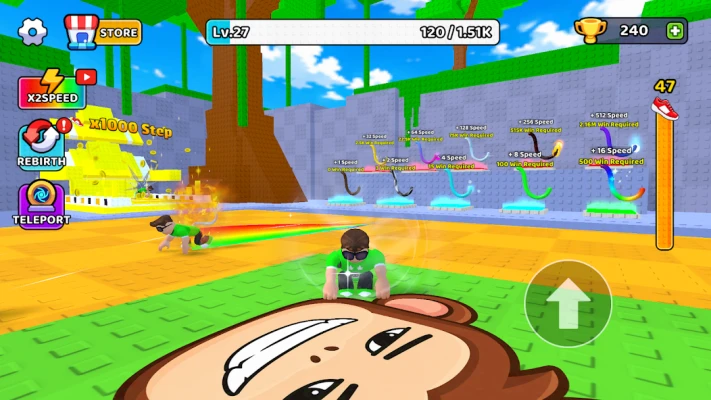
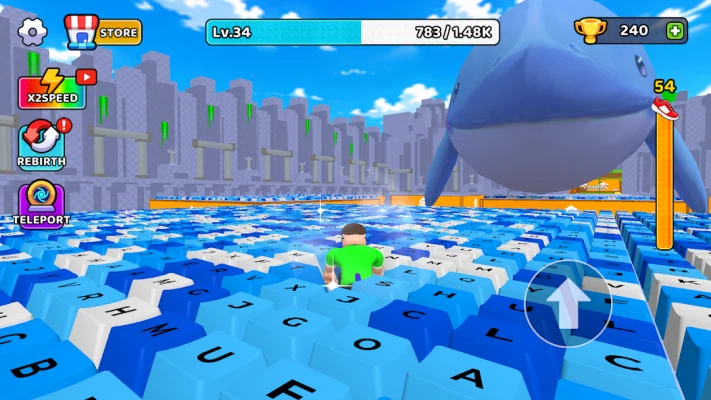
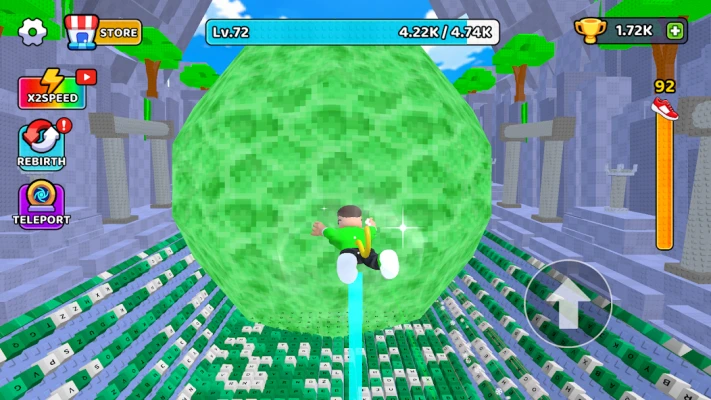
The game combines parkour movement, obstacle avoidance, speed collection and racing-style challenges. Rather than relying on complicated controls, the challenge comes from reacting to obstacles, choosing the right moment to jump and maintaining your momentum throughout each course.
The game is published by H2T GLOBAL PTE. LTD. and is currently listed in the Adventure category on Google Play. The store listing shows 10K+ downloads and an Everyone content rating.
What Is Monkey Speed: Parkour Run?
Monkey Speed: Parkour Run is a casual parkour racing game built around one main objective: reach the finish line as fast as possible.
You guide a monkey through obstacle-filled courses while jumping over hazards and collecting speed. The better you understand the course and time your movements, the easier it becomes to maintain momentum and finish quickly.
The official description specifically highlights running, jumping, parkour obstacles, collecting speed and racing through exciting levels.
Main Gameplay Features
Fast-Paced Monkey Parkour
The game puts parkour movement at the center of its gameplay. Your monkey must navigate a series of obstacles while continuing toward the finish line.
Quick reactions are important, but knowing when not to move can be equally useful.
Speed Collection
Collecting speed is an important part of the gameplay loop. The more effectively you maintain your momentum, the better positioned you are for a fast finish.
Instead of treating speed pickups as optional decorations, consider them part of your route planning.
Challenging Obstacles
The courses contain obstacles designed to interrupt your progress. A successful run requires a combination of jumping, positioning and timing.
As you become familiar with the layouts, you can begin anticipating obstacles instead of reacting to them at the last moment.
Racing to the Finish
Every run ultimately comes down to reaching the finish line.
This gives the game a straightforward competitive element: learn the course, improve your movement and try to complete the route more efficiently.
New Maps
The game has received updates adding new map content. Google Play's current listing shows a September 2026 update, while recent version information also records new-map updates.
How to Play Monkey Speed: Parkour Run
The basic gameplay is easy to understand:
- Start the course.
- Run forward through the parkour route.
- Watch for upcoming obstacles.
- Jump at the appropriate moment.
- Collect speed where it is safe to do so.
- Maintain your momentum.
- Avoid unnecessary crashes.
- Reach the finish line.
- Learn from mistakes and improve your next run.
The controls may be simple, but completing a course efficiently requires good timing and awareness.
Full Monkey Speed: Parkour Run Strategy Guide
1. Learn the Course Before Chasing Speed
Your first run through a new course should be treated as a learning attempt.
Do not worry about finishing at maximum speed immediately.
Instead, pay attention to:
- Where obstacles appear
- Which jumps require more timing
- Where speed opportunities are located
- Which sections are easy to navigate
- Where you are most likely to lose momentum
Once the route becomes familiar, you can concentrate on improving your time.
2. Look Ahead
One of the most useful parkour habits is looking beyond the obstacle immediately in front of you.
If you only react to what is directly ahead, you may complete one jump successfully but then arrive at the next obstacle without enough time to prepare.
Look forward whenever possible and anticipate your next movement.
3. Time Your Jumps Carefully
Jumping too early can leave you short of the next platform or obstacle.
Jumping too late can send you directly into the obstacle.
Try to identify a consistent takeoff point for difficult jumps. Once you find the timing that works, repeat it rather than improvising every attempt.
4. Protect Your Momentum
Speed is valuable, so unnecessary stops and crashes can seriously hurt a run.
However, maintaining momentum does not mean blindly running into every obstacle.
A controlled jump that preserves your run is better than a risky movement that causes a fall.
5. Collect Speed When the Route Is Safe
Speed pickups can help you move faster, but they should not make you ignore an approaching hazard.
Before collecting a speed opportunity, consider the next obstacle.
If grabbing it puts you in a poor position for the next jump, the extra speed may not be worth the risk.
6. Do Not Panic Around Obstacles
Fast gameplay can make obstacles appear more difficult than they really are.
When you see a complicated section, focus on the movement required for the immediate obstacle.
Make the jump, stabilize your position and prepare for what comes next.
7. Use Failed Runs as Practice
Every failed attempt gives you information.
If you repeatedly fall at the same obstacle, identify the reason.
Perhaps you are:
- Jumping too early
- Jumping too late
- Approaching from the wrong angle
- Moving too quickly
- Missing a speed opportunity
- Failing to prepare for the next obstacle
Change your approach instead of repeating the exact same mistake.
8. Build Consistency
A fast run is useful only if you can reproduce it.
Once you discover a reliable path through a section, practice it until the movements become natural.
Consistency will eventually allow you to increase your speed without sacrificing control.
Advanced Parkour Tips
Plan Two Obstacles Ahead
Do not think only about the next jump.
When possible, identify the obstacle after it as well. This allows you to land in a position that prepares you for the following section.
Avoid Unnecessary Movement
Every extra movement creates another opportunity to make a mistake.
Use direct, controlled movements whenever the course allows it.
Jump With Purpose
A jump should have a reason.
Use it to clear an obstacle, reach the next section or maintain the intended route—not simply because jumping feels faster.
Prioritize Safe Landings
A slightly slower landing that keeps you moving is usually preferable to a risky landing that causes a crash.
Memorize Difficult Sections
If one part of a map consistently causes problems, memorize its sequence.
Knowing what comes next reduces reaction time and makes the section much easier.
How to Get Faster Finishes
If you want to improve your completion times, work on the run in stages.
First: Complete the entire course without worrying about speed.
Second: Identify where you lose the most time.
Third: Practice those sections individually.
Fourth: Improve your obstacle timing.
Fifth: Optimize your speed collection.
Finally: Combine everything into one consistent run.
Trying to optimize the entire course immediately can make improvement harder. It is usually easier to eliminate one source of lost time at a time.
Speed Collection Strategy
Speed collection should be part of your route planning.
Before taking a speed opportunity, ask:
Where is the next obstacle?
If the route remains clear, collecting the speed boost can help you maintain a faster pace.
If a difficult jump is immediately ahead, prioritize positioning first.
The best route is not necessarily the one containing the most speed pickups. It is the route that lets you maintain high speed without repeatedly crashing.
Obstacle Strategy
Stationary Obstacles
For fixed obstacles, the main challenge is choosing the correct jump timing.
Once you know the distance, the obstacle becomes predictable.
Consecutive Obstacles
When several obstacles appear close together, avoid focusing only on the first one.
Prepare for the entire sequence before starting the section.
Narrow Sections
Use controlled movements and avoid unnecessary corrections.
Difficult Jump Sequences
Practice the first jump until you can land consistently. Then focus on the transition into the second jump.
Breaking complicated sections into smaller sequences makes them easier to learn.
Common Mistakes to Avoid
Rushing a New Map
Trying to set a fast time before learning the route often leads to repeated crashes.
Ignoring the Next Obstacle
Successfully clearing one obstacle does not mean the section is finished.
Chasing Every Speed Opportunity
A speed pickup is not useful if collecting it causes a crash.
Jumping Too Early
Early jumps can leave you short of your target.
Jumping Too Late
Late reactions often result in direct collisions.
Repeating Failed Attempts Without Adjusting
If the same strategy keeps failing, change your timing or positioning.
Sacrificing Control for Speed
Fast movement is useful, but finishing the course is still the primary objective.
Beginner's Quick Guide
New players can use this simple approach:
Run: Get comfortable with the basic movement.
Observe: Learn where obstacles appear.
Jump: Practice timing rather than jumping randomly.
Collect: Take safe speed opportunities.
Repeat: Learn difficult sections through repeated attempts.
Optimize: Once you can finish consistently, begin reducing unnecessary movement.
Monkey Speed: Parkour Run Game Information
Game Title: Monkey Speed: Parkour Run
Developer: H2T GLOBAL PTE. LTD.
Platform: Android
Genre: Adventure
Gameplay: 3D parkour and racing
Main Character: Monkey
Core Activities: Running, jumping, obstacle navigation and speed collection
Main Goal: Reach the finish line as quickly as possible
Content Rating: Everyone
Google Play Downloads: 10K+
Contains: Ads and in-app purchases
Package Name: com.Monkey.Speed.Parkour.Run
Latest Google Play Update: September 12, 2026
Recent Content: New map
Recent Updates
Monkey Speed: Parkour Run is still receiving updates. Google Play currently lists a September 12, 2026 update, while recent release information also identifies new map content. This suggests the available course selection can change as new maps are introduced.
For players returning to the game after an earlier version, it is worth checking the current map selection rather than relying entirely on an older route.
Who Will Enjoy Monkey Speed: Parkour Run?
Monkey Speed: Parkour Run may appeal to players who enjoy:
- 3D parkour games
- Monkey-themed games
- Obstacle-course games
- Casual racing games
- Fast-paced platforming
- Speed challenges
- Reflex-based gameplay
- Short gaming sessions
- Games focused on improving completion times
It is particularly suited to players who enjoy repeating a course, learning its layout and gradually becoming faster.
Pros and Cons
Pros
- Simple gameplay concept
- Easy-to-understand parkour objective
- Speed-focused progression
- Obstacle-based challenges
- New map content
- Quick, repeatable runs
- Everyone content rating
Cons
- Repeated attempts can become challenging
- Players who prefer story-heavy games may find the gameplay straightforward
- Speed-focused gameplay requires patience when learning difficult sections
- Ads and in-app purchases are present on the Google Play listing
Frequently Asked Questions
What is Monkey Speed: Parkour Run?
Monkey Speed: Parkour Run is an Android Adventure game focused on running, jumping, parkour obstacles, speed collection and racing toward the finish line.
How do you win in Monkey Speed: Parkour Run?
The main objective is to navigate the obstacle course successfully and reach the finish line. Improving your timing, route knowledge and speed management can help you complete courses more efficiently.
What is the main challenge in Monkey Speed: Parkour Run?
The main challenge is combining fast movement with accurate obstacle timing. You need to maintain momentum without allowing speed to cause unnecessary crashes.
Does Monkey Speed: Parkour Run have new maps?
Yes. Recent updates have added new map content, including the September 2026 update shown on the current Google Play listing.
Is Monkey Speed: Parkour Run free?
The Google Play listing currently offers the game with ads and in-app purchases.
What should beginners focus on?
Beginners should first learn the course layout and obstacle timing. After they can finish consistently, they can start optimizing speed and movement.
Final Thoughts
Monkey Speed: Parkour Run keeps its concept simple: run, jump, collect speed and reach the finish line. Its challenge comes from turning those basic actions into a clean and consistent parkour run.
The most effective strategy is to learn each map before chasing speed. Watch the obstacles ahead, time jumps carefully, protect your momentum and use speed opportunities when the route is safe. Once you know the course, small improvements in timing and movement can make a noticeable difference.
With its parkour-focused gameplay and continuing map updates, Monkey Speed: Parkour Run gives players a straightforward reason to keep replaying: learn the route, run it better and try to become faster.
Rate the Game
User Reviews













Popular Games

















 Android
 iOS
iOS Windows
 Xbox
Xbox