
Latest Version
August 12, 2026
HOMA GAMES
Casual
iOS
0
Report a Problem
More About :game
Life Bubble: My Mini Planet takes players away from traditional city-building and puts them on a collection of small, colorful worlds floating through space.
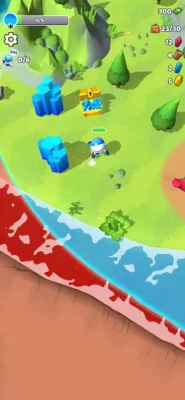
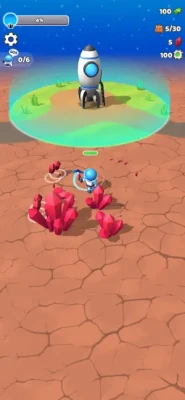
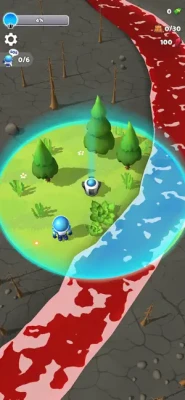
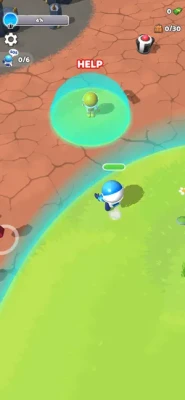
Your mission is straightforward: explore planets, collect resources, rescue astronauts, improve your equipment, and continue discovering new areas.
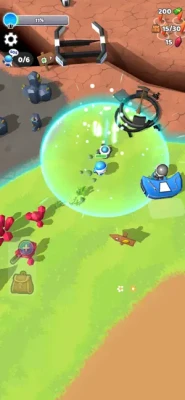
Instead of focusing purely on combat, the game revolves around exploration and resource management. Each planet gives you new things to discover and collect while your growing collection of tools allows you to reach more areas.
The current App Store listing categorizes the game as Casual and identifies HOMA GAMES as its developer. It is available on iPhone and iPad.
Game Concept
The central gameplay loop is:
Explore → Collect → Upgrade → Rescue → Build → Discover New Worlds
You begin with basic equipment and gradually improve your capabilities as you gather resources.
The miniature-planet concept gives the game a distinctive visual identity. Rather than exploring one enormous open world, you move through compact environments where each area contains resources, obstacles, characters and objectives.
Space Exploration Gameplay
Exploration is the foundation of Life Bubble.
Each world presents a self-contained environment that you can investigate while looking for useful resources and completing objectives.
The game encourages players to move around rather than simply following a linear path.
You may discover:
- Natural resources
- Valuable materials
- Astronauts needing rescue
- New construction areas
- Planet-specific activities
- Collectible resources
- Areas requiring upgraded equipment
The result is a casual exploration experience designed around short, repeatable objectives.
Collect Resources
Resource collection is one of the most important gameplay mechanics.
You need materials to improve your equipment and continue developing your progress.
The App Store's central description specifically highlights collecting resources as one of the game's primary activities.
Efficient resource gathering therefore becomes increasingly important as you move into later worlds.
Rescue Lost Astronauts
Exploration isn't only about collecting materials.
A major part of your mission is finding and saving lost astronauts scattered throughout the game's planetary environments.
This gives the player an additional objective while exploring.
Instead of simply gathering everything visible, you also have a reason to investigate different parts of each planet and look for characters who need assistance.
Explore Different Planets
Life Bubble is structured around discovering multiple worlds.
Each planet can introduce different environments, resources and objectives, giving progression a sense of adventure.
The game's subtitle, "Explore Worlds In The Space!", reinforces this focus on planetary discovery.
The appeal comes from wondering what the next miniature world will contain and which resources or activities you'll encounter there.
Tools and Equipment
Your equipment determines how efficiently you can explore.
As you progress, you'll be able to improve different tools and expand your capabilities.
The current App Store listing includes purchases such as Upgrade Tools, Upgrade Bag and Machine Upgrade, reflecting the game's broader equipment-progression system.
Better tools can make gathering and exploration more efficient.
Resource Management
Collecting resources is only half of the process.
You also need to manage what you've gathered.
The game's inventory system gives resource capacity an important role. The optional subscription, for example, includes an Infinite Bag, while the standard game provides upgrade options for carrying capacity.
This creates a simple management decision:
Collect more → Upgrade capacity → Explore longer → Gather more resources
Building and Development
Life Bubble isn't purely an exploration game.
There is also a light building and development component as you expand areas and use collected resources.
This aspect has been positively mentioned by players, with one App Store reviewer specifically praising the game's building aspect and colorful graphics.
The combination of exploration and development gives resources a clear purpose.
Miniature Planet Design
One of the game's most distinctive features is its miniature-world presentation.
Instead of enormous realistic planets, the environments feel like compact floating worlds filled with activities and resources.
This makes navigation straightforward while giving every planet its own visual character.
The colorful presentation also contributes to the game's relaxed, casual atmosphere.
Game Progression
The progression system revolves around gradually expanding what your character can do.
A typical progression path looks like:
Early Exploration
Learn the controls and collect basic resources.
Equipment Improvement
Upgrade tools and carrying capacity.
Astronaut Rescue
Search for stranded characters while exploring.
Planet Development
Use resources to expand and improve your surroundings.
New Worlds
Move into additional planetary environments and continue collecting.
Advanced Exploration
Return to earlier mechanics with stronger tools and more efficient resource gathering.
How to Play Life Bubble: My Mini Planet
1. Explore the Planet
Move around the available area and investigate the environment.
2. Gather Resources
Collect materials whenever you find them.
3. Watch Your Inventory
Avoid filling your storage unnecessarily when more valuable resources are nearby.
4. Upgrade Your Equipment
Invest resources into tools and capacity that make exploration easier.
5. Search for Astronauts
Look around the planet for lost astronauts who need to be rescued.
6. Develop Your Area
Use collected resources to progress construction and development objectives.
7. Unlock More Exploration
Continue progressing until new worlds and objectives become available.
Beginner's Guide
Explore Before Spending
When entering a new world, take a moment to understand its layout before immediately spending your resources.
Knowing where useful materials are located can make future visits more efficient.
Upgrade Carrying Capacity
A larger inventory can reduce the amount of time spent returning to deposit or manage resources.
Improve Your Tools
Tool upgrades can make gathering more efficient and allow you to progress through objectives more comfortably.
Rescue Astronauts as You Explore
Don't treat astronaut rescue as a secondary activity.
Look around while collecting resources so you can complete multiple objectives during the same exploration trip.
Don't Ignore New Areas
If an area seems inaccessible, it may become available after upgrading the appropriate equipment.
Advanced Strategy Tips
1. Combine Objectives
Try to collect resources while simultaneously searching for astronauts and completing development tasks.
This reduces unnecessary travel.
2. Upgrade the Equipment You Use Most
Instead of spreading resources across every upgrade, prioritize the tools that directly affect your current objectives.
3. Manage Inventory Carefully
A full inventory can interrupt exploration.
Plan your resource collection around your available storage.
4. Learn Planet Layouts
Once you've visited a world several times, remembering where important resources are located can dramatically improve efficiency.
5. Don't Rush Into New Worlds
Before moving forward, make sure your equipment is strong enough to handle the new environment comfortably.
Space Adventures and Atmosphere
The game combines colorful miniature planets with a light sci-fi theme.
It isn't designed as a realistic space simulator. Instead, the presentation is playful and approachable.
The result is a relaxed environment where exploration, collection and building are more important than intense combat.
The App Store currently classifies Life Bubble as a Casual game and gives it a 13+ age rating.
Game Difficulty
Life Bubble is relatively easy to understand.
The controls and objectives are designed around straightforward exploration and collection.
The main challenges come from:
- Finding enough resources
- Managing inventory
- Improving equipment
- Exploring efficiently
- Reaching new areas
- Completing objectives
- Progressing through additional worlds
The game therefore relies more on resource management and exploration than complex strategy.
Player Experience and Reviews
The U.S. App Store currently shows 4.5 out of 5 stars from approximately 3,100 ratings, indicating generally positive reception.
Players have praised the game's colorful visuals, exploration and building mechanics.
However, advertising is a recurring criticism. One reviewer described the game as fun but said advertisements appeared too frequently. Other reviews mention bugs, repeated levels and progression problems encountered during earlier versions.
The version history shows that HOMA GAMES has repeatedly released bug fixes, performance improvements and other maintenance updates. The current listing shows version 67.0, with bug fixes and performance improvements.
Ads and In-App Purchases
Life Bubble is free to download but contains advertisements and optional purchases.
The App Store currently lists purchases including:
- No Ads
- Upgrade Bag
- Upgrade Tools
- Machine Upgrade
- Resource Chests
- Starter Pack
- Golden Pack
- No Timed Bubbles
- Weekly Subscription
The subscription includes benefits such as no ads, unlimited bag capacity, an unlimited hoverboard, daily rewarded tickets and daily in-game currency.
This free-to-play model is worth considering before starting the game, particularly if you prefer uninterrupted exploration.
Pros and Cons
Pros
- Colorful space environments
- Miniature planet concept
- Resource gathering
- Astronaut rescue missions
- Exploration-focused gameplay
- Building and development mechanics
- Equipment upgrades
- Inventory progression
- Multiple worlds
- Easy-to-learn gameplay
- iPhone and iPad support
- Strong App Store rating
Cons
- Advertising can feel frequent
- Some players have reported bugs
- Earlier reviews mention repeated levels
- Some players encountered progression problems
- Free-to-play purchases can influence the experience
These points are based on the current App Store information and player reviews and should not be interpreted as problems affecting every player.
Updates and Version History
The App Store currently lists version 67.0, released April 17, with bug fixes and performance improvements.
The version history shows a long series of maintenance releases, including:
- Bug fixes
- Performance improvements
- New visual icons
- Privacy improvements
- Tracking framework updates
- Fixes for bridges and barricades
- General stability improvements
The update history indicates that the developers have continued maintaining the game after its original release.
Technical Details
| Feature | Information |
|---|---|
| Game | Life Bubble: My Mini Planet |
| App Store ID | 1664138498 |
| Developer | HOMA GAMES |
| Category | Casual |
| Platform | iPhone, iPad |
| Mac | Apple Silicon compatibility listed |
| Apple Vision | Supported |
| Current Listed Version | 67.0 |
| App Size | 357.3 MB |
| Price | Free |
| In-App Purchases | Yes |
| Age Rating | 13+ |
| U.S. App Store Rating | 4.5/5 |
| Ratings | 3.1K+ |
| Language | English |
| Required iOS | iOS 15.0 or later |
The current U.S. App Store listing confirms iPhone and iPad compatibility, with iOS 15.0 or later required on iPhone and iPadOS 15.0 or later on iPad.
Is Life Bubble: My Mini Planet Free?
Yes. The game is free to download, with optional in-app purchases and subscription plans.
Is Life Bubble Available on iPhone?
Yes. It supports iPhone devices running iOS 15.0 or later.
Is Life Bubble Available on iPad?
Yes. The game is designed for iPad and requires iPadOS 15.0 or later.
What Do You Do in Life Bubble?
You explore miniature planets, collect resources, rescue lost astronauts and improve your equipment as you progress through different worlds.
Can You Rescue Astronauts?
Yes. Rescuing lost astronauts is one of the game's primary objectives.
Can You Collect Resources?
Yes. Resource gathering is central to the game's exploration and progression systems.
Does Life Bubble Have Building?
Yes. Development and building mechanics are part of the gameplay, with players using resources to expand and improve their progress.
Can You Upgrade Equipment?
Yes. The game includes upgrade systems for tools, storage and other equipment.
Does Life Bubble Have Ads?
Yes. The free version contains advertising. A paid no-ads option and subscription are available.
Does Life Bubble Have In-App Purchases?
Yes. The App Store lists several optional purchases and subscription plans.
What Is the Current Version?
The current U.S. App Store listing shows version 67.0, with bug fixes and performance improvements.
Life Bubble Compared With Other Casual Exploration Games
Life Bubble stands out by combining several simple mechanics rather than focusing on just one.
You aren't only collecting resources. You're also:
- Exploring planets
- Rescuing astronauts
- Improving equipment
- Managing resources
- Expanding areas
- Discovering new worlds
That mixture makes the game particularly suitable for players who like casual exploration games with progression and light building mechanics.
Why Play Life Bubble: My Mini Planet?
The main attraction is its combination of space exploration and relaxing resource collection.
The miniature planets provide compact environments to explore, while resource gathering gives every trip a clear purpose. Equipment upgrades then create a feeling of gradual improvement.
The astronaut-rescue objectives add another layer to exploration, while the building elements give collected materials a practical purpose.
For players looking for a casual space game, resource collection game, exploration game or colorful mobile adventure, Life Bubble offers an accessible experience with a distinctive miniature-planet theme.
Final Verdict
Life Bubble: My Mini Planet offers a colorful take on casual space exploration by combining miniature planets, resource gathering, astronaut rescue and light building mechanics.
Its strongest quality is the way these systems work together. Exploring gives you resources, resources support upgrades, upgrades help you access or complete more objectives, and those objectives lead toward additional worlds.
The game has received generally positive App Store feedback, currently holding a 4.5-star rating from more than 3,100 U.S. ratings.
At the same time, advertising and technical bugs have been recurring concerns in player reviews, although the version history shows repeated bug-fix and performance updates.
Overall, Life Bubble is a good choice for players who enjoy space exploration games, resource gathering, casual building, astronaut rescue missions and relaxing progression-based mobile games.
Rate the Game
User Reviews












Popular Games



















 Android
 iOS
iOS Windows
 Xbox
Xbox