

Latest Version
September 09, 2024
Homa
Simulation
0
com.ristretto.lifebubble
Report a Problem
More About :game
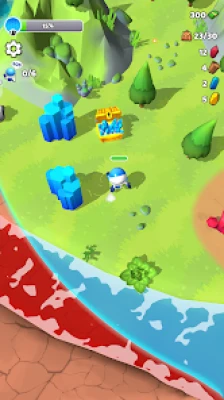
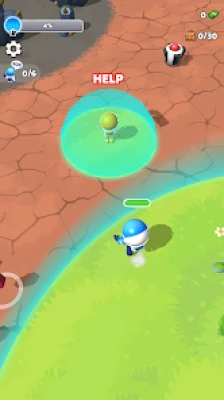
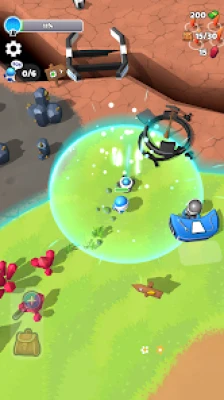
The game mixes peaceful resource collection with danger. Along the way, you encounter hostile imposters, rescue stranded astronauts, discover new areas, and improve both your character and machinery. The result is a casual sci-fi experience that sits somewhere between resource management, exploration, survival, and action.
What Is Life Bubble – My Little Planet?
Life Bubble puts you in control of a space explorer responsible for developing and protecting small planetary environments.
The central idea is simple: explore, collect, upgrade, expand, and protect your world.
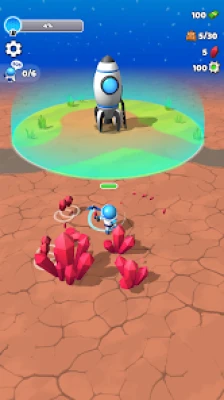
You move around miniature planets searching for useful materials such as minerals and crystals. These resources can then be used to improve your character, equipment, and planet-related progression.
The game also introduces rescue missions and enemies, preventing the experience from becoming purely a resource-collection simulator.
Ristretto Studios identifies Life Bubble as one of its major games, while Homa lists it among its games developed with Ristretto Studio.
Game Information
Game: Life Bubble – My Little Planet
Package: com.ristretto.lifebubble
Developer: Ristretto Studios
Publisher: Homa
Genre: Simulation, Strategy, Adventure, Casual
Core Gameplay: Exploration, resource collection, planet development and combat
Main Mode: Single-player
Platforms: Android, iPhone, iPad and Nintendo Switch
Setting: Sci-fi / futuristic
Main Objective: Explore miniature planets and develop their resources
Secondary Objectives: Rescue astronauts, fight enemies and complete missions
Progression: Character upgrades, machine upgrades and planet expansion
Monetization: Free-to-play on mobile with advertising and in-app purchases
The Android version originally launched in November 2022, followed by iOS and later Nintendo Switch.
The Main Gameplay Loop
Life Bubble revolves around a repeating but satisfying progression cycle:
Enter a miniature planet.
Explore the available area.
Locate valuable resources.
Collect minerals, crystals and other materials.
Expand your usable planetary area.
Upgrade your character and equipment.
Complete objectives and missions.
Fight hostile enemies when necessary.
Rescue stranded astronauts.
Move toward more challenging areas.
The game's resource-management foundation is combined with exploration and combat, giving you reasons to keep improving rather than simply collecting materials indefinitely.
Exploring Your Mini Planet
Exploration is one of the most important parts of Life Bubble.
Each miniature world contains areas that may initially be inaccessible or difficult to reach. Expanding your life bubble allows you to explore more of the environment and discover additional resources.
Do not think of the planet as simply a collection of random resources.
Instead, treat every area as an investment.
If expanding into a new section gives you access to better resources or an important mission objective, the expansion can pay for itself through future gathering.
Resource Collection
Resources are the foundation of progression.
The game focuses heavily on collecting materials from planets, including minerals, crystals and other valuable objects.
A common beginner mistake is collecting everything immediately without considering what the resource is going to accomplish.
A better approach is to think in terms of priorities:
Resource → Upgrade → Greater efficiency → More resources
The sooner you improve the equipment that directly affects gathering, the sooner future exploration becomes easier.
How to Collect Resources Efficiently
When entering a new area:
1. Identify the Valuable Resources
Look around before moving randomly.
2. Plan a Short Route
Collect nearby resources in a logical path instead of constantly crossing the same area.
3. Avoid Unnecessary Backtracking
Movement takes time, so group nearby collection targets together.
4. Upgrade Your Gathering Tools
Improved tools make future resource collection more efficient.
5. Expand With a Purpose
Do not expand simply because an area is available. Expand when the new territory provides useful resources or advances your objectives.
Planet Expansion Strategy
Expansion is one of the defining systems in Life Bubble.
The objective is not simply to make the bubble larger. You want to expand into areas that improve your ability to gather resources, complete missions, and progress through the world.
Best Expansion Rule
Expand toward value, not just toward empty space.
When choosing between two possible directions, favor the area that provides:
Better resources
Important mission objectives
New exploration opportunities
Access to useful materials
A route toward the next progression objective
This keeps your development efficient.
Character Upgrades
Life Bubble includes several character upgrade categories, including improvements related to the player's bag, movement speed, life, tools and power.
Each category solves a different problem.
Bag Upgrade
A larger bag lets you carry more resources before needing to return or manage your inventory.
This becomes increasingly valuable during longer exploration trips.
Speed Upgrade
Movement speed reduces the time spent traveling between resources, objectives and missions.
It is particularly useful once planets become larger.
Life Upgrade
Health improvements give you more room for error when dealing with enemies and dangerous situations.
Tool Upgrade
Better tools improve your resource-gathering efficiency.
Power Upgrade
Power improvements are useful when hostile enemies become more difficult to defeat.
Which Upgrades Should You Prioritize?
There is no single upgrade that is perfect for every player, but a practical progression order is:
Tools → Bag → Speed → Power → Life
This is a flexible recommendation rather than a strict rule.
If you are struggling to defeat enemies, move Power higher.
If you frequently run out of carrying capacity, prioritize Bag.
If traveling becomes the main source of wasted time, Speed becomes more valuable.
The best upgrade is the one removing your current bottleneck.
Machine Upgrades
Your character is not the only thing that can be improved.
Life Bubble also includes upgrades for the machine used during resource collection and planetary development. Nintendo's official description specifically identifies machine upgrades that increase storage capacity.
Machine upgrades are important because increased capacity means fewer interruptions during resource-gathering runs.
This creates a simple efficiency advantage:
More storage → longer collection trips → fewer interruptions → faster progression.
Rescue Missions
Rescue missions add another objective beyond collecting resources.
The game includes missions where you must save lost astronauts while continuing your planetary adventure.
When beginning a rescue mission, do not become distracted by every resource around you.
Complete the mission objective first if it is time-sensitive or dangerous.
You can return to resource collection afterward when the immediate objective is complete.
How to Approach Rescue Missions
Before the Mission
Upgrade your equipment if necessary.
Make sure you have enough carrying capacity.
Know where the objective is located.
Consider nearby enemies.
During the Mission
Move directly toward the objective.
Avoid unnecessary detours.
Deal with enemies blocking your route.
Collect valuable resources only when they do not compromise the mission.
After the Rescue
Use the opportunity to explore nearby areas that you previously could not safely reach.
Fighting Hostile Imposters
Life Bubble is not purely a peaceful resource game.
Hostile imposters and other enemies can interfere with your exploration, making combat an important part of progression. The official game description specifically highlights fighting enemies with your power weapon.
The most important combat principle is:
Do not fight unnecessarily when your objective is exploration.
If an enemy is blocking an important resource or mission route, eliminate it.
If an enemy can be safely avoided, conserving time and health may be preferable.
Combat Strategy
When facing enemies:
Identify the threat.
Maintain enough distance to react.
Use your power weapon efficiently.
Avoid wandering into additional enemy groups.
Complete the objective.
Return to resource gathering afterward.
The goal is efficient combat rather than fighting every enemy you encounter.
How to Protect Your Life Bubble
The life bubble represents your ability to operate in otherwise hostile planetary environments.
When exploring unfamiliar areas, avoid pushing too far beyond your comfortable range without a reason.
A good exploration cycle is:
Explore → Gather → Upgrade → Explore farther
This gradually increases your capabilities without forcing you to take unnecessary risks.
Best Early-Game Strategy
During the beginning of the game, concentrate on understanding the resource and upgrade systems.
Early Priorities
Learn the movement controls.
Collect nearby resources.
Upgrade your gathering tools.
Increase carrying capacity when necessary.
Expand the bubble gradually.
Complete early missions.
Learn enemy behavior.
Save larger upgrades for meaningful progression points.
Do not worry about making your planet perfect immediately.
Early progression is about establishing an efficient foundation.
Mid-Game Strategy
Once you have stronger equipment, efficiency becomes more important.
At this point:
Plan resource routes.
Expand toward valuable areas.
Upgrade storage.
Improve movement speed.
Complete rescue missions efficiently.
Avoid unnecessary combat.
Keep your offensive equipment strong enough to handle mandatory encounters.
The larger your accessible planet becomes, the more important route planning becomes.
Late-Game Strategy
Later progression is primarily about maximizing efficiency.
Instead of simply collecting whatever is closest, look for high-value areas and objectives.
Use your improved storage to make longer resource runs worthwhile.
At the same time, continue improving your combat capability so that enemies do not become a bottleneck.
Your late-game mindset should be:
Spend resources to increase future resource efficiency.
Efficient Resource Route
A good resource route should minimize unnecessary movement.
Try to organize your exploration like this:
Base/starting area → nearby resources → secondary resource cluster → mission objective → distant resource cluster → return
Avoid repeatedly traveling between two distant points.
If an upgrade increases your carrying capacity, use that advantage by making longer, more productive trips.
How to Spend Resources Wisely
Before spending a large amount of resources, ask:
Will this upgrade help me collect resources faster, carry more, move faster, survive longer, or defeat enemies more efficiently?
If the answer is yes, it is probably a productive investment.
If an upgrade provides little immediate benefit, consider saving until you can make a more meaningful improvement.
Common Mistakes
Collecting Without a Plan
Random gathering wastes movement time.
Expanding Everywhere
A larger bubble is not automatically a better bubble.
Ignoring Storage
Small carrying capacity can turn resource gathering into constant backtracking.
Neglecting Tools
Better gathering equipment improves almost every future collection run.
Fighting Every Enemy
Combat should support progression rather than consume all your time.
Ignoring Missions
Mission objectives often provide progression opportunities that ordinary resource collection does not.
Upgrading Only Combat
A powerful weapon is useful, but gathering, storage and movement upgrades can have a much larger effect on long-term efficiency.
Beginner Tips
Explore systematically.
Collect resource clusters together.
Upgrade tools early.
Increase bag capacity when inventory becomes a problem.
Use speed upgrades to reduce travel time.
Do not fight enemies unnecessarily.
Complete rescue missions efficiently.
Expand toward valuable areas.
Keep enough power to deal with unavoidable enemies.
Think about what each upgrade will help you accomplish next.
Advanced Tips
Use Storage to Your Advantage
Once your carrying capacity is high, make longer collection runs.
Plan Before Expanding
Look at the area around you before deciding where to go next.
Upgrade Your Weakest Link
If gathering is slow, upgrade tools.
If travel is slow, upgrade speed.
If inventory fills too quickly, upgrade the bag.
If enemies are stopping progression, improve power or health.
Separate Exploration From Combat
Do not turn every resource-gathering trip into a combat expedition.
Use Missions as Progression Checkpoints
Missions can help give structure to your exploration. Complete them when they align with your current route rather than constantly abandoning resource collection to chase distant objectives.
Atmosphere and World Design
Life Bubble has a distinctive miniature-planet concept.
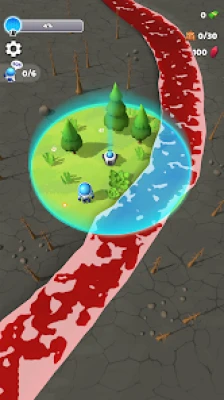
Instead of exploring a conventional large open world, you move through small spherical environments surrounded by a protective life bubble.
The result is a colorful sci-fi setting that combines resource gathering with a sense of building and maintaining your own tiny universe.
Ristretto describes the game among its latest titles, while Nintendo's official description emphasizes the space-adventure, planet-expansion and resource-gathering aspects.
Graphics and Presentation
The visual identity is centered around miniature planets, colorful resources and a futuristic space-adventure theme.
The game's diagonal-down presentation makes the planet easy to navigate while giving you a clear view of nearby resources and objectives.
Its presentation is much more playful than a traditional survival game, making it suitable for players who prefer lighthearted exploration over serious sci-fi survival.
Controls
Life Bubble uses direct character control designed for mobile play.
The main activities are:
Moving around the planet
Collecting resources
Operating tools
Fighting enemies
Expanding accessible territory
Completing missions
The Nintendo Switch version also supports touch-screen functionality.
Game Modes and Platforms
Life Bubble is primarily a single-player experience.
The game was released on Android in 2022 and subsequently on iPhone and iPad. A Nintendo Switch version followed in 2024.
The Nintendo Switch release is classified across adventure and strategy categories and supports a single player.
Updates and Current Version
The Android game continues to receive updates. App-tracking information currently lists version 69.0.1, with an update reported in September 2026 and more than 10 million Google Play downloads.
The exact version and availability can vary by device and storefront.
Ads and In-App Purchases
The mobile version contains advertisements and in-app purchases.
The iOS listing, for example, includes purchases covering items such as resource chests, upgrades, subscriptions and an option related to removing ads.
Advertising is one of the recurring criticisms visible in player feedback. Some players enjoy the game itself but find the frequency or handling of advertisements frustrating.
Player Feedback
Life Bubble has built a substantial audience, with current third-party tracking showing more than 10 million Android downloads and a rating around 4.26 from tens of thousands of ratings.
The strongest appeal is the combination of:
Miniature planet exploration
Resource gathering
Upgrades
Rescue missions
Light combat
Planet expansion
The main criticisms concern advertising and some progression or convenience issues.
Overall, the reception suggests that the core gameplay concept is appealing, even though monetization can affect the experience for some players.
Pros and Cons
Pros
Creative miniature-planet concept
Resource gathering and exploration
Planet expansion
Character progression
Multiple upgrade categories
Rescue missions
Enemy combat
Machine upgrades
Colorful sci-fi atmosphere
Easy-to-understand gameplay
Available across mobile and Nintendo Switch
Cons
Advertising can interrupt the experience
Progression can become repetitive
Resource collection involves considerable movement
Some upgrades can feel grind-heavy
Combat is relatively simple
Players looking for deep strategy may want more complex systems
Is Life Bubble – My Little Planet Worth Playing?
Life Bubble is a good choice for players who enjoy a combination of exploration, resource management and casual action.
Its miniature-planet concept gives it an identity that separates it from conventional farming or resource-management games. You are not simply gathering materials—you are expanding a tiny world, improving your equipment, rescuing astronauts and defending yourself against hostile threats.
The game is especially enjoyable when approached as a gradual progression experience.
If you prefer fast competitive matches or deep strategy, Life Bubble may feel too relaxed. But if you like collecting resources, upgrading equipment and gradually opening up new areas, the game offers a satisfying gameplay loop.
Final Verdict
Life Bubble – My Little Planet is a charming sci-fi resource-management adventure built around miniature worlds.
Its strongest feature is the way several simple systems work together:
Explore → Gather → Upgrade → Expand → Rescue → Fight → Explore farther
The best strategy is to focus on efficiency rather than collecting everything immediately. Upgrade the tools that remove your current bottleneck, expand toward valuable areas, improve storage when necessary, and only fight enemies when combat actually helps your objective.
For players who enjoy casual exploration, resource collection and planet-building mechanics, Life Bubble offers a distinctive and approachable experience.
Frequently Asked Questions
What is Life Bubble – My Little Planet?
Life Bubble is a sci-fi resource-management and exploration game where players develop miniature planets, collect resources, complete missions and fight hostile enemies.
Who developed Life Bubble?
Life Bubble was developed by Ristretto Studios and published in collaboration with Homa.
What is the main objective?
The main objective is to explore planets, collect resources, expand your accessible world, improve your equipment and complete missions.
Can you build or expand your planet?
Yes. Planet expansion is a major part of the game's progression.
What resources can you collect?
The game features valuable planetary materials including minerals and crystals.
Can you rescue astronauts?
Yes. Rescue missions are one of the game's major objectives.
Are there enemies?
Yes. Hostile imposters and other enemies can attack or interfere with your exploration.
Can you upgrade your character?
Yes. Character improvements include areas such as bag capacity, movement speed, life, tools and power.
Can you upgrade your machine?
Yes. Machine upgrades can increase its storage capacity.
Is Life Bubble multiplayer?
No. It is primarily a single-player experience.
Is Life Bubble available on Nintendo Switch?
Yes. Nintendo released Life Bubble on Switch in 2024, with single-player support and touch-screen functionality.
Does Life Bubble contain ads?
Yes. The mobile version contains advertising, and the iOS listing also shows in-app purchases.
Is Life Bubble free to play?
The mobile version is free to download and uses advertising and optional purchases.
What is the best upgrade to buy first?
For most players, tool upgrades are a strong early priority because they improve the efficiency of future resource gathering. However, bag, speed, life and power upgrades should move up the priority list when they address your current weakness.
How can I progress faster?
Focus on resource clusters, upgrade your gathering efficiency, expand toward valuable areas, increase storage when necessary, and avoid wasting time on unnecessary combat.
Rate the Game
User Reviews











Popular Games



















 Android
 iOS
 Windows
 Xbox