





Latest Version
January 31, 2025
Riot Games
Strategy
iOS
0
Report a Problem
More About :game
The game features the single-player roguelite adventure Path of Champions, where every run offers new cards, powers, and relics to develop a champion's strength. With a large roster of characters, challenging encounters, and competitive card-battling gameplay, Legends of Runeterra offers a deep experience for fans of strategy games and collectible card games.
Game Overview
Legends of Runeterra brings the world of Runeterra to life through tactical card battles. Developed by Riot Games, the game features familiar champions and characters from the League of Legends universe, including Jinx, Vi, Ashe, Teemo, Heimerdinger, Warwick, Caitlyn, and many others.
Rather than depending entirely on luck, the game rewards players who understand their cards, manage resources carefully, and anticipate their opponents' decisions. Every match involves choices about when to attack, when to defend, which spells to play, and how to protect important units.
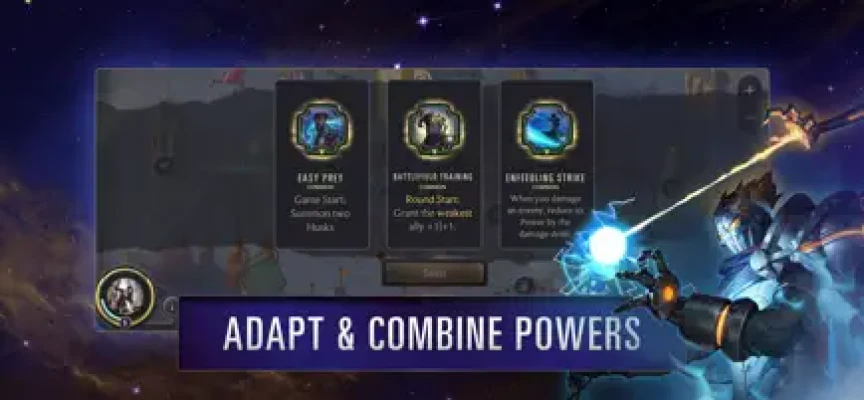
The experience combines strategic card battles with a substantial single-player adventure. Path of Champions is a roguelite mode in which players select a champion and travel through encounters across Runeterra. During each adventure, you can collect new cards, discover powerful temporary abilities, equip relics, and improve your champion.
The game also features champion progression through levels, Star Powers, and Constellations. These systems allow players to strengthen their favorite characters and experiment with different strategies.
For players who enjoy competitive card games, Legends of Runeterra offers a ranked card-battling experience alongside its single-player content. Whether you prefer building decks, defeating computer-controlled enemies, or developing a champion through repeated adventures, the game provides several ways to explore its strategic world.
Main Features of Legends of Runeterra
Champions From the League of Legends Universe
The game features a large collection of recognizable champions from Runeterra. Each champion has individual abilities, card interactions, and strategic possibilities. Choosing the right champion is an important part of developing a successful deck or adventure strategy.
Strategic Card Battles
Legends of Runeterra focuses on thoughtful decisions rather than simply playing the strongest available card. Players must manage mana, understand card effects, protect valuable units, and identify the right moment to attack.
Path of Champions Roguelite Adventure
Path of Champions is a major single-player experience. Players select a champion and progress through a series of encounters, gaining cards, powers, and rewards along the way.
World Adventures
World Adventures allow players to take different champions through challenging encounters across Runeterra. Difficulty increases as you progress, making preparation and adaptation essential.
Weekly Nightmares
Weekly Nightmares provide demanding encounters designed to test champion development and strategic decision-making. These challenges offer another objective for experienced players.
Champion Levels and Star Powers
Champions can become stronger through progression. Champion levels improve their adventure decks, while Star Powers provide permanent enhancements that influence how each champion performs.
Constellations
The Constellation system offers additional champion progression and unlockable powers. Developing a champion's Constellation can open new strategic possibilities and make difficult adventures more manageable.
Cards, Powers, and Relics
Every Path of Champions run can develop in a different direction. Players collect additional cards, choose powers, and equip relics to create combinations that suit their selected champion.
Competitive Card Battling
The game also offers a ranked card-battling experience for players who enjoy testing their deck-building skills against other competitors.
Rich Runeterra Universe
Legends of Runeterra features characters, locations, and stories connected to League of Legends and Arcane. Its detailed card artwork and recognizable champions make the game particularly appealing to fans of the universe.
Understanding the Core Gameplay Mechanics
Cards and Decks
Cards are the foundation of every battle in Legends of Runeterra. Your deck contains different types of cards that serve different purposes.
Followers are units that fight on the battlefield. Champions are powerful characters with distinctive abilities and level-up conditions. Spells create effects that can damage enemies, protect allies, control the battlefield, or support your strategy. Other card types, including landmarks and equipment, introduce additional tactical possibilities.
A successful deck should have a clear purpose. Some decks focus on applying early pressure, while others build toward powerful combinations that become effective later in a match.
Avoid adding cards simply because they look powerful. Every card should contribute to the overall strategy.
Mana Management
Mana determines which cards you can play during a round. Managing it carefully is one of the most important skills in the game.
Playing a card immediately is not always the best decision. Sometimes saving mana allows you to respond to an opponent's action or prepare a stronger combination during a later exchange.
Legends of Runeterra also has spell mana, which allows certain unused mana to be carried forward for spell casting, subject to the game's rules and storage limit.
Understanding the difference between regular mana and spell mana helps you plan more efficiently and avoid wasting valuable resources.
Attack and Defense Rounds
Combat revolves around alternating opportunities to attack and defend.
When you have the attack token, you can initiate combat by committing units to attack. Your opponent can respond with defenders and other available actions. When defending, you must decide which units should block and which threats may be better handled through spells or other effects.
Do not attack automatically whenever the opportunity appears. Consider the units you might lose and whether the attack advances your overall plan.
Fast and Slow Spells
Spell timing is an essential part of strategic play.
Different spell speeds determine when a card can be played and whether the opponent can respond before its effect resolves. Fast spells can be used during more combat situations, while slow spells generally require an open action window.
Understanding these distinctions helps you avoid timing mistakes and plan combinations more effectively.
Champion Level-Ups
Champions are among the most important cards in the game. Many have special conditions that must be fulfilled before they level up.
These conditions vary. A champion may need to see certain actions, survive specific situations, or meet a particular gameplay requirement.
Always read the champion's level-up text before building your strategy around it. A deck that supports the champion's condition will usually perform more consistently than one that relies on the champion without providing the necessary support.
Path of Champions: The Main Single-Player Adventure
Path of Champions is a roguelite mode in which you select a champion and travel through a series of encounters. It combines tactical card battles with progression and randomized choices.
Each run gives you opportunities to strengthen your deck and create new combinations. You may discover cards, select powers, equip relics, and encounter different challenges as you advance.
The mode is designed around experimentation. A champion can develop in different ways depending on the rewards and choices available during a run.
Starting an Adventure
After completing the introductory tutorial, you can access Path of Champions and its World Map.
The map acts as your central hub. From there, you can choose champions, explore available adventures, and access progression features.
New players should begin with accessible encounters and learn how the adventure system works before attempting the most difficult challenges.
Champion Selection
Each champion has a distinct play style. Some focus on aggressive attacks, while others use spells, defensive tools, special units, or complex combinations.
Jinx, for example, is associated with a fast and aggressive approach. Teemo uses traps to create pressure over time, while Heimerdinger rewards players who build around spell-based strategies and supporting units.
Choose a champion whose mechanics you understand and whose strategy matches the way you enjoy playing.
Collecting Cards During Runs
As you progress through an adventure, you can add cards to your deck.
Every new card should be evaluated according to the strategy you are developing. A powerful card is not automatically useful if it does not support your champion or existing combinations.
Try to maintain a balanced deck that can handle different situations rather than filling it with expensive cards that are difficult to play.
Choosing Powers
Powers can significantly influence the direction of a Path of Champions run.
Some provide additional resources, while others strengthen units, improve spells, or create special interactions. The best choice depends on your champion and the cards you expect to use.
Look for powers that reinforce your main strategy. A combination of compatible effects can become much stronger than several unrelated bonuses.
Equipping Relics
Relics provide additional benefits to champions in Path of Champions.
Different relics support different play styles. Some improve a champion's combat potential, while others help generate resources or strengthen particular strategies.
Experiment with available relic combinations and consider what your champion needs most. A relic that supports an existing strength can make a familiar strategy more effective, while one that compensates for a weakness can create a more balanced approach.
Champion Progression and Star Powers
Champions gain experience as you play Path of Champions. Increasing their levels improves their adventure progression.
Star Powers provide permanent enhancements that can change how a champion performs. These upgrades are unlocked through champion progression resources and can make future runs more powerful.
Constellations provide additional long-term development. Completing more of a champion's progression can unlock stronger abilities and new strategic options.
Complete Strategy Guide
Getting Started as a New Player
New players should begin by completing the tutorials and learning the basic rules of card combat.
Pay close attention to mana, attack opportunities, blocking, spell timing, and champion abilities. These mechanics form the foundation of almost every important decision.
Do not worry about mastering every keyword immediately. Focus on understanding the cards you use and the effects that influence the current battle.
Path of Champions is a useful place to develop your skills because it allows you to experience the card system through structured single-player encounters.
Build a Deck With a Clear Strategy
A strong deck should have a recognizable game plan.
Before adding cards, decide how you want to win. You might aim to overwhelm the opponent with inexpensive units, control the battlefield through spells, build a combination around a champion, or survive until a powerful late-game strategy becomes available.
Choose cards that support that plan.
Avoid including too many unrelated effects. A deck with several different ideas may struggle to execute any of them consistently.
Understand Your Champion's Strengths
Every champion has a particular role and set of abilities.
Some champions become stronger through repeated attacks, while others depend on spells, summoned units, damage, or special interactions.
Read the champion's text carefully and identify what it needs to level up. Then build your deck around fulfilling that condition.
Your champion should be an important part of the strategy, not simply a powerful card that happens to be included in the deck.
Manage Mana Efficiently
Mana management separates experienced players from beginners.
Avoid spending all your mana simply because it is available. Consider whether a card is necessary at the current moment or whether saving resources gives you more options later.
Spell mana is particularly useful when planning future turns. If you expect to need an important spell, preserving available resources can make a significant difference.
Try to avoid situations where you have a hand full of powerful cards but insufficient mana to play them effectively.
Learn When to Attack
Attacking is not always the correct decision.
Before committing your units, consider the opponent's possible blocks and available spells. Think about whether you can protect your most valuable units and whether the attack is likely to deal meaningful damage.
Sometimes a small attack is useful because it forces the opponent to respond. In other situations, waiting can preserve your strongest units for a more favorable opportunity.
The best attack is one that supports your overall plan.
Defend With a Purpose
Blocking decisions can determine the outcome of a match.
Do not automatically block every attacking unit. Consider the value of your defenders, the amount of damage you would take, and whether losing a unit would weaken your future turns.
Protect important champions whenever possible, but remember that some damage may be acceptable if preserving your board creates a stronger opportunity later.
Learn to distinguish between a threat that must be stopped and one that can be allowed through.
Understand Card Keywords
Card keywords describe special abilities and effects. Learning them is essential for understanding interactions.
Some keywords improve combat performance, while others provide protection, movement, additional damage, or special effects when units attack or survive.
When you encounter an unfamiliar keyword, inspect the card's description. Understanding exactly what an ability does can prevent costly mistakes.
Never assume that two similar-looking effects work in the same way.
Use Spells at the Right Moment
Spells can change the outcome of a battle, but their timing is important.
A damage spell may remove an enemy before it attacks. A protection spell may save an important champion. A combat trick may turn an unfavorable exchange into a winning one.
Avoid using valuable spells without considering the opponent's possible response.
Try to identify the moment when a spell creates the greatest advantage. Sometimes waiting for the opponent to commit resources gives you a better opportunity.
Protect Your Important Units
Champions and key followers often provide the foundation of your strategy.
If an important unit is removed too early, your deck may struggle to execute its plan. Use available defensive tools carefully and avoid unnecessary exchanges.
At the same time, do not spend every resource protecting one unit if doing so leaves the rest of your board vulnerable.
A balanced approach is usually more effective than committing everything to a single card.
Develop a Consistent Path of Champions Strategy
Path of Champions requires a different approach from traditional deck-building because your deck changes during an adventure.
At the beginning of a run, focus on the champion's basic strategy. As you collect new cards and powers, look for combinations that strengthen it.
Do not choose rewards only because they have impressive individual effects. Consider how they interact with your existing deck.
A smaller number of compatible effects can produce a more reliable strategy than a collection of powerful but unrelated cards.
Choose Powers That Work Together
Powers can shape the entire direction of an adventure.
When selecting a power, consider its effect on your champion, your units, and your available cards.
For example, a power that improves summoned units may be valuable for a deck that creates many followers. A spell-focused champion may benefit more from effects that improve spell usage or generate additional resources.
Look for combinations that reinforce one another instead of selecting bonuses randomly.
Select Relics Carefully
Relics should support the champion you are using.
Consider whether your champion needs better survivability, additional damage, more consistent card access, or stronger interactions.
Try different combinations and evaluate their performance over several adventures. Some relics may be particularly effective in one encounter but less useful in another.
As your champion develops, revisit your equipment choices. A combination that worked at an early level may not be the most effective option for a more advanced challenge.
Prepare for Difficult Boss Encounters
World Adventures and Weekly Nightmares include increasingly demanding opponents.
Before entering a difficult encounter, think about the threats the enemy strategy may create. Consider whether your deck can handle aggressive units, repeated damage, or powerful late-game effects.
During the battle, prioritize the enemy abilities that threaten your game plan most directly.
Do not waste valuable resources on minor threats if a more dangerous opponent is preparing a powerful combination.
Improve Through Repeated Adventures
Failure is part of the roguelite experience.
When an adventure ends, think about what caused the problem. Perhaps your deck lacked defensive options, your champion was not developed enough, or your selected powers did not support one another.
Use that information when preparing your next run.
Repeated attempts allow you to understand encounter patterns, improve champion progression, and make better decisions about rewards.
Build a Strong Competitive Card-Battling Strategy
For players interested in ranked card battles, deck consistency and matchup knowledge are especially important.
Start with a clear archetype and learn its strengths and weaknesses. Understand which cards are essential, which can be replaced, and how your strategy changes against different opponents.
Do not copy a deck without learning how it works. Knowing the purpose of every card helps you make better decisions when the match develops differently from your expectations.
Review your losses and identify whether the problem came from deck construction, resource management, or individual decisions.
Advanced Tips and Tricks
Read Every Card Carefully
Card descriptions contain important details about abilities, timing, and special conditions. Understanding them can prevent mistakes and reveal useful combinations.
Plan More Than One Turn Ahead
Think about the resources and cards you will need in future rounds. Planning ahead makes it easier to preserve mana and prepare important combinations.
Do Not Spend Mana Automatically
Unused mana can sometimes be more valuable than playing a card without a clear purpose. Consider what your opponent might do before committing your resources.
Protect Champions Strategically
Champions can be central to your deck's strategy. Protect them when necessary, but avoid spending every resource on keeping one unit alive.
Build Around Champion Level-Up Conditions
Understand what your champion needs to level up and include cards that support that objective.
Choose Compatible Path of Champions Rewards
Look for powers and cards that reinforce your current strategy. Avoid selecting bonuses simply because they appear powerful.
Experiment With Relics
Different relic combinations can change how a champion performs. Test several options and identify which ones complement the character's abilities.
Learn From Difficult Encounters
If a boss repeatedly defeats you, examine its strategy and adjust your deck, champion development, or relic choices.
Keep Your Deck Focused
Too many unrelated cards can make it difficult to draw the pieces you need. Maintain a clear plan and prioritize useful combinations.
Understand When to Pass
Passing can be a strategic decision. It may encourage an opponent to spend resources first or allow you to preserve options for a more favorable exchange.
Explore Different Champions
Playing different champions exposes you to new mechanics and strategies. This also improves your understanding of how different decks operate.
Take Advantage of Progression
Champion levels, Star Powers, and Constellations provide long-term benefits. Continue developing your preferred champions to prepare for more difficult adventures.
Common Mistakes to Avoid
Playing Every Card Immediately
Spending all your mana as soon as possible can leave you without resources to respond to your opponent. Consider the value of saving mana for future actions.
Ignoring Spell Timing
Different spell speeds affect when cards can be played and how opponents can respond. Learn these rules before relying on a particular combination.
Building an Unfocused Deck
Including too many unrelated cards can weaken consistency. Choose a central strategy and make sure your cards support it.
Attacking Without Considering Blocks
An attack can be harmful if it allows the opponent to remove valuable units without losing anything important. Evaluate possible combat outcomes before committing.
Blocking Every Enemy
Taking some damage can be better than sacrificing an important unit. Consider the long-term value of your board before choosing defenders.
Ignoring Champion Level-Up Conditions
A champion may be powerful, but its full potential often depends on fulfilling a specific condition. Build your deck to support that requirement.
Selecting Random Adventure Rewards
Powerful-looking cards and abilities are not always useful together. Choose rewards that improve your existing strategy.
Neglecting Champion Progression
Higher champion levels, Star Powers, and Constellations can make difficult encounters more manageable. Develop your favorite champions over time.
Champions and Play Styles
Legends of Runeterra features a large roster of champions, each offering a distinctive approach to strategy.
Jinx
Jinx is associated with fast, aggressive gameplay and effects that reward active use of cards. Her style suits players who enjoy applying pressure and creating explosive turns.
Ashe
Ashe focuses on controlling combat through freezing effects and limiting enemy attacks. Her strategy rewards careful planning and effective battlefield management.
Teemo
Teemo is known for planting traps that create pressure over time. His play style encourages patience and a strategy built around accumulating effects.
Heimerdinger
Heimerdinger rewards players who use spells to generate additional value. His strategy focuses on combining spell usage with powerful supporting units.
Vi
Vi offers a different approach centered on combat strength and building toward powerful attacks. Understanding how to support her abilities is important when developing a deck around her.
Warwick
Warwick brings a distinctive champion strategy to the game's newer content. Players can explore his abilities and supporting cards through the available adventures.
These examples demonstrate why champion selection matters. Every character can encourage a different way of approaching card battles.
Regions and Deck-Building
The world of Runeterra is divided into regions, each associated with distinctive champions, followers, and gameplay mechanics.
Regions help define the identity of a deck. Some emphasize aggressive combat, others focus on control, spells, defensive effects, or complex combinations.
When building a deck, consider how the regions complement each other. Combining compatible mechanics can create powerful strategies, while choosing regions without a clear connection may make your deck less consistent.
Pay attention to the region restrictions and deck-building rules that apply to the selected game mode.
Rewards and Long-Term Progression
Legends of Runeterra includes several progression systems that encourage regular play.
Path of Champions rewards players with champion experience and resources for developing their characters. Champion Fragments help unlock and advance champions, while other progression rewards support long-term improvement.
Champion levels, Star Powers, and Constellations provide increasingly powerful development options.
Relics add another layer of customization by allowing players to equip champions with additional effects.
The most effective long-term approach is to concentrate on a few favorite champions first. Developing several characters at once can spread resources too thin, while focusing on a smaller group helps you build a reliable selection for different adventures.
Graphics, Sound, and Presentation
Legends of Runeterra features detailed card artwork inspired by the League of Legends universe. Champions, followers, spells, and locations are presented with distinctive illustrations that bring the world of Runeterra to life.
The visual design makes individual cards recognizable and gives each region its own identity. Familiar characters from League of Legends and Arcane add another layer of appeal for players who already enjoy the franchise.
Animations and visual effects help communicate important card interactions during battles. The overall presentation supports the strategic nature of the game without taking attention away from decision-making.
Is Legends of Runeterra Free to Play?
Legends of Runeterra is available as a free download on the Apple App Store and includes optional in-app purchases.
The game offers purchasable currency and other store content. Players can explore its card battles and Path of Champions adventure without treating optional purchases as a requirement for learning the mechanics.
Its progression systems provide several ways to develop champions and improve your available strategies through gameplay.
Who Should Play Legends of Runeterra?
Legends of Runeterra is a strong choice for players who enjoy thoughtful strategy, collectible cards, and fantasy adventures.
It may appeal to:
Fans of League of Legends and Arcane.
Players who enjoy collectible card games.
Strategy fans who like planning several moves ahead.
People who enjoy single-player roguelite adventures.
Players interested in champion progression and character collection.
Fans of deck-building and tactical combat.
Players who enjoy experimenting with different powers and relic combinations.
Competitive card-game fans who enjoy ranked battles.
Anyone interested in exploring the world and characters of Runeterra.
Frequently Asked Questions
What is Legends of Runeterra?
Legends of Runeterra is a free-to-play strategy card game developed by Riot Games. It features champions and characters from the League of Legends universe and combines strategic card battles with a single-player roguelite adventure.
Who developed Legends of Runeterra?
The game was developed and published by Riot Games.
What is Path of Champions?
Path of Champions is a single-player roguelite mode in which players choose a champion and progress through a series of encounters. During each run, they can collect cards, choose powers, equip relics, and strengthen their strategy.
Is Legends of Runeterra a single-player game?
It includes a substantial single-player experience through Path of Champions, along with competitive card-battling gameplay.
How many champions are available?
The roster includes more than 65 champions according to the current App Store description. The available selection can change as new content is introduced.
How do you unlock champions in Path of Champions?
Champion Fragments and other progression resources are used to unlock and develop champions. The available progression systems also include champion levels, Star Powers, and Constellations.
What are Star Powers?
Star Powers are permanent champion enhancements that influence how a character performs in Path of Champions. They can unlock additional strategies and improve your chances in difficult encounters.
What are relics used for?
Relics provide additional effects when equipped to champions in Path of Champions. Choosing suitable relics can strengthen a champion's existing strategy or compensate for weaknesses.
What are World Adventures?
World Adventures are challenges on the Path of Champions map. Players select a champion and progress through encounters, earning experience and rewards along the way.
What are Weekly Nightmares?
Weekly Nightmares are difficult Path of Champions challenges designed to test champion development, deck choices, and strategic skills.
What is the best champion for beginners?
There is no single best champion for everyone. Jinx offers an accessible aggressive approach, while other champions introduce different mechanics. Beginners should choose a character whose abilities are easy to understand and practice.
Is Legends of Runeterra free on iPhone and iPad?
Yes. The game is free to download on compatible Apple devices and includes optional in-app purchases.
Is Legends of Runeterra connected to League of Legends?
Yes. The game takes place in the League of Legends universe and features its champions, regions, characters, and stories.
Final Verdict
Legends of Runeterra offers a deep strategy experience built around intelligent card play, memorable champions, and the rich world of Runeterra. Its combination of tactical battles and the Path of Champions roguelite adventure gives players different ways to enjoy the game.
The single-player experience stands out through its champion progression, evolving decks, powerful relics, Star Powers, and increasingly difficult encounters. Every run provides opportunities to experiment with new combinations and develop a stronger strategy.
Success depends on understanding your cards, managing mana carefully, recognizing the right moments to attack or defend, and building combinations that support your chosen champion.
Whether you are a League of Legends fan, a collectible card-game enthusiast, or a player who enjoys roguelite progression, Legends of Runeterra offers a rewarding strategic adventure filled with characters and challenges worth exploring.
Rate the Game
User Reviews












Popular Games



















 Android
 iOS
 Windows
 Xbox