



Latest Version
November 05, 2026
LAST ORIGIN STUDIO LIMITED
Strategy
iOS
0
Report a Problem
More About :game
What Is Last Shelter: War Z?
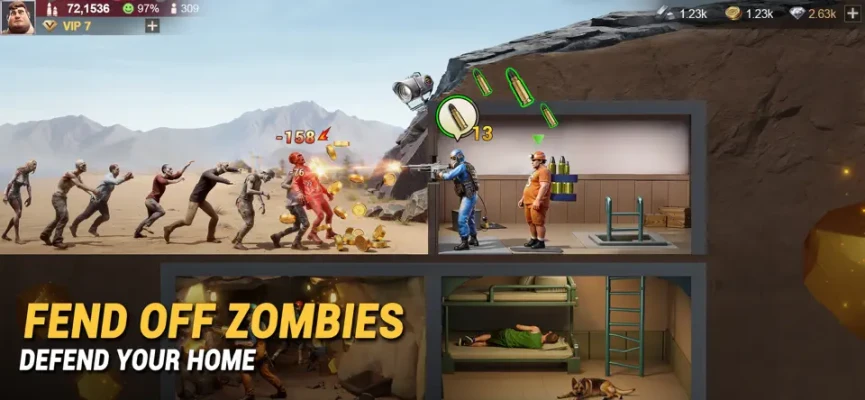
Last Shelter: War Z is a strategy game developed by LAST ORIGIN STUDIO LIMITED. It takes place in a world devastated by a zombie apocalypse, where the last groups of survivors must work together to rebuild civilization.
You play as a commander responsible for developing an underground shelter and leading a growing force against the dangers outside. Your base is more than a place to hide. It is the center of your operations, providing the power, research, weapons, and resources needed to survive.
As your shelter expands, you can send squads into unexplored tunnels and dangerous wastelands. These expeditions allow you to collect valuable supplies, discover lost technology, complete missions, and rescue other survivors.
Combat is another important part of the experience. You must assemble teams of heroes, develop their abilities, and choose suitable formations to defeat zombies, mutant bosses, and rival forces.
The game also includes multiplayer cooperation. Joining an alliance allows you to coordinate attacks, exchange resources, participate in large-scale wars, and compete with other groups.
Success requires more than building a powerful base. You must balance economic development, military strength, exploration, research, and cooperation.
Main Features of Last Shelter: War Z
Underground Fortress Building
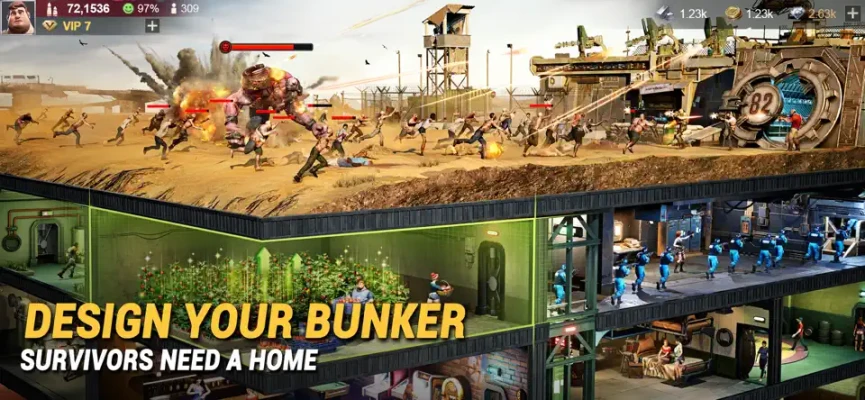
Your underground shelter is the foundation of your survival strategy. You can construct and upgrade different facilities to support your growing community and military operations.
Important buildings include power generators, research laboratories, and control centers. Each facility contributes to the development of your underground stronghold.
Upgrading buildings helps unlock additional capabilities and supports access to more advanced equipment and weapons.
Resource Collection and Exploration
The world outside the shelter is dangerous, but it contains valuable resources.
Send squads into unexplored tunnels and wasteland areas to search for supplies, lost technology, and survivors. Expeditions also provide opportunities to complete missions and discover new challenges.
Managing these resources carefully is essential because construction, research, and military development all require supplies.
Hero Recruitment and Development
Heroes are important members of your fighting force. Each character brings different abilities that can contribute to your overall combat strategy.
Recruit heroes, learn how their skills work, and develop teams that suit the challenges ahead.
A strong hero lineup can make a significant difference when facing difficult enemies or participating in competitive battles.
Zombie Combat
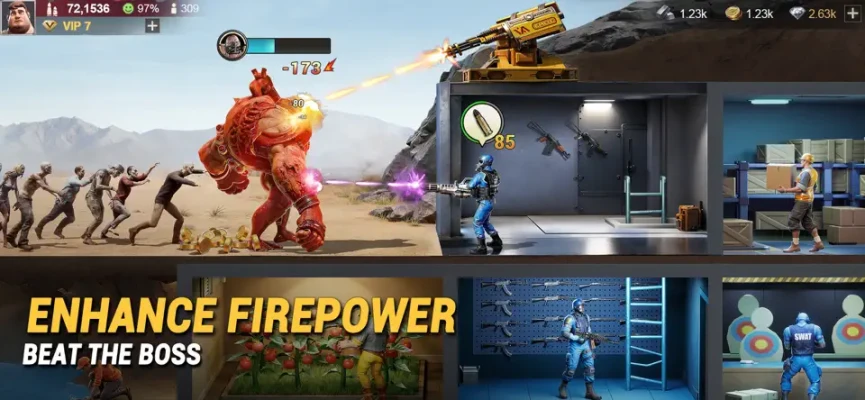
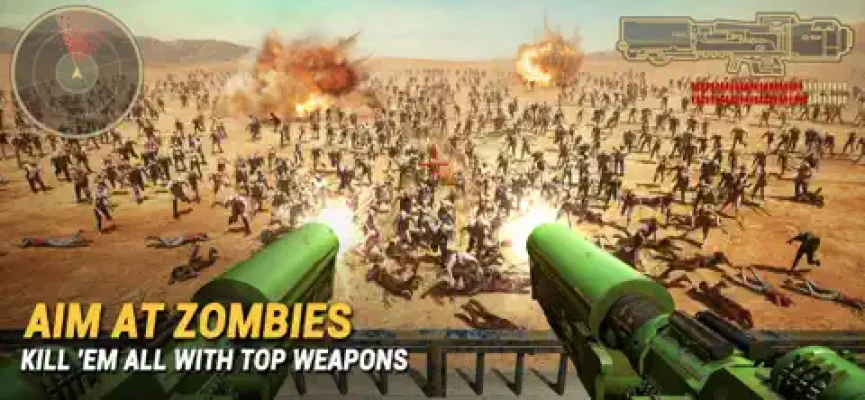
The apocalypse is filled with dangerous enemies. You must fight zombie swarms, powerful mutant bosses, and other hostile threats.
Combat involves selecting suitable heroes, organizing your formations, and using character abilities effectively.
Understanding your team's strengths is important when preparing for difficult encounters.
Base Defense and Tower Tactics
Your shelter can attract attacks from zombies and rival commanders. Building defensive structures is therefore an important part of survival.
Construct fortifications, place guard towers, and use traps to protect important areas. Radar detection also helps you identify incoming threats and prepare your defenses.
Research and Technology
Research laboratories help develop the technology needed to strengthen your shelter and military forces.
Technology improvements can support better facilities, stronger equipment, and more advanced weapons.
Research should be treated as a long-term investment because its benefits can improve several areas of your strategy.
Alliance Cooperation
Alliances allow commanders to work together rather than facing the wasteland alone.
Members can coordinate attacks, share resources, and participate in large-scale alliance wars. Cooperation is particularly important when facing stronger opponents or competing in major events.
Tactical Battles and Competitive Modes
The game offers different combat challenges, including player-versus-environment stages and competitive battles.
Its updates have also introduced and improved features such as 5v5 battles, Arena activities, alliance tournaments, and cross-server competitions.
These activities give players additional ways to test their heroes, formations, and overall development.
Gameplay Mechanics Explained
Shelter Management
Shelter management is the foundation of your progress. You must develop facilities, maintain the resources needed for upgrades, and make decisions about which buildings deserve attention first.
A well-organized base supports future expansion and makes it easier to maintain a strong military.
Resource Management
Resources are required for almost every important activity. Construction, research, troop training, and other development tasks compete for your available supplies.
This means you should avoid spending everything immediately. Keep enough resources available for essential upgrades and unexpected requirements.
Hero Formation
Your combat lineup determines how your heroes work together during battles.
Different heroes have different abilities, so the best formation depends on the enemies you are facing and the strengths of your available characters.
Experiment with combinations and observe which teams perform most effectively.
Troop Training
Troops provide additional military strength and support your combat operations.
Training soldiers regularly helps maintain your army, but it is important to balance troop production with the resources required for shelter development.
Exploration Missions
Expeditions allow you to send squads into dangerous areas beyond your shelter.
These missions are useful for collecting resources, discovering technology, and completing objectives. Before sending a squad, consider its strength and the difficulty of the mission.
Defensive Planning
Your base must be prepared for incoming attacks. Fortifications, traps, guard towers, and radar information all contribute to your defensive strategy.
A strong defense reduces the risk of losing important resources and helps protect your progress.
Alliance Warfare
Multiplayer warfare requires coordination. Members must communicate, organize attacks, and understand their shared objectives.
Individual strength is useful, but a well-organized alliance can accomplish much more than a group of players acting independently.
How to Play Last Shelter: War Z
Begin Your Survival Journey
Start by following the initial tutorial and learning how your underground shelter works. Pay attention to the basic construction, resource, and combat systems.
Develop Your Shelter
Construct essential facilities and begin upgrading them. Focus on buildings that support power, research, and your overall development.
Collect Resources
Gather available supplies and complete exploration activities. Resources are necessary for maintaining a steady development pace.
Recruit and Develop Heroes
Build a team of heroes and become familiar with their abilities. Try different combinations to understand which characters work well together.
Train Your Troops
Develop your military forces so you have enough soldiers for battles, defense, and other operations.
Explore the Wasteland
Send squads into unexplored areas to collect resources, discover technology, and complete missions.
Defend Your Underground Base
Construct defensive structures, use traps, and monitor radar information to prepare for potential attacks.
Join an Alliance
Find an active alliance and participate in cooperative activities. Communication and teamwork can make progression easier.
Continue Research and Expansion
Keep upgrading facilities, improving technology, and strengthening your army as new challenges become available.
Complete Last Shelter: War Z Strategy Guide
Prioritize Your Essential Buildings
One of the biggest early-game mistakes is upgrading buildings without considering their importance.
Your shelter needs a strong foundation before you invest heavily in optional development. Focus on facilities that support essential resources, power generation, research, and military operations.
Before starting an expensive upgrade, check what it unlocks and whether it contributes to your immediate objectives.
A useful approach is to prioritize improvements that remove development bottlenecks. If a facility is limiting your progress, upgrading it may be more valuable than improving a building that is not currently needed.
Maintain a Balanced Resource Supply
Resources are the foundation of your development. Running out of essential supplies can interrupt construction, research, and troop training.
Avoid spending everything as soon as it becomes available. Keep a reserve for important upgrades and planned military activities.
Check your current requirements before beginning several projects at once. This helps prevent situations where multiple facilities compete for the same limited resources.
Also make use of available collection opportunities and exploration missions.
Build a Strong Hero Team
Do not select heroes based only on appearance or rarity. Their abilities and how they work together are more important when building an effective lineup.
Study the skills of your available characters and identify combinations that support your preferred combat approach.
Try to create a balanced team rather than depending entirely on one powerful hero. A lineup with complementary abilities can be more useful across different encounters.
Upgrade Heroes With a Clear Plan
Hero development requires resources, so avoid spreading your investment too thinly.
Identify the characters you use most frequently and prioritize their development. Improving your main combat lineup can provide more immediate benefits than investing equally in every available hero.
Before using valuable upgrade materials, consider whether the hero will remain useful in your future formations.
Choose Formations for the Enemy
A formation that works well against one opponent may not be equally effective against another.
Observe enemy strengths and weaknesses, then adjust your lineup accordingly.
Pay attention to the results of previous battles. If your team struggles, consider changing its composition or improving the heroes involved instead of repeatedly using the same arrangement.
Keep Troop Training Consistent
Troops are an important part of your military strength. Allowing training to remain inactive for long periods can slow your overall development.
When resources are available, maintain a regular training schedule.
However, do not spend so much on troop production that you cannot afford essential building upgrades or research. A balanced military economy is more sustainable than producing soldiers without a plan.
Research Technologies Strategically
Research can provide long-term improvements, but not every technology deserves immediate attention.
Choose research that supports your current goals. If you are concentrating on shelter expansion, prioritize relevant economic and construction improvements. If combat is your main concern, focus on technologies that strengthen your military capabilities.
Check the requirements for future research before committing resources. Planning ahead can help avoid unnecessary delays.
Explore the Wasteland Regularly
Exploration is a valuable part of the survival experience.
Send squads on available missions to collect supplies, discover technology, and complete objectives. Do not ignore exploration simply because shelter development feels more urgent.
A successful expedition can provide resources that support several areas of your progression.
Before choosing a mission, consider the squad's strength and the possible risks. Avoid sending an unsuitable team into a challenge that is beyond its capabilities.
Use Radar Information
Radar helps you identify incoming threats and plan your response.
Make a habit of checking available radar information rather than waiting until an attack becomes an immediate problem.
Knowing what is approaching gives you more time to prepare defenses, coordinate with allies, and protect important parts of your shelter.
Strengthen Your Base Defenses
A strong shelter needs more than upgraded production buildings.
Use fortifications, traps, and guard towers to improve your protection against zombie waves and attacks from rival commanders.
Think carefully about defensive placement. Your goal is to make it difficult for enemies to reach important areas of your base.
Continue reviewing your defensive setup as your shelter grows and new threats become available.
Join an Active Alliance Early
An active alliance can provide valuable support throughout your progression.
Look for a group whose members communicate regularly and participate in cooperative activities.
Alliance membership can help you coordinate attacks, share resources, and take part in larger events. It also gives you access to players who may have useful experience and strategic advice.
Do not choose an alliance based only on its advertised power. Activity, organization, and communication are equally important.
Participate in Alliance Activities
Joining an alliance is only the beginning. Active participation helps you benefit from the group's collective strength.
Pay attention to alliance events, shared objectives, and scheduled battles. Coordinate your actions with other members rather than operating independently.
If your alliance organizes a group attack, follow its instructions and make sure your troops are prepared.
Prepare for Competitive Battles
Competitive modes require more than a high combat power number.
Review your hero lineup, understand your available abilities, and experiment with different formations.
Learn from both victories and defeats. A loss may reveal weaknesses in your lineup or show that certain heroes need additional development.
Use those observations to improve your next attempt.
Manage Your Speedups and Special Items
Construction and research can require considerable time. Speedups and special resources may help reduce waiting periods, but they should be used carefully.
Save valuable items for projects that provide meaningful benefits or help you complete important objectives.
Avoid spending rare resources on small improvements when a more important upgrade is approaching.
Plan Your Daily Activities
A consistent routine helps maintain progress without wasting resources.
Check your construction projects, research progress, troop training, available missions, and alliance activities.
Collect completed rewards and begin new tasks when possible.
A few organized actions each day can be more effective than spending resources randomly during a long session.
Adapt Your Strategy as You Progress
Your priorities will change as your shelter develops.
Early progression focuses on establishing essential facilities and unlocking important systems. Later development requires stronger heroes, improved technology, better formations, and more organized alliance participation.
Do not continue using an early-game strategy if your current challenges demand a different approach.
Advanced Tips and Tricks
Focus on Development Bottlenecks
Identify what is slowing your progress. If construction is limited by a building requirement, prioritize that facility. If combat is the problem, improve your main heroes and formations.
Avoid Unnecessary Resource Spending
Before starting an upgrade or training project, consider its value. Save enough supplies for your next important objective.
Use Multiple Combat Formations
Different encounters may require different approaches. Experiment with your available heroes instead of relying on one lineup for every battle.
Coordinate With Alliance Members
Communication is particularly valuable during major events and alliance warfare. Follow shared plans and avoid wasting troops on poorly coordinated attacks.
Keep Your Shelter Active
Regularly check whether construction, research, and troop training are progressing. Starting new tasks when previous ones finish helps maintain development.
Study Battle Results
Use battle outcomes to identify weaknesses in your team. Improve the areas that are actually causing problems rather than spending resources without a clear objective.
Prepare Before Major Events
Check your resources, troops, hero development, and alliance instructions before participating in large-scale activities.
Build for Long-Term Progress
Avoid focusing only on immediate combat power. Economic development, research, and defensive strength are also important for sustainable growth.
Common Mistakes to Avoid
Upgrading Buildings Without Priorities
Random upgrades can consume resources without providing useful progress. Choose facilities based on your current needs.
Ignoring Resource Management
Spending every available resource can delay important projects. Maintain reserves and plan your next upgrades.
Neglecting Research
Research supports long-term development. Leaving the laboratory inactive can limit your future capabilities.
Using an Unbalanced Hero Team
A lineup without complementary abilities may struggle against difficult opponents. Experiment with different combinations.
Training Troops Without Considering Costs
Troop production is important, but it should not prevent you from upgrading essential facilities or technologies.
Ignoring Base Defense
A strong army does not automatically make your shelter safe. Build defensive structures and monitor incoming threats.
Exploring Without Preparation
Choose missions that match your squad's capabilities. Poor preparation can make expeditions less efficient.
Joining an Inactive Alliance
An alliance that rarely communicates or participates in activities may offer limited support. Look for an organized and active group.
Spending Premium Currency Too Quickly
Save valuable currency and special items for purchases or upgrades that provide meaningful long-term benefits.
Ignoring Event Requirements
Events may have specific objectives and deadlines. Check their rules before spending resources or committing troops.
Is Last Shelter: War Z Difficult?
Last Shelter: War Z is relatively accessible at the beginning because its main systems introduce familiar strategy concepts such as building upgrades, resource collection, and combat.
However, the experience becomes more demanding as your shelter expands and the number of development requirements increases.
Players must balance several systems at once. Building upgrades compete with research and troop training for resources, while hero development and alliance activities add further strategic decisions.
The game rewards planning and consistent management. Players who understand their priorities and avoid unnecessary spending can develop more efficiently.
Who Should Play Last Shelter: War Z?
Last Shelter: War Z may appeal to players who enjoy:
Zombie survival strategy games.
Underground base building and management.
Hero recruitment and character development.
Tactical combat and team formations.
Resource collection and technology research.
Exploring dangerous post-apocalyptic environments.
Tower defense and shelter protection.
Multiplayer alliances and cooperative warfare.
Competitive strategy events.
Long-term progression and military development.
It may be less suitable for players who prefer short, purely casual games without resource management, construction timers, or multiplayer competition.
Frequently Asked Questions
What is Last Shelter: War Z?
Last Shelter: War Z is a post-apocalyptic strategy game where players build an underground fortress, recruit heroes, explore dangerous areas, fight zombies, and cooperate with other commanders.
Who developed Last Shelter: War Z?
The game was developed by LAST ORIGIN STUDIO LIMITED.
Is Last Shelter: War Z free to play?
The game is free to download, but it includes optional in-app purchases.
What is the main objective of the game?
Your main objective is to develop a powerful underground shelter, protect survivors, strengthen your military, and help reclaim the wasteland from the zombie threat.
Can you build your own underground base?
Yes. You can construct and customize facilities such as power generators, research laboratories, and control centers.
Can you recruit heroes?
Yes. The game features unique heroes with different abilities that can be assembled into combat teams.
How do you defeat powerful zombies?
Develop your heroes, choose suitable formations, understand their abilities, and prepare your team for the enemies you face.
Can you explore outside the shelter?
Yes. You can send squads into unexplored tunnels and wasteland areas to collect resources, discover technology, and complete missions.
Does Last Shelter: War Z include multiplayer?
Yes. Players can join alliances, coordinate attacks, share resources, and participate in large-scale alliance warfare.
What is the purpose of the research laboratory?
The research laboratory supports technological development and helps unlock improvements that strengthen your shelter and military capabilities.
How can you protect your shelter?
Build defensive fortifications, place guard towers, use traps, and monitor radar information to prepare for incoming threats.
What is the best strategy for beginners?
Focus on essential buildings, maintain a balanced resource supply, develop a reliable hero team, train troops regularly, and join an active alliance.
Should beginners spend premium currency immediately?
It is generally better to save premium currency until you understand which purchases provide the most useful benefits for your development.
Does the game include competitive battles?
Yes. The game features competitive activities and battle modes, including Arena and alliance-related competitions.
What devices support Last Shelter: War Z?
The App Store listing supports iPhone and iPad devices. It requires iOS 15.0 or later for iPhone and iPadOS 15.0 or later for iPad.
Final Verdict
Last Shelter: War Z combines underground base construction, zombie combat, hero development, exploration, and multiplayer warfare into a large-scale survival strategy experience.
Its strongest feature is the variety of systems players must manage. Building a successful shelter requires economic planning, research, military preparation, and effective defense. Meanwhile, exploration and alliance activities provide additional challenges beyond the base itself.
The best way to progress is to establish a strong economic foundation, develop a focused hero lineup, maintain regular troop training, and cooperate with an active alliance. Avoid wasting resources on unnecessary upgrades and make decisions based on your most important objectives.
For players who enjoy zombie-themed strategy games, base management, tactical battles, and cooperative competition, Last Shelter: War Z offers a substantial post-apocalyptic adventure.
Rate the Game
User Reviews














Popular Games



















 Android
 iOS
 Windows
 Xbox