
Latest Version
December 15, 2025
DongZ Game
Puzzle
iOS
0
Report a Problem
More About :game
Game Overview
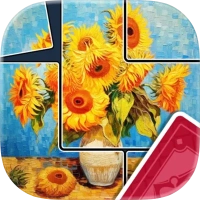
Jigsaw Solitaire Match introduces a refreshing way to enjoy picture puzzles by combining familiar jigsaw mechanics with an innovative card-matching system. Instead of simply placing traditional puzzle pieces into a fixed board, players move card fragments freely across the playing area and look for opportunities to connect pieces that belong together.
Every successful match brings players closer to completing the featured image. As individual fragments connect, they automatically form larger groups that can be moved together. This creates an interesting balance between visual recognition, careful positioning, and strategic planning.
Developed by DongZ Game, Jigsaw Solitaire Match is designed for players who appreciate relaxing mobile games with simple controls and rewarding gameplay. Its combination of card movement and picture reconstruction makes each level an opportunity to think carefully while enjoying the satisfaction of watching a scattered image come together.
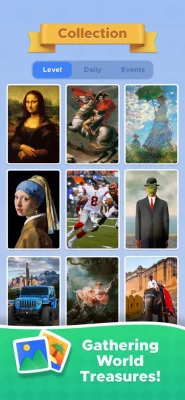
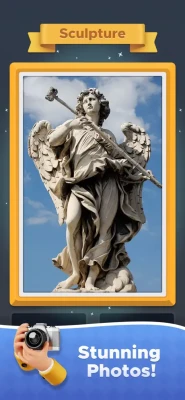
The game features different visual themes, including classic paintings, colorful floral scenes, beautiful landscapes, and adorable animals. These collections give players plenty of visual variety as they progress through the available challenges.
Whether you enjoy traditional jigsaw puzzles, solitaire-inspired games, or casual brain teasers, Jigsaw Solitaire Match offers an accessible experience that is easy to understand but requires thoughtful decisions to master.
Main Features of Jigsaw Solitaire Match
Creative Jigsaw and Solitaire Combination
The main attraction is its combination of two familiar puzzle styles. Players move card fragments around the screen and connect matching sections to reconstruct complete images. This creates a different experience from ordinary jigsaw games.
Simple Swipe Controls
The controls are designed to make gameplay accessible. Players simply swipe their fingers to move cards into suitable positions. There is no complicated control system to learn, allowing beginners to focus on solving puzzles.
Automatic Card Grouping
When compatible fragments connect, they automatically become part of a larger group. Players can then move the connected cards together, making it easier to organize the puzzle and work toward completing the picture.
Satisfying Chain Reactions
Some successful placements can trigger several connections in quick succession. These chain reactions make puzzle-solving more rewarding and encourage players to search for opportunities to connect multiple fragments through carefully planned moves.
Beautiful Themed Pictures
The game features different visual collections, including artwork, flowers, landscapes, and animals. Each theme adds variety to the experience and gives players another reason to continue exploring new levels.
Strategic Puzzle Challenges
Although the controls are straightforward, choosing the correct position for every card requires attention. Players must consider the size, location, and relationship between different fragments before making important moves.
Suitable for Short and Long Sessions
Jigsaw Solitaire Match works well for quick gaming breaks as well as longer puzzle sessions. Players can enjoy a few moves whenever they have free time or spend more time carefully completing an image.
How to Play Jigsaw Solitaire Match
The objective is to combine scattered card fragments until the complete picture has been reconstructed.
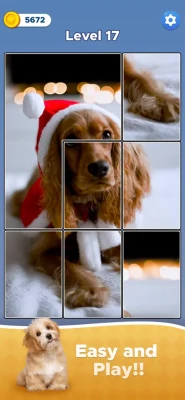
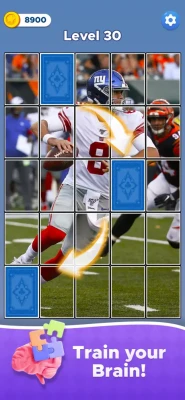
At the beginning of a level, players encounter several cards containing different sections of an image. These fragments may appear scattered across the playing area, so the first task is to examine their visual details and identify which pieces belong together.
Swipe a card toward a suitable position to connect it with another matching fragment. When the pieces are correctly combined, they automatically form a group.
Continue moving individual cards and connected groups to bring more sections of the picture together. As the puzzle develops, larger groups begin to appear, making it easier to recognize the structure of the original image.
However, positioning is important. Placing a smaller card over a larger one can replace part of the bigger card, potentially changing the visible puzzle information. Players should therefore pay close attention to card sizes and avoid careless placements.
The level progresses through a series of successful connections until the picture is completed.
Understanding the Card-Matching Mechanics
One of the most important aspects of Jigsaw Solitaire Match is understanding how its card system works.
Individual Card Movement
Every card can be moved independently using swipe controls. This gives players flexibility when organizing fragments and searching for matching sections.
Matching Fragments
Cards must be positioned carefully to connect compatible parts of the picture. Recognizing visual relationships between fragments is essential for making progress.
Combined Card Groups
Successfully connected cards automatically become grouped together. These groups function as larger puzzle sections that can be moved as a single unit.
Card Size and Overlapping
Card placement requires additional attention because a smaller card placed over a larger card may replace part of the visible image. This mechanic makes positioning an important part of the strategy.
Chain Reactions
When several compatible connections become possible, one successful move can help create additional matches. Recognizing these opportunities can make puzzle completion faster and more satisfying.
Full Strategy Guide for Jigsaw Solitaire Match
Study the Entire Playing Area Before Moving
One of the best ways to improve your performance is to avoid moving cards immediately after a level begins.
Take a moment to examine the available fragments. Look for recognizable colors, objects, patterns, and image details that might help you identify matching sections.
For example, a group of green fragments may belong to the same landscape or floral arrangement, while sections containing similar colors and shapes may form part of a painting.
Understanding the overall arrangement before making your first move can prevent unnecessary repositioning later.
Identify Easy Matches First
Not every connection requires the same amount of effort. Some fragments have obvious visual relationships, while others are more difficult to recognize.
Start with the easiest matches whenever possible. Connecting clearly related fragments helps establish larger sections of the picture and gives you a better understanding of the image's structure.
These early combinations can also make more complicated connections easier to identify.
Pay Attention to Card Dimensions
Card size is an important part of the gameplay.
Avoid placing smaller cards over larger cards without considering the possible consequences. Since this action may replace part of the larger card, you could lose useful visual information needed to identify other connections.
Before making a placement, consider whether the move will help organize the puzzle or make other fragments harder to recognize.
Developing this habit can prevent avoidable mistakes.
Build Larger Groups Whenever Possible
Connecting individual cards is useful, but creating larger groups is even more important.
Whenever two fragments successfully connect, look for additional pieces that might extend the same group. Larger connected sections reduce the number of separate cards you need to manage.
They also make moving the puzzle easier because several matching fragments can travel together.
Try to build meaningful groups instead of creating random combinations across the playing area.
Keep the Playing Area Organized
A disorganized playing area can make it difficult to recognize matching fragments.
Try to keep related cards close to one another and avoid moving pieces without a clear purpose. Maintaining a logical arrangement helps you remember which sections have already been connected and which areas still need attention.
If several possible matches are available, focus on one section at a time rather than moving everything simultaneously.
Use Visual Details to Recognize Connections
Color recognition is helpful, but successful puzzle-solving requires more than matching similar shades.
Pay attention to smaller visual details, including:
Lines and shapes that continue between fragments.
Objects that appear partially across different cards.
Patterns found in paintings and illustrations.
Similar backgrounds and textures.
Natural features such as leaves, flowers, clouds, and water.
Distinctive animal features and other recognizable objects.
These details can help you identify connections that are not immediately obvious.
Think Before Every Important Move
Random swiping can make a puzzle unnecessarily complicated.
Before moving a card, consider where it should go and whether the placement could affect another fragment. A useful move should ideally improve the arrangement, create a new connection, or help reveal additional visual information.
If a placement does not provide a clear advantage, consider examining other available combinations first.
Take Advantage of Chain Reactions
Chain reactions are among the most rewarding parts of Jigsaw Solitaire Match.
After making a successful connection, examine the surrounding cards again. A newly created group may reveal additional matching opportunities that were previously difficult to recognize.
Rather than immediately moving to an unrelated section, check whether the latest connection has made another combination possible.
This approach can help you complete several connections through a sequence of well-planned moves.
Move Connected Groups Carefully
Once multiple fragments have been combined, treat the resulting group as an important puzzle section.
Think about where the entire group should be positioned before moving it. Since connected cards move together, one carefully planned movement can organize several pieces simultaneously.
Avoid unnecessary repositioning, especially when the group already contains useful visual connections.
Focus on Difficult Sections Without Rushing
Some parts of an image are naturally harder to reconstruct than others. Large areas with similar colors or repeated patterns can make it difficult to distinguish individual fragments.
When this happens, slow down and examine the details more carefully.
Look for small differences in texture, object outlines, and background patterns. Comparing several fragments before choosing a position is often more effective than repeatedly testing random combinations.
Learn from Incorrect Placements
Not every move will produce the desired result.
When a placement creates an unexpected outcome, use it as an opportunity to understand the game's mechanics better. Pay attention to how the cards interact, particularly when different-sized cards overlap.
Being more aware of these interactions will help you make better decisions in future levels.
Maintain a Consistent Solving Rhythm
A steady approach is often more effective than rushing through the puzzle.
Examine the available cards, identify possible connections, make a deliberate move, and then review the updated arrangement.
Repeating this process helps reduce mistakes and makes complicated levels feel more manageable.
Advanced Tips and Tricks
Prioritize Recognizable Image Sections
Distinctive objects are easier to identify than plain backgrounds. Start by connecting fragments containing recognizable details, then use those groups to help reconstruct less distinctive areas.
Avoid Unnecessary Card Movements
Every movement should have a purpose. Repeatedly shifting cards without a clear plan can make the playing area harder to understand.
Remember the Overlapping Rule
The possibility of smaller cards replacing parts of larger cards is particularly important. Protect useful visual information by thinking carefully about card placement.
Look for Multiple Matching Opportunities
A fragment may help connect more than one section of the image. Consider how a potential match could improve the overall arrangement before committing to a move.
Use Connected Groups to Simplify the Puzzle
Once fragments become grouped, take advantage of their combined movement. Organizing the picture through larger sections is generally easier than managing every card individually.
Recheck the Board After Every Chain Reaction
A chain reaction can change the playing area quickly. Review the new arrangement to identify additional opportunities rather than assuming the remaining cards are still in their previous positions.
Be Patient with Similar Colors
Floral scenes, landscapes, and paintings may contain several visually similar sections. Examine outlines and textures instead of relying exclusively on color.
Common Mistakes to Avoid
Making Random Moves
Moving cards without identifying a possible connection can create unnecessary confusion. Always look for a reason before repositioning a fragment.
Ignoring Card Sizes
Overlapping smaller cards with larger ones without considering the result may replace useful image sections. Pay attention to dimensions before making placements.
Forgetting About Connected Groups
Once cards have been successfully combined, remember that they can move together. Treating every fragment as an individual card can make the experience more complicated than necessary.
Overlooking Small Image Details
Two fragments may have similar colors but belong to completely different parts of the picture. Examine patterns, shapes, and object boundaries before matching them.
Rushing Through Difficult Sections
Trying to complete a complicated image too quickly can lead to repeated mistakes. Take your time and compare the available fragments carefully.
Ignoring New Matching Opportunities
A successful connection can make other combinations easier to recognize. Always review the playing area after completing a group.
Different Picture Themes and Visual Collections
Jigsaw Solitaire Match offers a variety of themed picture collections that add visual diversity to its puzzle experience.
Classic Paintings
Art-inspired images provide an opportunity to reconstruct detailed compositions. Recognizing shapes, colors, and artistic patterns can help players connect different sections.
Floral Landscapes
Flower-themed pictures introduce colorful arrangements and natural patterns. Players can use petal shapes, leaves, and background details to identify related fragments.
Beautiful Nature Scenes
Landscape images encourage players to examine natural features such as skies, trees, mountains, and water. These elements provide useful visual clues during reconstruction.
Adorable Animals
Animal-themed pictures offer recognizable details such as faces, ears, eyes, and fur patterns. These distinctive features can make certain connections easier to identify.
The changing themes help keep the experience visually interesting and give players different types of images to explore.
Is Jigsaw Solitaire Match Suitable for Beginners?
Yes. Jigsaw Solitaire Match is designed with simple swipe controls and an easy-to-understand objective, making it accessible to people who are new to mobile puzzle games.
Beginners can start by identifying obvious visual matches and gradually learn how connected groups work.
The game also provides opportunities to develop better observation and planning habits. As players become more familiar with card movement and overlapping behavior, they can approach more complicated arrangements with greater confidence.
Experienced puzzle enthusiasts may also appreciate the additional challenge created by the combination of card movement and traditional picture reconstruction.
What Makes Jigsaw Solitaire Match Different from Traditional Jigsaw Puzzles?
Traditional jigsaw games usually involve placing individual pieces into specific positions on a fixed puzzle board.
Jigsaw Solitaire Match introduces a different approach by allowing players to move card fragments freely across the playing area.
Its automatic grouping mechanic adds another layer of strategy because successfully connected cards can be moved together. The possibility of overlapping cards also makes placement decisions more important.
This combination creates a puzzle experience that rewards both visual recognition and careful planning.
Graphics, Controls, and Gameplay Experience
The visual presentation is an important part of the game's appeal. Its themed picture collections give players different images to reconstruct, while the card-based design keeps the main playing area focused on puzzle-solving.
The swipe controls make it easy to move cards without learning complicated commands. Automatic grouping also reduces the effort required to manage connected fragments.
The satisfying connection animations and chain reactions provide positive feedback as players make progress.
The overall experience is designed around accessible gameplay with enough strategic depth to keep puzzle enthusiasts interested.
Progression and Replay Experience
Jigsaw Solitaire Match offers a level-based puzzle experience in which players work through different picture challenges.
As players advance, they can explore additional themed levels and discover new visual arrangements. The variety of images helps provide a sense of progression beyond simply repeating the same puzzle.
Regular additions of themed content also give players opportunities to discover fresh pictures and continue their puzzle journey.
The combination of short sessions, recognizable images, and strategic card movement makes the game suitable for different playing habits.
Frequently Asked Questions
What is Jigsaw Solitaire Match?
Jigsaw Solitaire Match is a casual mobile puzzle game that combines jigsaw picture reconstruction with solitaire-inspired card movement. Players connect scattered image fragments to complete beautiful pictures.
How do you play Jigsaw Solitaire Match?
Swipe cards across the playing area to position matching fragments together. Correctly connected cards automatically form groups that can be moved as a single unit.
Is Jigsaw Solitaire Match easy to learn?
Yes. The game uses simple swipe controls and straightforward matching mechanics. New players can understand the basic objective quickly and gradually develop more advanced strategies.
Does Jigsaw Solitaire Match require strategy?
Yes. Although the controls are simple, players must consider card sizes, overlapping behavior, matching opportunities, and group positioning to complete puzzles efficiently.
Can connected cards move together?
Yes. When compatible cards connect, they automatically form a group that can be moved together.
What happens when a smaller card is placed over a larger card?
According to the game's instructions, placing a smaller card over a larger one may replace part of the larger card. Players should therefore consider card dimensions before making placements.
What types of pictures are included?
Themed collections include classic paintings, floral landscapes, nature scenes, and adorable animals.
Is Jigsaw Solitaire Match suitable for casual players?
Yes. Its simple controls, picture-based challenges, and flexible session length make it suitable for casual puzzle fans as well as more experienced players.
Is Jigsaw Solitaire Match free to play?
The game is listed as free to download on the Apple App Store, with optional in-app purchases. Some purchases include level unlocking, coin packages, and options for removing forced advertisements.
Which devices support Jigsaw Solitaire Match?
The App Store listing identifies the game as an iPhone title requiring iOS 13.0 or later. Compatibility with other devices may vary.
Final Thoughts
Jigsaw Solitaire Match delivers an enjoyable combination of traditional picture puzzles and strategic card movement. Its simple swipe controls make it easy to get started, while automatic card grouping, overlapping mechanics, and chain reactions create interesting opportunities for thoughtful gameplay.
The variety of themed pictures adds visual appeal, and the gradual process of connecting scattered fragments provides a satisfying sense of accomplishment.
For players who enjoy jigsaw puzzles, solitaire-inspired challenges, and relaxing brain games, Jigsaw Solitaire Match offers a refreshing way to spend their free time. By learning how to recognize matching fragments, organize connected groups, and plan card placements carefully, players can improve their puzzle-solving skills and enjoy a more rewarding experience with every completed picture.
Rate the Game
User Reviews













Popular Games



















 Android
 iOS
 Windows
 Xbox