

Latest Version
December 02, 2024
Erabit Studios
Role Playing
0
com.yokagame.ProjectS
Report a Problem
More About :game
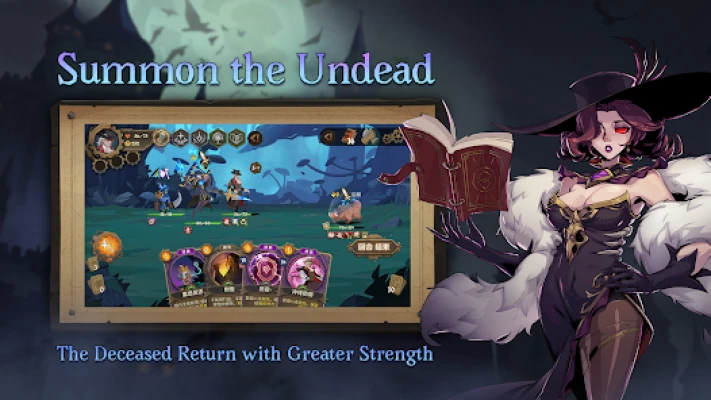
Indies' Lies combines traditional card-based strategy with roguelike exploration and RPG progression. Instead of following one fixed path, players travel through procedurally generated maps, encounter different enemies and events, collect cards, develop talents, and build a team around their chosen hero.
The current Google Play listing describes 12 playable characters, four classes, more than 10 partners, hundreds of cards, and more than 200 talents. Each character has their own cards and talents, giving every run a distinct strategic identity.
The game also places considerable emphasis on story. Each character can reveal different chapters and personal adventures as you uncover clues about the world of Mekaa.
The Story of Mekaa
The world of Indies' Lies begins with an ancient creation myth.
According to the game's lore, the old gods created the continent of Mekaa from chaos. Strockanos, the god of the universe, shaped the land and infused it with his own blood. The gods of agriculture, destiny, and death became guardians of Mekaa, while divine blood and arcane magic became fundamental forces of life.
Over generations, humans established different civilizations throughout the continent. Ancient clans, migrating peoples, and exiled communities developed their own cultures and beliefs.
For centuries, the old gods remained central to civilization.
Then came Indies.
The arrival of this new god introduced a new faith and changed the direction of Mekaa forever. The conflict between old beliefs, new powers, and competing civilizations forms the foundation of the game's fantasy setting.
Gameplay Overview
The core gameplay loop combines exploration, deck building, turn-based battles, character progression, and roguelike decision-making.
A typical run involves:
- Choosing a hero.
- Entering a procedurally generated map.
- Exploring different paths.
- Fighting enemies through card battles.
- Adding and upgrading cards.
- Developing your talent tree.
- Recruiting partners.
- Discovering runes and other enhancements.
- Making decisions at events.
- Facing increasingly difficult encounters.
The choices you make along the way determine how your deck develops and how effectively your team handles later battles.
Roguelike Deck Building
Deck building is at the center of Indies' Lies.
Instead of using a fixed deck throughout the entire game, you gradually construct your strategy during each run.
You may acquire offensive cards, defensive abilities, utility effects, status effects, and cards that interact with particular character mechanics.
Because the map and available choices change from run to run, you cannot always rely on the same sequence of cards.
That creates an important strategic question:
What is the strongest deck I can build with the opportunities this run gives me?
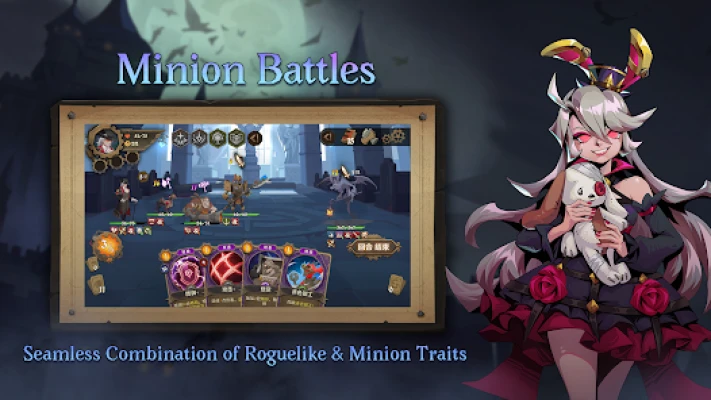
Turn-Based Card Combat
Combat takes place through turn-based card battles.
You need to consider:
- Your available cards
- Energy or action resources
- Enemy intentions
- Defensive requirements
- Damage opportunities
- Status effects
- Partner abilities
- Card combinations
- Long-term deck consistency
Winning is not necessarily about playing every powerful card immediately.
Sometimes the best move is to defend, prepare a combination, or preserve resources for the following turn.
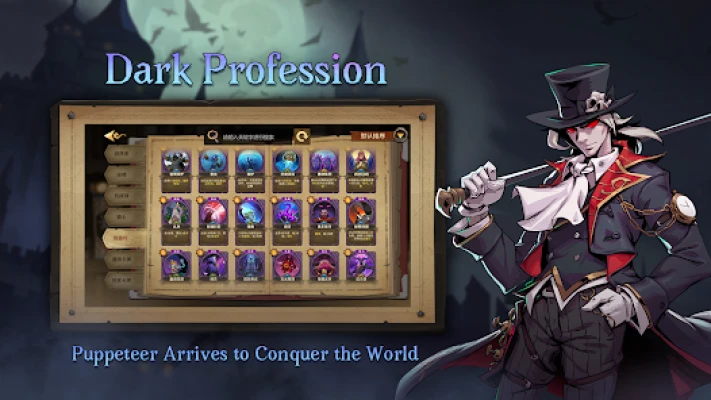
Twelve Playable Characters
The current Google Play listing features 12 playable characters spread across four classes. Each character comes with their own cards and talents.
This creates a significant amount of replay value.
Different characters can encourage completely different deck-building approaches.
A hero designed around direct attacks may want a very different deck from one that relies on spells, ranged effects, summons, or tactical combinations.
Character Classes
The game's character system is built around distinct classes and individual hero identities.
The current listing references Wizards, Rangers, and Mechanists among its class structure, while the broader character roster provides multiple variations within the game's combat archetypes.
Each character can change how you evaluate cards, talents, and partners.
Wizard-Style Builds
Wizard characters can favor magical effects, spell-based attacks, and ability combinations.
Ranger-Style Builds
Ranger-oriented characters can emphasize ranged attacks, precision, and tactical damage.
Mechanist-Style Builds
Mechanist characters can provide more unusual strategic possibilities built around specialized cards and effects.
The exact value of a card depends heavily on the character using it.
Partner System
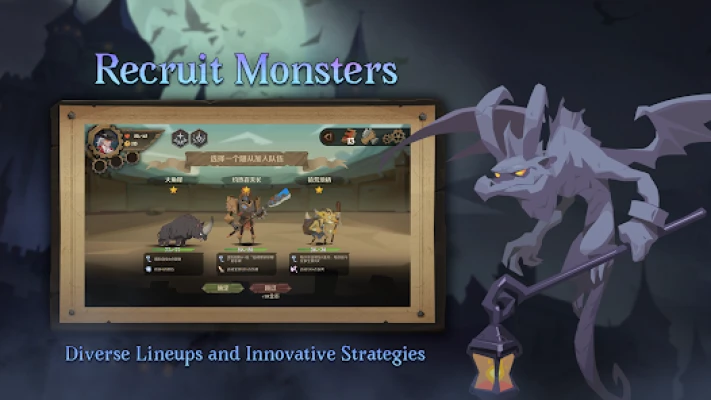
One of Indies' Lies' most distinctive mechanics is its partner system.
You control one main hero and can recruit up to two partners during a run. The current game description identifies more than 10 partners, each with distinctive cards and strengths.
Partners are not simply passive companions.
Their cards can become part of your overall tactical strategy.
This means you can combine your hero's deck with cards from your recruited partners to create unusual team compositions.
Building a Team
A strong team generally needs complementary roles.
For example, you might combine:
Main damage dealer + defensive partner + support partner
Or:
Spell-focused hero + offensive partner + utility partner
The best combination depends on the cards and talents available during your particular run.
Talent Tree System
Indies' Lies features a procedurally generated talent tree.
The current listing states that there are more than 200 talents designed around different classes and builds.
This adds another layer of customization beyond your deck.
Instead of simply collecting cards, you are also developing the underlying capabilities of your character.
Why Talents Matter
Talents can help reinforce your chosen strategy.
A deck focused on a particular mechanic becomes more effective when your talent choices support that same mechanic.
This makes talent selection an important part of long-term run planning.
Runes
Runes provide another progression and customization system.
They can complement your hero, deck, and overall strategy, creating additional opportunities to specialize your build.
Rather than viewing cards, talents, partners, and runes as separate systems, experienced players can combine them into one cohesive strategy.
Hundreds of Cards
The game offers hundreds of cards for different classes and character strategies.
This large card pool is one of the main reasons each run can feel different.
Cards can provide:
- Direct damage
- Defense
- Healing
- Buffs
- Debuffs
- Special effects
- Resource manipulation
- Character-specific abilities
- Partner interactions
The strongest deck is rarely the one with the most powerful individual cards.
Consistency and synergy matter much more.
Card Synergy
A good deck should have a clear purpose.
For example, if your strategy depends on repeatedly applying a particular effect, you want cards that help apply it, strengthen it, and capitalize on it.
Likewise, a defensive deck may benefit from cards that generate protection while gradually building toward a powerful counterattack.
Think in combinations rather than isolated cards.
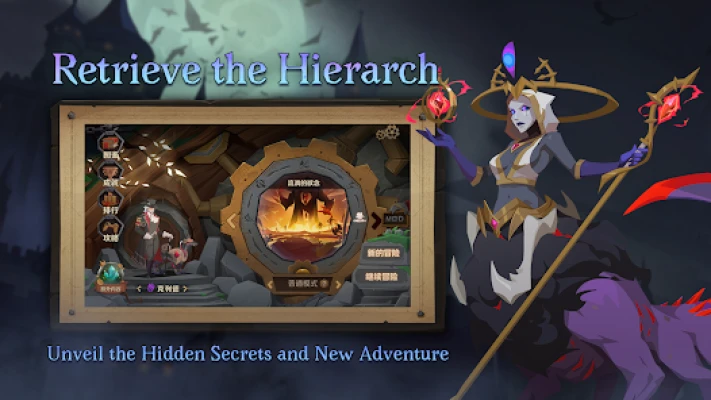
Procedurally Generated Maps
Each roguelike journey takes place across procedurally generated maps.
The current listing specifically highlights different cards, talents, events, enemies, and encounters appearing across these changing journeys.
This means you cannot memorize one perfect route and expect it to work every time.
Instead, you must evaluate the opportunities presented by each run.
Map Decisions
Choosing your route can be almost as important as winning battles.
You may encounter:
- Combat encounters
- Special events
- Rewards
- Character-related story moments
- Opportunities to improve your deck
- Dangerous enemies
- Valuable resources
The safest route is not always the most rewarding one.
Events and Random Encounters
Random events add uncertainty to the journey.
An event might present a choice between immediate benefits and potential long-term consequences.
These moments help reinforce the roguelike structure because the player must make decisions without knowing exactly what will happen next.
Enemy Encounters
Enemies are designed to test different aspects of your deck.
Some encounters may emphasize damage.
Others may punish weak defenses or poor resource management.
As the run progresses, enemies become increasingly important tests of whether your deck is actually functioning as a cohesive strategy.
Boss Battles
Boss encounters are major checkpoints in a run.
They can expose weaknesses that ordinary enemies fail to reveal.
A deck might comfortably defeat small groups of enemies but struggle against a boss with high health, powerful attacks, or special mechanics.
Before a boss battle, consider whether your deck has:
- Reliable damage
- Sufficient defense
- Recovery options
- Consistent card draw
- Strong partner support
- A clear win condition
Story Mode
Indies' Lies is not only about combat.
The game includes character-focused story adventures that reveal more about the world and individual heroes.
The official listing describes character stories involving themes such as lost love, the Seven Nightmares, and the mystery surrounding Mekaa's descent into darkness.
This gives the game a stronger narrative identity than many purely mechanical deck-building roguelikes.
Character Stories
Different characters can reveal different parts of the world.
This encourages players to return to the game with different heroes rather than treating the first successful run as the end of the experience.
The stories also give additional context to the characters you are using during combat.
Progression System
Indies' Lies has several interconnected progression systems:
- Character progression
- Deck development
- Talent trees
- Runes
- Partner recruitment
- Story progression
- New character experiences
This layered progression helps create a sense of long-term advancement.
Beginner's Guide
New players may initially find the number of systems overwhelming.
The best approach is to keep your strategy simple.
1. Learn Your Hero
Understand what your character does particularly well.
2. Build Around a Theme
Don't add every interesting card you see.
Ask whether the card actually helps your deck.
3. Don't Overfill Your Deck
A larger deck is not automatically a stronger deck.
A focused deck gives you a better chance of drawing the cards you need.
4. Use Partners Strategically
Think about what your partner adds to your existing strategy.
5. Plan for Defense
Damage alone will not carry every battle.
6. Study Enemy Behavior
Pay attention to what enemies are preparing to do.
7. Learn From Failed Runs
Roguelike games reward experimentation.
A failed run can reveal exactly which part of your strategy needs improvement.
Advanced Strategy Tips
Build Around Synergy
Look for combinations between cards, talents, partners, and runes.
Prioritize Consistency
A smaller number of complementary cards can often outperform a huge collection of unrelated abilities.
Consider Your Entire Team
Your partner choices should fill weaknesses in your main hero's strategy.
Plan Ahead
Before selecting a card, think about how it will interact with future upgrades.
Don't Chase Damage Blindly
Defensive cards can be just as important as offensive ones.
Adapt to the Map
Do not force yourself into a predetermined route.
Use the opportunities the current map provides.
Prepare for Bosses
A build that destroys regular enemies may not have enough single-target power for a boss.
Best Deck-Building Approach
There is no single universal best deck in Indies' Lies.
The ideal build depends on the character, cards, talents, partners, runes, and map choices available during a run.
A useful general structure is:
Core damage strategy → supporting cards → defense → resource management → finishing ability
Once you identify your deck's core mechanic, prioritize cards that strengthen that mechanic.
Common Beginner Mistakes
Taking Every Card
More cards do not necessarily mean more power.
Ignoring Defense
A powerful offensive deck can collapse if it cannot survive enemy attacks.
Choosing Partners Randomly
A partner should contribute something meaningful to your team.
Changing Strategies Too Often
Constantly switching between unrelated mechanics can make your deck inconsistent.
Ignoring Talents
Talents can significantly influence how effectively your build works.
Forgetting the Long Game
A card that is useful now may be less valuable than an upgrade that strengthens your overall strategy.
Difficulty
Indies' Lies is designed to be accessible to newcomers while retaining significant strategic depth for experienced deck-building players.
The Google Play listing specifically describes its mechanics as beginner-friendly while still offering meaningful challenge and flexibility for experienced players.
The difficulty comes primarily from making good decisions rather than relying on fast reflexes.
Graphics and Art Style
Indies' Lies uses a stylized medieval fantasy art direction.
The world of Mekaa combines traditional fantasy elements with divine mythology, magic, mysterious civilizations, and supernatural threats.
The visual identity helps distinguish it from more minimalist card roguelikes.
Fantasy World and Atmosphere
Mekaa feels like a world shaped by mythology and conflict.
Ancient gods, competing religions, arcane magic, mysterious characters, and dark supernatural events create a setting that supports both the card battles and the character stories.
Controls and Interface
The game is built around touch-friendly card selection and turn-based decision-making.
There is no need for fast reflexes or complex movement controls.
Instead, the challenge comes from deciding:
- Which card to play
- Which enemy to target
- When to defend
- When to attack
- Which upgrade to choose
- Which partner to recruit
- Which route to follow
Game Modes
The current game includes several ways to experience its content, centered around roguelike runs and character-focused story progression.
Roguelike Mode
Build your deck and attempt to survive a procedurally generated journey.
Character Story Adventures
Explore character-specific stories and discover more about the world of Mekaa.
Progression and Collection
Experiment with different characters, cards, talents, partners, and runes.
Single-Player Experience
Indies' Lies is a single-player game. Google Play currently categorizes it as a role-playing, tactical, casual, single-player experience.
The focus is therefore entirely on personal strategy, deck construction, exploration, and progression.
Current Version and Updates
The current Google Play listing shows the game was updated on April 16, 2026, with the latest visible update note stating that bugs were fixed.
The listing also currently promotes a Grand Event with DLC discounts, making the game particularly relevant for returning players who want to explore additional content.
Player Reception
Indies' Lies currently holds approximately 4.4 stars from 14.3K Google Play reviews and has 500K+ downloads listed on the store page.
Recent player reviews praise its card combat, character variety, art, classes, and replayability. Some players mention translation issues and request additional features such as longer or endless runs.
Overall, the reception suggests that the game's strategic depth and character systems are major strengths.
Pros and Cons
Pros
- Deep roguelike deck building
- 12 playable characters
- Multiple classes and playstyles
- Hundreds of cards
- More than 200 talents
- Partner system
- Procedurally generated maps
- Character-specific stories
- Medieval fantasy setting
- Strong replayability
- Beginner-friendly core mechanics
- Significant strategic depth
Cons
- Translation quality can occasionally be inconsistent
- Large number of systems may overwhelm new players
- Some runs can end before players fully explore a powerful deck
- Ads and in-app purchases may not appeal to everyone
- Players looking for real-time combat may prefer another genre
Ads and In-App Purchases
The current Google Play listing states that Indies' Lies contains ads and in-app purchases. It is also available through Google Play Pass.
This gives players several ways to access the game, depending on their preferred Google Play setup.
Data Safety
According to the current Google Play developer-provided data safety information, the listing states that no data is shared with third parties and no data is collected. It also states that data is encrypted in transit and that users can request deletion of data.
Technical Details
Game: Indies' Lies
Developer: Erabit Studios
Original developer: FunC Games
Genre: Roguelike / Deck Building / RPG / Strategy
Platform: Android
Game Mode: Single-player
Google Play Rating: 4.4/5
Reviews: Approximately 14.3K
Downloads: 500K+
Content Rating: Everyone 10+
Content Descriptors: Fantasy Violence, Use of Alcohol
Monetization: Ads and in-app purchases
Google Play Pass: Yes
Latest listed update: April 16, 2026
Indies' Lies vs Slay the Spire
Players familiar with deck-building roguelikes may naturally compare Indies' Lies with Slay the Spire.
Both games revolve around building decks, making strategic decisions, fighting through changing encounters, and adapting to each run.
However, Indies' Lies adds several systems that give it its own identity:
- Multiple playable characters
- Character-focused stories
- Partner recruitment
- Procedurally generated talent trees
- Runes
- A larger RPG-style fantasy framework
The result is a deck-building experience that places greater emphasis on characters and team composition.
Who Should Play Indies' Lies?
Indies' Lies is a strong choice for players who enjoy:
- Roguelike deck-building games
- Card battle RPGs
- Turn-based strategy
- Fantasy RPGs
- Character progression
- Build experimentation
- Procedurally generated adventures
- Single-player games
- Tactical combat
- Story-driven roguelikes
- Games similar to Slay the Spire
It may be less suitable for players who prefer real-time action, multiplayer combat, or heavily cinematic storytelling.
Why Indies' Lies Is Worth Playing
The game's biggest strength is the way its systems interact.
You are not simply building a deck.
You are building a character, developing talents, recruiting partners, selecting routes, discovering runes, and uncovering a story at the same time.
That creates a layered experience where strategic decisions continue beyond individual card battles.
The combination of procedural maps, hundreds of cards, 12 characters, partners, talents, and story adventures gives players plenty of reasons to replay the game.
Final Verdict
Indies' Lies is a thoughtful roguelike deck-building RPG that combines card strategy with character progression and a substantial fantasy setting.
Its procedural maps ensure that runs do not simply follow one predetermined path, while the large card pool gives players plenty of room to experiment.
The partner system is particularly interesting because it transforms deck building into team building. Instead of thinking only about what your main character can do, you must consider how the entire group works together.
The character stories add another layer of motivation, giving the world of Mekaa more personality than a purely mechanical deck-building game.
For fans of turn-based card battles and roguelike RPGs, Indies' Lies is well worth exploring.
Overall Rating: 9/10
Frequently Asked Questions
What is Indies' Lies?
Indies' Lies is a single-player roguelike deck-building RPG that combines card battles, character progression, procedural maps, talents, partners, runes, and story adventures.
Is Indies' Lies free on Android?
Yes. The current Google Play listing offers the game for free with ads and optional in-app purchases.
How many characters are in Indies' Lies?
The current Google Play listing features 12 playable characters.
How many cards are available?
The game features hundreds of cards across its different character classes and strategies.
Does Indies' Lies have partners?
Yes. You can control one main hero and recruit up to two partners. The game currently lists more than 10 partners with their own strengths and cards.
What are talents in Indies' Lies?
Talents are part of the game's character-development system. The current listing describes more than 200 talents designed to support different classes and builds.
Is Indies' Lies a multiplayer game?
No. It is designed as a single-player experience.
Is Indies' Lies similar to Slay the Spire?
Yes, both are roguelike deck-building games with turn-based card combat and run-based progression. Indies' Lies adds a larger character, partner, talent, and story system.
Does Indies' Lies have a story?
Yes. The game features a medieval fantasy story set in Mekaa, with character-specific adventures and story chapters.
What is the setting of Indies' Lies?
The game takes place in Mekaa, a medieval fantasy continent shaped by ancient gods, magic, civilizations, religions, and the arrival of a new god named Indies.
Rate the Game
User Reviews











Popular Games




















 Android
 iOS
iOS Windows
 Xbox
Xbox