



Latest Version
September 16, 2024
ABI Games Studio
Simulation
0
com.abi.hotdog.tycoon
Report a Problem
More About :game
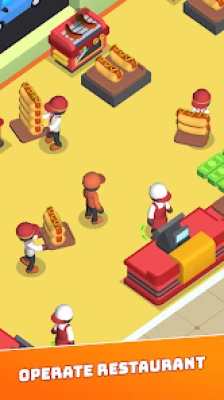
Rather than focusing purely on cooking, the game is about running the business behind the food. Your decisions about upgrades, staff, resources, and expansion determine how quickly your hot dog operation can grow.
Hotdog Bitte: Idle Tycoon Game Information
- Game: Hotdog Bitte: Idle Tycoon
- Developer: ABI GLOBAL LTD.
- Genre: Simulation / Idle Management
- Platform: Android and iOS
- Main theme: Restaurant and business management
- Core gameplay: Manage hot dog restaurants and expand a food business
- Progression: Earn, reinvest, upgrade and expand
- Staff system: Hire and train employees
- Equipment: Upgrade kitchen equipment
- Expansion: Develop additional restaurants and locations
- Monetization: Free with advertising and in-app purchases
- Main objective: Grow from a small hot dog stand into a large restaurant empire
The iOS listing describes the game as combining restaurant management with strategic investment and specifically highlights staff training, equipment upgrades, resource management and expansion.
How to Play Hotdog Bitte: Idle Tycoon
The basic progression loop is straightforward:
Serve customers → earn money → reinvest profits → improve efficiency → expand → increase revenue.
Your business starts small, so early money should be used carefully. Instead of spending everything immediately, think about which investment will increase your earning ability most effectively.
As the business grows, you'll have more systems to manage, including equipment, employees, restaurants and expansion.
Hotdog Bitte: Idle Tycoon Strategy Guide
1. Reinvest Your Early Profits
One of the most important habits in an idle management game is avoiding unnecessary spending early on.
Your first profits are more valuable when they improve the business.
Prioritize investments that can increase:
- Customer service speed
- Restaurant productivity
- Employee efficiency
- Production capacity
- Overall earning potential
The objective is to create a stronger income loop rather than simply accumulating money.
2. Upgrade Equipment With a Purpose
Kitchen equipment directly affects how efficiently your restaurant operates.
When deciding between upgrades, think about the long-term benefit rather than simply choosing the cheapest available improvement.
A useful question is:
“Will this upgrade help me earn more money over the next several stages?”
If the answer is yes, it may be a stronger investment than a purely cosmetic or low-impact purchase.
3. Don't Ignore Your Employees
Staff management is an important part of Hotdog Bitte: Idle Tycoon.
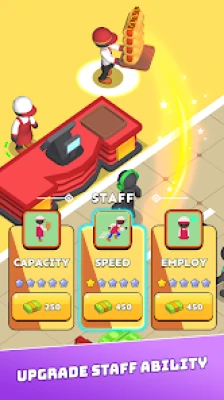
The game's official description highlights hiring and training employees to improve service and efficiency.
A restaurant with better equipment but inefficient staff may not perform as well as expected.
When you have enough resources, invest in employees who can improve the overall operation rather than focusing only on one isolated part of the business.
4. Train Staff Strategically
Employee upgrades should support your current bottleneck.
For example, if customers are waiting because service is slow, improving service-related efficiency can be more useful than upgrading an area that isn't limiting your income.
Think about your restaurant as a chain:
Production → preparation → service → customer flow → revenue.
Improving the weakest link can have a bigger effect than upgrading something that is already performing well.
5. Watch Your Income Before Expanding
Expansion sounds attractive, but opening or developing another location should be treated as an investment.
Before expanding, make sure your existing business is generating enough money to support further growth.
A good progression mindset is:
Stabilize → upgrade → increase profits → expand → upgrade again.
This prevents expansion from draining the resources needed to improve your existing operation.
6. Expand When Your Business Can Support It
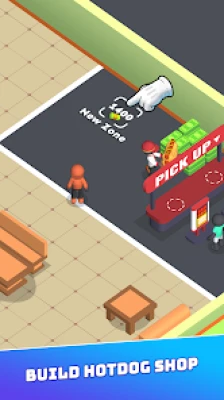
The game encourages players to construct restaurants and purchase new buildings as the hot dog empire grows.
Don't treat every expansion opportunity as an automatic purchase.
Consider:
- Current cash reserves
- Existing restaurant efficiency
- Upgrade costs
- Employee requirements
- Expected earning improvements
- How quickly you can recover the investment
The strongest expansion is one that strengthens your overall income rather than leaving your existing business underfunded.
7. Keep Improving Your Main Restaurant
Expansion shouldn't mean abandoning your original operation.
Your established restaurant can continue providing the financial foundation for later investments.
Whenever you have spare resources, look for ways to improve the businesses you already control before committing everything to a new location.
8. Think in Terms of Profit Per Investment
Instead of asking:
“What can I buy?”
ask:
“What gives me the most useful improvement for what I spend?”
This simple change in thinking makes idle tycoon games much easier to manage.
A relatively inexpensive upgrade that noticeably improves income can be more valuable than an expensive upgrade with a small practical effect.
9. Don't Spend Currency Just Because You Have It
Having enough money for an upgrade doesn't necessarily mean you should purchase it immediately.
Keep a reserve for important opportunities.
This is especially useful when the game presents several possible investments close together.
Maintaining flexibility gives you more control over your progression.
10. Use Idle Progress Efficiently
Hotdog Bitte: Idle Tycoon is designed around an idle progression structure, so your business should continue developing while you're not actively managing every action.
When returning to the game:
- Collect accumulated earnings.
- Check which upgrade has the biggest impact.
- Improve your weakest business area.
- Review employee development.
- Reinvest remaining profits.
- Check whether expansion is now affordable.
This creates a simple and repeatable routine.
Best Upgrade Order
There isn't one universally correct upgrade order because your needs can change as the restaurant develops.
However, a useful general priority is:
Early Game
Focus on:
- Basic income generation
- Essential equipment
- Service efficiency
- Employee improvements
- Reliable profit growth
Mid Game
Start balancing:
- Equipment upgrades
- Staff development
- Restaurant capacity
- New attractions or facilities
- Expansion opportunities
Later Progression
Think more about:
- Multiple business locations
- Long-term income
- Efficient staff management
- Large investments
- Sustainable expansion
The game's progression is built around managing resources, improving staff and equipment, and reinvesting profits into a growing restaurant business.
How to Make More Money
Making money consistently is more important than making a large amount once.
Build a Strong Income Cycle
Your ideal cycle should look like this:
Customers → Sales → Profit → Upgrade → Higher Efficiency → More Sales
Every major purchase should ideally strengthen one part of this cycle.
Improve Bottlenecks
If one part of your restaurant is significantly slower than the others, improving that area can have a noticeable effect on overall performance.
Don't automatically distribute upgrades equally.
Instead, identify what is holding the business back.
Reinvest Instead of Hoarding
Saving money is useful, but excessive hoarding slows down progression.
Once you've built an adequate reserve, put your money into upgrades that improve future earnings.
Employee Management Tips
Employees are more than an additional feature; they are part of the restaurant's production system.
Hire When It Solves a Problem
Hiring should have a clear purpose.
If your restaurant is already running efficiently, spending heavily on staff may not be your highest priority.
If service is becoming a bottleneck, additional or better-trained staff can become much more valuable.
Train the Right Employees
The game specifically includes employee training, so don't treat every staff improvement as equally important.
Focus your resources on employees whose improvements support the current needs of your restaurants.
Balance Staff and Equipment
Don't upgrade equipment endlessly while ignoring employees.
Likewise, don't spend everything on staff while leaving important equipment behind.
A balanced restaurant generally performs better than one with a single highly developed system.
Restaurant Expansion Strategy
Expanding your hot dog business is one of the major progression goals.
The game description mentions purchasing new buildings and establishing restaurants in different locations around the world.
Before expanding, check:
- Can the current restaurant comfortably fund the investment?
- Do you still have money for important upgrades?
- Can your staff development keep pace?
- Will the new location improve long-term income?
- Are you leaving enough cash for unexpected expenses?
Expansion should accelerate your business, not destabilize it.
Common Mistakes to Avoid
Spending Everything Immediately
Always keep enough resources available for important upgrades.
Upgrading Randomly
Choose improvements based on your restaurant's current weakness.
Ignoring Staff
Better equipment alone doesn't guarantee efficient service.
Expanding Too Fast
A larger empire isn't automatically a more profitable empire.
Focusing Only on Short-Term Cash
The best investments are those that improve future income.
Forgetting Existing Locations
Once you expand, continue improving your established restaurants.
Treating Every Upgrade Equally
Some upgrades can have a much greater practical impact than others.
Beginner Tips for Hotdog Bitte: Idle Tycoon
If you're starting the game for the first time, follow these simple rules:
1. Reinvest early.
Use your first profits to strengthen the business.
2. Watch efficiency.
Find the area slowing down your operation.
3. Upgrade intelligently.
Prioritize improvements that increase long-term income.
4. Develop employees.
Staff training is part of the game's progression system.
5. Don't rush expansion.
Build a strong financial foundation first.
6. Keep a reserve.
Don't spend your entire balance on one purchase.
7. Think long-term.
A good investment should make the next investment easier.
Hotdog Bitte: Idle Tycoon Review
Hotdog Bitte: Idle Tycoon focuses on the business side of running a food operation rather than simply preparing meals.
Its main appeal comes from the progression loop: start small, generate income, improve the restaurant, manage staff, reinvest profits and gradually expand the business.
The official description highlights restaurant construction, equipment upgrades, employee training, resource management and expansion, giving the game a broader management focus than a simple cooking simulator.
Pros
- Easy-to-understand business concept
- Restaurant management gameplay
- Equipment upgrades
- Employee hiring and training
- Idle progression
- Business expansion
- Multiple management systems to develop
Cons
- Progress can become repetitive for players who prefer active gameplay
- Advertising can interrupt the experience
- Optional purchases are available
- The large-business progression can encourage repeated upgrade cycles
The iOS listing includes user reviews specifically criticizing the amount of advertising, so the advertising experience is worth considering before playing.
Is Hotdog Bitte: Idle Tycoon Worth Playing?
If you enjoy idle management games where the main satisfaction comes from watching a small operation grow into something much larger, Hotdog Bitte: Idle Tycoon offers a straightforward restaurant-business progression loop.
Players who prefer active cooking, fast-paced restaurant service or highly detailed economic simulations may find the idle structure less demanding.
The strongest part of the experience is the progression from a small hot dog operation toward a larger restaurant business through upgrades, staff development and expansion.
Frequently Asked Questions
What is Hotdog Bitte: Idle Tycoon?
Hotdog Bitte: Idle Tycoon is a restaurant-management simulation from ABI GLOBAL LTD. Players manage hot dog restaurants, improve equipment, develop employees, earn profits and expand their business.
How do you make money in Hotdog Bitte?
The basic progression is to operate your restaurant, earn profits and reinvest those profits into upgrades, employees and expansion.
Can you upgrade the restaurant?
Yes. The game includes kitchen equipment upgrades and additional development options as the business grows.
Can you hire employees?
Yes. Hiring and training staff is one of the game's documented management features.
Can you expand to new locations?
Yes. The game description specifically mentions purchasing new buildings and establishing restaurants in different locations.
Is Hotdog Bitte: Idle Tycoon free?
The game is listed as free with in-app purchases. The available iOS listing also documents optional purchases and advertising.
What is the best upgrade strategy?
Prioritize upgrades that improve your current bottleneck and increase future earning potential. Avoid spending heavily on upgrades that provide little practical benefit.
Should I expand quickly?
Not necessarily. Build a reliable income base first, then expand when your existing business can comfortably support the investment.
Is Hotdog Bitte: Idle Tycoon a cooking game?
It has a hot dog and restaurant theme, but its main focus is business management, resource management, upgrades, employees and expansion rather than traditional cooking-game mechanics.
Final Thoughts
Hotdog Bitte: Idle Tycoon turns the familiar hot dog stand into the foundation of a growing business empire.
The most effective way to approach the game is to think like a manager rather than simply spending every piece of currency you earn. Improve the weakest part of your operation, train useful employees, upgrade equipment when it provides meaningful benefits, and expand only when your finances can support the next step.
Once your restaurants begin generating stronger profits, reinvesting those profits creates the foundation for even larger growth.
Rate the Game
User Reviews














Popular Games



















 Android
 iOS
 Windows
 Xbox