


Latest Version
January 18, 2026
ABI GLOBAL LTD.
Puzzle
iOS
0
Report a Problem
More About :game
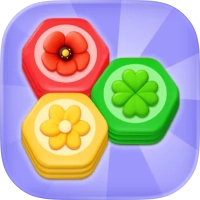
The concept is simple: place fruit tiles on a hexagon-shaped board, group identical fruits together, and complete full stacks to make them pop and disappear. As the board becomes more complicated, successful play depends on planning where each tile should go rather than simply matching the first available fruit.
The game adds a relaxing presentation to the traditional sorting formula with colorful 3D fruit, juicy visual effects, satisfying sounds, and simple controls. Players can also use boosters when a puzzle becomes difficult and complete missions as they progress through the levels.
How to Play Hexa Fruzzle
The basic gameplay loop is easy to learn:
- Tap a fruit hexagon to pick it up.
- Choose an appropriate position on the hexagon board.
- Stack matching fruit types together.
- Build a complete stack.
- Watch the completed stack pop and clear.
- Continue organizing the remaining fruit.
- Complete the level or mission.
The official App Store description specifically identifies tapping, placing fruit hexagons, stacking identical fruits, completing full stacks, using boosters, and completing missions as the core gameplay systems.
Main Features
Fruit-Based Hexagon Puzzle
Instead of ordinary square blocks, Hexa Fruzzle uses colorful fruit-shaped tiles on hexagonal boards. This gives the sorting mechanic a different visual and spatial feel.
Match and Stack
The central objective is to bring the same fruit types together. Once a stack is complete, it can pop and clear from the board.
Colorful 3D Graphics
The game uses 3D fruit models and juicy visual effects to make every successful match more satisfying.
Relaxing Puzzle Gameplay
Hexa Fruzzle is designed as a casual brain teaser that is easy to learn while providing more demanding puzzles as players advance.
ASMR-Style Sounds
Satisfying sound effects accompany the stacking and clearing actions, adding another layer to the game's relaxing presentation.
Boosters and Helpful Tools
Boosters can be used when a difficult arrangement prevents straightforward progress. Learning when to save and use these tools is an important part of advanced play.
Missions and Progression
Players can complete missions while progressing through the fruity puzzle levels, giving additional objectives beyond simply clearing individual boards.
Full Hexa Fruzzle Strategy Guide
1. Study the Board Before Placing a Tile
Don't immediately put every fruit into the nearest available position.
First, examine the board and determine:
- Which fruit types are available
- Where existing stacks are located
- Which spaces are open
- Which stacks are close to completion
- Which areas could become crowded
- Which fruit may need additional space later
A few seconds of planning can prevent unnecessary blocking.
2. Prioritize Nearly Complete Stacks
If a stack already contains several matching fruit tiles, consider completing it before starting a new group.
Clearing a nearly finished stack can create valuable empty space and reduce the amount of clutter on the board.
3. Don't Fill Every Available Space
Empty spaces are valuable.
A common mistake in stacking puzzles is treating every empty hexagon as a place that should immediately be filled.
Instead, keep some flexibility for future fruit tiles.
4. Think About the Next Fruit
Before placing a tile, consider what might come next.
Ask yourself:
If I put this fruit here, will I still have somewhere useful to place the next matching or non-matching fruit?
This simple question can prevent many difficult situations.
5. Build One Group Carefully
When several identical fruits are available, try to keep their group organized rather than spreading them randomly around the board.
A compact group is easier to complete and easier to understand.
6. Clear the Board Whenever a Full Stack Is Available
A completed stack is more than a score opportunity. It also creates additional room.
Whenever you can safely complete a stack, consider the benefit of the newly available space before moving on to another group.
7. Avoid Creating Isolated Groups
An isolated group can become difficult to complete if there is no convenient space for its remaining fruit.
When possible, keep your stacks positioned so they remain accessible from multiple directions.
8. Watch the Hexagonal Geometry
Hexagonal boards don't behave exactly like conventional square grids.
Each position has several neighboring directions, so think about how a tile connects to the surrounding spaces.
This makes spatial awareness especially important.
9. Plan Around Difficult Fruit Types
If one fruit has limited room around it, treat that fruit as a priority.
Don't allow easy matches to consume the spaces needed by the more restricted group.
10. Save Boosters for Genuine Problems
Boosters are useful, but using them too early can leave you without assistance when a much harder arrangement appears.
Before activating a booster, check whether the puzzle can be solved through ordinary placement.
If there is a clear natural solution, save the booster.
Advanced Stacking Strategy
Create a Chain of Clears
The strongest moves can sometimes produce more than one useful result.
For example:
Complete stack → clear board space → expose useful position → build another stack
When planning a move, look for these opportunities rather than considering each placement separately.
Keep the Center Flexible
If the board has a central area that can be reached from several directions, avoid filling it unnecessarily.
Central spaces can provide valuable flexibility later in a level.
Use the Edges as Storage
Edge positions can sometimes be useful for temporarily organizing a fruit type without occupying the most flexible central spaces.
However, avoid placing a fruit on an edge if doing so makes its eventual completion difficult.
Complete Short-Term Goals Without Destroying Long-Term Options
A move that completes a stack immediately isn't necessarily the best move.
Compare the immediate reward with what the board will look like afterward.
If the cleared stack opens several useful positions, it may be excellent. If it leaves the remaining fruits trapped or scattered, another move may be safer.
How to Handle Difficult Levels
When a level becomes complicated, use this process:
Step 1: Stop making random placements.
Step 2: Identify every fruit currently on the board.
Step 3: Find stacks closest to completion.
Step 4: Locate the most restricted spaces.
Step 5: Determine which fruit needs those spaces.
Step 6: Complete safe stacks first.
Step 7: Reassess the board after every clear.
Step 8: Save open positions for difficult fruit.
Step 9: Use a booster only when ordinary moves no longer provide a sensible route.
This keeps the puzzle under control instead of allowing the board to become increasingly crowded.
Booster Strategy
Boosters can be particularly valuable on difficult puzzles, but their usefulness depends on timing.
Don't Use Boosters Immediately
If the board still has several obvious moves, continue solving normally.
Use a Booster to Restore Options
A booster is more valuable when it creates new possibilities rather than simply speeding up an easy move.
Consider Mission Objectives
If you're working toward a particular mission, consider whether using a booster helps you complete the objective efficiently.
Keep an Emergency Booster
When possible, maintain at least one useful tool for situations where the board becomes difficult to manage.
The game specifically includes helpful tools and boosters for difficult puzzles.
Common Mistakes
Filling Spaces Without a Plan
Placing every fruit wherever it fits can quickly create a crowded board.
Starting Too Many Stacks
Several incomplete groups can become harder to manage than a smaller number of organized stacks.
Ignoring Almost-Finished Groups
A nearly complete stack may be the easiest opportunity to create new space.
Blocking Important Positions
A convenient placement now can become an obstacle several moves later.
Using Boosters Too Early
Save special tools for situations where they genuinely improve your options.
Forgetting to Reassess
After a stack pops, the board changes.
Always scan the new arrangement before making your next move.
Best Beginner Tips
- Look at the whole board first.
- Match identical fruits carefully.
- Complete nearly finished stacks.
- Keep some spaces open.
- Avoid scattering identical fruits unnecessarily.
- Think about the next few moves.
- Use central spaces carefully.
- Don't waste boosters on easy situations.
- Recheck the board after every successful clear.
- Treat difficult fruit groups as priorities.
Missions and Progression
Hexa Fruzzle includes missions alongside its level progression. Completing these objectives gives players additional goals while moving through the game's fruit-themed puzzles.
When a mission is active, don't focus only on clearing the board. Consider whether your normal strategy can also satisfy the mission objective.
This can make each level more purposeful and may influence which moves you choose.
Hexa Fruzzle Graphics and Sound
The game's presentation is built around bright fruit designs and satisfying interactions.
The App Store highlights:
- Colorful 3D fruit
- Juicy visual effects
- ASMR-style sounds
- Soothing visuals
- Easy controls
These features complement the game's relaxed puzzle structure and help distinguish it from more traditional tile-sorting games.
Hexa Fruzzle on iPhone and iPad
The App Store lists Hexa Fruzzle: Stack Sort for iPhone and iPad. It requires iOS 13.0 or later on iPhone and iPadOS 13.0 or later on iPad. The listed app size is approximately 431.2 MB.
The game is categorized as Puzzle and has a 4+ age rating. It is free to download with optional in-app purchases.
Game Updates
The App Store version history shows a series of updates focused on adding or updating levels. Version 1.0 was released on September 29, 2025, followed by multiple level updates, with version 2.3 listed on January 29.
This repeated level-update pattern suggests that the game has continued receiving additional puzzle content after its initial release.
In-App Purchases
The App Store lists optional purchases including a Fruzzle Royal Pass, item packs, revive packs, coin packages, and bundles.
The game itself is listed as free to download.
Is Hexa Fruzzle Difficult?
Hexa Fruzzle is easy to understand at the basic level because the central objective is simply to stack matching fruit types.
The challenge comes from deciding where to place each piece.
As the board becomes more crowded, players need to think about:
- Available spaces
- Stack completion
- Future placements
- Board organization
- Restricted positions
- Booster timing
So the controls remain simple even when the puzzle-solving becomes more demanding.
Is Hexa Fruzzle a Relaxing Puzzle Game?
Yes. The game is explicitly presented as a relaxing puzzle experience, with soothing visuals, ASMR-style sounds, colorful fruit animations, and easy controls.
Its casual format makes it suitable for short puzzle sessions when you want something more thoughtful than an idle game but less intense than a fast-action title.
Frequently Asked Questions
What is Hexa Fruzzle: Stack Sort?
Hexa Fruzzle: Stack Sort is a casual puzzle game where players place fruit-shaped hexagonal tiles, stack matching fruits, and clear completed stacks.
How do you play Hexa Fruzzle?
Tap a fruit hexagon, place it on the board, and organize matching fruit types into stacks. When a stack is complete, it pops and clears.
Does Hexa Fruzzle have boosters?
Yes. The game includes helpful tools and boosters intended to assist with difficult puzzles.
Does Hexa Fruzzle have missions?
Yes. Missions are part of the game's progression system.
Is Hexa Fruzzle free?
Yes. The App Store lists it as free with optional in-app purchases.
Can I play Hexa Fruzzle on iPad?
Yes. The game is available for both iPhone and iPad.
What is the best strategy for Hexa Fruzzle?
Study the board before placing tiles, prioritize nearly complete stacks, protect flexible spaces, avoid creating unnecessary groups, and think several moves ahead.
When should I use boosters?
Use boosters when normal moves are no longer giving you useful options. Saving them for difficult arrangements generally gives them more value.
How do I get better at Hexa Fruzzle?
Focus on planning rather than speed. Learn to recognize restricted spaces, complete safe stacks, keep the board organized, and reconsider your strategy after every stack clears.
Final Thoughts
Hexa Fruzzle: Stack Sort combines fruit matching, hexagonal tile placement, stack sorting, and relaxing puzzle gameplay into an easy-to-learn casual experience.
The most important skill isn't fast tapping. It's understanding how each placement affects the rest of the board.
Start by scanning the puzzle, prioritize nearly completed stacks, keep flexible spaces available, and avoid filling the board simply because a position is open. On harder levels, think several moves ahead and save boosters for situations where they genuinely improve your options.
With its colorful 3D fruit, satisfying stack-clearing effects, ASMR-style sounds, missions, and ongoing level updates, Hexa Fruzzle offers a simple puzzle loop that can become surprisingly strategic as the boards become more complicated.
Rate the Game
User Reviews














Popular Games



















 Android
 iOS
 Windows
 Xbox