


Latest Version
June 08, 2024
GAMEANNIE LLP
Simulation
0
com.halloweenfever.chef.kitchen.craze.madness
Report a Problem
More About :game
With its festive atmosphere and fast-paced restaurant gameplay, the game is a fun choice for players who enjoy cooking games, restaurant management, time-management challenges, and Halloween-themed adventures. Success depends on preparing the right dishes, keeping track of cooking times, and serving customers before their patience runs out.
Game Overview
Halloween Cooking Fever Chef combines casual cooking gameplay with the excitement of running a haunted restaurant. Instead of simply preparing meals at a relaxed pace, players must pay attention to customer orders, cooking progress, and the timing of every action.
The Halloween theme gives the experience a playful spooky atmosphere, making it suitable for players looking for a seasonal cooking game with more action than a traditional food simulator.
Main Game Information
Game Title: Halloween Cooking Fever Chef
Genre: Cooking, Time Management, Casual Simulation
Platform: Android
Developer: GAMEANNIE LLP
Gameplay Style: Restaurant cooking and food serving
Main Objective: Prepare meals, serve customers, and complete kitchen challenges.
Theme: Halloween and spooky cooking
Controls: Touchscreen controls
Gameplay and Main Features
1. Prepare Spooky Food
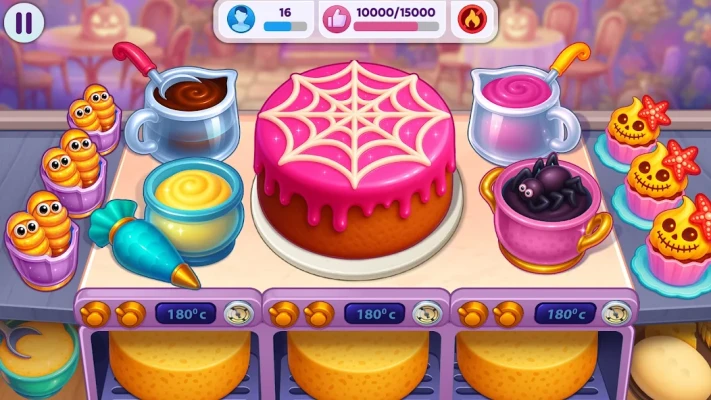
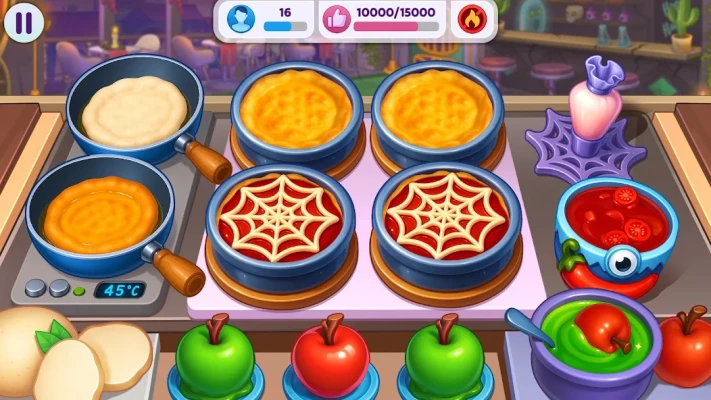
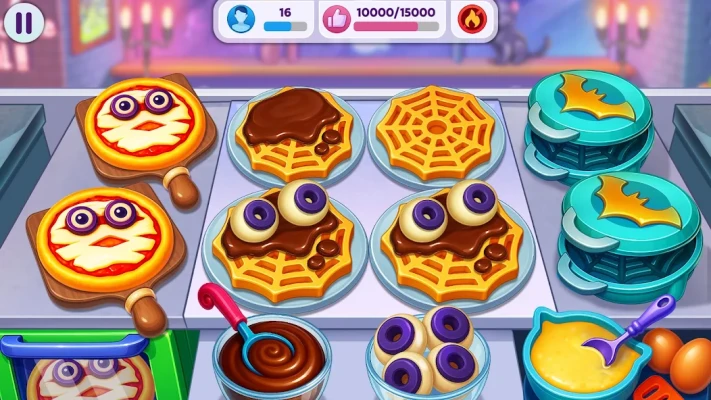
Cooking is at the heart of Halloween Cooking Fever Chef. Players must prepare dishes according to customer orders and make sure each meal is ready before it is served.
The key is to learn how the kitchen works and become familiar with the available cooking stations. Knowing which action to perform next makes it easier to handle several orders without losing control of the kitchen.
2. Serve Customers on Time
Customer management is an important part of the challenge. Orders can arrive while other dishes are still cooking, forcing players to divide their attention between different tasks.
Serving customers quickly helps maintain a steady rhythm. Waiting too long, forgetting an order, or allowing food to burn can disrupt the entire cooking process.
3. Master Time-Management Challenges
The game rewards players who combine speed with accuracy. Tapping quickly is not enough if the wrong dish is prepared or an important order is forgotten.
Good time management means identifying urgent tasks, preparing food in an efficient order, and avoiding unnecessary movements around the kitchen.
4. Enjoy the Halloween Atmosphere
The spooky theme gives the cooking experience a distinctive identity. Haunted kitchens, Halloween-inspired food, and festive presentation make the game appealing to players who enjoy seasonal games and lighthearted spooky adventures.
5. Improve Your Cooking Performance
Progress in a cooking game depends on learning from each level. As challenges become harder, players need to develop better timing, recognize recurring order patterns, and use available kitchen improvements wisely.
Full Strategy Guide and Cooking Tips
Beginner Guide: Learn the Kitchen First
When starting Halloween Cooking Fever Chef, resist the temptation to tap every available item as quickly as possible. Spend the first few levels learning where ingredients are located, how food is prepared, and how completed dishes are delivered to customers.
Follow these beginner tips:
Read each customer order before preparing food.
Learn which ingredients belong to each dish.
Watch cooking progress rather than starting too many tasks at once.
Serve completed orders promptly.
Remember which actions require one tap and which require several steps.
Once the controls become familiar, you can complete routine actions faster and concentrate on managing multiple orders.
Strategy 1: Prioritize Orders Correctly
One of the most useful skills in a cooking time-management game is deciding what to do first.
A practical priority system is:
Collect or finish food that is already ready.
Check cooking stations that are close to finishing.
Start dishes required by waiting customers.
Prepare additional ingredients when the kitchen has a spare moment.
Return to the next urgent order.
This sequence is a general strategy rather than a fixed rule for every level. If a cooking station is about to finish or a customer is close to leaving, adjust your priorities accordingly.
Strategy 2: Never Forget Food on the Stove
Cooking time can become a major problem when several dishes need attention at once. Starting a meal and then focusing entirely on another order can lead to wasted food or lost time.
Develop a simple routine: start a dish, complete another useful action, and return to check the cooking station.
Avoid beginning additional cooking tasks when you already have several dishes that need immediate attention. A smaller number of well-managed orders is often better than a crowded kitchen full of unfinished food.
Strategy 3: Prepare for Customer Rushes
Busy moments become easier when you stay organized. Instead of reacting randomly to every new order, look at the whole kitchen and identify tasks that can be completed together.
For example, if two customers request dishes that share a cooking station or ingredient, prepare the common element when it makes sense. Then finish each order according to its requirements.
Do not assume every dish can be prepared in advance. Some food may need to be cooked only when requested, so follow the game's actual mechanics.
Strategy 4: Improve Accuracy Before Chasing Speed
Speed matters, but mistakes create extra work. Preparing the wrong meal wastes valuable seconds that could have been used to complete another order.
Build a habit of checking three things before serving:
Is this the correct dish?
Is the food fully prepared?
Does it match the customer's order?
With practice, these checks become almost automatic. You can then increase your pace without sacrificing accuracy.
Strategy 5: Upgrade the Most Useful Equipment
If the game provides kitchen upgrades, choose improvements that address your biggest problem.
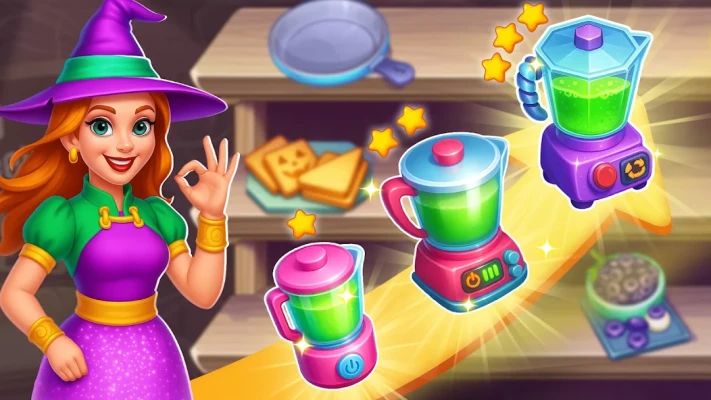
Equipment that shortens cooking time can help when food preparation is the main bottleneck. Serving-related improvements can be more useful when finished meals accumulate faster than you can deliver them.
Use this approach when deciding how to spend earned coins or other resources:
Identify the task that slows you down most often.
Check whether an available upgrade improves that task.
Invest in the most relevant improvement first.
Replay earlier levels if you need to earn additional rewards.
Avoid spending all your resources on upgrades that do not solve your current difficulty.
Strategy 6: Handle Difficult Levels More Efficiently
When a level becomes frustrating, repeating the same approach is rarely the best solution. Identify the reason for failure before trying again.
If food burns, monitor cooking stations more closely. If customers leave, prioritize their orders earlier. If you run out of time, reduce unnecessary actions and organize your sequence of tasks.
Change one part of your strategy at a time. This makes it easier to determine which adjustment actually improves your results.
Strategy 7: Use Boosters Carefully
If the game offers boosters or temporary assistance, save them for levels where they can make a meaningful difference.
Before using one, consider whether your problem is caused by slow cooking, difficult order combinations, or poor task management. A booster may help with a demanding challenge, but it will not necessarily fix an inefficient routine.
Try to complete easier levels without consuming valuable resources. Reserve additional assistance for stages where it can help you overcome a genuine obstacle.
Strategy 8: Build a Consistent Cooking Routine
A repeatable routine reduces hesitation during busy levels. A useful general pattern is to check orders, start necessary cooking tasks, collect ready food, serve completed dishes, and immediately reassess the kitchen.
The order will sometimes change depending on customer patience and cooking times. The important part is to keep reviewing the situation rather than following a rigid sequence when the kitchen becomes busy.
Advanced Tips for Better Results
Experienced players can improve further by paying attention to the relationship between cooking time and customer patience.
Watch for orders that require several preparation steps.
Avoid leaving completed food unattended.
Group compatible actions when the game allows it.
Learn the timing of frequently used cooking stations.
Spend upgrade resources where they produce the greatest practical benefit.
Review unsuccessful attempts and identify the exact cause.
Keep your attention on urgent tasks instead of repeatedly checking completed actions.
The best strategy is not always to perform more actions. It is to perform the right actions at the right time.
Common Mistakes to Avoid
Starting Too Many Dishes
Opening too many cooking tasks at once makes it difficult to track everything. Start with the orders you can manage and expand your workload as you become more comfortable.
Ignoring Waiting Customers
A dish may be easy to prepare, but that does not mean it should always come first. Consider customer patience and the urgency of each order before choosing your next action.
Spending Resources Without a Plan
Upgrades should solve a real problem. Identify the equipment that slows you down and prioritize improvements that make a noticeable difference.
Repeating Failed Strategies
If you fail a level several times, change your approach. Better timing, improved order prioritization, or a relevant equipment upgrade may be more effective than simply tapping faster.
Is Halloween Cooking Fever Chef Worth Playing?
Halloween Cooking Fever Chef is worth considering for players who enjoy casual cooking games, fast-paced food preparation, and Halloween-themed entertainment.
Its main appeal is the combination of a spooky setting and the familiar challenge of keeping a busy kitchen under control. Players who like improving their speed, learning efficient routines, and overcoming increasingly demanding cooking stages may find the gameplay enjoyable.
However, anyone looking for a realistic restaurant simulator with detailed recipe creation may prefer a game focused more heavily on free-form cooking. This experience is better suited to players who enjoy structured challenges and quick decisions.
Pros and Cons
Pros
A distinctive Halloween-inspired cooking theme.
Simple touchscreen-style gameplay.
Combines food preparation with time management.
Encourages planning and multitasking.
Suitable for short casual gaming sessions.
Cons
Fast-paced stages may become challenging for inexperienced players.
Repeated cooking and serving tasks may feel familiar over time.
Success can depend heavily on timing and efficient task management.
The amount of content and available upgrades may vary with the installed version.
Frequently Asked Questions
What is Halloween Cooking Fever Chef?
Halloween Cooking Fever Chef is an Android cooking game featuring a spooky Halloween theme, food preparation, customer orders, and time-management challenges.
How do you play Halloween Cooking Fever Chef?
Learn the kitchen controls, prepare the dishes customers request, monitor cooking progress, and serve completed meals on time. Efficient task management is essential for handling busy levels.
What is the best strategy for difficult levels?
Focus on the tasks that cause the most problems. Monitor cooking stations, prioritize waiting customers, avoid unnecessary actions, and consider relevant equipment upgrades if the game offers them.
How can you stop food from burning?
Keep track of active cooking stations and return to them before food becomes overcooked. Avoid starting too many dishes if you cannot monitor them effectively.
Are kitchen upgrades important?
If upgrades are available, they can help improve efficiency. Prioritize equipment that addresses your biggest bottleneck instead of spending resources without a clear purpose.
Is Halloween Cooking Fever Chef suitable for casual players?
Its cooking and time-management format can appeal to casual players who enjoy short challenges. The faster stages may require practice and better planning.
Can you play Halloween Cooking Fever Chef offline?
Offline availability should be checked in the current game version and its store information. Do not assume that every feature works without an internet connection.
Is Halloween Cooking Fever Chef free?
Check the current Google Play listing for the latest pricing, advertisements, and in-app purchase information, as these details can change.
Final Verdict
Halloween Cooking Fever Chef offers a spooky take on the familiar cooking-game formula. Its main challenge is balancing food preparation, customer orders, and cooking times while keeping the kitchen running smoothly.
New players should focus on learning the controls and avoiding simple mistakes. More experienced players can improve their performance by anticipating busy periods, prioritizing urgent orders, and investing in useful upgrades when available.
If you enjoy Halloween games, restaurant challenges, and fast-paced cooking gameplay, this title may be a fun addition to your mobile game collection.
Rate the Game
User Reviews















Popular Games



















 Android
 iOS
 Windows
 Xbox