

Latest Version
October 02, 2026
BILIBILI HK LIMITED
Role Playing
iOS
0
Report a Problem
More About :game
Players take the role of the acting Director of the Gopher Troupe, leading a team of characters against the Arrival of Fantasyland and attempting to rescue people trapped in a death-like sleep.
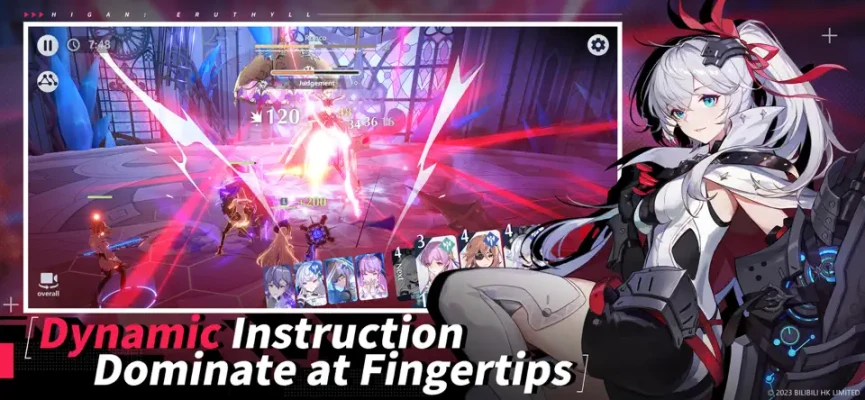
Unlike traditional turn-based RPGs, Higan: Eruthyll emphasizes real-time tactical decisions. Players can issue commands during combat, activate character abilities and use a bullet-time style system to carefully coordinate attacks.
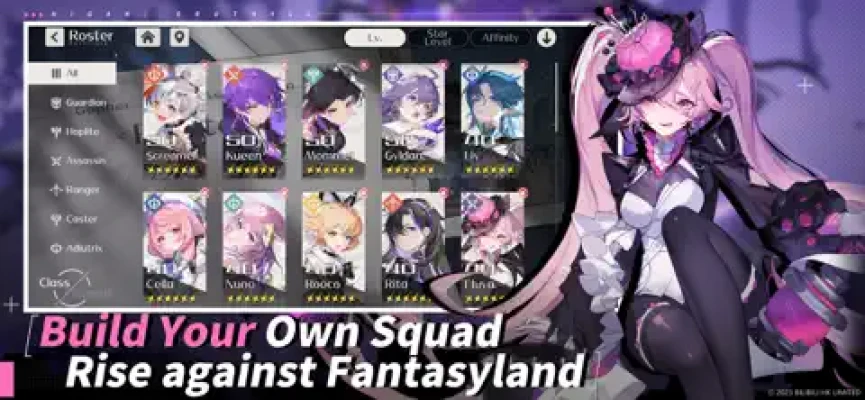
The game features six character classes, five elements and Play Inspirations, giving team building several different layers.
What Is Higan: Eruthyll?
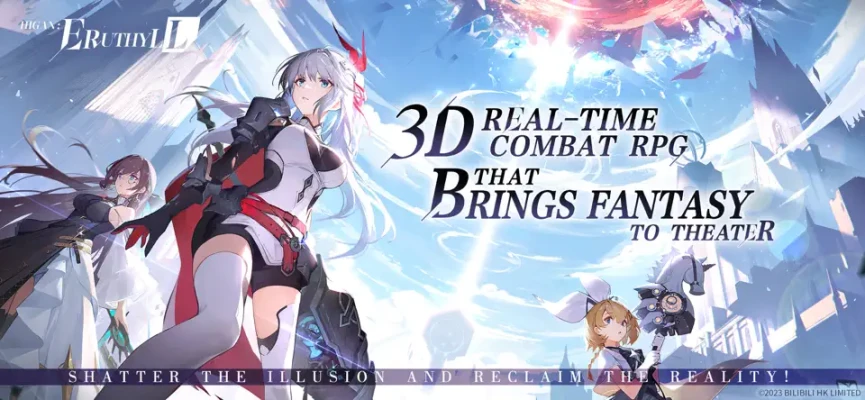
Higan: Eruthyll is a single-player role-playing game developed by BILIBILI HK LIMITED.
Its gameplay combines real-time action with strategic RPG mechanics. Battles take place in 3D environments, while characters can unleash flashy Ultimate Skills and other abilities.
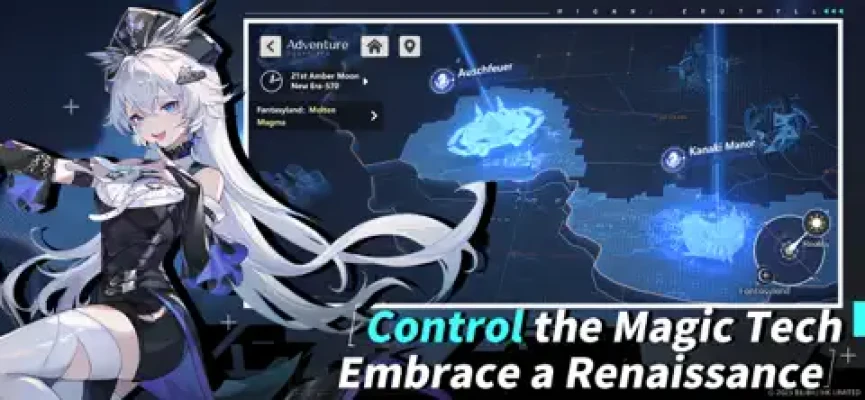
The game's setting mixes magic and technology, creating a visual style built around fantasy landscapes, futuristic effects and theatrical presentation.
The current App Store listing identifies it as a free game with optional in-app purchases and lists support for iPhone and iPad.
Higan: Eruthyll Story
The story takes place on Planet Eruthyll, where Fantasyland has begun threatening reality.
As the acting Director, you lead the Gopher Troupe through different worlds while attempting to stop the Arrival of Fantasyland and awaken people trapped within its nightmare.
The central idea of the story is the struggle between fantasy and reality.
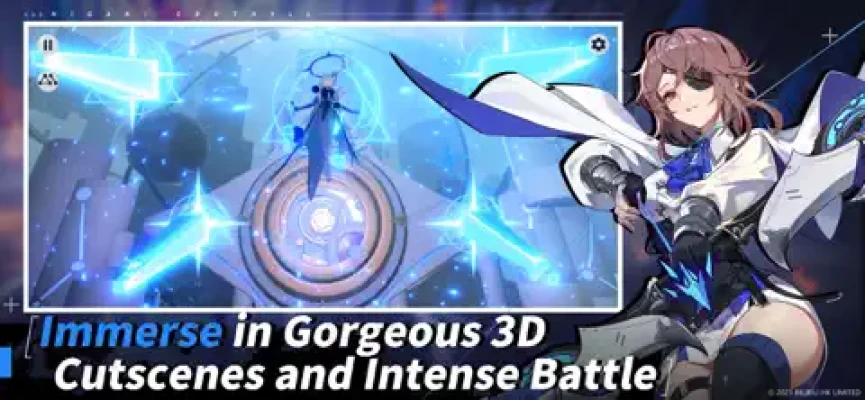
The game uses cinematic cutscenes and voice acting to present its characters and major story events.
Main Features
3D Real-Time Combat
Combat is one of Higan: Eruthyll's defining features.
Rather than waiting for a conventional turn order, you control your squad during real-time encounters. You can choose when to use abilities and react to what is happening on the battlefield.
This makes timing an important part of combat.
Dynamic Instructions
The game uses a dynamic command system that lets you make tactical decisions during battle.
The bullet-time mechanic gives players an opportunity to slow the action while selecting abilities, making it easier to coordinate attacks during intense encounters.
Cinematic Ultimate Skills
Characters have powerful Ultimate Skills presented with elaborate visual effects.
Learning when to use these abilities is an important part of maximizing your team's effectiveness.
Six Classes
The game features six character classes.
Classes determine the general role a character plays within a team, making team composition important when building a squad.
Five Elements
Characters also belong to different elemental types.
Element interactions can influence the outcome of battles, so checking the enemy before entering a difficult stage can help you choose the right team.
Play Inspirations
Play Inspirations provide another progression and customization system.
They allow players to further develop characters and tailor their builds toward different combat goals.
3D Story Presentation
Higan: Eruthyll places significant emphasis on its visual presentation, including 3D cutscenes, cinematic camera work, character animations and elaborate battle effects.
Higan: Eruthyll Beginner Guide
1. Learn the Combat System First
Do not rush through the early battles without learning how the controls work.
Practice:
Moving characters
Selecting abilities
Using Ultimate Skills
Pausing or slowing combat
Switching between targets
Combining character abilities
Once these basics become familiar, later battles become much easier to manage.
2. Do Not Rely Entirely on Auto-Battle
Auto-battle can be convenient for easier encounters, but manual control becomes much more valuable when fighting difficult enemies.
A real-time combat system gives you opportunities to react to enemy attacks and coordinate your strongest abilities.
When a stage becomes difficult, switch to manual control and look for the exact moment where your strategy is failing.
3. Build a Balanced Team
One of the most important Higan: Eruthyll tips is to avoid building a team consisting entirely of damage dealers.
A balanced squad normally needs a mixture of:
Front-line protection
Damage
Support
Healing or recovery
Utility
The game's character classes are designed to provide different battlefield functions.
A beginner guide from BlueStacks specifically notes that Guardians and Hoplites can serve as durable front-line characters, while other classes fill different offensive and support roles.
4. Understand Your Character's Role
Before investing heavily in a character, determine what that character is designed to do.
A tank should not be evaluated purely by damage.
A support character should not be judged only by attack power.
A damage dealer may look impressive but become ineffective if the team cannot keep that character alive.
Always evaluate a character within the context of the complete squad.
5. Check Element Matchups
Five elements are part of Higan: Eruthyll's combat system.
Before starting a difficult battle, check the enemies and consider whether another elemental lineup would perform better.
This can be particularly useful when your characters appear strong enough but still struggle to defeat a particular opponent.
6. Use Bullet Time Strategically
The bullet-time system is more than a visual effect.
Use it when:
Several abilities are ready simultaneously
An enemy is preparing a dangerous attack
You need to coordinate a combo
A support skill needs to be activated before a damage ability
You need time to select the correct target
Do not activate abilities randomly.
Think about what your team is trying to accomplish over the next few seconds.
7. Save Ultimate Skills for Important Moments
Ultimate Skills can have a major impact on battle results.
Using them immediately is not always the best option.
Consider saving them for:
Elite enemies
Bosses
Enemy waves
Vulnerable phases
Important defensive moments
A properly timed Ultimate can sometimes turn a difficult encounter around.
8. Protect Your Front Line
Your front-line characters absorb pressure and create space for your damage dealers.
If your front line falls too quickly, the rest of your team can become vulnerable.
If you repeatedly lose battles, check whether your tank is underdeveloped before assuming that you simply need more damage.
9. Keep Your Main Team Upgraded
Do not spread all your materials across every character.
Choose a core squad and concentrate your early resources on them.
A practical priority is:
Main DPS → Front-line character → Support → Secondary DPS → Situational characters
The exact priority depends on your roster.
10. Upgrade Skills Alongside Levels
Character level is only one part of progression.
If a character's abilities are underdeveloped, simply increasing their level may not solve a difficult battle.
Review the skills of your core characters regularly and invest in abilities that directly support their role.
Higan: Eruthyll Classes Explained
The game features six classes, each intended to fulfill a particular role.
Guardian
Guardians are primarily defensive characters designed to absorb incoming damage.
They are useful when your team needs additional durability.
Hoplite
Hoplites also operate near the front line but can contribute more offensive pressure than a pure defensive character.
This makes them useful when you want durability without completely sacrificing damage.
Ranger
Rangers focus on ranged offensive abilities.
They can deal damage from a safer position and are useful when the team needs consistent ranged attacks.
Adjutant
Adjutants provide support-oriented abilities that can improve the performance and survival of the rest of the squad.
Caster
Casters specialize in magical or ability-based damage and can provide strong offensive pressure.
Assassin
Assassins focus on attacking vulnerable targets and delivering high offensive pressure.
The exact effectiveness of each class depends on the character, build, equipment and battle situation.
Building a Balanced Squad
A simple beginner formation can contain:
Front line: Guardian or Hoplite
Damage: Ranger, Caster or Assassin
Support: Adjutant
Flexible slot: Another damage dealer, support character or defensive unit depending on the encounter.
This is a starting structure rather than a universal team formula.
Some encounters may reward more damage, while others require additional protection or support.
Character Progression Guide
When developing a new character, consider several factors rather than upgrading everything automatically.
Level
Increasing level improves the character's basic combat capabilities.
Skills
Skills determine how effectively a character performs their intended role.
Awakening
Awakening and related progression systems can provide additional character improvements.
Play Inspirations
Play Inspirations allow further customization and can help shape a character toward a particular build.
Team Compatibility
A character becomes more valuable when their abilities work well with the rest of your squad.
Play Inspirations Guide
Play Inspirations are an important part of character customization.
When selecting them, do not simply choose the item with the largest numerical value.
Instead, ask:
What does this character need?
A damage dealer may benefit from offensive improvements.
A tank may need additional durability.
A support character may benefit from stats that improve their ability to maintain the team.
The best build depends on the character's class, abilities and your overall team composition.
Advanced Combat Strategy
Control the Battlefield
Real-time combat gives you more control than a traditional auto-battle RPG.
Watch enemy movement and attack patterns.
If an opponent is preparing a powerful attack, use your available commands to respond rather than continuing your original rotation.
Combine Abilities
Instead of using skills independently, look for combinations.
For example:
Support ability → enemy debuff → damage skill → Ultimate
The exact sequence depends on your characters, but the general principle is to make your strongest attacks benefit from your team's buffs and debuffs.
Focus on Dangerous Enemies
When facing multiple enemies, identify which opponent creates the greatest threat.
A dangerous enemy that survives for too long may cause more damage than several weaker enemies combined.
Eliminating the highest-priority target first can therefore make the entire encounter easier.
Use Defensive Skills Before Disaster
Do not wait until a character is almost defeated before using defensive abilities.
Watch the enemy's attack pattern and activate protection before the major hit lands.
Manual Control for Bosses
Auto-battle is convenient for routine farming, but manual play gives you more control during difficult encounters.
Against bosses, pay attention to:
Attack animations
Skill cooldowns
Enemy positioning
Element interactions
Character HP
Ultimate availability
Beginner Progression Route
A simple early-game progression routine is:
Step 1
Complete the main story stages.
Step 2
Unlock the game's major systems.
Step 3
Choose a core squad.
Step 4
Upgrade those characters instead of spreading resources.
Step 5
Improve equipment and Play Inspirations.
Step 6
Learn elemental matchups.
Step 7
Switch to manual combat when auto-battle starts failing.
Step 8
Farm the resources needed for your main team.
Step 9
Develop secondary characters for specialized content.
Step 10
Return to difficult stages after improving the squad.
Higan: Eruthyll Farming Tips
Resource farming becomes increasingly important as character progression expands.
When farming:
Identify the material you actually need.
Use your available stamina efficiently.
Prioritize your main squad.
Avoid upgrading characters you do not intend to use.
Complete available daily activities.
Take advantage of event rewards when available.
The game has received updates adding new story content, characters and gameplay improvements over time. The App Store history includes additions such as the Feast Haze story and character Tibby, a new Starlight Express difficulty, and an optimized auto-battle system.
Higan: Eruthyll Gacha Tips
Higan: Eruthyll uses character recruitment and in-game currencies, so resource management matters.
For free-to-play players, avoid spending every premium resource immediately.
Before using currency, ask:
Does the character fill a role my team needs?
Do I already have a strong character in the same role?
Does the character work with my current elements?
Will the new character require a completely different team?
How many resources will remain afterward?
A strong account is not necessarily the account with the largest roster. It is the account where resources have been invested efficiently.
Daily Routine
A useful daily routine can be:
Collect available rewards.
Complete daily activities.
Progress through available story content.
Farm the resources required for your main team.
Upgrade core characters.
Check recruitment events.
Complete limited-time activities.
Save remaining resources for future upgrades.
If you are playing casually, focus on the activities that provide the greatest progression rather than trying to complete everything every day.
Story and World
Higan: Eruthyll's world combines fantasy, theater, magic and technology.
The Gopher Troupe travels between worlds while attempting to restore reality and fight the influence of Fantasyland.
The presentation uses 3D environments, cinematic camera movements, character animations and voice acting to give the story a theatrical atmosphere.
The game's visual identity is one of its strongest distinguishing features, particularly during Ultimate Skills and major story sequences.
Current Game Information
According to the current U.S. App Store listing:
Game: Higan: Eruthyll
Genre: Role-Playing
Developer: BILIBILI HK LIMITED
Platform: iPhone and iPad
Business model: Free with in-app purchases
Age rating: 13+
Language: English
Listed size: approximately 4.1 GB
Current App Store rating: 3.4/5 from 937 ratings
The Google Play listing also currently describes the game as a single-player, anime-styled, action-strategy RPG and shows an update dated April 28, 2026.
Because the game is large at approximately 4.1 GB on the current iOS listing, players should make sure sufficient storage is available before installation.
Player Feedback
Current App Store feedback is mixed.
Some players praise the game's combat, character designs, animations and overall visual presentation. Other reviews criticize aspects such as story quality, progression, content pacing and monetization. These are individual player opinions and can differ considerably between players.
The current U.S. App Store listing shows 3.4/5 from 937 ratings, while the Google Play listing currently shows 3.4 stars from 10.8K reviews.
Pros and Cons
Pros
High-quality 3D character presentation
Real-time tactical combat
Bullet-time command system
Six character classes
Five elements
Play Inspirations for customization
Cinematic Ultimate Skills
Anime-inspired visual style
Magic-and-technology setting
Voice-acted story presentation
Multiple character-building options
Cons
Large installation size
Gacha-based character collection
Resource management becomes increasingly important
Some players report concerns about story and content pacing
The number of systems can be overwhelming for beginners
Team composition matters considerably in harder battles
Is Higan: Eruthyll Worth Playing?
Higan: Eruthyll is built around a combination of real-time RPG combat, anime-style visuals and tactical team building.
Its combat is particularly different from conventional turn-based gacha RPGs because players can issue commands during battles and use the bullet-time system to coordinate abilities.
For new players, the most important priorities are learning the combat controls, building a balanced team, understanding the five elements and investing resources into a focused group of characters.
Players who enjoy character-collection RPGs with cinematic presentation and real-time tactical combat will find several systems to explore, while those who prefer purely manual action combat should remember that Higan: Eruthyll remains fundamentally an RPG built around character statistics, team composition and abilities.
Higan: Eruthyll FAQ
What is Higan: Eruthyll?
Higan: Eruthyll is a 3D real-time combat RPG set on Planet Eruthyll, where players lead the Gopher Troupe against Fantasyland.
Is Higan: Eruthyll free?
Yes. The game is free to download with optional in-app purchases.
Is Higan: Eruthyll an open-world game?
No. It is primarily a structured RPG with story stages and combat content rather than a traditional open-world game.
How does combat work?
Combat takes place in real time. Players can issue dynamic commands and use a bullet-time system to select abilities and coordinate attacks.
How many classes are in Higan: Eruthyll?
The game features six classes.
How many elements are there?
Higan: Eruthyll features five elemental types.
What are Play Inspirations?
Play Inspirations are progression and customization components that can be used to further develop characters and their builds.
Should I use auto-battle?
Auto-battle is useful for easier content and farming, but manual control is more valuable when dealing with difficult stages and bosses.
What is the best beginner team?
There is no single universal team. A balanced starting structure generally includes a durable front-line character, one or two damage dealers and a support character.
What should I upgrade first?
Concentrate resources on your primary team. Upgrade levels, important skills and character progression before investing heavily in secondary characters.
Is Higan: Eruthyll available on iPhone?
Yes. The App Store lists Higan: Eruthyll for iPhone and iPad.
Final Thoughts
Higan: Eruthyll combines cinematic anime-style presentation with real-time tactical RPG combat. Its most distinctive systems include dynamic commands, bullet-time combat, six character classes, five elements and Play Inspirations.
For beginners, the smartest way to approach the game is to build a focused core squad rather than spreading resources across every character. Learn how each class contributes to a team, check elemental interactions, use manual control when battles become difficult and time your Ultimate Skills around important moments.
Once the fundamentals are understood, the game becomes much more about team composition, timing and tactical decision-making than simply increasing character levels.
Rate the Game
User Reviews









Popular Games















 Android
 iOS
iOS Windows
 Xbox
Xbox