
Latest Version
January 20, 2026
Pham Anh
Puzzle
iOS
0
Report a Problem
More About :game
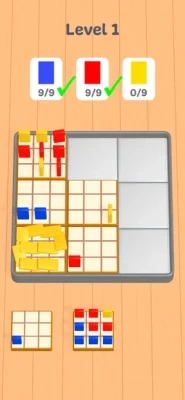
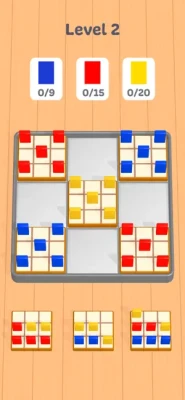
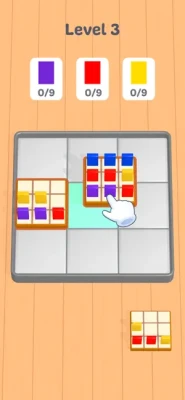
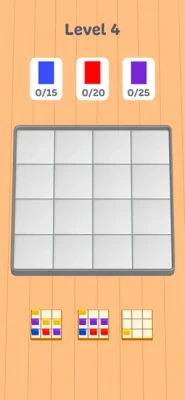
Domino Sort! offers a simple idea with a surprisingly strategic twist. Instead of moving individual blocks one at a time, you work with plates containing blocks of different colors.
Your job is to place the plates into the field in the right positions. When blocks of the same color are spread across different plates, they automatically group together on the appropriate plate.
The result is a satisfying combination of color sorting, space management, planning, and puzzle solving.
The App Store categorizes Domino Sort! as a Puzzle game and lists Pham Anh as the developer. It is free and designed for iPad, while also supporting iPhone and other compatible Apple platforms.
How to Play Domino Sort!
The basic gameplay is easy to understand:
- Start a level with several plates containing colorful blocks.
- Pick up a plate.
- Drag and drop the plate onto the available playing field.
- Watch matching colors automatically group together.
- Continue placing plates strategically.
- Fulfill the level's sorting requirements.
- Avoid filling the available space and causing the game to end.
The challenge comes from deciding where and when to place each plate.
Color Sorting Puzzle Gameplay
Color sorting is the heart of Domino Sort!.
Each plate can contain blocks of different colors, creating a puzzle that changes as you make your moves. Because matching blocks automatically rearrange themselves, every plate placement can affect the rest of the board.
This creates a gameplay experience where a seemingly simple move can have a much bigger impact on the available space.
Strategic Plate Placement
The most important decision in Domino Sort! is where to place each plate.
The game gives you a limited amount of space, so careless placement can quickly make the board difficult to manage. Successful players need to think ahead and consider how the automatic sorting system will change the arrangement of blocks.
A good move is not necessarily the move that solves one color immediately. Sometimes the better choice is the move that leaves enough room for several future plates.
Automatic Color Sorting
One of Domino Sort!'s defining mechanics is its automatic sorting system.
When blocks of the same color appear on different plates, they automatically group together on one plate. This gives the game a satisfying visual response while reducing the need for repetitive manual sorting.
The mechanic also creates strategic opportunities because your plate placement determines how the colors interact.
Space Management
Space is one of the main challenges in Domino Sort!.
Every level gives you a playing field where plates must be positioned carefully. If the field becomes too crowded, you risk losing the level.
That means players need to balance two goals:
- Sort colors efficiently.
- Keep enough open space for upcoming moves.
Good space management can make the difference between completing a puzzle and running out of room.
Complete the Level Requirements
Each level has sorting requirements that must be satisfied.
Your objective is not simply to move plates around randomly. Every move should contribute toward completing the required color arrangement while keeping the board manageable.
The combination of objectives and limited space gives Domino Sort! its puzzle-solving character.
Domino Sort! Gameplay Loop
The central gameplay loop can be summarized as:
Choose a Plate → Drag and Drop → Trigger Color Sorting → Manage Space → Meet Requirements → Complete the Level
This structure makes the game accessible to beginners while leaving room for more thoughtful planning.
Main Game Features
Colorful Block Sorting
Organize blocks according to their colors and create cleaner arrangements across the board.
Automatic Matching
Matching blocks on different plates automatically group together, making each move visually satisfying.
Drag-and-Drop Controls
Move plates around the field using a straightforward drag-and-drop interaction.
Strategic Puzzle Solving
Think about the consequences of every placement before committing to a move.
Space Management
Keep the playing field under control so you do not run out of room.
Level-Based Challenges
Continue arranging plates until the requirements for the current puzzle are fulfilled.
Simple but Engaging Gameplay
The core rules are easy to learn, but careful planning becomes important as you manage the available space.
Controls and Interface Guide
Domino Sort! uses simple touch-based controls.
Dragging Plates
Select a plate and drag it to the desired position on the playing field.
Dropping Plates
Release the plate in the appropriate location and allow the game's automatic sorting mechanic to process matching colors.
Observing the Board
After every move, look at the new arrangement before deciding what to do next. The automatic movement of matching blocks can change the board significantly.
Beginner's Guide
If you're new to Domino Sort!, don't worry about solving everything immediately. Start by understanding how the automatic color grouping works.
Tip 1: Look at Every Plate
Before moving anything, inspect the colors on all available plates.
Tip 2: Think About Space
Do not use all available space too quickly. Keeping open areas gives you more options later.
Tip 3: Use Automatic Sorting
Remember that matching colors will automatically group together. Plan your moves around this mechanic rather than trying to manually control every block.
Tip 4: Plan More Than One Move Ahead
A plate that looks useful now may create a problem later. Consider what space will remain after the move.
Tip 5: Avoid Random Placement
Every plate placement should have a purpose. Random moves can quickly fill the field and leave you with no useful options.
Advanced Puzzle Strategy
Experienced players can approach Domino Sort! as a space-management puzzle rather than simply a color-matching game.
Before making a move, consider:
- Which colors are already close to being grouped?
- Which plate will create the most useful space?
- Where will the next plate fit?
- Could automatic sorting block an important area?
- Will the current move leave enough room for future plates?
The strongest strategy is to think about the entire board, not just the immediate color match.
Why Space Matters So Much
Many color sorting games focus almost entirely on matching. Domino Sort! adds another layer by making board space an important resource.
A move can be correct from a color perspective but still be strategically poor if it leaves the field too crowded.
This makes the game appealing to players who enjoy puzzles requiring both pattern recognition and spatial planning.
Game Difficulty
Domino Sort! starts with an approachable concept. The rules are simple enough to understand quickly: move plates, sort colors, and complete the level.
The strategic element comes from managing the board efficiently. As the arrangement becomes more complicated, players need to pay greater attention to future moves and available space.
Game Theme and Visual Style
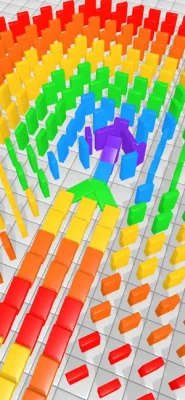
Domino Sort! uses a bright, colorful puzzle presentation centered around plates and colored blocks.
The visual design supports the game's main mechanic: players can quickly identify different colors and watch matching blocks come together after making a move.
The automatic sorting effect also provides a satisfying visual reward for successful decisions.
Story and Characters
Domino Sort! is a gameplay-focused puzzle rather than a story-driven adventure.
The App Store listing does not advertise a narrative campaign, named characters, or character progression. The focus is instead on completing sorting challenges and managing the puzzle board.
Progression System
The primary progression structure comes through completing puzzle levels.
Rather than relying on a traditional character-leveling system, Domino Sort! centers progression around improving your ability to organize plates, manage space, and satisfy the sorting requirements of each puzzle.
Game Modes
The App Store description presents Domino Sort! as a focused puzzle experience built around its plate-sorting mechanic. It does not advertise separate multiplayer, competitive, or story modes.
The main gameplay experience revolves around:
- Color sorting
- Plate placement
- Automatic matching
- Space management
- Level completion
Who Will Enjoy Domino Sort!?
Domino Sort! may be a good choice for players who enjoy:
- Color sorting games
- Block puzzle games
- Matching puzzle games
- Brain-training style puzzles
- Casual mobile games
- Spatial reasoning puzzles
- Drag-and-drop games
- Relaxing puzzle challenges
- Simple strategy games
- Color-matching games
Domino Sort! on iPhone and iPad
Domino Sort! supports iPhone and iPad. The App Store lists a requirement of iOS 12.0 or later for iPhone and iPadOS 12.0 or later for iPad. The listed download size is approximately 88.6 MB.
Technical Details
- Game: Domino Sort!
- Developer: Pham Anh
- Genre: Puzzle
- Price: Free
- Language: English
- Size: 88.6 MB
- iPhone Requirement: iOS 12.0 or later
- iPad Requirement: iPadOS 12.0 or later
- Age Rating: 13+
- Supported Platforms: iPhone, iPad, iPod touch, Mac with Apple silicon, and Apple Vision compatibility as listed by the App Store
Accessibility
Apple's current App Store listing states that the developer has not yet indicated which accessibility features the app supports.
Ratings and Reviews
At the time of checking the App Store listing, Domino Sort! had not received enough ratings or reviews for Apple to display an overall ratings summary.
Pros and Cons
Pros
- Easy-to-understand puzzle concept
- Colorful block-based gameplay
- Automatic sorting creates satisfying interactions
- Drag-and-drop controls are straightforward
- Requires strategic space management
- Free to play
- Supports iPhone and iPad
Cons
- The App Store provides limited information about long-term progression
- No advertised story campaign
- No advertised multiplayer mode
- The developer has not specified accessibility features on the listing
What Makes Domino Sort! Different?
Domino Sort! combines color matching with spatial management.
The automatic sorting mechanic means you are not simply matching blocks manually. Instead, you control the larger plates and let the game handle the grouping of matching colors.
This makes the player's decisions more about positioning, timing, and planning.
Domino Sort! vs. Traditional Color Sorting Games
Traditional color sorting games often ask players to move individual objects between containers until every color is separated.
Domino Sort! takes a slightly different approach. You move entire plates while the game automatically groups matching blocks.
That difference gives the game a more spatial and strategic feel. Instead of focusing only on which block to move, you need to consider where the whole plate should go.
Expert Rating
Gameplay: 7.5/10
Puzzle Concept: 8/10
Accessibility: 8/10
Visual Satisfaction: 7.5/10
Strategic Depth: 7/10
Overall: 7.6/10
This editorial rating reflects the documented gameplay concept and does not imply an official score from Apple or the developer.
Final Verdict
Domino Sort! is a colorful puzzle game that turns a simple sorting idea into a spatial strategy challenge.
The rules are easy to learn: move plates, allow matching colors to group together, satisfy the level requirements, and avoid running out of space. However, successful play requires more than simply matching colors. You need to think ahead and use the available field carefully.
If you enjoy color sorting puzzles, block games, matching challenges, and casual brain games, Domino Sort! offers a straightforward experience with a satisfying automatic sorting mechanic.
Frequently Asked Questions
What is Domino Sort!?
Domino Sort! is a puzzle game based on organizing colorful blocks on plates and automatically grouping blocks of the same color.
How do you play Domino Sort!?
You pick up plates and drag them onto the playing field. Matching blocks on different plates automatically group together, while you try to satisfy the level requirements without running out of space.
Is Domino Sort! free?
Yes. The App Store lists Domino Sort! as a free game.
Is Domino Sort! available on iPhone?
Yes. Domino Sort! supports iPhone and requires iOS 12.0 or later.
Can I play Domino Sort! on iPad?
Yes. The game supports iPad and requires iPadOS 12.0 or later.
What type of game is Domino Sort!?
Domino Sort! is categorized as a Puzzle game on the App Store.
Who developed Domino Sort!?
The App Store lists Pham Anh as the developer of Domino Sort!.
What is the main objective in Domino Sort!?
The objective is to strategically place plates, automatically group matching colors, satisfy the level requirements, and avoid filling the available playing area.
Does Domino Sort! have multiplayer?
The current App Store description does not advertise a multiplayer mode, so it should not be described as a multiplayer game without additional confirmation.
Does Domino Sort! have a story?
The App Store listing does not describe a story campaign. The game is focused on puzzle-solving and color sorting.
Domino Sort! is a casual color-sorting puzzle built around plates, colorful blocks, automatic matching, and careful space management. Its drag-and-drop controls make the basic gameplay accessible, while the limited playing area encourages players to plan their moves carefully.
Rate the Game
User Reviews














Popular Games



















 Android
 iOS
iOS Windows
 Xbox
Xbox