



Latest Version
October 18, 2025
COTTONGAME Network Technology Co., Ltd.
Puzzle
iOS
0
Report a Problem
More About :game
Developed by COTTONGAME Network Technology Co., Ltd., this distinctive adventure combines artistic visuals, immersive exploration, and logical challenges. It is a suitable choice for players who enjoy mysterious environments, creative puzzle mechanics, and games that reward careful observation.
Game Overview
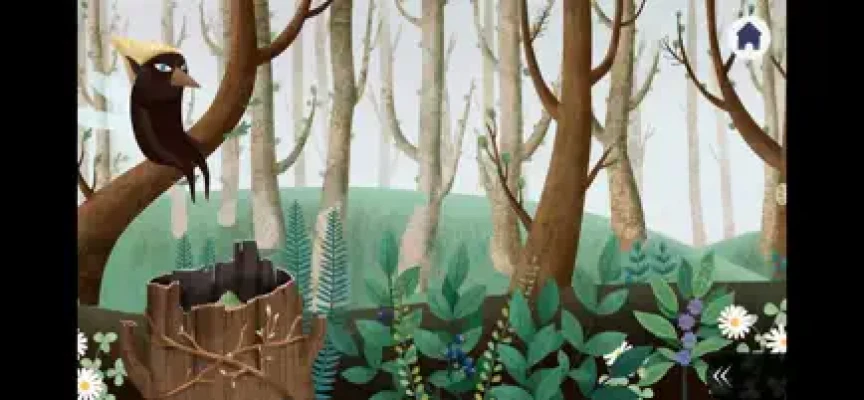
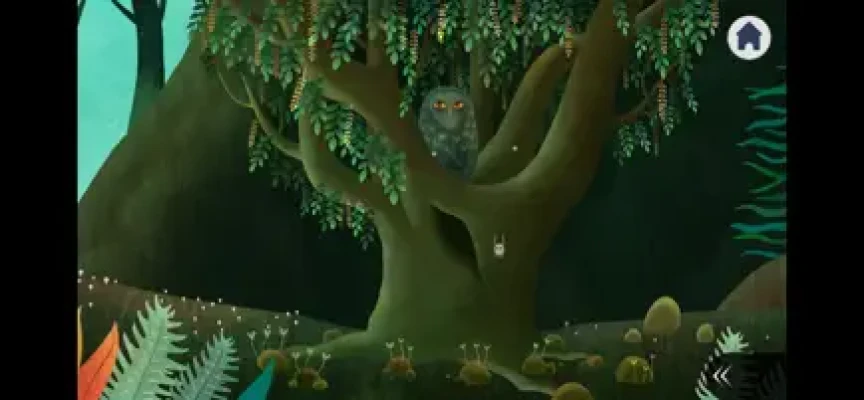
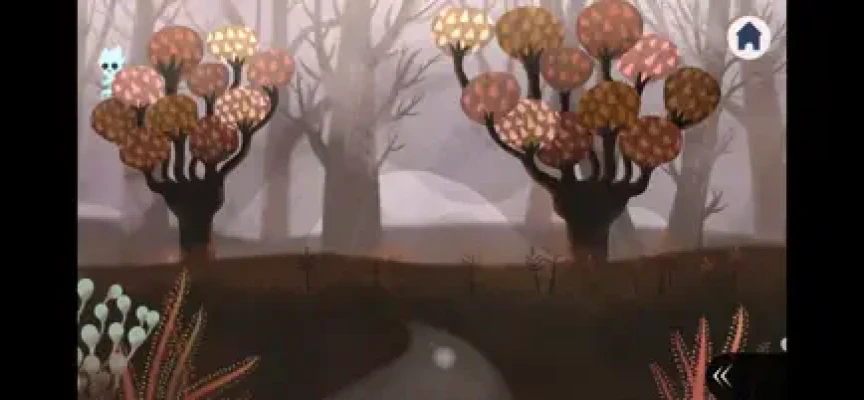
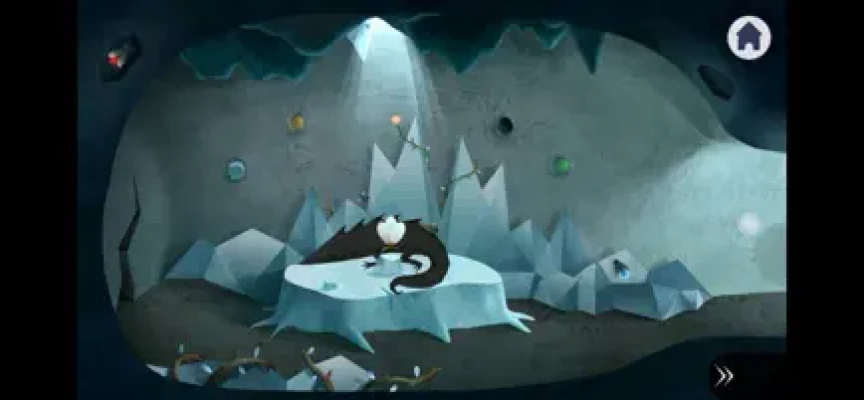
Deep in the Woods offers a different approach to the traditional point-and-click puzzle genre. Its environments are designed to resemble detailed paintings, encouraging players to explore each scene rather than simply search for obvious objects.
The central gameplay idea is to interact with the illustrated world using touchscreen gestures. Players can drag and swipe across the screen to investigate locations, uncover details, and discover how different elements connect.
This approach makes exploration an important part of every puzzle. An object that appears ordinary at first may become meaningful after the player examines the surrounding environment more carefully.
The game focuses on observation, experimentation, and logical thinking. It does not depend on fast movement or competitive action, making it a more relaxed experience for players who enjoy solving challenges at their own pace.
Main Gameplay Features
Beautifully Illustrated Environments
The most distinctive feature of Deep in the Woods is its artistic presentation. The game uses carefully designed scenes that resemble paintings, giving its world a unique visual identity.
Each environment contains details that encourage players to investigate beyond the obvious. The artwork is not simply decorative; it forms an important part of the puzzle-solving experience.
Interactive Dragging and Swiping
Unlike conventional point-and-click games that rely mainly on tapping objects, Deep in the Woods introduces more direct touchscreen interaction.
Players can drag and swipe across scenes to explore their surroundings. These gestures help reveal details and create a stronger sense of interaction with the illustrated environments.
Learning how to use these controls effectively is essential for making progress.
Point-and-Click Puzzle Challenges
The game combines environmental exploration with traditional puzzle-solving. Players must examine objects, identify useful clues, and understand how different elements relate to one another.
Some challenges may require careful observation, while others involve experimenting with the available interactions.
Immersive Exploration
The environments are designed to encourage curiosity. Instead of immediately revealing every important detail, the game asks players to investigate scenes and discover their interactive possibilities.
This creates a more involved experience in which exploration and puzzle-solving work together.
Atmospheric Presentation
Deep in the Woods emphasizes visual atmosphere rather than constant action. Its illustrated environments and carefully constructed scenes help create an experience that feels closer to exploring an interactive artwork than playing a conventional puzzle game.
Try Before You Buy
The App Store listing currently offers the game as a free download with an in-app purchase to unlock the complete experience. This allows players to try the beginning before deciding whether to purchase the full game.
Understanding the Gameplay Mechanics
Scene Exploration
Exploration is the foundation of Deep in the Woods. Each scene should be treated as an interactive environment rather than a static picture.
Players should examine different parts of the screen, look for unusual details, and test available gestures. A puzzle may depend on noticing something that is easy to overlook during a quick examination.
Dragging and Swiping
Dragging and swiping are important because they allow players to interact with the scenes in a more natural way.
When exploring an unfamiliar location, try moving across different areas instead of repeatedly tapping the same object. Pay attention to changes in the scene and any visual feedback that indicates a successful interaction.
Observation and Logical Thinking
The game rewards players who take time to understand what they see.
A successful solution often begins with identifying a pattern, recognizing an unusual object, or understanding how several visual elements might be connected.
Rather than guessing randomly, study the available clues and develop a possible explanation before trying an action.
Puzzle Progression
Progress depends on discovering interactions and solving challenges. Completing one puzzle may help reveal the next opportunity for exploration.
If a scene appears to have no remaining possibilities, reconsider its details and check whether an earlier interaction has changed anything.
Complete Strategy Guide
Getting Started
When starting Deep in the Woods, take a moment to become familiar with its controls.
The game uses dragging and swiping as important parts of its interaction system, so do not approach every scene as though it were a standard tap-only puzzle game.
Begin by exploring the visible environment. Test the available gestures, observe how the scene responds, and pay attention to any objects or areas that appear different from their surroundings.
Understanding the controls early makes later challenges easier to approach.
Examine Every Scene Carefully
One of the best strategies is to avoid rushing through an environment.
Look across the entire scene and examine its details. Pay attention to unusual shapes, objects, symbols, patterns, and areas that appear to have a special purpose.
The game's illustrated presentation can make interactive elements blend naturally into the artwork. Careful observation helps prevent important clues from being missed.
Experiment with Different Gestures
If tapping does not produce a result, try a different interaction.
Move across the screen slowly, test dragging where appropriate, and explore areas that may contain hidden details.
Do not assume that every object responds to the same gesture. Understanding how the game handles interaction is part of solving its challenges.
Look for Visual Patterns
Patterns are valuable clues in many puzzle games.
When you encounter repeated shapes, symbols, colors, or arrangements, consider whether they might be connected to another part of the scene.
Compare similar objects and look for differences. A small variation may provide the information needed to understand a puzzle.
Connect Clues Instead of Guessing
Some challenges may not be solved by examining a single object. You may need to combine information from several parts of the environment.
When you discover an interesting detail, remember it and consider whether it relates to another object or location.
A useful approach is to ask yourself:
What is unusual about this scene?
Which objects appear connected?
Have I noticed a repeated pattern?
Does the environment suggest a particular sequence?
Have I tried all relevant gestures?
This process encourages logical experimentation rather than random actions.
Revisit Areas When Necessary
If you become stuck, return to previously examined parts of the environment.
A clue that seemed unimportant earlier may become meaningful after you discover another detail. Reconsidering the scene with new information can reveal a connection that was not obvious at first.
Be Patient with Difficult Puzzles
Deep in the Woods is designed around observation and interaction, so some puzzles may require more thought than others.
If an action does not work, pause and reconsider the problem. Repeating the same gesture without understanding the objective is unlikely to help.
Try a different approach, examine the surrounding artwork, and look for overlooked information.
Approach Interactive Challenges Carefully
The game also includes interactive sequences that provide variety beyond ordinary scene exploration. Some challenges may require more precise actions or quicker reactions.
When you encounter one, pay attention to its instructions and behavior before making repeated attempts.
If a challenge depends on timing or coordination, focus on understanding its pattern and responding consistently.
Advanced Tips for Better Progress
Explore before interacting. Study the full scene before deciding which object deserves attention.
Use different gestures. Dragging and swiping are important mechanics, so experiment with them instead of relying exclusively on tapping.
Notice small visual differences. A subtle change in an illustrated environment may be an important clue.
Remember unusual details. Information discovered in one part of a scene may help explain another puzzle.
Avoid random experimentation. Try to understand the purpose of an interaction before repeating it.
Reconsider unsolved areas. If you cannot progress, return to earlier scenes and examine them from a different perspective.
Take breaks when necessary. A short pause can make it easier to notice patterns that were previously overlooked.
Learn the interaction style. The more familiar you become with the game's gesture-based mechanics, the more naturally you will approach its challenges.
Common Mistakes to Avoid
Treating Every Scene Like a Static Picture
The artwork is designed for interaction. Simply looking at a scene without testing its possible gestures can cause you to miss important discoveries.
Using Only Tap Controls
Dragging and swiping are central to the experience. Players who rely exclusively on tapping may overlook the game's distinctive mechanics.
Rushing Through the Artwork
Moving too quickly can make small clues difficult to notice. Take time to examine the environment before moving forward.
Ignoring Repeated Patterns
Similar shapes or objects may be connected to a puzzle. Pay attention to repeated visual elements and their positions.
Repeating Unsuccessful Actions
If an interaction does not work, do not continue performing it without reconsidering the situation. Look for additional information or try a different approach.
Forgetting Earlier Clues
Some puzzle solutions may depend on information discovered previously. Keep important visual details in mind as you explore new scenes.
Graphics, Sound, and Overall Presentation
Deep in the Woods places considerable emphasis on artistic presentation. Its environments are designed to resemble carefully composed paintings, creating a visual experience that feels different from many conventional mobile puzzle games.
The detailed scenes encourage players to look closely at their surroundings. Rather than presenting every object as an obvious interactive element, the game integrates exploration into the artwork itself.
The gesture-based controls also contribute to the atmosphere. Dragging and swiping allow players to interact with the scenes in a more direct way, making the environments feel less like static backgrounds and more like spaces to investigate.
The overall experience is best suited to players who appreciate artistic puzzle games and prefer thoughtful exploration over fast-paced action.
Is Deep in the Woods Free to Play?
Deep in the Woods is available as a free download on the App Store, but the complete game requires an in-app purchase.
The current listing uses a Try Before You Buy payment model. Players can experience the available opening content before purchasing the full game.
The US App Store listing shows a full-game purchase priced at $2.99. Prices may vary by country and can change over time.
Game Information
Category | Details |
|---|---|
Game title | Deep in the Woods |
Developer | COTTONGAME Network Technology Co., Ltd. |
Genre | Puzzle |
Gameplay style | Point-and-click adventure |
Main mechanics | Dragging, swiping, scene exploration |
Visual style | Illustrated, painting-like environments |
Main activities | Exploration and interactive puzzles |
Game mode | Single-player |
Monetization | Free download with full-game purchase |
Supported devices | iPhone, iPad, Mac, Apple Vision |
Minimum iOS version | iOS 16.0 or later |
App size | Approximately 1.2 GB |
Age rating | 13+ |
Languages | English, French, German, Japanese, Korean, Portuguese, Russian, Simplified Chinese, Spanish, Traditional Chinese |
Developer's privacy information | App Store listing indicates no data collected |
Store specifications and regional purchase prices may change with future updates.
Frequently Asked Questions
What is Deep in the Woods?
Deep in the Woods is a point-and-click puzzle game featuring beautifully illustrated environments. Players explore scenes through dragging and swiping while discovering interactive details and solving puzzles.
Who developed Deep in the Woods?
The game was developed by COTTONGAME Network Technology Co., Ltd.
How do you play Deep in the Woods?
Players explore illustrated scenes using touchscreen gestures. Dragging, swiping, and examining different parts of the environment help uncover interactive elements and solve puzzles.
Is Deep in the Woods a traditional hidden-object game?
Not exactly. Although observation is important, its gameplay focuses on interactive scene exploration and point-and-click puzzle mechanics rather than simply finding a list of hidden objects.
What makes Deep in the Woods different?
Its painting-like environments and gesture-based exploration distinguish it from many traditional mobile puzzle games. Players can interact with scenes through dragging and swiping, creating a more immersive experience.
Is Deep in the Woods free?
The game is free to download, but accessing the complete experience requires an in-app purchase.
Can you play Deep in the Woods on an iPad?
Yes. The App Store listing supports both iPhone and iPad, as well as Mac and Apple Vision compatibility.
Does Deep in the Woods require iOS 16?
Yes. The current App Store listing specifies iOS 16.0 or later for iPhone.
Is Deep in the Woods suitable for casual puzzle fans?
Yes. Its exploration-focused gameplay is a good fit for players who enjoy visual puzzles, artistic environments, and taking their time to understand challenges.
Is Deep in the Woods an action game?
No. It is primarily a puzzle experience. Its main focus is exploration, visual observation, and interactive problem-solving rather than combat or fast-paced action.
Final Verdict
Deep in the Woods is a distinctive puzzle adventure that combines artistic environments with an unusual approach to point-and-click gameplay. Its painting-like scenes invite players to explore carefully, while dragging and swiping create a more interactive way to investigate the world.
The game is especially appealing to people who enjoy visual puzzles, atmospheric environments, and challenges that reward patience and attention to detail. Its controls may take a little time to understand, but learning how to explore the scenes is part of what makes the experience interesting.
Although players looking for fast action or straightforward puzzle solutions may prefer a different style of game, Deep in the Woods offers something worthwhile for fans of thoughtful exploration.
With its distinctive artwork, interactive environments, and creative puzzle approach, Deep in the Woods is a good choice for anyone looking for a more artistic and immersive mobile puzzle experience.
Rate the Game
User Reviews













Popular Games



















 Android
 iOS
 Windows
 Xbox