
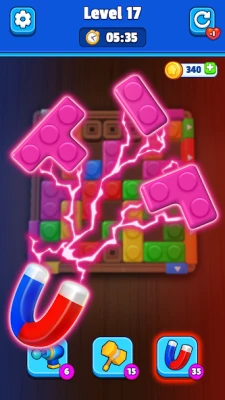
Latest Version
May 10, 2025
TAAP GAME STUDIO
Puzzle
Android
0
com.color.jam.away.block.puzzle
Report a Problem
More About :game
The game is designed to be easy to understand but increasingly difficult to master. Instead of simply matching colors, you need to think about the order in which blocks move and make sure one piece does not prevent another from reaching its destination.
Google Play currently lists the game in the Puzzle category with 100K+ downloads, a 4.4-star rating, ads and in-app purchases.
How to Play Color Jam Away
The basic gameplay loop is:
Slide → Position → Match → Clear → Solve
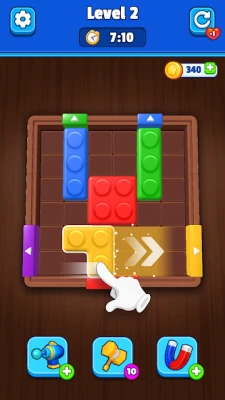
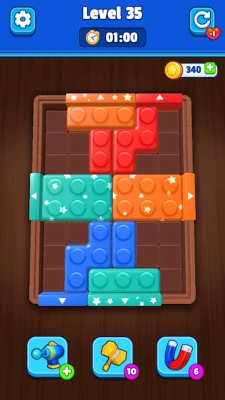
Each colored block needs to reach the door that corresponds to its color.
Before moving anything, examine the entire board.
A block that looks easy to move may actually be blocking another piece. This means that solving a level is often less about making a single correct move and more about finding the correct sequence of moves.
The Google Play description specifically instructs players to slide colored blocks, match them with their corresponding doors, avoid obstacles and complete levels using as few moves as possible.
Color Jam Away Gameplay Features
Slide-to-Match Puzzle Gameplay
The main mechanic is based on sliding colored blocks around the board and sending them to matching doors.
The controls are designed for touch screens, making the game straightforward to pick up on phones and tablets.
Hundreds of Puzzle Levels
The game features hundreds of unique levels, ranging from relatively relaxing puzzles to much more difficult challenges.
Obstacles and Special Mechanics
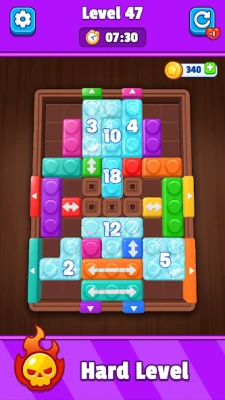
Later puzzles introduce additional obstacles and mechanics. These can restrict movement, change the way blocks interact or force you to carefully plan the order of your moves.
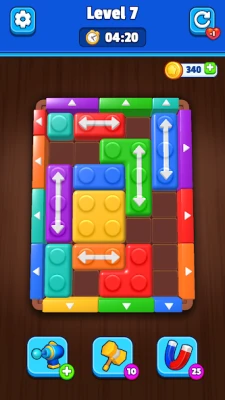
Limited Moves and Time Pressure
Some challenges include limited moves or a time element. This means that simply experimenting with random movements can eventually leave you without enough options to finish the puzzle.
Boosters and Power-Ups
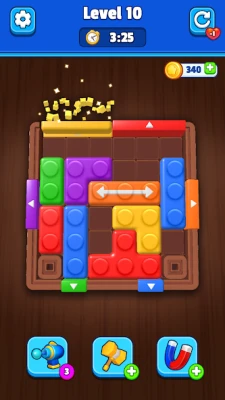
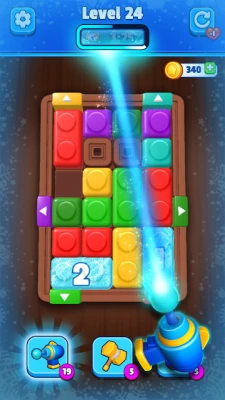
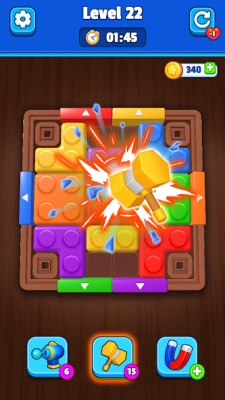
Color Jam Away includes boosters such as Time Freeze and Hammer, which can help when a puzzle becomes particularly difficult.
Colorful Visual Design
The game uses bright colors, smooth animations and a simple visual style intended to keep the board easy to understand while maintaining a casual puzzle atmosphere.
Full Color Jam Away Strategy Guide
1. Study the Board Before Moving
The most important beginner habit is simple:
Don't move the first block you see.
Spend a few seconds examining:
- Every colored block
- Every matching door
- Obstacles
- Narrow spaces
- Blocks that appear to be trapped
- The likely order of movement
A puzzle can look easy until you move one block and accidentally block another.
2. Find the Most Restricted Block
Look for the block with the fewest available movement options.
This is usually more important than moving the easiest block first.
For example, if a red block can move in several directions but a blue block has only one possible route, the blue block may need to be handled first.
This is a classic puzzle-solving principle:
Solve the most constrained part of the board first.
3. Think About the Order of Colors
The important question is not just:
Which block goes to which door?
It is:
Which block needs to move first?
A correctly matched block can still cause problems if it occupies a position needed by another block.
Before committing to a move, imagine the board after the block disappears.
4. Keep Escape Routes Open
Do not fill an important corridor too early.
If a block needs to pass through a particular space later, keep that route clear.
This becomes especially important on crowded boards.
A common mistake is solving one color successfully but accidentally making another color impossible to move.
5. Work Backward From the Doors
Sometimes the easiest way to solve a difficult puzzle is to start with the destination.
Ask:
- Where does the block need to finish?
- What route does it need to take?
- Which blocks could block that route?
- Which piece must move first?
Working backward can reveal the required sequence much faster than random experimentation.
6. Avoid Random Sliding
Every movement should have a purpose.
Before sliding a block, ask:
What does this move accomplish?
If the answer is unclear, wait and examine another possibility.
Random movements are particularly dangerous when the level has a move limit.
7. Prioritize Blocks That Block Other Blocks
A block can have two roles:
- Its own destination
- An obstacle preventing another block from moving
If one block is blocking two other pieces, moving it may be the most valuable move on the board.
Look for these "gateway" blocks whenever a level seems stuck.
8. Use the Fewest Moves Possible
The game encourages players to complete puzzles in as few moves as possible.
That means efficiency matters.
Instead of solving a level through trial and error, try to identify a clean sequence before making your first movement.
A good solution should ideally:
- Avoid unnecessary movements
- Avoid backtracking
- Keep routes open
- Solve blocked areas efficiently
- Use boosters only when necessary
9. Plan Around Obstacles
Obstacles are introduced as the game becomes more challenging.
When you encounter one, don't immediately try to force a block through it.
First determine whether the obstacle changes the available routes.
Sometimes the correct solution is to move another block first and approach the obstacle from a different direction.
10. Use Boosters Strategically
Boosters are useful, but using them too early can waste an important resource.
The game includes tools such as Time Freeze and Hammer.
Time Freeze
A time-related booster can be particularly useful when the level puts pressure on you to act quickly.
Use it when the extra breathing room allows you to examine the board and make a more deliberate sequence of moves.
Hammer
A hammer-style booster is useful when one troublesome obstacle or block is preventing normal progress.
Try to use it to solve a genuine bottleneck rather than spending it on a minor inconvenience.
11. Don't Rush Timed Levels
If a level introduces a countdown, the pressure can encourage mistakes.
Instead of frantically moving blocks, use the beginning of the level to identify your route.
The goal is to combine:
Fast decisions + accurate planning
rather than simply moving as quickly as possible.
12. Learn From Failed Attempts
A failed attempt is useful if you understand why it failed.
Ask:
- Which block became trapped?
- Which route did I close?
- Did I move the wrong color first?
- Did I use too many moves?
- Did I ignore a more restricted block?
- Did I activate a booster unnecessarily?
Once you understand the mistake, the next attempt becomes much easier.
Advanced Color Jam Away Tips
Look for Bottlenecks
A bottleneck is a small area through which several blocks need to pass.
If you identify one, treat it as the most important part of the puzzle.
Do not block it prematurely.
Identify Deadlock Positions
A deadlock occurs when a block can no longer reach its matching door because another piece or obstacle has restricted its route.
Before moving a block into a corner or narrow space, check whether it can still escape.
Solve in Layers
For complicated boards, divide the puzzle into sections:
Layer 1: Open the blocked area.
Layer 2: Move the most restricted blocks.
Layer 3: Clear the first group of matching doors.
Layer 4: Reorganize the remaining blocks.
Layer 5: Finish the final colors.
Breaking a complicated board into smaller problems makes it easier to understand.
Color Jam Away Level Strategy
When starting a new level, follow this five-step process:
Step 1: Count the Colors
Identify how many different block colors are present.
Step 2: Locate the Doors
Find the destination for every color.
Step 3: Find the Blocked Routes
Look for corridors or spaces that are occupied by other pieces.
Step 4: Determine the Order
Decide which block needs to move first.
Step 5: Execute Carefully
Once you have a plan, make deliberate movements rather than experimenting randomly.
How to Beat Difficult Color Jam Away Levels
When you are stuck, don't immediately restart.
Try this method:
Look for the problem block
Which block is preventing the board from progressing?
Trace its destination
Where does it ultimately need to go?
Remove the obstruction
Determine which other block needs to move first.
Preserve the route
Make sure the newly opened space remains available.
Repeat
Continue solving the board from the most restricted area toward the easiest remaining pieces.
This approach is much more reliable than simply moving colors toward their doors whenever possible.
Best Booster Strategy
Boosters should be treated as emergency tools rather than ordinary moves.
Use a booster when:
- A block is genuinely stuck.
- A time limit is becoming dangerous.
- An obstacle prevents the planned solution.
- The remaining moves are insufficient.
- You can immediately convert the booster into meaningful progress.
Avoid using a booster simply because the level feels slightly inconvenient.
Color Jam Away for Beginners
If you are new to block puzzle games, remember these basic rules:
- Look at the entire board first.
- Identify every matching door.
- Find the most restricted block.
- Keep narrow corridors open.
- Do not trap blocks in corners.
- Think about the next two or three moves.
- Avoid unnecessary movements.
- Pay attention to limited moves.
- Use boosters carefully.
- Restart only after understanding what went wrong.
Color Jam Away Difficulty
Color Jam Away starts with straightforward mechanics and gradually adds more complicated challenges.
The developer describes the game as easy to learn but challenging to master, with progressively harder levels, obstacles and special mechanics.
The difficulty comes less from complicated controls and more from planning.
As the board becomes crowded, one incorrect movement can affect several other blocks.
Color Jam Away Controls
The game uses touch-friendly sliding controls.
The basic action is:
Touch → Slide the block → Release
The simplicity of the controls means the main challenge is logical thinking rather than complicated button combinations. Google Play specifically describes the controls as intuitive and suitable for mobile and tablet devices.
Is Color Jam Away Relaxing?
The game is designed to work both as a casual puzzle experience and as a more demanding logic challenge.
Some puzzles can be approached slowly and methodically, while later stages introduce obstacles, limited moves and other mechanics that require more concentration.
This makes it suitable for short puzzle sessions as well as longer attempts at difficult levels.
Color Jam Away Ads and In-App Purchases
Google Play currently lists ads and in-app purchases for Color Jam Away.
The store page also contains player feedback about the advertising experience, with some reviewers specifically mentioning the length of ads. These are individual user reports rather than a universal description of the experience.
Color Jam Away Updates
The Google Play listing shows the game was updated on December 9, 2025. The listed update notes mention new levels, a new event and performance optimization.
This indicates that the developer has continued adding content and making technical improvements.
Color Jam Away Ratings and Downloads
At the time of checking the Google Play listing shows:
- 4.4-star rating
- 658 reviews on the current store page
- 100K+ downloads
- Everyone content rating
- Ads
- In-app purchases
The numbers can change as new installations and reviews are added.
Color Jam Away Pros and Cons
Pros
- Simple sliding controls
- Easy-to-understand color matching
- Hundreds of puzzle levels
- Increasing difficulty
- Obstacles and special mechanics
- Time-based challenges
- Boosters such as Time Freeze and Hammer
- Bright, colorful presentation
- Suitable for casual puzzle sessions
- Mobile and tablet-friendly controls
Things to Consider
- Later puzzles can become considerably more difficult.
- Some levels use limited moves or time pressure.
- Ads are present.
- In-app purchases are available.
- Some player reviews have raised concerns about advertising length or later-level mechanics. These comments represent individual player experiences.
Frequently Asked Questions
What is Color Jam Away?
Color Jam Away - Block Puzzle is a logic puzzle game where players slide colored blocks toward their corresponding doors while avoiding obstacles and solving increasingly difficult boards.
How do you play Color Jam Away?
Slide each colored block across the board and guide it to the door with the matching color. You need to plan the movement order carefully so blocks do not become trapped.
Is Color Jam Away easy to play?
The basic controls are easy to learn, but the puzzles become more challenging as new mechanics, obstacles and restrictions are introduced.
How many levels does Color Jam Away have?
The developer describes the game as having hundreds of unique levels with different puzzle challenges.
Does Color Jam Away have boosters?
Yes. The game includes boosters such as Time Freeze and Hammer to help with difficult situations.
Does Color Jam Away have obstacles?
Yes. Obstacles, barriers, special blocks and other mechanics are introduced as players progress.
How can I solve difficult levels?
Study the board before moving, identify the most restricted block, keep escape routes open and plan the order in which the blocks should reach their doors.
How can I use fewer moves?
Avoid unnecessary sliding and plan the entire sequence before making your first move. Moving the correct block at the correct time is usually more important than moving quickly.
Does Color Jam Away have a time limit?
The Google Play description states that players must remove all the color blocks before the time runs out, and it also mentions limited-move challenges.
Is Color Jam Away free?
The game is available as a free download, but Google Play currently lists ads and in-app purchases.
Who developed Color Jam Away?
Color Jam Away - Block Puzzle was developed by TAAP GAME STUDIO.
What is the best beginner strategy?
Don't rush. First identify each block's matching door, then find the most restricted piece and determine which blocks need to move before it.
Final Thoughts
Color Jam Away - Block Puzzle takes a straightforward idea—moving colored blocks toward matching doors—and turns it into a progressively more demanding logic challenge.
The controls are simple, but the puzzles reward careful planning. The biggest improvement comes from learning to think about movement order, not just individual blocks.
When a level becomes difficult, stop looking for the easiest move and start looking for the most important move. Find the block that is restricting the rest of the board, preserve useful routes and work backward from the matching doors.
With hundreds of levels, obstacles, special mechanics and boosters, Color Jam Away gives puzzle fans plenty of opportunities to test their spatial reasoning and problem-solving skills.
Rate the Game
User Reviews








Popular Games



















 Android
 iOS
 Windows
 Xbox